

This is the map of homophobia
The State-Sponsored Homophobia Report, published by the International Lesbian, Gay, Bisexual, Trans and Intersex Association (ILGA), highlights both progress and setbacks globally and regionally. Institutional violence and religious fundamentalism are emerging as challenges worldwide. In countries that have made progress, such as Argentina, repression has intensified. Meanwhile, 72 countries continue to criminalize sexual orientation.

Share

The State-Sponsored Homophobia Report, published by the International Lesbian, Gay, Bisexual, Trans and Intersex Association (ILGA), highlights both progress and setbacks globally and regionally. Institutional violence and religious fundamentalism are emerging as challenges worldwide. In countries that have made progress, such as Argentina, repression has intensified. Meanwhile, 72 countries continue to criminalize sexual orientation.
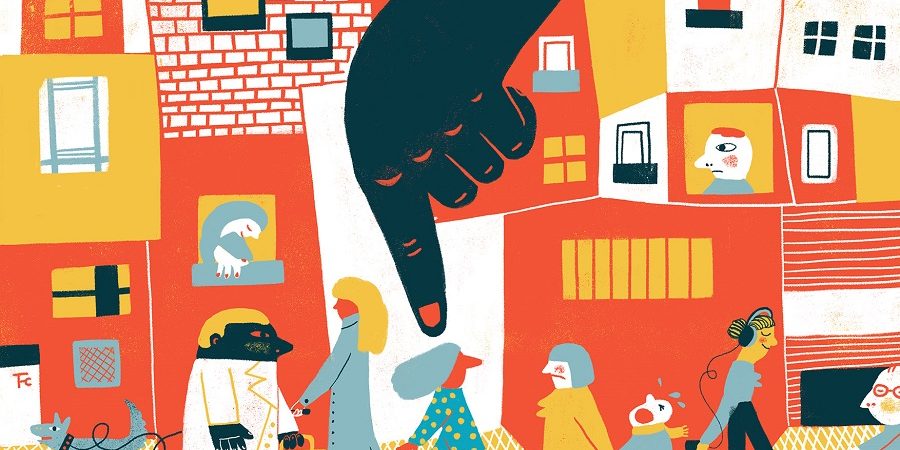
Illustration: Florencia Capella.
The latest State-Sponsored Homophobia report, published by the International Lesbian, Gay, Bisexual, Trans and Intersex Association (ILGA), states that the global situation for LGBTI people “is worrying.” Because “although the number of laws criminalizing same-sex sexual practices is decreasing, persecution and strong stigmatization persist in many countries.”
According to the report, even in countries with significant progress, there have been setbacks or attempts to block the recognition of LGBT rights. In the case of Argentina, it notes that while the current government has not openly opposed LGBTI rights, it “is unwilling to make the necessary investments required by public policies” and instead “tolerates an opposing policy.” This, the report says, has led to “increased police repression, limitations on access to justice, and discriminatory prosecutions.”
Institutional violence and religious fundamentalisms
When asked about state-sponsored homophobia, Pedro Paradiso Sottile, secretary of the Argentine Homosexual Community (CHA) and executive director of ILGA-LAC, told Presentes: “We need to work on real access to rights. Among the challenges we face is monitoring compliance in countries with existing legislation, and if it isn't being enforced, denouncing them.” He cited the case of the Diana Sacayán trans employment quota law, which remains unimplemented in the province of Buenos Aires.
 Asked about the major global challenges today, Paradiso Sottile emphasized the fight against religious fundamentalism and institutional violence. “Globally, we are managing to lower the levels of criminalization, which is an indication that we are working hard, but this is overshadowed by the rates of violence,” Paradiso Sottile said. “At ILGA-LAC, we promote education as a fundamental tool.” "We also want to work with different vulnerable groups and populations, such as trans people, children, and older LGBTI people, to promote and make these groups visible," she added.
"Less than 25% of the world's states recognize us."
The report, published since 2006, focuses on three areas of analysis: criminalization, protection, and recognition. It highlights that full equality for LGBT people is still far from being achieved because the majority of countries lack protective legislation . “ Although laws recognizing our relationships and families are also on the rise, less than 25% of the world’s states recognize or protect us – that is a worrying thought ,” noted Aengus Carroll, one of the report’s authors.
As examples of recent progress , he cites the cases of Seychelles and Belize, where laws criminalizing same-sex sexual practices were repealed.
While 43 countries have legal provisions against hate crimes , 72 against discrimination in the workplace, 39 against incitement to hatred, and 23 allow same-sex marriage, the report details.
Latin America: progress, violence and anti-establishment sectors
According to the report, 2016 was a year marked by significant progress related to the human rights of LGBTI people, but it was also a year of violence and anti-rights actors at the regional level.
Among the regional advances, the report cites the creation of the UN Independent Expert on protection against violence and discrimination based on sexual orientation and/or gender identity. It also notes the agreement, signed in July 2016 in the Peralta Wetzel case, through which Chile acknowledged responsibility for denying access to civil marriage to three same-sex couples and for denying legal recognition to marriages performed in other countries. In the agreement, Chile assumed significant responsibilities, including promoting marriage equality as a matter of legitimate interest in a democratic and inclusive society and reviewing several articles of its Penal Code.

[READ MORE: #CHILE: Bachelet pledged to pass an Equal Marriage Law ]
The report also addresses the public hearing before the Inter-American Commission on Human Rights (IACHR) in the case of Luis Alberto Rojas Marín v. Peru, concerning alleged sexual assault and torture based on his sexual orientation. This case discusses state obligations regarding the prevention, investigation, and redress of torture stemming from perceptions of sexual orientation.
Another point is the progress made in recognizing the rights of same-sex couples, where Argentina is a pioneer. In 2010, it became the first country in the region to legalize same-sex marriage. Months later, for the first time, a baby was registered in the Argentine Civil Registry with two mothers.
Among the measures to prevent discrimination and pathologization, the report notes that several states have adopted significant steps. It highlights the resolution issued by the Chilean Ministry of Health, which officially condemned so-called “conversion therapies.”
Peru and the "Don't Mess With My Children" campaign
In Peru, many evangelical churches spearheaded protests in March under the slogan “Don’t mess with my children,” accusing the government of Pedro Pablo Kuczynski of trying to “homosexualize” children through its plans to reform the school curriculum, including a gender perspective.
The ideological debate and legal initiatives find their saddest counterpart in the streets. The Inter-American Commission on Human Rights (IACHR) summarized it this way in a report on homophobia in the Americas: “There is widespread and pervasive intolerance and disrespect toward LGBTI people or those perceived as such, which is compounded by the failure of States to adopt effective measures to investigate and effectively punish hate-motivated violence.”
[VIDEO: " Being a lesbian in Peru means your life is in danger "]
Violence without statistics
In 2016, at least two massacres were recorded in gay bars : in Orlando, Florida, 49 LGBT people were killed as a result of this violence, and in Xalapa, Mexico, five LGBT people were murdered in a bar.
The research highlights that the lack of comprehensive statistical information on the rates of violence affecting LGBTI people in the region remains one of the most significant shortcomings . It also emphasizes that the figures that are recorded—particularly by civil society organizations—are cause for great alarm. As an example, it cites the murders recorded in Brazil, which reached 340 people.
72 countries criminalize sexual orientation
- Currently there are eight UN member states (or parts of them) where the death penalty is applied as punishment for consensual same-sex sexual acts, and five others where the death penalty is technically possible.
- In 14 other countries, the maximum penalty can range from 14 years to life imprisonment.
- Currently, 72 states continue to criminalize same-sex sexual activity , and in 45 of these countries the law applies to both women and men.”
“"This relates to the invisibility of relationships between women; it's not about having a position in favor, but rather it's framed within machismo and heteronormativity," said Paradiso Sottile.
- 22 states have “morality” or “promotion” laws that actively block the public promotion or expression of same-sex and trans realities.
“The current situation in Chechnya offers the most appalling example of such abuses, as there are fears that the social media accounts of (detained) individuals suspected of being homosexual are being hacked and used to identify others who have not yet been arrested,” denounced ILGA Director General Renato Sabbadini.
[READ MORE: “Torture of gays in Chechnya constitutes crimes against humanity ”]
- Only 9 countries explicitly mention sexual orientation as a protected ground against discrimination in their Constitution .
- 72 states contain legal provisions that protect against employment discrimination based on sexual orientation.
- 63 have enacted various non-discrimination laws, both broad and specific.
- This year the focus was on states that explicitly prohibit so-called "conversion therapies": only 3 of them have adopted national measures on the issue, but the list is expected to expand in the coming years.
- 43 states enacted legislation to combat hate crimes; while 39 countries have laws that address incitement to hatred based on sexual orientation.
- Marriage equality is a reality in 23 states, while another 28 guarantee recognition of civil partnerships. Some 86 states have National Human Rights Institutions that include sexual orientation in their work; resorting to such bodies can be a preliminary step toward changing laws and policies.


 ]]>
]]>
We are present
We are committed to journalism that delves into the territories and conducts thorough investigations, combined with new technologies and narrative formats. We want the protagonists, their stories, and their struggles to be present.
SUPPORT US

FOLLOW US
Related notes


We are present
This and other stories are not usually on the media agenda. Together we can bring them to light.