

They denounce to the UN the persecution of transvestites and trans people
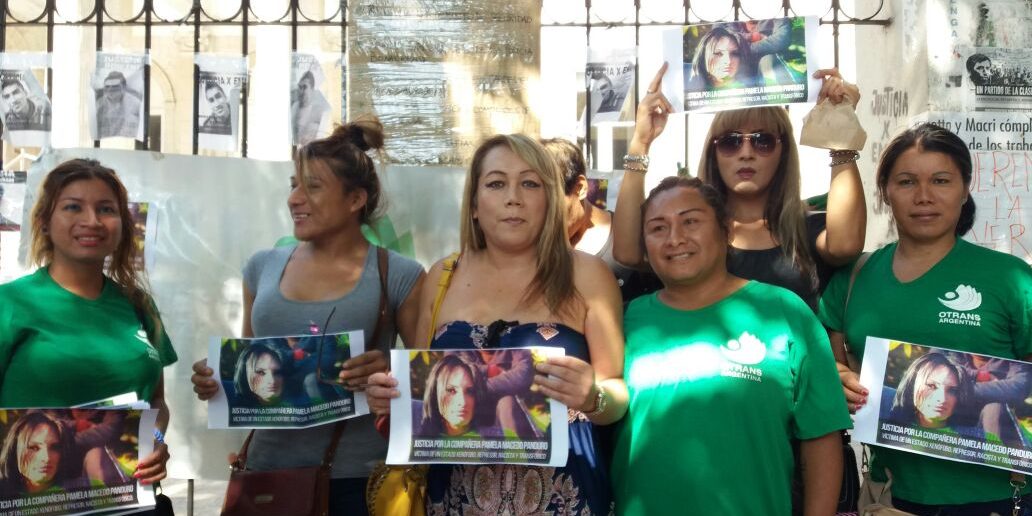
This came to light through a report submitted by the organization OTRANS Argentina to the United Nations Committee against Torture. The report details how transgender and transvestite women, primarily in the Province of Buenos Aires, are detained and mistreated by the police. It also denounces the conditions of their detention.

Share

It was through a report presented by the organization OTRANS Argentina to the United Nations Committee Against Torture. The report details how transgender and transvestite women, primarily in the Province of Buenos Aires, are detained and mistreated by the police. The conditions of their detention are also denounced. By Ariana Budasoff: “In Argentina, being trans or transvestite is not a crime, but a right protected by Law 26.743 on Gender Identity. However, transvestites and trans women, particularly migrants from Latin American countries, continue to be systematically criminalized under the pretext that they commit crimes.” This is how the report that OTRANS Argentina—the Civil Association that works for the defense and promotion of the human rights of transgender and transvestite people—presented on March 20 to the United Nations Committee Against Torture begins. The complaint centers on the critical situation faced by transgender and transvestite women in the Province of Buenos Aires, specifically regarding unjustified arrests, police mistreatment, and the precarious conditions they endure when deprived of their liberty. The report highlights that these conditions contributed to the deaths of Angie Velásquez and Pamela Macedo Panduro, both transvestite women from Peru, under 40 years old, who were detained in Unit 32 of Florencio Varela. Both suffered from chronic illnesses that did not receive adequate medical attention.
[READ ALSO: Judge and prosecutors charged with homicide after the death of another trans activist ]
“In the report, we sought to describe the experiences of our fellow women living on the streets, from arbitrary arrests and mistreatment to the abuse they suffer when detained. We denounced the illicit association of police, judges, prosecutors, and the prison service. Since taking office, this situation has worsened, because we had never before lost a comrade in custody,” she told Present Claudia Vásquez Haro, head of OTRANS.
Lawyers' guards and protocols
The Human Rights Secretariat of the Province of Buenos Aires acknowledges being aware of the situation. As a result of the complaint filed last year by OTRANS Argentina with the Convention on the Elimination of All Forms of Discrimination against Women (CEDAW), the state agency has made progress in several lines of work to prevent and change police behavior. “We designed a system that was implemented in March: the lawyers' guard. There are two male and two female lawyers on call from 6:00 p.m. until 6:00 a.m. the following day to cover off-hours, and 24 hours a day on weekends. They have two phone numbers available to receive reports of urgent violations occurring at that moment. "We just finished designing the protocol for action yesterday," explained a representative from the Secretariat.[READ ALSO: "Trans people are criminalized, imprisoned, and ultimately killed"]
In this regard, they assure that a second line of work is the negotiation of the portfolio with the provincial police to establish a protocol that indicates how to operate In these situations: “The Secretariat is discussing the illegality of these types of searches. We understand that this procedure is incompatible with human rights standards that safeguard people's privacy and intimacy. We are debating how to change this practice and completely eradicate any type of invasive search, such as anal or vaginal searches.” In response, they indicate that a training cycle has been initiated with the staff of the Ninth Police Station, the one most involved in these procedures.Precarious conditions and mistreatment in prisons
In February, OTRANS, along with detained trans and travesti people, filed a habeas corpus petition to denounce the precarious and unsanitary conditions to which members of these groups are subjected in prisons. The petition was accepted: deficiencies in hygiene and healthcare, mistreatment of inmates and visitors, among other human rights violations, were confirmed. Following this, The provincial Executive Branch was ordered to allocate an exclusive pavilion for trans women and transvestites in Unit 32 of Florencio Varela, with female staff in charge of inspections, among other provisions that have not yet been implemented. The Buenos Aires Penitentiary Service responded by appealing the ruling in order to avoid complying with the court order. Sources from the Secretariat headed by Santiago Canton claim to have supported OTRANS throughout this process and are awaiting the second instance decision before taking charge, along with the Penitentiary Service, of implementing the measures stipulated in the ruling.Without access to healthcare and housing
Other major problems that urgently need addressing, according to the organization, are the health of trans women, both inside and outside prison, and the lack of housing upon their release. “Our comrades died because they had chronic illnesses, and when they were arrested, they weren't given their medication again,” says Vásquez Haro. “The lack of medical care in prison is terrible. That's why we want to create a system so that everyone can receive care in one place and so that when someone is arrested, their treatment isn't interrupted.” “Another important issue, given the arbitrary arrests and the fact that our comrades are being held without a final sentence, is housing. They may be eligible for house arrest or release, but they have nowhere to go. Many have been imprisoned for a year and a half without a conviction. Some of the arguments used to deny these possibilities are that they will escape, that they have no ties to the community, and that there's nowhere to house them.” The Secretary of Human Rights of the Nation, Claudio Avruj, was questioned about this report before the United Nations on April 26. Present He tried to contact him through various means, but received no response.“Questions to the State.”
Towards the end of the report, there is a section titled “Questions for the State.” There, OTRANS asks: “What measures are you implementing to stop the arbitrary detentions and fabrication of cases against migrant and national transvestites and trans women, particularly in the Province of Buenos Aires? What measures are being implemented to investigate and punish those responsible for human rights violations? What measures are you taking to implement the Provincial Law against Institutional Violence passed last year? What measures are you implementing to prevent further deaths of transvestites and trans women in Unit 32?” Answers are still pending.We are present
We are committed to journalism that delves into the territories and conducts thorough investigations, combined with new technologies and narrative formats. We want the protagonists, their stories, and their struggles to be present.
SUPPORT US

FOLLOW US
Related notes

We are present
This and other stories are not usually on the media agenda. Together we can bring them to light.