

When the medical system violates the rights of LGBT people
Lesbians are always spoken to as if they were heterosexual, trans people's gender identity is not respected, gay men are associated with HIV, and the list goes on. While there has been progress in Argentina, thanks to inclusive clinics, the healthcare system does not adequately support current legislation, and the LGBT population faces daily prejudice from doctors and violations of their rights when accessing healthcare.

Share

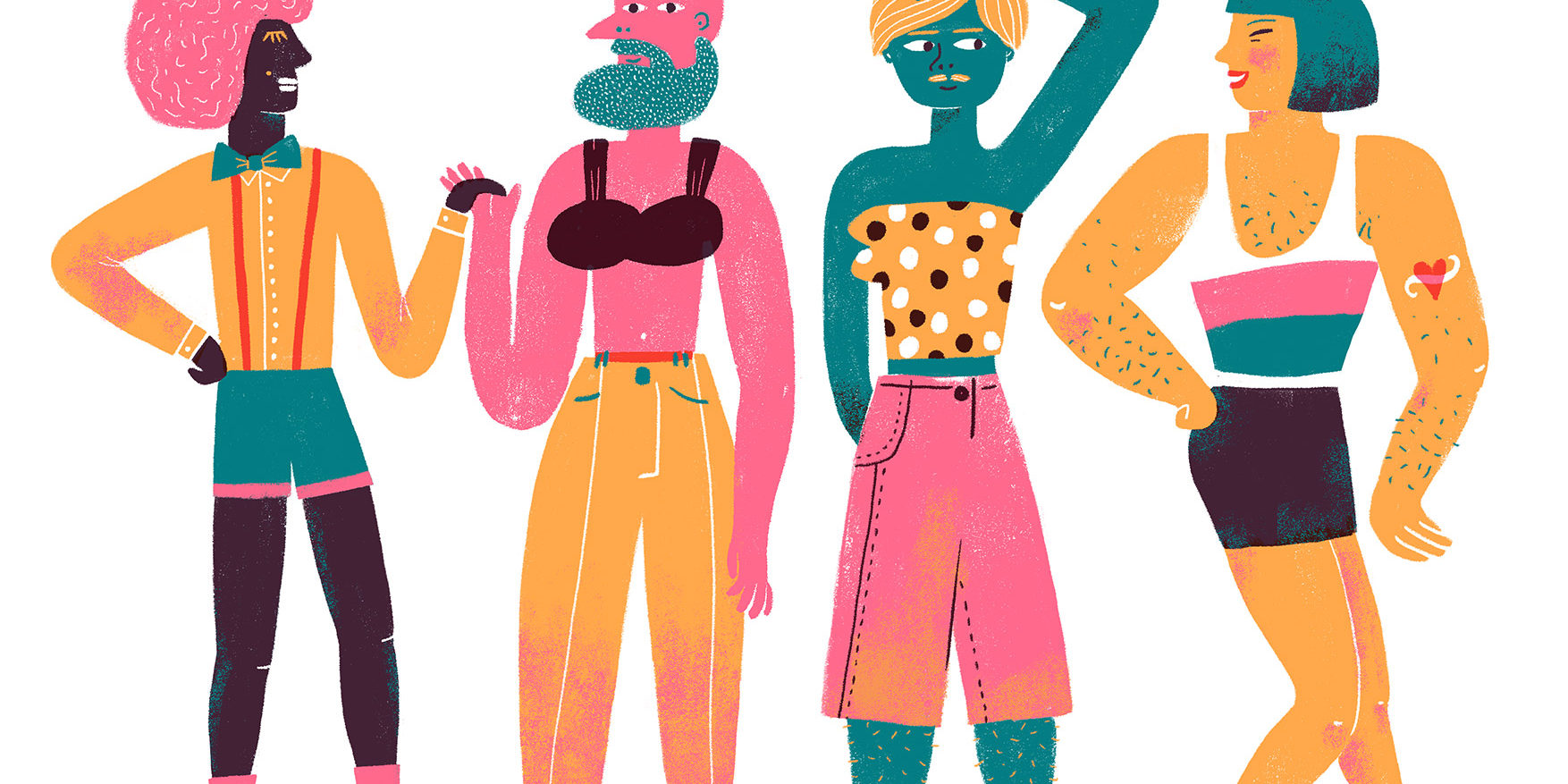
Lesbians are always spoken to as if they were heterosexual, trans people's gender identity is not respected, gay men are associated with HIV, and the list goes on. While there has been progress in Argentina, thanks to inclusive clinics, the healthcare system does not adequately support current legislation, and the LGBT population faces daily—when accessing healthcare—the prejudices of doctors and the violation of their rights. By Amanda Alma. Illustration: Florencia Capello. Dr. Marina Elichier is a young lesbian who works at Health Center No. 19 in Bajo Flores. The clinic where she works is located on the edge of one of the most densely populated neighborhoods, where highly stigmatized communities live. One day a week, the sexual health clinic is open, where Dr. Elichier sees patients. She has been working for years to subvert the patriarchal structures that underpin the healthcare system. In addition to her visibility, she challenges one of the main obstacles to access for lesbians: the presumption of heterosexuality . Among the first questions doctors ask, it is assumed that women are heterosexual, and they are given information focused on pregnancy and sexually transmitted infections with men. Because of this, many lesbians remain silent or hide in the doctor's office, faced with the certainty of the medical opinion.
"Prejudices and fantasies"
Elichier recalls that a few years ago, in a survey she conducted for a lesbian spring event, it turned out that the vast majority of lesbians had been abused and had assumed they were heterosexual. "When they answered that they weren't straight, the information they were given was very general, based on prejudices and fantasies," she tells PresentWhen she entered university, one of the first challenges she faced was with her fellow students. In every class, she questioned the lack of information about lesbian health and the practices that reinforce binary thinking and heterocentrism. During her residency, she ensured that each patient could choose which doctor they preferred to see, "so that men are not imposed on gynecological consultations."Inclusive clinics
In Argentina, the healthcare system has been decentralized for many years. Therefore, primary care falls to the municipalities, the smallest unit of government. This proximity fosters a sense of accessibility that cannot be realized without public policies. In 2010, the National Ministry of Health implemented inclusive clinics in several cities across the country. Working with social organizations, it sought to pave the way for lesbians, gay men, trans people, transvestites, and intersex people to access public healthcare. The first project was implemented in the municipality of La Matanza, spearheaded by Diana Sacayán, a trans activist and political leader of MAL (Anti-Discrimination Liberation Movement). La Matanza has a population of 1.7 million.[READ ALSO: The intersex girl who lived two years registered as male ]
In two years, seven clinics were implemented throughout the country: currently there are 19 in the province of Buenos Aires and they are aiming for 24. But “these are isolated policies, with some intention of generating a common approach, but it is very difficult,” says Elichire and concludes: “the regulation of article 11 of the Gender Identity Law gave it a boost from public policies but a very weak one that guarantees the bare minimum, but less and less is being done.”Not all heterosexuals
One of the main obstacles that needs to be overcome is getting to the clinic. The prejudice and stigma faced by lesbians, transvestites, trans people, intersex people, and gay men generally prevent them from being seen at the hospital. Diego Bocchio is a political activist and participated in coordinating the inclusive clinic with a focus on sexual diversity in Morón: “The first thing we did was train the medical staff and all the administrative personnel. We needed to ensure that our colleagues weren't turned away at the door.”[READ ALSO: Hearing at the IACHR highlighted violence against intersex people ]
As a member of Conurbanos por la Diversidad (Suburbs for Diversity), a community-based organization, she worked closely with the municipality and the National Ministry of Health's HIV/AIDS and STI (Sexually Transmitted Infections) program. For two years, they conducted workshops to disseminate information about current regulations and dismantle prejudices; they went out into the streets, to sex work venues, and to meeting places for LGBTQ+ groups to publicize the available services. But with the change in government, only the continued employment of the medical staff was guaranteed, without the continuation of all the community outreach work that had been carried out.READ ALSO: [ HIV in Argentina: trans people add their specific demands ]
While the initiative aims to bring the LGBTI community closer to the hospital, it's not a separate clinic or a private building. It's the same outpatient clinic where a different specialty is offered each day. In Morón, Friday afternoons are specifically reserved for those who identify as LGBTQ+, but heterosexual people can also consult there. This initiative seeks to dismantle the prejudices of those who use public healthcare facilities. Bocchio recalls, “We used to occupy the waiting room; people from job inclusion programs would come to talk about projects. When Lohana Berkins died, a colleague brought a poem, and we read it.” She laments that the new administration stopped visiting the community because consultations have decreased significantly since “nobody knows if the clinic is still there.”Serving blindly
The lack of awareness among medical staff is another fundamental difficulty they face within the healthcare system. Bocchio states that “there is a general misunderstanding within the healthcare system and among political authorities regarding the demands and needs of the LGBTQ+ community.” Scientific knowledge is focused on the male body, and all other bodies are either the subject of relatively recent study or a question mark without answers. In this regard, Dr. Elichier warns: “There is an abuse of patients' bodies by doctors that goes unrecognized; they are discussed at conferences or congresses without their consent.”Lesbians, invisible to medicine
Lesbian health is an invisible issue, absent from the literature and health prevention and access campaigns. There is also insufficient scientific evidence to support research, as well as funding to promote it. Generally, lesbians are lumped together with the "women" collective to reinforce the gender binary upheld by medicine. As part of the LGBTQ+ community, lesbians are excluded from community-based initiatives and end up hidden away in HIV campaigns, often with condoms in hand.[READ ALSO: IN PHOTOS Lesbian Visibility Festival in Buenos Aires ]
Furthermore, the lack of research into the specific problems faced by each segment of the community means that much of the information circulating is inaccurate. Among lesbians, the use of latex products to prevent contact with bodily fluids is widespread, but very little is promoted about how to use barriers correctly, thus generating frustration among those who try, unsuccessfully, to adopt these protective practices. Undoubtedly, the few prevention campaigns carried out by government ministries speak to lesbians, transvestites, and trans people in the same way, assuming that non-heteronormative sexuality is uniform. “Just as trans people are unnecessarily exposed, myths are reinforced about lesbians,” says Elichier.Share
We are present
We are committed to journalism that delves into the territories and conducts thorough investigations, combined with new technologies and narrative formats. We want the protagonists, their stories, and their struggles to be present.
SUPPORT US

FOLLOW US
We are present
This and other stories are not usually on the media agenda. Together we can bring them to light.
I'm concerned that the article doesn't mention intersex people. Intersex people are one of the most invisible and disadvantaged groups within this medical system, which, before being heterocapitalist, is normative. And the fight here isn't about having a cool doctor who works in an LGBT-friendly clinic… We have to attack the root of the problem: it's in universities where macho men continue to teach how to wield the law of the scalpel.