

"It was a hate crime": Ten months later, Nicole's murder remains unpunished
Nicole Saavedra Bahamondes was 23 years old and a lesbian. Her murdered body was found in Limache, a week after she was last seen. Family and friends denounce the lack of progress in the investigation. The lawyer who took the case in January speaks of a hate crime, sexism, and other murders of women in the area. She only gained access to the case files this week.

Share

Nicole Saavedra Bahamondes was 23 years old and a lesbian. She was found murdered in Limache, a week after she was last seen. Family and friends denounce the lack of progress in the investigation. The lawyer who took the case in January speaks of a hate crime, sexism, and other murders of women in the area. She only gained access to the case files this week. By: Airam Fernández, from Limache.
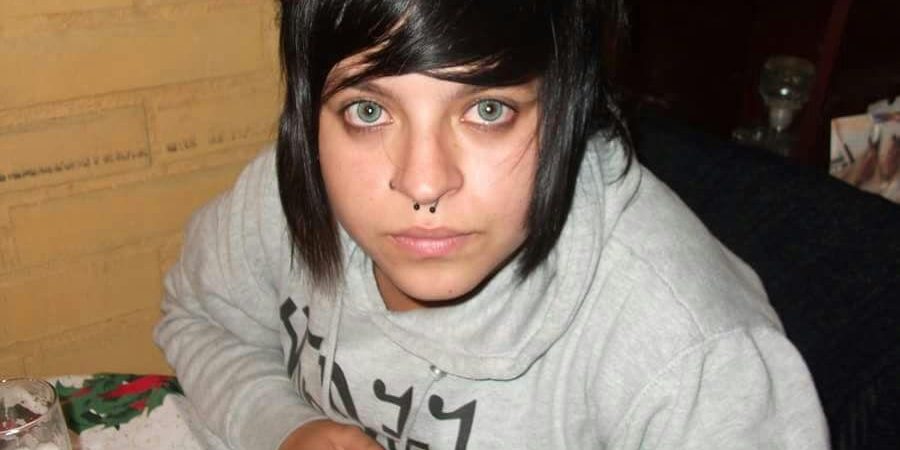
Photos: Bahamondes Family and Presentes archive. Nicole Saavedra, 23, was last seen alive on the morning of June 18, 2016, after a night out. She was missing for a week, until she was found murdered. According to the autopsy, she died from multiple traumas to her skull and face. Her family publicly expressed their concern: in ten months, the judicial investigation has not made significant progress, and there are no suspects. “Sometimes I think everything has been so slow because of pure discrimination, because we are poor and because she was different, she was a lesbian ,” says María Bahamondes, the victim’s cousin. The case has passed through the hands of two prosecutors and a public defender. The lawyer who has represented the family since January, Silvana del Valle, from the Chilean Network Against Violence Against Women, considers this factor key to the investigation. She believes it was a hate crime: that Nicole was killed because she was a lesbian. But only this week did she have access to the complete case file. “There’s nothing new since January, nothing significant,” she told Presentes, after obtaining the complete court files. The questions the prosecution still can’t answer are the same as they were ten months ago. How did Nicole end up in Limache (a town 126 kilometers from Santiago), a place so far from where she lived? Where was she and with whom hours before she died? What happened during the week she was missing? Was she tortured during that time or only before she was murdered? How was she transported to Los Aromos hill in Limache, where her body was found? “The most complex case I’ve ever had to investigate.” The Limache prosecutor investigating the case, Juan Emilio Gatica, cannot answer these questions. Nor can he confirm the theory held by the family and their lawyer. From his office at the prosecutor’s office, he insists that, to this day, no hypothesis stands out more than another. “It’s a very confusing case, without witnesses, one of the most complex I’ve ever had to investigate,” he told this agency. The investigation is in the hands of this prosecutor’s office because the young woman’s body was found on June 25, 2016, in this small Chilean town. It maintains the traditions of any remote Latin American town: most businesses close at midday and reopen after lunch. Minibuses and buses travel between different locations, navigating the town’s narrow streets. But no public transportation goes near the reservoir where Nicole was found, because getting there requires taking a difficult dirt road. That morning, when the young woman left the party she was attending with several friends, she walked to a bus stop in the town of La Cruz. There she would wait for a bus that would take her home to El Melón, a rural community where life revolves around agriculture and mining. She lived 40 minutes away from the hill where she was later found, lifeless, beaten, and bound.
Nicole's Story
She was the younger of two siblings, in a home where her mother was always the sole provider. Today, she prefers not to speak to the press. María says: “My aunt is very unwell, very depressed. She's terribly confused. She doesn't understand why her, why this time it happened to Nicole.” Nicole was one semester away from finishing her degree as a risk prevention technician at the Quillota Institute, where she spent most of her time. “She would go to Quillota because she felt more comfortable there, perhaps because she saw more of a city atmosphere. She also had many friends there,” says María. Those close to her say she liked to keep her hair very short and wear loose-fitting clothes. The family knew some of her partners, but she was single at the time of her death.
"They looked at her badly, they harassed her, they insulted her."
Nicole's sexual orientation was never a secret to her family or those around her, although at first everyone struggled to accept it, says her cousin Maria: “This is a rural area, very macho. We got used to her new reality when she turned 14. But she was never accepted on the street. They looked at her badly, harassed her, insulted her. When she was 16, some guys chased her and yelled that they would make her a woman. They judged her and attacked her because of how she looked. Why would they beat her to death if she didn't have problems with anyone? There's no reason. That's why We believe that all this tragedy is happening because Nico never hid her preferences”."Because of their sexual orientation or because they are a woman"
Silvana del Valle, a member of the national coordination team of the Chilean Network Against Violence Against Women, became the new public defender earlier this year. When she took on the case, at the request of people close to Nicole's family, no one had had access to the complete file, only to very specific and selective details of the autopsy, because the process was under seal. Prosecutor Gatica explains that this judicial decision was made "to avoid alerting potential suspects." "In a hearing we had two weeks ago," the lawyer recounts, "I requested a copy of the entire file to see what it contains and, with that information, contribute to the investigation or suggest avenues and lines of inquiry to consider." I am sure this is a hate crime. "And it could be for two reasons: because of Nicole's sexual orientation or simply because she was a woman," del Valle points out.
The crime: no robbery
So far, no one has been arrested for the crime, only one suspect who has already been ruled out. María, Nicole's cousin, says, "We were lucky if we saw the state-appointed lawyer once." She complains about the slow pace of the investigation. She believes the Prosecutor's Office hasn't given the case the importance it deserves. And unlike the prosecutor, she supports the theory put forward by the lawyer, considering it the most logical: she believes Nicole was indeed killed because she was a lesbian. So far, the only hypothesis the Prosecutor's Office has dismissed is robbery, because at the crime scene they found Nicole had all her belongings: wallet, money, documents, cell phone, and clothing intact. “From a criminological standpoint, all homicides have a motive. We don't yet know the motive in this one. We've already ruled out robbery, because nothing was taken from the girl. What I must make very clear is that, so far, there's nothing to indicate that this was actually due to her sexual orientation. We haven't ruled it out entirely, though, because all hypotheses are valid at this point, but the evidence doesn't suggest that one is more likely than another. The reason for this is that, so far, there are no witnesses,” the prosecutor explains.What is known
The only certainties at the legal level are those revealed by the autopsy, recorded in case number 1600605044-5. Nicole's death occurred between 24 and 36 hours before her body was found on that hill, and she died from multiple skull fractures. The prosecutor's office has already tapped some phones, questioned people in her inner circle, and summoned those who last saw her at that location to testify. Even so, the authorities haven't solved basic mysteries: what happened during the week Nicole was missing, where she was, and with whom. Just when they thought they were close to a significant breakthrough, DNA evidence disproved another hypothesis and eliminated the only suspect. “A few weeks ago, here in Limache, we arrested a man for kidnapping and rape. We thought he might be involved in Nicole's case. But when we compared the DNA evidence found on her body, it was ruled out because it didn't match.”"There is a pattern of killing women in the area."
This crime is similar to those committed against two other very young lesbian women who at some point shared the same territory. One of the most remembered cases in the area is that of María Pía Castro (19). Her body was found burned in an abandoned lot in Limache in February 2008. Two years later, the case was closed by the local prosecutor's office without any suspects. The most recent case is that of Susana Sanhueza (22), who was found wrapped in garbage bags with her hands tied in the San Felipe Municipal Archives on March 7. Of the three cases, this one has seen the most progress: a 22-year-old man, an acquaintance of the victim, is the main suspect. He has been charged with simple homicide, Commissioner Gino Gutiérrez, head of the Los Andes Homicide Brigade, told local media. Prosecutor Gatica rules out any connection between these murders, beyond the modus operandi. But for the family's lawyer, the pattern is clear: “I don't think there's a link between the perpetrators, but these are definitely associations that the prosecution should consider. Because This cultural pattern exists in the area, and the killing of women in these atrocious ways is normalized.. Besides, If it had been considered from the beginning as a hate crime, specifically anti-lesbian, more precautions would have been taken to ensure the autopsy revealed other details.“,” says del Valle.[READ MORE: Hate crimes in Chile increased by 33 percent in 2016 ]
According to the latest report from the Chilean Homosexual Liberation Movement (Movilh), in 2016 there were 4 murders classified as hate crimes, and reports of such crimes increased by 28.6%. brutal murder of Daniel Zamudio, which occurred in 2012 in a park in the capital, there are 9 in total."The guilty parties are out there and they can do it again."
This is an important precedent, and the law can support Nicole's case, the lawyer asserts: “Those responsible for this horror are sure we won't catch them. But I know that when we do find them, we will be able to prove it, so we can stop talking about this as just another homicide and another statistic.” The questions weigh heavier on the 25th of each month, when Nicole's family commemorates the reason for their mourning. María says: “They killed us while we were still alive; we will never be happy again. No one can bring Nicole back to us, but the guilty parties are out there and they can do it again. That's why we insist, because we don't want this to happen to anyone else.”
We are present
We are committed to journalism that delves into the territories and conducts thorough investigations, combined with new technologies and narrative formats. We want the protagonists, their stories, and their struggles to be present.
SUPPORT US

FOLLOW US
Related notes

We are present
This and other stories are not usually on the media agenda. Together we can bring them to light.