

"Being lesbian or bisexual doesn't mean we're not sexist."
Today, Argentina commemorates Lesbian Visibility Day. Seven years after the hate crime against Pepa Gaitán, murdered by her girlfriend's stepfather, Claudia Castrosin and Mariana Paz, from La Fulana, reflect on that day and the path they have traveled. They call for a re-evaluation of violent and sexist relationships, stating that lesbian and bisexual relationships are not exempt from them.


Share

Today, Argentina commemorates Lesbian Visibility Day. Seven years after the hate crime against Pepa Gaitán, murdered by her girlfriend's stepfather, Claudia Castrosin, Mariana Spagnuolo and Paz Gustavo Dellacasa, from La Fulana, reflect on that day and the path traveled. They call for a rethinking of violent and sexist relationships, and say that relationships between lesbians or bisexuals are not exempt from them. By Claudia Castrosin, Mariana Spagnuolo, and Paz Gustavo Dellacasa, lesbian activists from
La Fulana. Photos: La Fulana. Seven years ago, we were stunned by the news of Pepa Gaitán, shot dead by her girlfriend's stepfather. Memories that remain like an explosion of questions and a million conflicting emotions. "She was shot" was the only thing the movement agreed on. The news circulated through some more alternative media outlets until it reached Página/12, where, in the wake of that story, we were able to delve deeper into the violence we face every day of our lives when we decide “to be who we are and not someone else,” as our great comrade and generous activist Claudia Pía Baudracco said. [READ ALSO:
Schedule of activities for Lesbian Visibility Day ]
[READ ALSO:
Schedule of activities for Lesbian Visibility Day ]
March 7: Lesbian visibility in schools
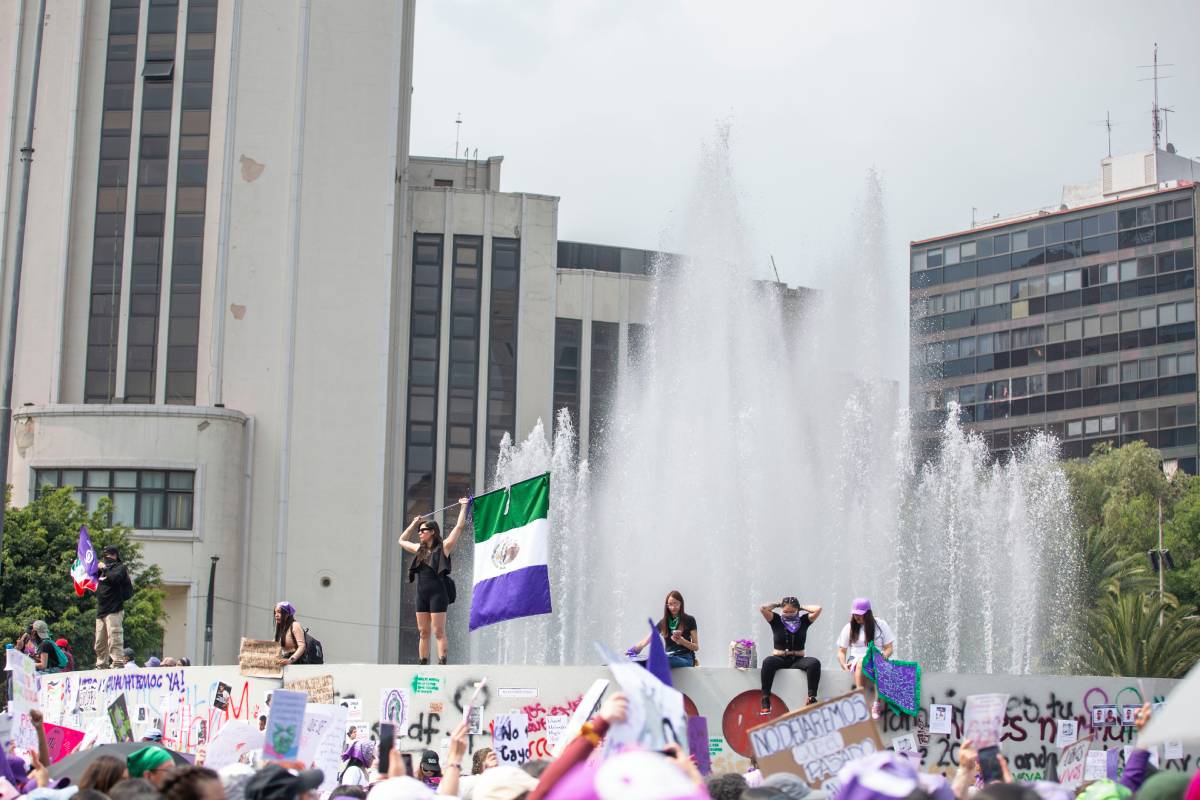
From that moment on, we carried out many actions to raise awareness of the violence that lesbians and bisexual women experience every day in our territory. From our space, “La Fulana,” we promoted, championed, and, together with María Rachid—a former legislator from the city of Buenos Aires—we successfully advocated for the establishment of March 7th as “Lesbian Visibility Day.” With her unwavering commitment, in 2016 National Deputy Silvia Horne presented the bill at the national level in the National Congress, where it is currently under parliamentary review. This legislation seeks to add March 7th to the school calendar—like March 8th or any other commemorative date—and to implement visibility activities in schools so that all lesbians and bisexual women know they are not alone in the world, so that Pepa's death will not be in vain.
"After the Constitution of 1812, we began to be referred to as victims of violence."
In 2014, we launched the first Observatory on Violence Among and Against Lesbians, to increase our visibility and generate statistics that would inform public policies that include us. Thanks to the efforts and work of the activists in our organization, we discovered that before the case of Pepa Gaitán, news reports about violence against lesbians were very scarce. After her murder, few cases were reported, but we saw that lesbians and bisexual women began to be recognized as victims of violence. The media started to talk about our existence and the violence perpetrated against us by a system that promotes the punishment of anyone who deviates from the norm. [READ ALSO: "She was attacked for being a lesbian and is in jail for homicide" ]
"Our lesbian and bisexual world is not exempt from violence."
One of the recurring complaints is the violence perpetrated in relationships between lesbians and bisexual women, and it is from this point that we want to express our deep concern today. Our lesbian and bisexual world is not exempt from violence. When we are finally able to come out, we believe that we will no longer face violence, that sexism and patriarchy are behaviors experienced only in heterosexual relationships. However, we discover that we reproduce this dynamic and that the cycle of violence is the same. As lesbians and bisexual women, we find ourselves outside a system that considers heterosexuality as the only reality. And that grants power to only one of the people in the relationship—mostly men—leading to static roles where one person has more power than the other. This established power hierarchy is one of the main causes of violent relationships, where manipulation, economic, physical, and psychological violence, among many others, are exercised. Even though we are outside this system, lesbians sometimes reproduce these violent relationships.Institutional violence: "fight between women"
These women in violent relationships face a double coming out: one regarding their lesbian or bisexual identity, and another regarding their situation within a relationship where violence is present. These relationships also include institutional violence, as reporting mechanisms are neither prepared nor equipped to handle cases of violence between lesbians or bisexual women. Reports are dismissed and labeled as a "fight between women." Being outside a system that enforces heterosexuality does not exempt us from sexism. Being lesbians or bisexual women doesn't mean we aren't sexist. And let's not reproduce the violence this entails. It's a powerful work of deconstruction of the forms and stereotypes imposed upon us, revealing a society that justifies jealousy as part of love, among so many other things to which "romantic love" subjects us. May this day call us to rethink how we build our relationships from the very beginning, consistently linking them to our struggles and demands. May our movement shake the world on this day. Stop the violence against lesbians and bisexual women! Gaitán Present! "Long Live Pepa!" Freedom for Higui!
Follow Presentes:
Twitter
@PresentesTLGBI Instagram:
PresentesTLGBI Facebook:
https://web.facebook.com/presentesTLGBI/
]]>
We are present
We are committed to journalism that delves into the territories and conducts thorough investigations, combined with new technologies and narrative formats. We want the protagonists, their stories, and their struggles to be present.
SUPPORT US

FOLLOW US
Related notes

We are present
This and other stories are not usually on the media agenda. Together we can bring them to light.