

#Argentina: They opened a hair salon to help people leave prostitution
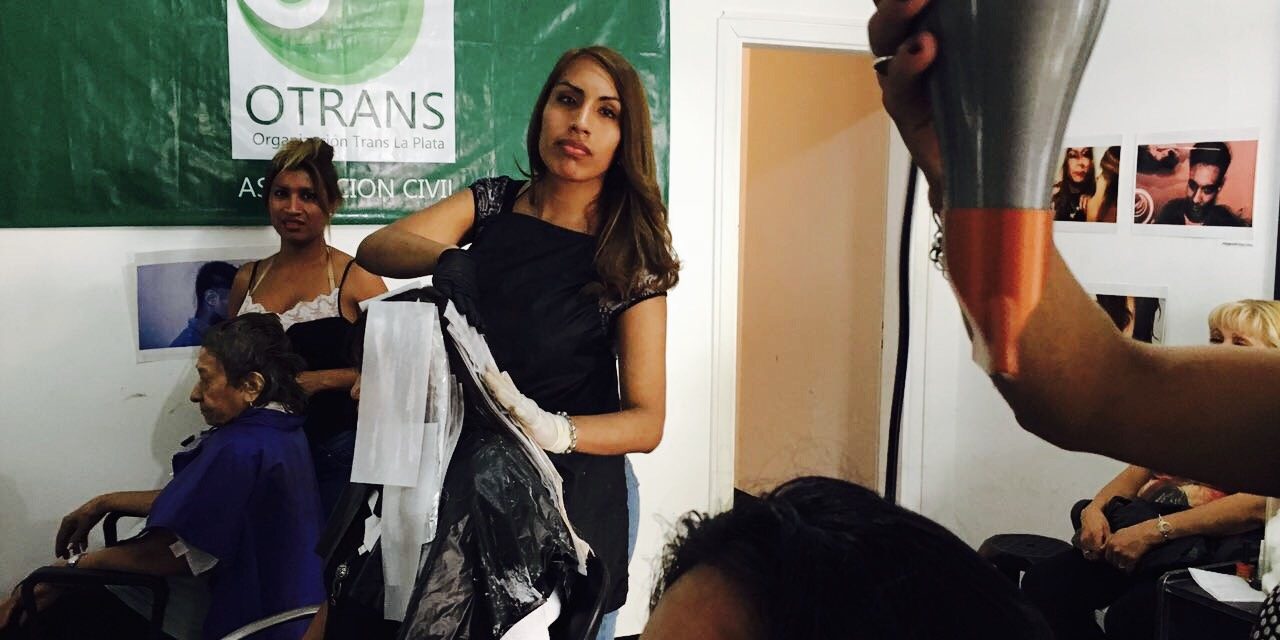
Ten transgender migrant women planned how to escape prostitution. They are succeeding at the Las Charapas cooperative hair salon, where they share working hours. They say they have cut expenses, but that their lives have changed. "We breathe fresh air," they affirm.

Share

Ten transgender and migrant women planned how to escape prostitution. They are succeeding at the Las Charapas cooperative hair salon, where they share the work hours. They say they cut expenses, but that their lives have changed. "We breathe fresh air," they affirm. The rhythm of the Las Charapas salon, the cooperative venture opened just a month ago by 10 transgender women from La Plata, is detached from the town of siestas and cicadas that the city of diagonals transforms into in January. Inside the salon, located on 18th Street between 39th and 40th, the blaring Red 92 radio station drowns out the sound of the hair dryers. In the salon, Celeste, Andrea, and Ariana divide the tasks of coloring and cutting the hair of three clients, while another woman and a man wait to be served. "We've been breathing fresh air for a month now," says Celeste Shuña Villacorta (29), hairdresser and president of the cooperative. "It's another battle won," he says proudly.
[READ ALSO: Trans people, migrants and hairdressers ]
Strictly speaking, the winds of change began to blow much earlier: three years have passed since they came together through Otrans Argentina, which brings together trans women and transvestites from La Plata and CABA, They began to think about how to escape the violence and helplessness that prostitution put them in. "This didn't come from a cabbage," he explains. Claudia Vázquez Haro, A leading figure in Otrans and a professor at the Faculty of Journalism in La Plata, she stated, "Beyond the abolitionist/regulatory debate, we consulted with our colleagues about what they would do if they could access decent work, and the majority assured us they would leave the streets." According to the Otrans census, There are about 350 trans women in the La Plata area, and 95 percent of them work as prostitutes. When asked if they would leave sex work if they had access to formal employment, 75 percent responded yes. Celeste has always worked on the streets. Ever since she arrived in La Plata from eastern Peru six years ago. She did the same in her home country. "Life is very hard there; our rights aren't recognized. We migrated because of a lack of public policies, because we experience violence at the hands of the police, and because of a patriarchal and sexist culture that doesn't recognize our gender identity," she says, her voice hardening.
[You may be interested in: #Argentina: drastic increase in transphobic murders in 2016 ]
Already in ArgentinaAlthough violence and discrimination continued, Oxygen arrived with the recognition of her female identity. “Thanks to the President,” she emphasizes, referring to the granting of her new ID card, as established by Law 26.743 on gender identity, passed in 2012 and enacted by Cristina Fernández de Kirchner in May of that year. Afterwards, together with her colleagues from Otrans, they began to develop Las Charapas, a hair salon and beauty center, a business named after the turtles typical of the Peruvian jungle, where most of the women come from, and which opened its doors on December 6th.
In search of new horizons
Andrea Vargas (26) arrived in the country in 2014, drawn by the new laws, "because trans women here are accepted and legally recognized," she says, straightening her green highlights. In Peru, she had already worked in hair salons, but when she arrived, she handed out resumes to various businesses without success. She had no other option but to work on the street. There, she experienced various situations of violence. One she particularly remembers was an attempted kidnapping by a client. "We were in the car, and he approached me without saying where we were going, as if he were going to kidnap me." She threatened to pepper-spray him, which is what many trans women use for self-defense, and he let her out of the car. Around that time, some friends invited her to Otrans meetings, and she began to get involved. That's how she joined the project that got her off the streets. "Since I've been working at the salon, I feel safer. No more beatings, robberies, or catching diseases. Here, we see different kinds of people. We interact with other people," she says. Like the others, Andrea moved into a boarding house so her money would stretch and she could survive. There are 10 girls at the hair salon, all Peruvian, who share the work hours and each work a six-hour shift. The quality of life? It's improved a lot, she says. So much so, that she's excited about the future: this year, in fact, Andrea will begin her studies at the Faculty of Journalism.
Change of habits
"We put this together while we were working on the street," says Ariana Linares (24), drying her hands, eager to continue washing them. "Now I've had to stop, I had to cut expenses and move into a boarding house like everyone else." Along the way, they organized volleyball tournaments, sold food, all to be able to open the hair salon which, since no real estate agency would rent them a space, they set up in Vázquez Haro's house. "I don't see myself working as a hairdresser my whole life," says this tall, dark-haired woman with brushed hair, who next month will begin studying Business Administration at the Faculty of Economics. "With Las Charapas, we reaffirm our position against prostitution, which we understand is not work, because it is violent and involves the objectification of the body, which can be used and discarded," Vázquez Haro emphasizes, and defines: "Prostitution is not work, and it is the State that must generate public policies so that our colleagues can access dignified living conditions and a life project."
[READ ALSO: #Argentina: progress and shortcomings of the trans employment quota ]
However, Celeste asserts that “the State never gave us anything. We paid for our hairdressing and manicure courses ourselves by working on the street, where we suffered police violence and violence from some people.” Vázquez Haro is enthusiastic: “This initiative has changed the lives of our colleagues; now they sleep at night to work during the day, they are not as exposed to alcohol and drug use, or to police abuse. This helps to change the prejudice that associates prostitution with gender identity. Their lives regain a new meaning and allow them to envision themselves in something that is completely opposite to prostitution, as a result of a process of political empowerment.” Follow Presentes: Twitter @PresentesTLGBI Instagram: PresentesTLGBI Facebook: https://web.facebook.com/presentesTLGBI/]]>We are present
We are committed to journalism that delves into the territories and conducts thorough investigations, combined with new technologies and narrative formats. We want the protagonists, their stories, and their struggles to be present.
SUPPORT US

FOLLOW US
Related notes


We are present
This and other stories are not usually on the media agenda. Together we can bring them to light.