

Investigation: How the Justice System Responded to Hate Crimes 2015
Based on the annual report in which the Argentine Homosexual Community (CHA) documented the murders of six transvestites and transgender people, and seven gay men, Presentes investigated the current status of each case. The results revealed disparate treatment: a few cases nearing trial, others shelved, a lack of evidence, and resistance from the system to classifying them as hate crimes. Investigation:…


Share

Based on the annual report in which the Argentine Homosexual Community (CHA) documented the murders of six transvestites and transgender people, and seven gay men, Presentes investigated the current status of each case. The results showed disparate treatment: a few cases close to going to trial, others were shelved, there was a lack of evidence, and the system resisted classifying the murders as hate crimes.
Research:
Milva Benítez, Cecilia Devanna, Matías Máximo, Ana Fornaro, and María Eugenia Ludueña. Illustrations:
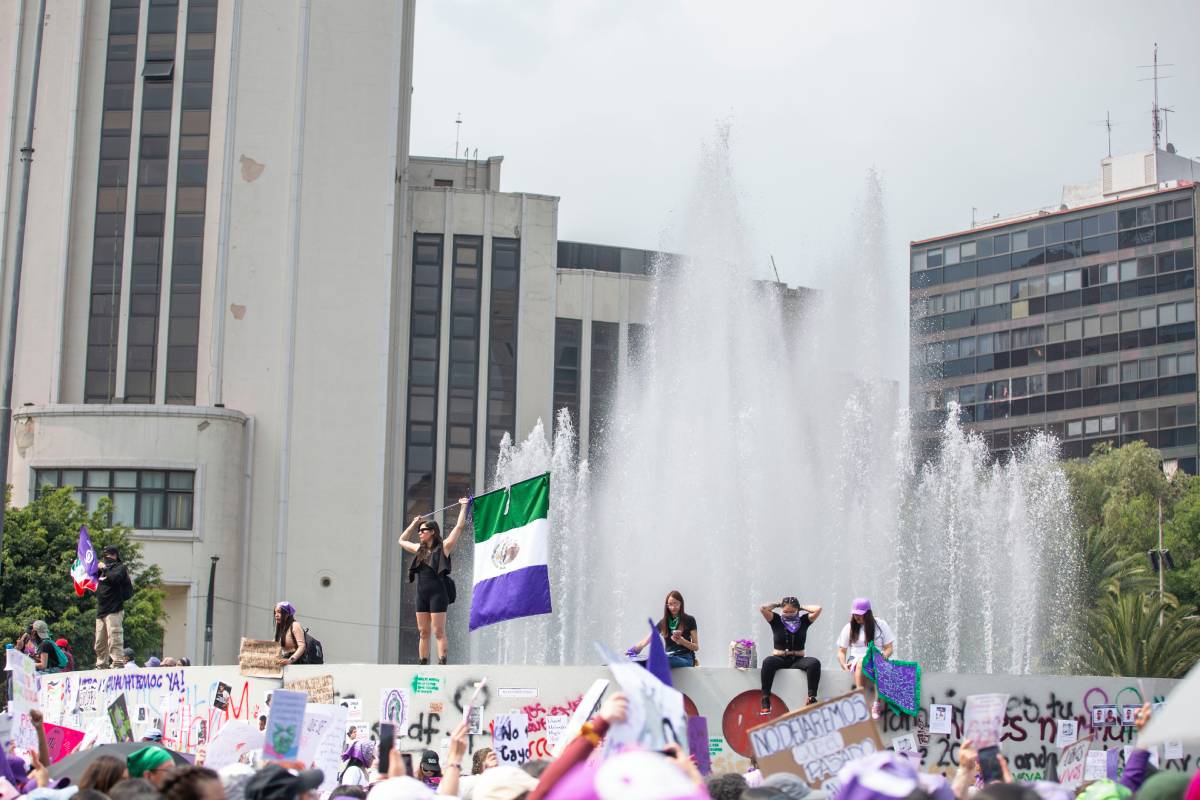
Charo Roque. Of the thirteen hate crimes from last year documented in the annual report of the Argentine Homosexual Community (CHA)—presented at the end of November—the murder of activist Diana Sacayán (in October 2015) received the most media coverage. Even so, her family and fellow activists from LGBTQ+ organizations blocked the streets yesterday to demand that the courts not close the investigation.
“The deaths of trans women are never investigated; the justice system is patriarchal and heterosexist, it’s not interested. And besides, who demands justice?” her brother, Sasha Sacayán, a plaintiff in the case, recently told this agency in an interview. “It would be part of the justice system to take responsibility for these deaths.”
Presentes investigated what happened in the courts regarding the deaths reported in the CHA report (based on data published in the media). These are the murders of six transvestites and transgender people, and seven gay men, which many judicial officials still refuse to classify as hate crimes.
Why are they hate crimes?
The CHA first used this definition in 2000, based on a joint effort with Amnesty International: “Hate crimes, conspiracy of silence. Torture and ill-treatment based on sexual orientation.” It was the first time Amnesty International presented a report on torture worldwide that included the variable “Sexual Orientation and Gender Identity.” Among the cases reported was that of Vanesa Ledesma, a trans woman who died in custody at Precinct 18 (formerly Police Station 13) in Córdoba. The courts closed the case, labeling it a “natural death.” The CHA continues to pursue the complaint.
Hate crime report: Murders increased 85% year-over-year. – https://t.co/byubIC7jm6
— CHA Argentina (@CHAArgentina) November 15, 2016
"Discrimination based on sexual orientation and gender identity and expression continues to be very strong in the judicial system, which is why it is essential to continue educating about diversity," she told Present The president of the CHA, César Cigliutti, stated that the CHA and the National Public Prosecutor's Office (MPF) held the first refresher and training course on hate crimes based on sexual orientation and gender identity in May 2015. "The course has been a fundamental step in giving visibility to the murders and hate crimes committed against LGBTQ+ people. It's a start in a very conservative environment like the judicial system," said Cigliutti.
Increase in gender-based violence
The CHA (Argentine Homosexual Community) documented in its latest report an 85% increase in murders compared to 2014. "The rise in gender-based violence is reflected in the number of femicides and also in violence against our LGBTI community. The cause is the same," Cigliutti stated.
In July 2016, Argentina held its first public trial for the femicide of Gimena Álvarez, a trans woman, perpetrated in the province of Salta in 2014, with two defendants. "The case is classified as 'aggravated homicide due to the premeditated involvement of two or more people, committed to conceal another crime, and due to gender-based violence.'
We continue working to ensure that the justice system recognizes hate crimes against our community for what they are," Cigliutti said. Presentes was able to confirm this difficulty when analyzing the cases: of the 13 cases, few met the legal definition of hate crime.
We share the results of our investigation:
Two hate crimes nearing trial
Leonardo Acosta and José Di Pietro (Santiago del Estero, Santiago del Estero)
Butcher, bodybuilder, and male escort Carlos Autalán, 30, is charged and being held in pretrial detention for the murders of Leonardo Acosta (25) and José Di Pietro (52), which occurred in Santiago del Estero in August and October 2015, respectively.
Initially, Acosta's death at his home on August 26 of that year was considered natural, due to an illness he suffered from. However, doubts arose: bloodstains were found at the crime scene, and a pillow was placed too close to the victim's face. These doubts were dispelled less than two months later when Autalán was arrested and charged with the murder of Di Pietro, which took place on October 5.
The similar characteristics of the crimes—both victims were gay, frequented the same places, and were found with pillows over their heads, among other things—combined with the fact that at the time of his arrest, Autalán had the cell phone he had stolen from Acosta, which he also used to photograph Di Pietro's lifeless body, led to him being charged with both murders.
After the initial interrogation, during which Autalán refused to speak, Judge Miguel Ángel Moreno of the Fourth Criminal and Correctional Court classified the crime under the aggravating circumstance of Law 26791, which refers, among other things, to hate crimes based on the victim's sexual orientation, gender identity, or gender expression. Currently, according to court sources, the case is ready to proceed to trial.

Condemnation but no grounds for hate crime
Roberto Lucas Aricuri (Salta City, Salta Province)
Roberto Lucas Aricuri, 34, was murdered by Nahuel Muñoz, 18, in an apartment in the city of Salta during a gathering of friends in July 2015. A year later, the trial and sentencing took place. Muñoz was sentenced to 11 years in prison by judges José Riera, Guillermo Pereyra, and Mónica Mukds, who found him “responsible for the crime of simple homicide.” During the trial, the prosecution requested that he be convicted of “homicide aggravated by hatred of sexual orientation,” but the judges rejected this request. In their ruling, they argued a lack of evidence to support this claim.
The judges also dismissed the defense's version of events, which claimed that Muñoz stabbed Aricuri in self-defense after being attacked because he refused to have sex in a particular way. To determine the sentence, the judges took into consideration Muñoz's youth, his addiction, and his limited education. They noted as an aggravating factor that after attacking the victim, he fled the scene and attempted to "conceal incriminating evidence."
To bring to trial
Claudio Cordero (Berazategui, Buenos Aires Province)
Claudio Cordero was 51 years old and worked as a hairdresser in Hudson (Berazategui district, Buenos Aires Province). He was found dead on September 7, 2015, with several blows to the head and dressed in pajamas and slippers. A neighbor alerted the police: she found it strange that Cordero's shop was closed.
Initially, his partner, a 25-year-old man, was detained, but he was released after his involvement in the crime was ruled out.
The Berazategui Decentralized Prosecutor's Office No. 3 informed Presentes that a man has been arrested for the crime, a male escort whom Cordero used to call. All the evidence has been gathered to bring the case to trial.
According to investigators from the Departmental Coordination of Investigations (CDI), the evidence suggests that "this man argued strongly with the victim, beat him to death, and then took various valuables from the scene."
"In 2015: 13 people from our community were murdered, 6 of them transvestites and 7 gay men" @paradisosottile from CHA on @Laoncediez
— You Can't Live on Love (@sepuedevivir) November 16, 2016
They are asking that it be tried as a hate crime
Marcela Chocobar (Río Gallegos, Santa Cruz)
Marcela Chocobar was 26 years old when she was last seen in the early morning of September 6, 2015, leaving a pub in the city of Río Gallegos. She often went out with friends. A security camera recorded her leaving in a red Renault 9. Three weeks later, forensic searches found her skull in a vacant lot. Her body is still missing.
The case seemed to begin unraveling in January 2016, when a man bought the red car in which Marcela was last seen at a bargain price. The seller warned the buyer that the Renault had already been searched and “had nothing to do with the crime.” The buyer found the comment strange and went to the police.
In May, based on a series of wiretaps related to the car, the Court of First Instance No. 3, presided over by Judge Rosana Suárez, arrested three men. One of them, the seller, was released after posting 50,000 pesos bail and was later found not guilty. Previously, the court had investigated a former boyfriend and then arrested two Bolivian men who owned a car similar to the red Renault seen in the video, although this line of investigation was discarded and delayed the capture of those responsible. “
Her skull was found in a vacant lot in San Benito, a poor neighborhood far from the city center. Only the bone remained, and given the time that had passed, it's unlikely it would have decomposed naturally. It's painful to think about, but someone went to the trouble of removing the meat with a sharp object; in this area, it's common for people to have experience working in meatpacking plants and butchering meat,” said Marcela's sister, Judith Chocobar.
Judge Rosana Suárez classified the case as “simple homicide.” The family and the Santa Cruz State Secretariat for Human Rights are demanding that it be considered a hate crime. Two of the alleged killers—Ángel Azzolini and Oscar Biott—are in custody awaiting trial. They had Marcela saved in their cell phones as "the poisoned dog."
Hate crimes are on the rise across the country. Marcela Chocobar's case is not an isolated incident: https://t.co/36WxOjCyXD #PrideMarch pic.twitter.com/KnxrNl0HhK
— Anfibia Magazine (@revistaanfibia) November 25, 2016
Trial by jury
Aníbal Ibáñez (Morón, Buenos Aires Province)
In mid-December 2015, Aníbal Ibáñez, a 57-year-old pensioner, was found dead with hammer blows in his home in Gervasio Pavón (Morón district, Buenos Aires Province). He had been killed with hammer blows. He had been struck on the head, causing a skull fracture and depression. The hammer was found in a closet in the house.
The 4th Police Station and the UFI No. 1 of Morón, headed by Javier Ghezzi, intervened in the case. After an investigation, David Springel was arrested. He was charged with "aggravated robbery with the use of a weapon and homicide committed to conceal another crime." According to information obtained by Presentes, the investigators' hypothesis is that Springel murdered the victim to cover up the theft of a cell phone and two laptops, among other items.
The case has already been sent to trial, and it has been assigned to the Oral Criminal Court No. 6. The parties have already presented evidence, and it will be held under the jury trial modality, probably next year.
“The percentage of gay people murdered has tripled compared to 2014,” said @paradisosottile of CHA with @francotorchia_ on @Laoncediez
— You Can't Live on Love (@sepuedevivir) November 16, 2016
Two brothers accused of homicide
Pamela Lazzerini, Esteban Echeverría (Buenos Aires Province)
Before her lifeless body was found by the side of Route 4, Pamela Beatriz Lazzerini repeatedly used her Facebook page to call for the national women's march on June 3, 2015. She urged: “Not one less, tomorrow everyone to the Monte Grande plaza…no more femicides…please…respect our lives…let's say enough to gender violence.” Two days after that march, her body was found by police officers from the Lavallol precinct. She had been murdered with a gunshot to the head.
Pamela was 39 years old, nearing the upper limit of the life expectancy that research (including recent studies, such as the 2016 study by the Public Defender's Office of the City of Buenos Aires) estimates for trans and travesti people like her: 40 years. She pleaded on her Facebook wall; “Stop hate crimes motivated by #transphobia ! For an active, equal, and socially committed
#Justice system Just hours after her death, police arrested two men, ages 21 and 24. The lead emerged quickly when two sex workers who frequented the area where the victim had been reported that men in a car had threatened to kill them if they didn't pay the demanded money: “The same thing that happened to Pamela will happen to you,” they had warned.
Her death did not end the violence against Pamela, who, after transitioning, had adopted Beatriz as a middle name in honor of a deceased sister. When reporting her murder, the media not only referred to her by her birth name, but some even confused that male name with that of the suspected killer. Thus, for some, “Pamela NN” had been murdered by someone named Lazzerini.
The 14th Prosecutor's Office of the Lomas de Zamora Judicial Department intervened. In May, it ordered the pretrial detention of the two detainees, brothers Alejandro David and Matías Suárez, judicial sources informed Presentes . On December 19, 2016, the prosecutor's office requested that the case be brought to trial for the "homicide" of Pamela Beatriz Lazzerini. The defendants' legal team filed an appeal with the 5th Court of Guarantees.
Back to square one.
Laura Moyano (Córdoba, Córdoba)
Laura Moyano was a 35-year-old trans woman who lived in the 9 de Julio neighborhood of Córdoba. Well-loved by her neighbors, she was actively involved in social causes in her community. She volunteered for community projects, was part of the Women's Group at Health Center No. 34, and attended adult primary school at the community center. During the day, she did odd jobs, mostly domestic work. The difficulties she faced in accessing the job market and the lack of a public policy for the inclusion of trans people in the workforce led her to prostitution at night.
On July 25, 2015, she was found dead in a vacant lot in Villa Allende Parque. Her body had been brutally beaten, with head wounds and strangulation marks.
After a year without any developments, at the end of August 2016, Liliana Copello, the prosecutor for District 4, Shift 4, in the city of Córdoba, ordered the arrest of three brothers, ages 24, 34, and 41. A 15-year-old girl was also considered a suspect. In less than a month, after DNA tests came back negative, they were released due to a lack of conclusive evidence. The case was back to square one.
A trans woman was murdered in Córdoba. A year and a half later, the justice system says "we're at zero." Transphobia and hate crimes: https://t.co/MydYQZJhIc
— red harvest (@cosecharoja) December 15, 2016
Filed due to lack of criminal responsibility
Nievas (Las Heras, Mendoza)
A 33-year-old transgender woman, surnamed Nievas, was murdered by a teenager with whom she had an argument during a party in Zamora Alley, Las Heras, in the early hours of Sunday, March 1. The victim was taken to Gailhac Hospital, but did not survive the wounds inflicted by the 15-year-old girl, who attacked her with a knife.
That same day, the teenager was apprehended at her home. The case was referred to the Juvenile Court. "After evaluating the evidence, it was determined that she had indeed committed the homicide without the participation of any adult, and, since she is not criminally responsible, the case was dismissed," Gustavo Farmache, head of the Third Juvenile Criminal Prosecutor's Office, explained to Presentes . Currently, the teenager is under the guardianship of the Provincial Directorate of Childhood, Adolescence, and Family, through the Local Administration Body (OAL).
Without data, without justice
NN (Pablo Podestá, Tres de Febrero, Buenos Aires Province)
The body of a man approximately 60 years old was found in his home in the town of Pablo Podestá, in an advanced state of decomposition and with signs of burns. Officers from the 5th Police Station of Tres de Febrero confirmed to Presentes that they arrived at the scene on August 7, 2015, after receiving a report from the owner of the house where the victim lived. The man, who bred dogs, was originally from Bolivia. According to one of the officers involved in the operation, after the discovery, a search was launched for a person who may have worked for the dog breeder. It is believed that this person had a relationship with him.
The case, preliminarily classified as "Investigation into the Causes of Death," was assigned to Functional Unit No. 6 of the San Martín Judicial Department, under the direction of Eduardo Farber. However, the prosecutor's office was unable to provide further details on the status of the case, stating that they did not have any information available and could not trace it based on the data provided by police sources.

The prosecution did not respect his identity, nor did the media.
Fernanda “Coty” Olmos (Santa Fe, Santa Fe)
Fernanda Coty Olmos was 59 years old and lived in the Alfonso neighborhood of Santa Fe. A friend who had gone to visit her on September 28, 2015, found her dead in her home, next to her bed, and notified the police. She had several stab wounds on her body, a gunshot wound to the chest, and a plastic bag over her head.
The Investigations Division and the Homicide Prosecutors of the Public Prosecutor's Office (MPA) of the province said that the crime scene was in disarray, presumably caused by the victim in her attempt to defend herself. They deduced that it could have been a robbery. The prosecutor in charge of the case, Ricardo Fessia, ordered forensic examinations and the collection of fingerprints.
Those who knew the victim condemned the prosecutor's statements to the media, in which he spoke of a “personal conflict” and referred to Olmos by the name she had before her gender transition, which was legally corrected on her national identity document. Many media outlets also referred to her by her former identity. The case was classified as "homicide with premeditation," but there are no suspects.
The fact that the prosecutor's office does not recognize Fernanda's identity, besides fueling transphobia, does not help investigate the hate crime angle. Her acquaintances made this clear to the media through social networks: "You journalists are misinformed. Fernanda was a trans woman, an excellent person. It's 2015 now, and with gender identity, it's a disgrace that with a female ID, you're still treated as a man. RIP."
Case dismissed due to “lack of evidence”
Francisco Rivero (Berisso, Buenos Aires Province)
Francisco Rivero, 48, was murdered on March 9, 2015, at his home in the Obrero neighborhood of Los Talas, Berisso, Buenos Aires Province. According to the official report, based on testimonies gathered from family members, Rivero lived alone and was gay. The report also mentions that “several people frequented his home, with whom the victim engaged in sexual encounters.”
Police reported no signs of forced entry, nor any disturbance that would suggest a robbery. The case was classified as “homicide,” and Prosecutor Marcelo Romero, head of UFI 6 in La Plata, was involved.
On August 18, 2015, the case was closed “due to insufficient evidence of the crime and the inability to identify the perpetrator,” the Prosecutor's Office told Presentes . Later, the family requested a review of the case's closure, but the Attorney General's Office denied the request.
The investigation into the
of Amancay Diana Sacayán (Buenos Aires City)
. The leader of the Anti-Discrimination Liberation Movement (MAL) and secretary of the International Lesbian, Gay, Bisexual, Trans and Intersex Association (ILGA) was found dead on October 13, 2015. She had been stabbed thirteen times in her apartment in the Flores neighborhood of Buenos Aires, where she lived with a friend.
One of the perpetrators has been identified, as reported to the investigating judge by the Public Prosecutor's Office—represented by the National Criminal Court of Instruction No. 4, headed by Matías Di Lello—and the Specialized Prosecutor's Unit for Violence against Women (UFEM), headed by Mariela Labozetta, which intervened to guarantee due diligence standards in cases of gender-based violence.
The prosecutors requested that Gabriel David Marino, 23, be brought to trial for the murder of a trans woman, and that the investigation into another detainee, Félix Alberto Ruiz Díaz, be deepened.
The Prosecutor's Office and the Diana Sacayán Justice Commission appealed the decision of National Criminal Court Judge No. 33, Gustavo Pierreti, who closed the investigation in November and sent the case to trial. The Prosecutor's Office and the plaintiffs argue that there is still insufficient evidence to determine the guilt of the second defendant and that there could be another killer at large.
On December 20, a hearing lasting more than three hours was held before the Court of Appeals. Participants included Mariela Labozetta, head of the Specialized Prosecutor's Unit for Violence against Women (UFEM); Diana's brother, Sasha Sacayán; and Luciana Sánchez, the lawyer for the Diana Sacayán Justice Commission. In front of the Court, LGBTQ+ groups blocked the street to demand justice for Diana. The National Institute Against Discrimination, Xenophobia and Racism (
INADI) supported the plaintiffs' case with a written statement. Sasha, Diana's sibling and a plaintiff, presented the evidence. “What was discussed before the judges is the possibility of keeping the investigation open,” said Sánchez.
“Diana’s case is an exception. Because trans murders are not investigated. But this exception wasn’t given to us by anyone: it’s due to everyone’s struggle. So congratulations on getting this far. And we will continue fighting until all the murderers are convicted,” said Martín Canevaro of 100% Diversity and Rights.
“Now we have to wait for a decision; there are only a few days left in the judicial year. We believe they won’t issue a ruling until February. And we hope the decision is favorable. We need the investigation to remain open to clarify what happened. It’s what Diana deserves, and what we all deserve,” added Sánchez.
Diana’s brother, Sasha Sacayán, a plaintiff, is certain of one thing: “If we don’t push Diana’s case forward, the situation for everyone will worsen.
Doing justice for Diana means continuing to fight to change the lives of our fellow women and demanding change from society. ”
Share
We are present
We are committed to journalism that delves into the territories and conducts thorough investigations, combined with new technologies and narrative formats. We want the protagonists, their stories, and their struggles to be present.
SUPPORT US

FOLLOW US
Related notes

We are present
This and other stories are not usually on the media agenda. Together we can bring them to light.