

#WorldHIVDay: Supplies are lacking in Argentina and the law hasn't arrived
In Argentina, 120,000 people are living with HIV, and 89 out of every 100 teenagers have never been tested. Legislators and organizations are denouncing shortages of medications, reagents, and condoms from the government. The trans and travesti movement reports that its members are among the hardest hit by these shortages, which have worsened…

Share

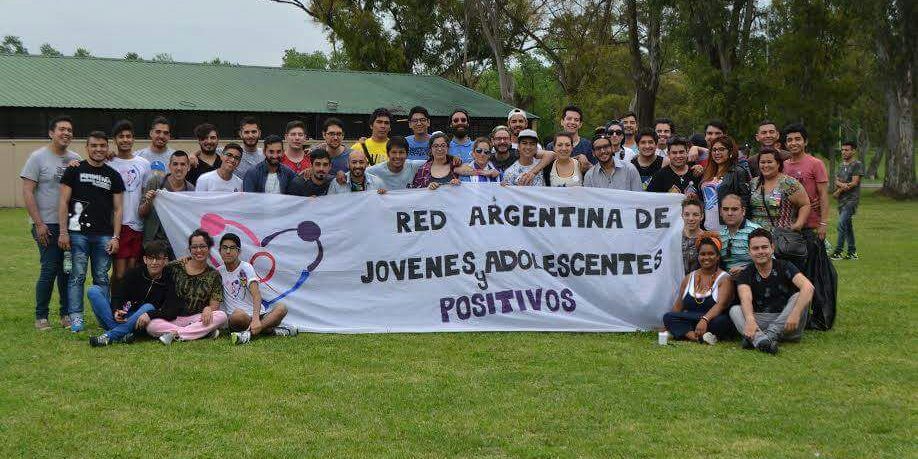
In Argentina, 120,000 people are living with HIV, and 89 out of every 100 teenagers have never been tested. Legislators and organizations are demanding government assistance in the form of medications, reagents, and condoms. The trans and travesti movement denounces that the community is one of the hardest hit by these shortages, exacerbated by a lack of access to healthcare, employment, and education. In recent months, several Argentine provinces (Buenos Aires, Santiago del Estero, Salta, Tucumán, Catamarca, Jujuy, and Santa Fe) have reported a lack of supplies for proper HIV/AIDS prevention and treatment, including reagents, medications, and condoms. According to the latest HIV/AIDS report , there are 120,000 people living with HIV in the country. The average age at diagnosis is 33, and 9 out of 10 people contracted the virus sexually. Eighty-nine out of every 100 teenagers have never been tested. On World AIDS Day, medical professionals and civil society organizations denounced the Argentine government's failure to support people living with HIV. Jorge Barreto, a national deputy for the Front for Victory party and the legislative driving force behind the new HIV/AIDS law, a bill developed in collaboration with 35 civil society organizations and specialists from the Ministry of Health after two years of meetings and debates, made these statements. Barreto says that the reports of shortages in the programs reveal a clear situation: “Until last year, reserve supplies were purchased, and this year they are being used without being replenished. These supplies were already included in the budget. There is under-execution in some cases, and in others, a clear deliberate policy that neglects prevention, whether it's by not purchasing condoms or, even more seriously, by reporting a lack of contraceptive cocktails. We are facing a policy of dismantling resources. What is the response to consuming the reserves? They simply don't respond. They don't even show their faces to offer excuses,” the congressman told Presentes . Among the 35 organizations that participated in drafting the law is the Argentine Network of Positive Youth (Rajap), a group made up of young people between 14 and 30 years old living with HIV/AIDS, with a presence throughout the country. “Since the beginning of the year, based on our territorial development as an organization in the 24 districts, we noticed shortages of various supplies. It started with some brands or types of medication and continued with shortages of CD4 cell count tests, which measure the immune system's defenses. That began to be resolved, but then shortages of condoms and reagents for measuring viral load, which is the amount of virus in a person's blood, began to appear. We've noticed the lack of informational brochures on the subject since 2015,” Matías Muñoz, a member of Rajap, Presentes Photos: Courtesy of Rajap. “Part of our work is to monitor public policies and report any violations of our rights, such as shortages. How do we find out? Our organization is made up of almost a thousand young people from all over the country, which means we are a thousand users of the healthcare system. Through our own efforts, we can analyze and map what is happening. And within our organization, we were able to verify the shortages that first appeared in some provinces and then spread throughout the country. Some provinces were able to purchase their own supplies because they have the budget, but the vast majority had not anticipated these shortages,” said Muñoz. Pedro D'ielsi, the head of Access to Information at the National Ministry of Health, responded to Rajap's request for information on stock levels of reagents, antiretroviral medication, condoms, feminine hygiene gels, and informational brochures. The response, which included a report from the Directorate of AIDS and STIs dated August 26, stated the following regarding viral load reagents: “Currently, laboratories have sufficient stock for processing emergency samples, pregnant women, children, and diagnostic confirmations. Samples for follow-up are not being received.” Referring to CD4 reagents, the report indicated that the stock would last until the end of February of next year. Regarding condoms, the stock was 1,360,800, while planned consumption was 81,999,360 units. That is, 80 million fewer. Similarly, Pedro Cahn, director of the Huésped Foundation, reported a shortage of condoms in the newspaper Página 12. “In March, the then-director of AIDS and STIs, Carlos Falistocco, placed an order to purchase 26 million condoms. But they still haven't arrived, because the purchase order was only signed two weeks ago. It's not clear to me whether this is a problem of management inefficiency or if they are underutilizing the budget,” said the infectious disease specialist. The Ministry of Health is the main distributor of condoms, and as the government fails to provide them, health centers and hospitals in the various provinces begin to experience stock shortages. Falistocco resigned from his position in September, citing personal reasons. “We know that this prominent professional's personal reasons stem from the dismantling of resources and the obstacles he faced in carrying out his work,” Barreto said.
Transvestite trans alert: no viral loads and with medication every 15 days
Florencia Guimaraes García, from the transvestite and transsexual movement Furia Trava, told Present The situation in the province of Buenos Aires is an emergency: “We want to make visible and denounce the fact that it will be ten months since there have been reagents for viral load tests at the San Justo Polyclinic, and that medication is being rationed: before, trans and travesti women could pick it up once a month, and now they are given enough for 15 days. There are no reagents for viral load tests, and the uncertainty of not knowing how their bodies are doing is completely detrimental to their mental health. We know that this is an illness that is fundamentally psychological.” The activist says that the situation of trans and gender-diverse people has its own particularities, as they experience structural exclusion from accessing basic rights such as education, work, and health: “We have to understand how difficult it is for trans people to get to a hospital; we don't have access to healthcare for many reasons. Taking that step of going there, getting tested, and deciding to start treatment is already very difficult. If, on top of that, they start with all these cuts, we have to understand that it affects the mental and physical well-being of our sisters. We are aware that the same situation of cuts is being reported in every province. This is something that started with the new government; there are shortages in the free distribution of condoms, and we perceive a different narrative: they say that if the viral load is negative (that is, when the amount of virus in the blood reaches undetectable levels due to the medication), it's not necessary to get tested every four months, that once a year is fine.”The demand for a new national HIV/AIDS law
The new bill, which was scheduled to be debated two weeks ago in the Health Committee of the Chamber of Deputies, has been suspended until next year due to a lack of quorum at the session that could have provided the necessary signatures to proceed. “The Cambiemos Alliance and the Socialist Party, led by Hermes Binner, refused to issue a ruling. The attitude of some deputies is regrettable; they even asked for more time to continue debating, despite UNAIDS highlighting the work behind this project. It's clear they don't want to address it,” said Barreto. The bill would replace the current law, which dates back to 1990, and its key features include the inclusion of sexually transmitted infections (STIs), a human rights perspective, and the creation of monitoring groups to ensure its effective implementation and improvement. “The goals set by the WHO and UNAIDS aim to achieve, by 2020, that 90 percent of people living with HIV are diagnosed, 90 percent of those diagnosed are on treatment, and that 90 percent of those on treatment have undetectable viral loads. We believe that the current medical response focuses on the first two 90s: testing and treatment. While this is effective and can be a viable course of action, it must be accompanied by social policies to ensure that people do not abandon treatment. Above all, we must also address preventive policies and the use of condoms, which we know is the most effective method for preventing HIV and STIs,” said Muñoz. He called for the new bill to be addressed beyond political considerations, since the current legislation does not include, for example, "people who were born with the virus and grew beyond the discouraging prognoses for them until just a few years ago, when it was thought that they would not reach adulthood."For inquiries, questions and information:
Ministry of Health toll-free hotline “0800 ask AIDS”: 0800-333-3444. You can also visit the website http://www.msal.gob.ar/sida/ To report shortages either discrimination Regarding social welfare organizations, the Superintendency of Health Services is recommended. http://www.sssalud.gov.ar/, which has a Virtual Care Center and a toll-free line: 0800-222-72583. In the face of any discriminationThe state agency INADI receives inquiries via the web http://www.inadi.gob.ar/asistencia/asistencia-por-discriminacion/ or by phone 24 hours a day at 0800-999-2345.]]>We are present
We are committed to journalism that delves into the territories and conducts thorough investigations, combined with new technologies and narrative formats. We want the protagonists, their stories, and their struggles to be present.
SUPPORT US

FOLLOW US
Related notes



We are present
This and other stories are not usually on the media agenda. Together we can bring them to light.