

The dissident column of the #PrideMarch2016
“Pride in Struggle” was formed out of discontent among a group of activists who do not feel represented by the slogans of the official march. They denounce that the national government’s policies of hunger, austerity, and repression primarily affect the trans and travesti community, due to their lack of access to employment, healthcare, and education. “Loss of…”

Share

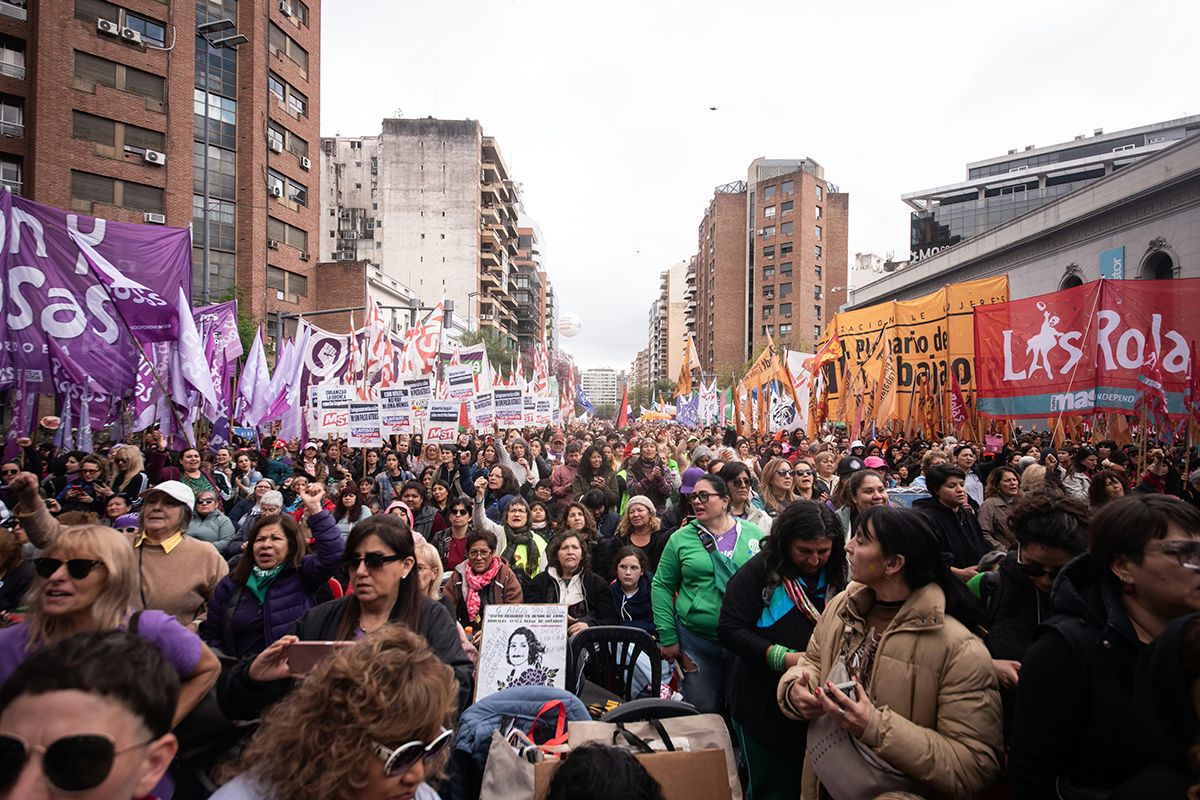
“Pride in Struggle” was formed out of discontent among a group of activists who felt unrepresented by the slogans of the official march. They denounce the national government's policies of hunger, austerity, and repression, which disproportionately affect the trans community due to their lack of access to employment, healthcare, and education. “Loss of rights, lack of access to healthcare, increased violence against the trans community, layoffs”: these are some of the issues raised by the “Pride in Struggle” contingent during the 25th Buenos Aires LGBTIQ Pride March , which proceeded this afternoon in the rain from Plaza de Mayo to Plaza de los dos Congresos. “Pride in Struggle” emerged from the dissatisfaction of a group of activists who, feeling unrepresented by the slogans of the official march, decided to create their own. Why bring alternative demands to the march? To understand the reasons, one must consider the political context of Argentina after President Mauricio Macri's victory with 51.5 percent of the vote, a triumph that exacerbated the division of opinions regarding this new political landscape. “The Pride march is a powerful demonstration of political strength by our community. It is diverse in its ideological and social composition, but at the same time, it is persistently used as political support by organizations that claim to represent it entirely. Today, some of these organizations maintain alliances with the current Macri administration and some of its political officials. This is why we say no. Not in our name,” states the document distributed by Pride in Struggle. In the 1970s, the Homosexual Liberation Front, one of the pioneering activist organizations in Argentina, carried out its interventions by distributing and throwing leaflets shaped like different fruits, on which various slogans about rights and sexuality could be read. “My favorite was always the same: Let go! A slogan that condensed in a very simple image the depth of the bonds of a repressive context and a concrete sex-political program: to let go, to free the body, to open it to the twisted experience of those contained untamed desires, to disobey the call to silence of repressive normality, to break with the muteness towards the fantasies of new body worlds, to loosen the flesh of what should be, to reclaim the pleasure of politics, and politics in pleasure to also build a community, a liberated people who from desire imagined transforming everything, breaking all the chains,” Nicolás Cuello, part of the organizing committee of the column, told Presentes 
With eyes fixed on the street
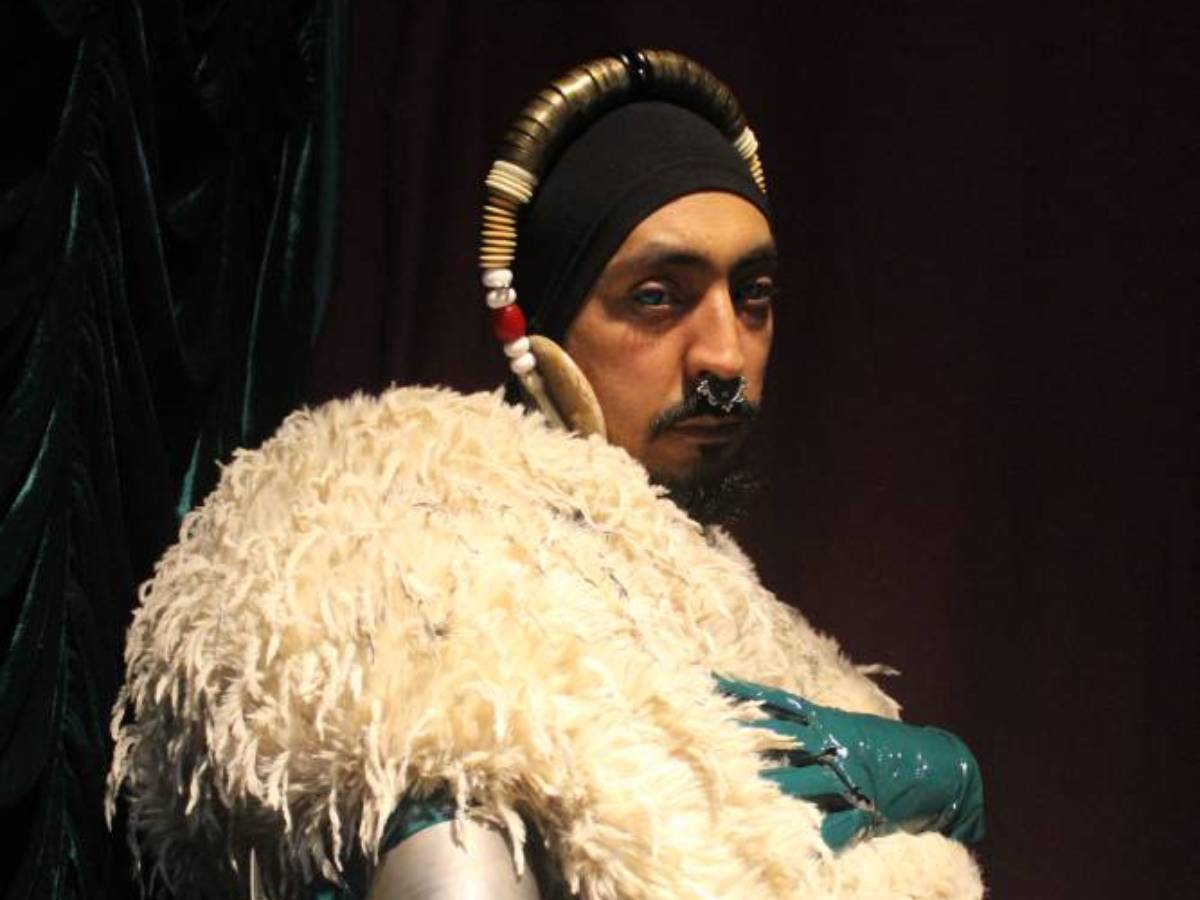
Pride in Struggle rises “as a collective commitment to reactivate the uncomfortable power of our pleasures, to break free from repression, to unravel the comfort of normality, to disentangle ourselves from the state's imagination, to finally, that: to let go and be free,” said Cuello. Within the dissident column marched “Hiedrah Dance Club,” a platform that showcases the rhythms of cultural minorities and operates through self-management, proposing that dance is a transformative ritual. “Each of us marching in Pride in Struggle, from our own space, with our own flag, believes there is a collective construction opposed to the official formulation of the march. We think it's a good time to build affinities together to empower ourselves and work more in relation to what's happening in the streets,” explained Nahuel and Ybán, members of Hiedrah. As the downpour continued and the march progressed, Present She continued, asking: Why Pride in Struggle? “Because we don't compromise with this government, because we're not interested in being part of it. Today, the leadership of the LGBT movement is working within public secretariats, and we're not interested in organizing in that way. On the contrary, we want to denounce the policies of hunger, austerity, and repression that are impacting Argentine society in general, and from there, consider the specific nature of these policies that generate defunding and outsourcing through NGOs, which affects our existence, making us even more vulnerable. And at this point, I'm referring to the trans community, which is the most vulnerable within our movement in terms of access to employment, and that's why we're demanding a trans employment quota law, as well as access to healthcare and education,” said Sandra Aguilar, a member of the Pride in Struggle committee. “Sir, Madam, don’t be indifferent, trans women are being killed right in front of everyone,” “Macri isn’t gay, he’s a liberal, take responsibility, he’s heterosexual,” chanted the Pride in Struggle movement as they marched to Plaza de los dos Congresos, where a ritual dance took place. “Getting married and having the self-identification document removed for trans and gender-diverse people are hard-won rights under the rule of law, but we have to fight for them, we want more, we are proud but we are fighting,” they said. the “trans South American” activist Susy Shock.
*The organizing committee for Pride in Struggle was made up of Colectiva Lohana Berkins/ Socialist Democracy/ From Fire CABA/ Trava Fury/ Hiedrah Dance Club / Independents / Communist Party / Neighborhood Cakes – FOL in La Brecha
As the downpour continued and the march progressed, Present She continued, asking: Why Pride in Struggle? “Because we don't compromise with this government, because we're not interested in being part of it. Today, the leadership of the LGBT movement is working within public secretariats, and we're not interested in organizing in that way. On the contrary, we want to denounce the policies of hunger, austerity, and repression that are impacting Argentine society in general, and from there, consider the specific nature of these policies that generate defunding and outsourcing through NGOs, which affects our existence, making us even more vulnerable. And at this point, I'm referring to the trans community, which is the most vulnerable within our movement in terms of access to employment, and that's why we're demanding a trans employment quota law, as well as access to healthcare and education,” said Sandra Aguilar, a member of the Pride in Struggle committee. “Sir, Madam, don’t be indifferent, trans women are being killed right in front of everyone,” “Macri isn’t gay, he’s a liberal, take responsibility, he’s heterosexual,” chanted the Pride in Struggle movement as they marched to Plaza de los dos Congresos, where a ritual dance took place. “Getting married and having the self-identification document removed for trans and gender-diverse people are hard-won rights under the rule of law, but we have to fight for them, we want more, we are proud but we are fighting,” they said. the “trans South American” activist Susy Shock.
*The organizing committee for Pride in Struggle was made up of Colectiva Lohana Berkins/ Socialist Democracy/ From Fire CABA/ Trava Fury/ Hiedrah Dance Club / Independents / Communist Party / Neighborhood Cakes – FOL in La Brecha
Follow us
Twitter: @PresentesTLGBI Facebook: PresentsTLGBI Instagram: PresentsTLGBI]]>Share
We are present
We are committed to journalism that delves into the territories and conducts thorough investigations, combined with new technologies and narrative formats. We want the protagonists, their stories, and their struggles to be present.
SUPPORT US

FOLLOW US
Related notes
We are present
This and other stories are not usually on the media agenda. Together we can bring them to light.