

Why is there a counter-march to LGBT Pride?
"There is no Pride with genocide" is the slogan for this new counter-protest taking place in Mexico City. Similar actions are also occurring in other Latin American countries.


Share

MEXICO CITY, Mexico. Activists and LGBTQ+ collectives will converge for a new LGBT Counter-March on Saturday the 27th. Counter-marches are emerging as spaces of resistance, remembrance, and political demands. This protest model seeks to reclaim the original meaning of the Stonewall uprising, challenging the co-optation of LGBTQ+ identities by states and brands.
Throughout June, counter-protests are taking place in Mexico City and other states, each with its own specific demands shaped by its context. In early June, protests were held in Guadalajara, Mérida, and Oaxaca. The next ones will be on June 28th in Monterrey, and also in Costa Rica, Chile, and Bogotá.
Unlike the committees that organize Pride marches with the support of the State, which are frequently criticized for their lack of transparency and for selling spaces for parade floats, the counter-marches are based on horizontal organization and the autonomy of independent groups and activists.
What is a countermarch?
The counter-march is a commitment to politicizing sexualities and affections. In Mexico City, its origins lie in the Pink Bloc, a group of dissidents organized since 2013. Even then, they sought to incorporate the needs of sexual diversity into discussions of other social struggles, such as the human rights crisis caused by militarization, and the labor and education reforms of that year.
Emmal Brunel is an activist and has participated in these processes since their inception. He explains that in 2014, in response to the creation of the Family Commission in the Senate, driven primarily by the National Action Party (PAN), which sought to promote the traditional concept of family and act as a counterweight to initiatives to legalize abortion, this collective response arose: to organize and stand against legislative decisions that threatened to jeopardize the advancement of human rights for women and LGBT+ people.
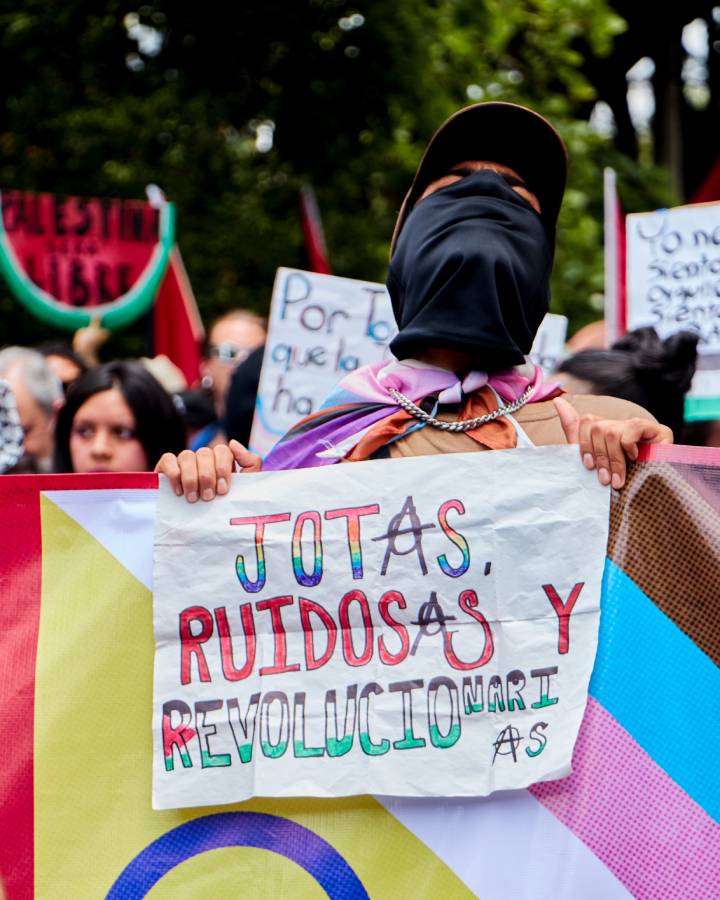
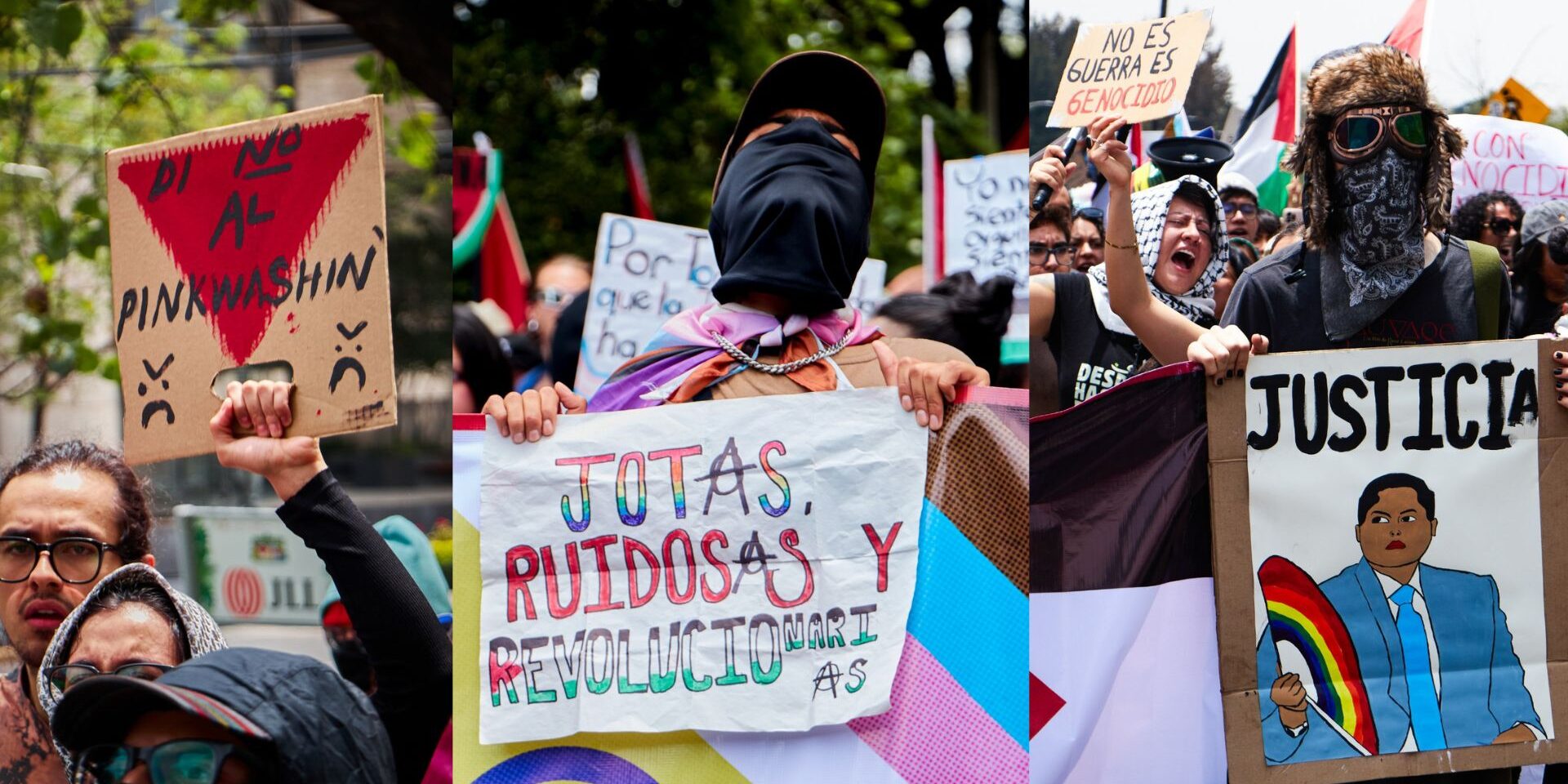
“Pride, in its beginnings, was dissident, but little by little it was also co-opted,” Emmal points out. She refers to how pinkwashing processes increased in Pride marches , thus shifting the meaning of the protest.
The turning point occurred in 2016, when more than thirteen groups stopped the Pride march to protest against the participation of embassies and transnational companies.
“That year, the embassies of the United States, Israel, Denmark, the United Kingdom, France, and Norway marched for the first time, along with many transnational corporations. Stopping the Pride march for a few minutes was quite a challenge because we know that thousands and thousands of people participate. I think that marked a turning point in what Pride means, because it was also a message to Western and colonial countries that present this face as LGBT-friendly…But it’s simply a mask for capitalism and imperialism,” Emmal explains.
For dissident groups, the presence of countries like the United States or Israel at Pride is a pinkwashing strategy . That is, the use of sexual diversity to whitewash the image of governments with imperialist and anti-rights policies.
The response to assimilation: the case in Monterrey
Outside the capital, the countermarch takes on different nuances. In Monterrey, the dissident organization faces not only the market and the idea of progress that is more entrenched in this border state, but also a conservative political culture that replicates the political ideas of the far-right government in the United States.
A member of the Monterrey Kuir Frontexplained in an interview that “the counter-protest stems from the anger at not being used by political parties and corporations. Here, we've begun to question why the community celebrates milestones that don't transform the reality for the most vulnerable people. Why should we be proud that a public official is gay? Why should that matter to me if this official then goes and denies that there's a crisis of disappearances in my country?”
For LGBTQ+ collectives in Nuevo León, organized pride, hand in hand with the government, “has become an ally of the ‘order and progress’ discourse” that has historically been used by the state's governments, ignoring structural problems such as the water crisis and the militarization of the state police. And recently, there's the debate in Congress about the legal classification of trans femicides, which some legislators are trying to reject.
How are they organized?
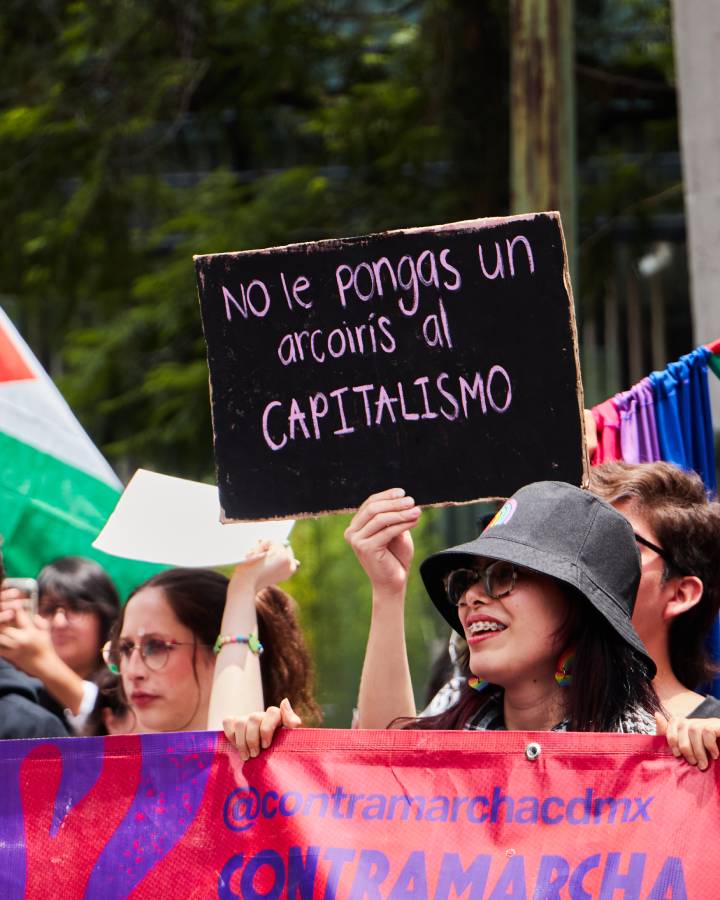
In Monterrey, the process begins months in advance through a committee that includes LGBT+ collectives, as well as student activists, grassroots movements, and anarchist or communist groups. Routes, schedules, activities, and strategic roles, such as security, are defined horizontally.
In Mexico City, since 2024 a coalition of diverse collectives and independent activists has been consolidated under specific slogans that link current demands at the local level and international solidarity, such as taking a stand against genocides in the world.
What is the purpose of a countermarch?
In recent years, the counter-march has served to break the bubble of sexual diversity and connect it with other social struggles. The slogan "there is no pride in genocide" has become central, especially in solidarity with Palestine. Emmal emphasizes that this narrative exposes states that use LGBT+ issues to justify serious human rights violations.
At the national level, the counter-march embraces demands that the state-organized Pride march, with corporate participation, ignores:
Forced disappearances: Family members of victims are integrated, remembering that state violence and organized crime affect all bodies.
Labor rights: The demand for reform to a 40-hour work week and better working conditions is a key issue.
Gentrification, dispossession, social cleansing and megaprojects: In Monterrey, Guadalajara and Mexico City, the impact of the FIFA World Cup is denounced and how city projects increase the cost of living for residents.
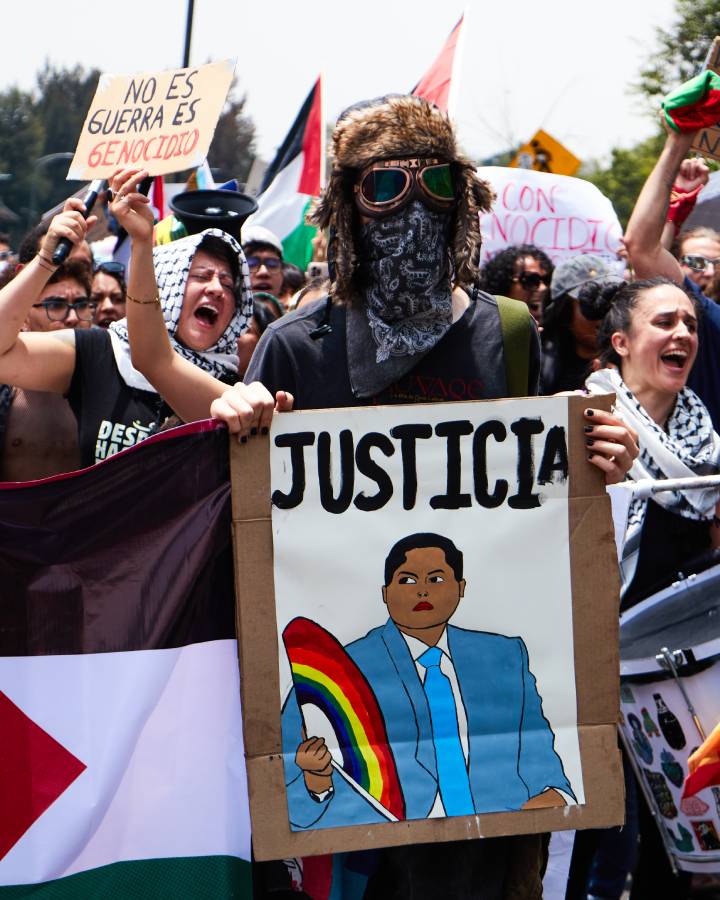
Among other things, they also march against hate crimes, trans femicides and feminicides, colonialism, Zionism, racism and militarization.
“A counter-protest reminds us that LGBTQ+ people are not in a bubble. We are also affected by labor exploitation, forced disappearances, the war on drugs, and militarization,” Emmal adds.
An alternative to the advance of fascism
In a global context of the rise of the far right, with figures like Donald Trump, Javier Milei or Nayib Bukele, counter-marches are positioned as a necessary option against hate speech, transphobic policies and the rollback of rights.
“There is definitely a real advance of the extreme right, with very explicit policies and a very strong audacity in all this violence. And in Mexico, perhaps it's not so visible because of this supposedly left-wing government, but there are groups vying for power that could grow in the future,” Emmal warns.
Drawing on his experience in the north of the country, the member of Frente Kuir adds that “we cannot rely on institutions or political leaders as the ultimate shield. Faced with the rise of fascism, we must organize… the counter-march is not just a different kind of march, it is a reminder that pride will be political or it will not be at all, and that freedom is only built from the ground up, collectively and horizontally, from the bottom up.”
We are present
We are committed to journalism that delves into the territories and conducts thorough investigations, combined with new technologies and narrative formats. We want the protagonists, their stories, and their struggles to be present.
SUPPORT US

FOLLOW US
Related notes

Cannon fodder: the book that recovers silenced stories of transvestites and trans people during the civic-military dictatorship
Lechedevirgen: “Undoing art means restoring its ritual and collective dimension”
Why the trial for the murder of Eldin and Milton could be historic for Guatemala's LGBT community
We are present
This and other stories are not usually on the media agenda. Together we can bring them to light.