

Heated Rivalry: the LGBT series we can't put down
Why did Heated Rivalry become one of the hottest series right now? What's behind a queer love story that challenges discrimination in sports and draws fans who gather in bars to watch it? Three fans analyze the driving forces behind this low-budget, high-impact production.

Share

By Emiliya Antonyuk, Laila Massaldi and Agustina Ramos
(Warning: This article contains spoilers)
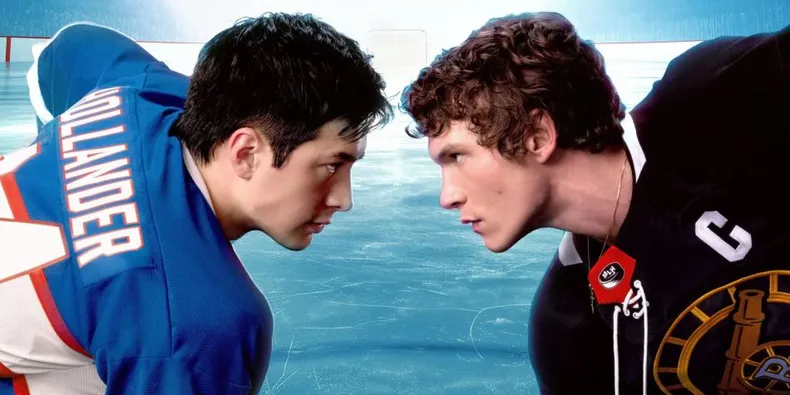
“What do we do now with all this that’s happening to us?” Ismael asks, addressing forty people gathered on a Sunday night on the second floor of a bar in the Palermo neighborhood of Buenos Aires, Argentina. They’ve just finished watching the fifth episode of the series Heated Rivalry and are clamoring for the sixth. On the brick walls, illuminated by a low, warm light, the Montreal Metros face off against the Boston Raiders, the ice hockey teams of the protagonists, Shane Hollander and Ilya Rozanov. A few moments ago, the audience—all women and LGBTQ+ individuals—repeated in unison one of the characters’ iconic conversations. They’re in a hospital room, and what he says puts a stamp on their relationship: “I was gonna ask you… ”
the scene of fans screaming at the screen in hundreds of reels , and now, finally, we belong to it. Watching the entire series once, twice, four times wasn't enough. We needed to connect with others to keep the feelings it evoked alive. And at a time when there's little news that truly captivates us.
When Emiliya assured us she had the perfect series for us to watch and discuss, we weren't entirely convinced. "Another plotless porn series with conventionally attractive bodies," was the thought that crossed our minds. It took us a few weeks to process it, and we approached the ritual with a bag of prejudices. But Heated Rivalry ( HR ) surprised us. Indeed, its protagonists are very handsome, muscular, sexy, and wealthy, and there is explicit sex. But what keeps us hooked on this love story is something else entirely. The tenderness in the small and large gestures, the ongoing challenges faced by LGBT+ athletes, and the role of women are some of the factors that make it a unique product in today's audiovisual landscape, and what we want to discuss in this article.
The hottest series right now is LGBT+
Heated Rivalry ( also known as More Than Rivals or Heated Rivalry, depending on the adaptation) tells the story of a secret love affair between two star ice hockey players who are also rivals, told in six episodes. It is based on the first two books of the Game Changers —a bestseller—by Canadian author Rachel Reid.
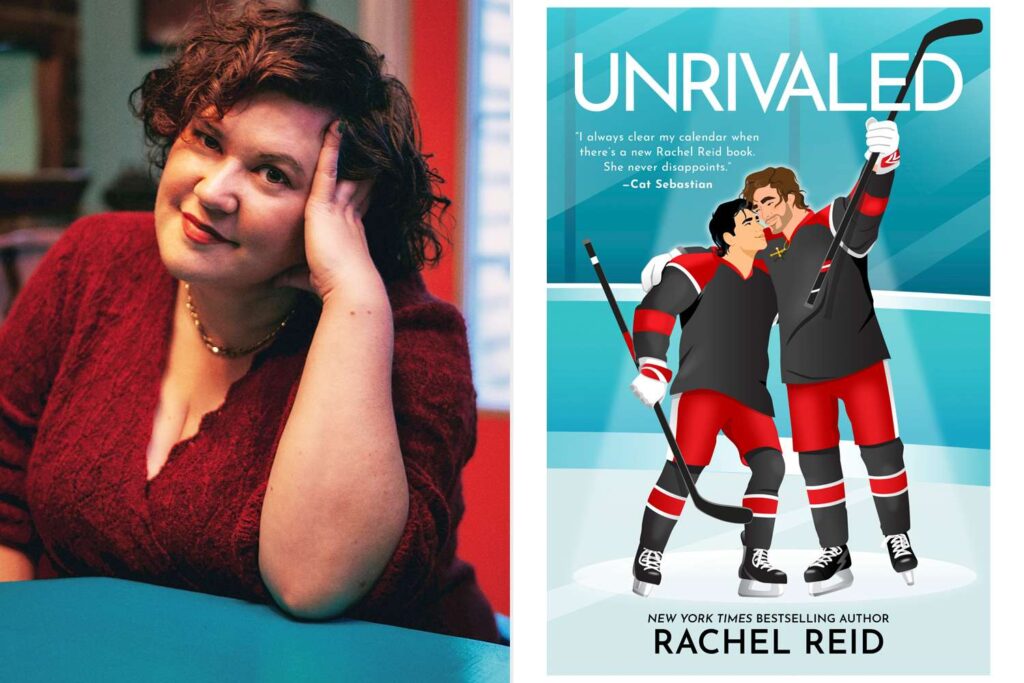
Created, written, and directed by Jacob Tierney, the series premiered in November 2025 on the Canadian platform Crave . It received government support through tax credits and a $3.1 million grant from the Canadian Media Fund. This was significant in a context where the United States government cut funding, impacting, among others, LGBT+ rights organizations around the world.
The series had a tight budget, unknown actors, and was filmed for only a month. Even so, it managed to break viewership records. Episode five achieved a perfect 10/10 rating on IMDb, matching the "Ozymandias" episode of Breaking Bad . This success led its stars, actors Hudson Williams and Connor Storrie—unknown until the series' release—to carry the Olympic torch at the Milan Winter Games, among other recent high-profile appearances.
streaming productions focus on securing large budgets and top Hollywood actors, the HR gives the roles to the two actors they believe best embody their characters. “We don’t care how many Instagram followers someone has, or if they can make a TikTok here in Canada,” Kay, the series’ co-casting director, told the BBC , hoping to set a precedent in the industry.
How to break down prejudices in sports
“ Game Changers came out of my anger with hockey culture and how blatantly homophobic it was and is,” confessed Reid, the author of the series. And indeed, despite record-breaking presence of at least 50 openly LGBTQ+ athletes at the last Winter Olympics in Milan-Cortina, the reality for queer athletes remains difficult . So much so that the International Olympic Committee has identified LGBTQ+ athletes as the group most at risk of harassment and abuse in sporting contexts.
According to the results of two international investigations on homophobia and transphobia in sport – Out on the Fields (2015) and OutSport (2019) – almost 90% of those interviewed considered that homophobia and transphobia continue to be barriers in sport.
Although it has been accused of being “another coming-out series,” it is an act of courage considering that 54% of male athletes admit to using homophobic slurs in the last two weeks. In this context, one of the week's biggest news stories in Argentina is that Nacho Lago, a 23-year-old player for Colón de Santa Fe, became the first professional first-division soccer player in Argentina to publicly come out as gay . The very first.
For example, the National Hockey League (NHL), a private professional ice hockey league in Canada and the United States, banned all LGBTQ+ symbols on uniforms in 2023. After pressure from sponsors, players, and fans, the rule was overturned.
In Russia—the home country of Ilya, one of the series' main characters— the Supreme Court labeled the "international LGBT movement" as "extremist ." Despite lacking official distribution, the series is a hit with Russian viewers, largely due to piracy. It achieved an average rating of 8.5 out of 10 on Kinopoisk—the Russian equivalent of IMDb—while fans are forming groups on social media platforms like VKontakte—the Russian version of Facebook—where they share clips and discuss the series.
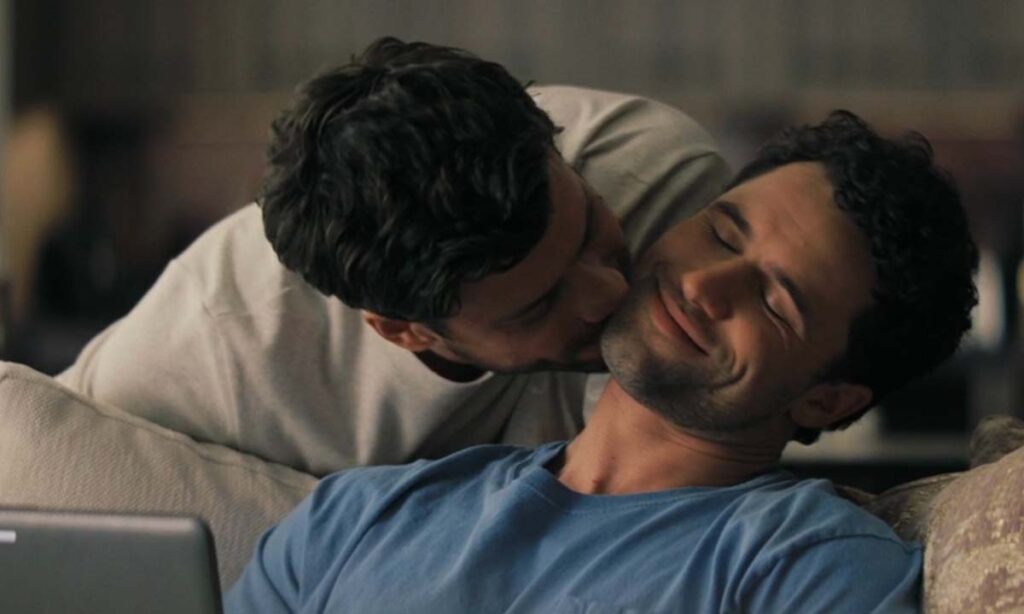
To write those books, Reid spoke with many gay and bisexual men. “In Heated Rivalry , we have an LGBT happy ending, something that doesn't often happen in audiovisual narratives. It's like a band-aid. You wish things could be like that: having a supportive mother, a family that accepts and encourages you,” shared Ismael, a 35-year-old non-binary and bisexual person who watched the entire series six times.
Following the release of HR , Nicolás Keenan, an Argentine hockey player, member of Los Leones (the national team), and partner of Dutch Prime Minister Rob Jetten, spoke about his connection to one of the characters, Scott . “When I met Rob, I felt he was the right person to shout to the world: 'I'm in love with this guy.' He gave me the confidence to come out and say: 'I'm a hockey player, and I'm also in love with this man.'”
Of hegemony and vulnerability
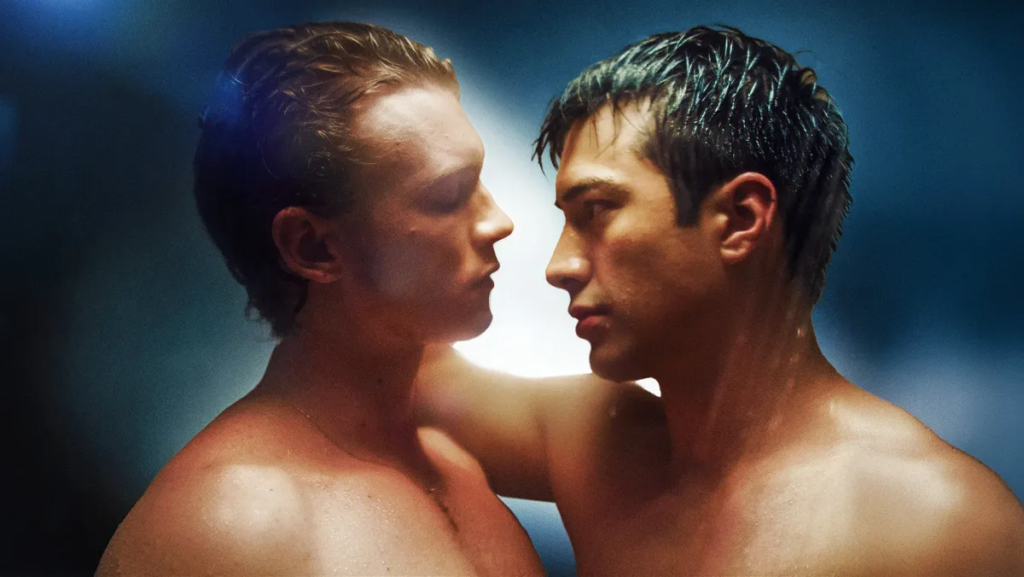
Two breathless, tired bodies, glistening with sweat, sit on the floor of a gym. They gaze into each other's eyes, searching for an excuse to speak; the silence has lasted too long. What they say has nothing to do with what they think. One of them confidently displays his desire through his gaze. The other, however, needs to look away from him for moments so his thoughts don't scream so loudly. They share a water bottle and use the exchange to intentionally brush their fingers together. That minimal physical contact is all they need to make their desires clear.
Much has been said about the captivating chemistry and allure between the series' protagonists. However, among the factors that make it so enthralling, the meticulous character development that underpins all six episodes deserves special mention. The protagonists are young, talented, influential, and wealthy, yet their vulnerabilities are magnetically exposed. And this vulnerability isn't solely related to their belonging to the LGBTQ+ community. On the contrary, it allows the audience to identify with almost universal feelings and experiences: the game of seduction, the confusion surrounding relationships, self-discovery, the sensations of success and failure, the fear of being our true selves, and the courage required to acknowledge and follow our own desires.
The characters' conflict is primarily internal and about communication, and as Caroline Siede states in Paste Magazine , it's much closer to the problems people face in real life than the contrived plot devices that so often keep couples apart in typical romantic comedies. Their bond combines eroticism, tenderness, humor, and sadness in a balanced and dynamic way, evoking our own experiences with relationships.
Women and gender roles
Although they appear as secondary characters, the women in the series play a fundamental role in the development of the story and defy many gender stereotypes. Far from being fragile, dependent, overly emotional, or a passive object of male desire, they are figures with agency, intelligence, and often more resources than men to understand and act within their environment.
Svetlana, Rose, and Elena are empathetic and perceptive, traits generally associated with femininity, but they employ them with powerful assertiveness to challenge their male friends or partners in different ways. For example, in the scene with Rose and Shane at the restaurant, she gently encourages him to acknowledge that he is gay, without this threatening his ego or his erotic capital. She values Shane to the point of being able to move from romantic desire to a genuine friendship without pain or resentment.
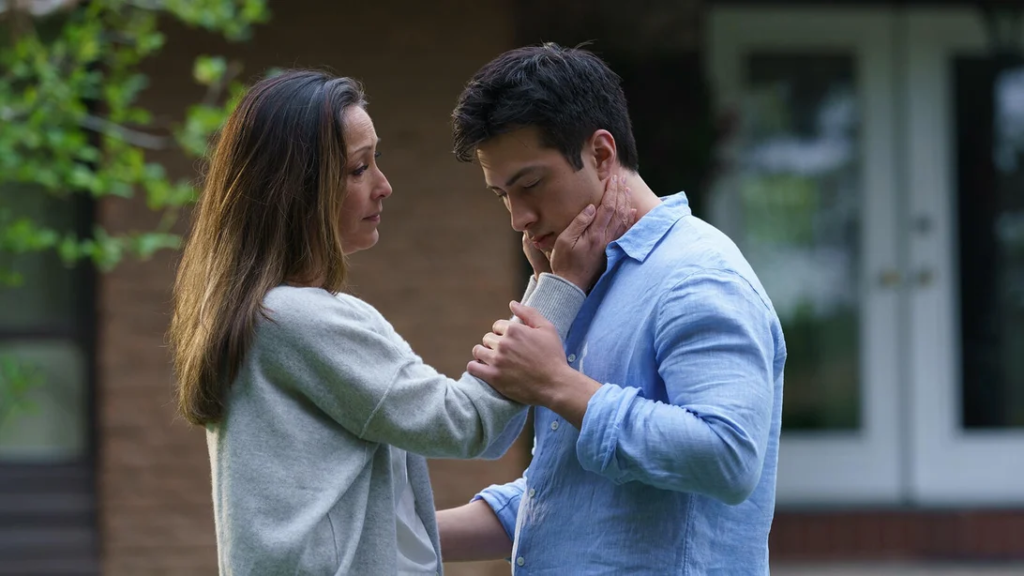
The protagonists' mothers are also important characters whom they respect and identify with, perhaps even more so than their fathers. Shane's mother, Yuna, wonders what she did to make her son distrust her, and instead of getting angry at him for hiding his connection to Ilya, she apologizes. Shane doesn't tell her that apology is unnecessary, but rather something more powerful: he forgives her. Even Ilya's mother, who committed suicide when he was a child, is portrayed with admiration by her son: "I don't want you to think I was weak.".
Best possible future
It is perhaps the realism of the plot that, in turn, allows it to have an almost fantastical ending, typical of a rom-com , without it feeling forced or relying on an excessive number of conveniences. This delicate work in the script, combined with the exceptional performances of the actors in the two couples who star in this season, makes each character's journey leading up to the events of episodes 5 and 6 feel organic and deeply satisfying.
The feeling of a well-deserved happy ending gives us that rush that allows us to return to our daily lives feeling that perhaps not everything is so bad, in a social and political context of increasing precarity where hope is scarce. This series doesn't intend to denounce that context; it offers us images and stories that allow us to imagine a better possible future. And unlike other romantic comedies where the distance from our reality feels abysmal, in Heated Rivalry the clear conclusion is that, both in the series and in life, there is enormous transformative power in people when there are bonds that sustain us and we commit to communication and vulnerability to build what we long for .
We are present
We are committed to journalism that delves into the territories and conducts thorough investigations, combined with new technologies and narrative formats. We want the protagonists, their stories, and their struggles to be present.
SUPPORT US

FOLLOW US
Related notes


We are present
This and other stories are not usually on the media agenda. Together we can bring them to light.