

Glacier Law: Of one hundred thousand registered, only 1% were able to attend the public hearing
More than 100,000 people registered to participate in the public hearings and express their opinion on the government-backed bill to reform Argentina's Glacier Law. However, less than 1 percent were authorized to participate.


Share

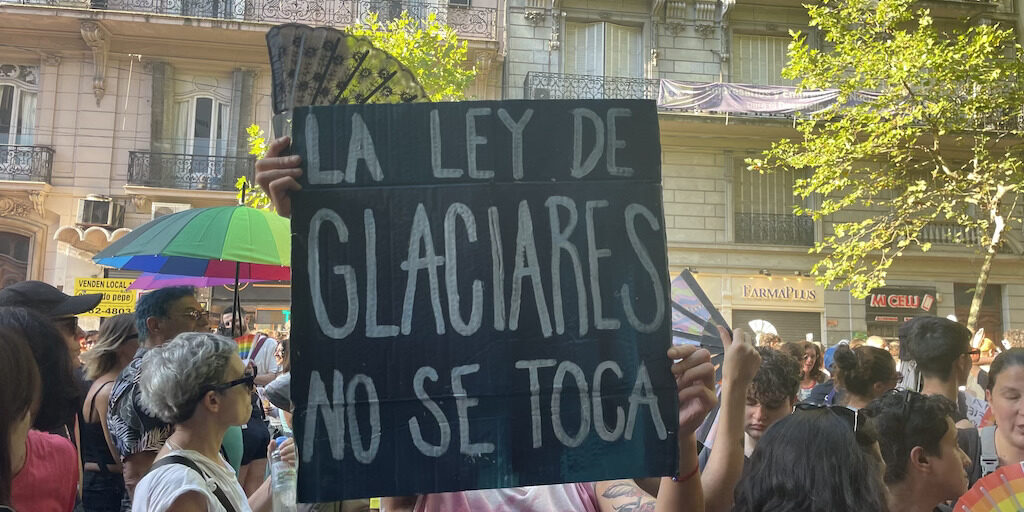
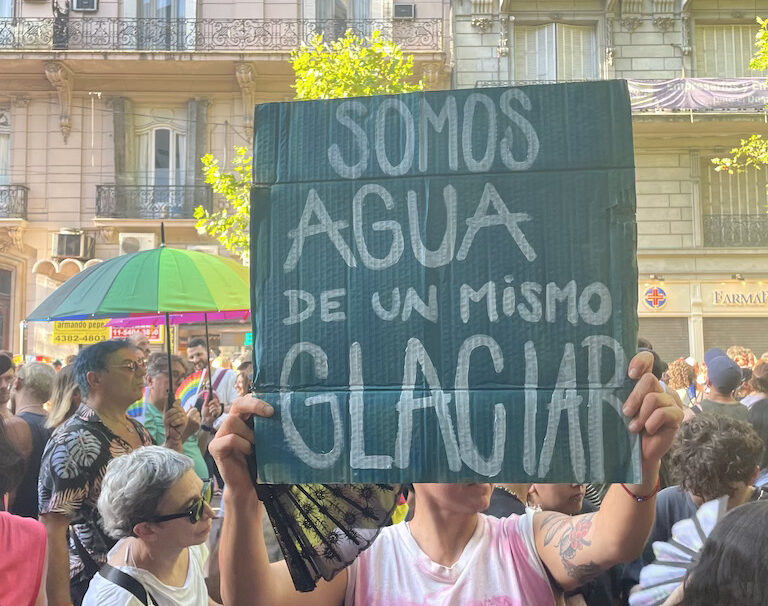
More than 100,000 people registered to participate in the public hearings and express their opinions on the government-backed bill to reform Argentina's Glacier Law. However, less than 1 percent were authorized to participate. In response, open assemblies, rallies, and demonstrations are taking place across the country under the slogans "Water is worth more than anything" and "Hands off the Glacier Law.".
The bill seeking to reform current legislation received preliminary approval in the Senate on February 26. Organizations warn that the reform is unconstitutional from a legal standpoint because it allows—among other changes—each province to decide which glaciers and periglacial zones to protect, and in which areas it will permit, for example, mining projects.
Without the right to participate
The project now depends on the Chamber of Deputies. Environmental groups have requested that the Chamber convene a public hearing to initiate a participatory, open, inclusive, and federal process to discuss the bill. They based their request on the Escazú Agreement —ratified by Argentina through Law 27,566 and with a legal standing superior to national laws. Article 7 of the agreement mandates guaranteeing public participation in decision-making processes , reviews, or updates on environmental matters that could have a significant impact.
The hearings are taking place between Wednesday, March 25, and Thursday, March 26, in the Chamber of Deputies. But activists warn that the process is not being conducted in a participatory manner. Of the more than 100,000 people registered, only 360 were authorized to speak. And all indications are that not even that number will be able to participate.
"Communities are always left out"
The first day saw the participation of 95 of the 196 eligible speakers. After 12 hours of hearings, the authorities decided to conclude them even though some speakers were still scheduled to speak . Among the presenters, 88% (84 people) rejected the reform. Thursday's hearing will be held virtually.
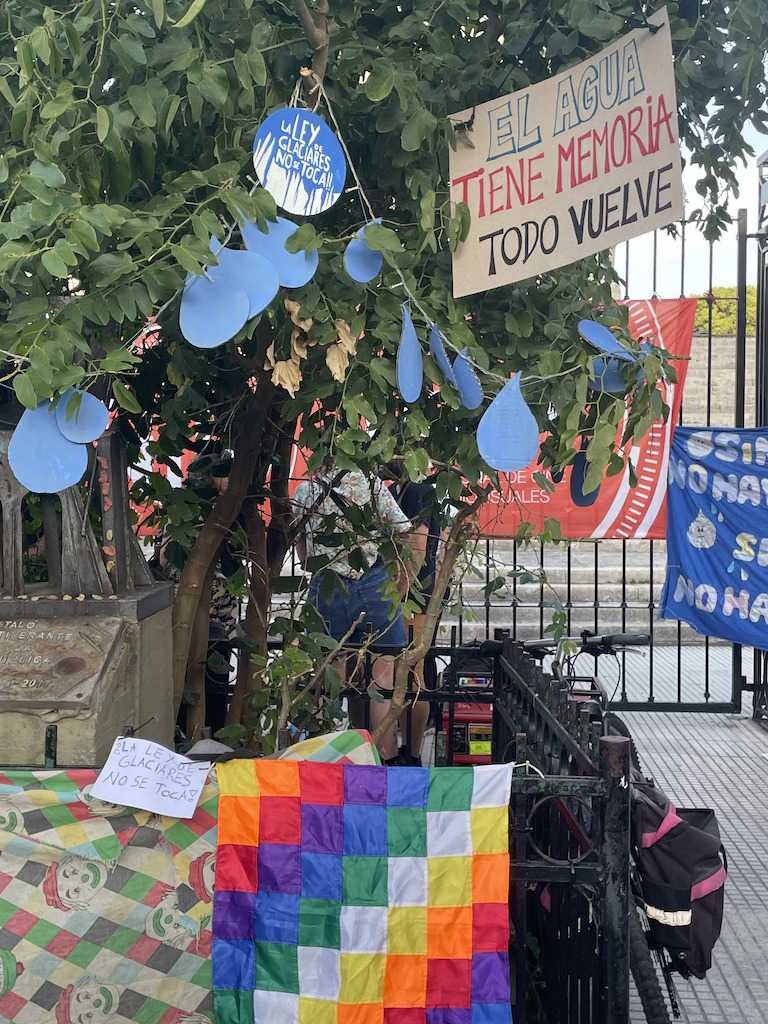
In the vicinity of the National Congress, surrounded by members of the Security Forces and fences, a crowd participated in the self-convened assembly a few meters away, at the corner of Riobamba and Bartolomé Mitre, in the City of Buenos Aires.
“The public hearing is not being conducted properly. We believe it is absolutely essential that all voices be heard. The people are saying no to reforming the Glaciers Law: we want to protect the land and the enormous and beautiful heritage we have, Sol, a self-organized brigade member from the Andean Region shared with Presentes .
Patricia, a retired teacher, arrived from Avellaneda, Buenos Aires province, carrying a sign that read “Democracies don’t censor!” “I’m very moved because I see this government pushing forward, and it hurts me deeply that we’re giving them the green light to keep doing this. I came because I think this is a line we can’t allow to be crossed. Thinking about my son, my future grandson, fills me with tremendous pain and a tremendous responsibility, so I can’t not defend this,” she said in an interview with Presentes .
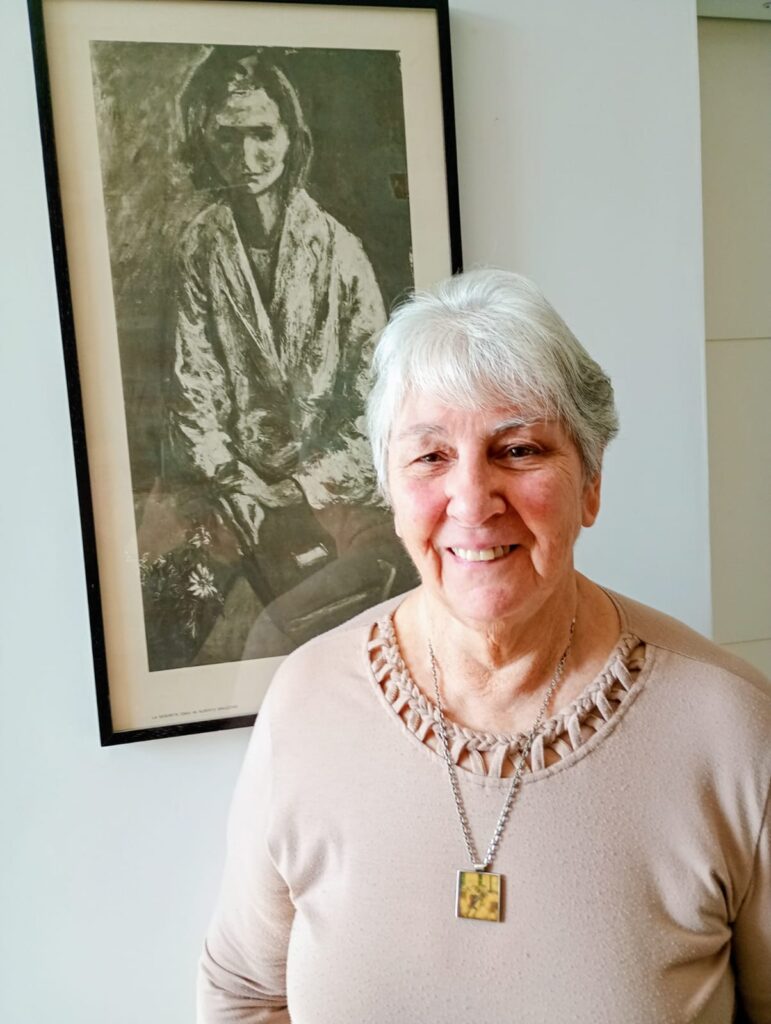
Inside the chamber, Marta Maffei, former legislator and one of the main promoters and drafters, along with a hundred organizations, of the Glaciers Law that Congress seeks to reform, . “We spent a year working on the law, consulting with academics, institutions, specialized bodies, and also with the communities, who are always left out. The assemblies and the indigenous peoples were consulted in drafting the law,” she explained during her presentation.
“I am here today so that our voice is heard,” Rural Workers' Movement (MTE Rural) told this agency . “Water is not to be touched. We condemn their attempt to reform this law. For us, as an Indigenous people, as small-scale livestock farmers, agricultural workers, and producers, water is life.”
Those in favor of the reform emphasized the role of mining. The Minister of Production for the province of San Juan, Gustavo Fernández, stated during the hearing that "geography defines us, and mining is an essential activity for our development." He highlighted "the potential for investment that the mining sector generates in road and energy infrastructure, and in general, for the development of other productive activities."
“We are deeply concerned because they want to abandon the scientific approach and instead focus on the interests of large foreign mining corporations that will come to plunder our common natural resources and take our water, the main resource that exists to produce and live,” Gabriela Estévez, a national deputy for the province of Córdoba (Union for the Homeland), Presentes
A group of legislators yesterday filed a formal challenge against the public hearing, arguing that it does not meet basic requirements for citizen participation . Additionally, legislators from the Union for the Fatherland party introduced a bill to hold a binding referendum so that the entire population of the country can express their opinion on the matter . Meanwhile, the Federal Administrative Court No. 7, presided over by Judge Enrique Lavié Pico, rejected two injunctions filed by environmental organizations seeking to expand public participation to ensure it is representative.
For several weeks now, the "Hands Off the Glaciers Law" campaign has been mobilizing public opinion to condemn the proposed law and calling for various demonstrations. "We defend water and glaciers; more than 7 million people in the country's arid and semi-arid regions depend on them. The senators want to hand over the water to mining companies. Those behind this modification, this reform of the Glaciers Law, are the multinationals. From the territorial assemblies of San Juan, Mendoza, and Catamarca, which are fighting against mega-mining, we say: 'Mining companies out of the country!' Political power is complicit in handing over water and territories," Clarisa Néstor told us from Extinction Rebellion Argentina, at one of the recent demonstrations in front of Congress.
Martin Antelaf, a teacher from Buenos Aires and father of two daughters, joined one of these demonstrations with a sign: "Water for young people, not prisons," referring to the law that lowered the age of criminal responsibility. "These reforms are a blow to this generation and future generations, so that a few can get rich while future generations have to pay for jugs of water," he told us.
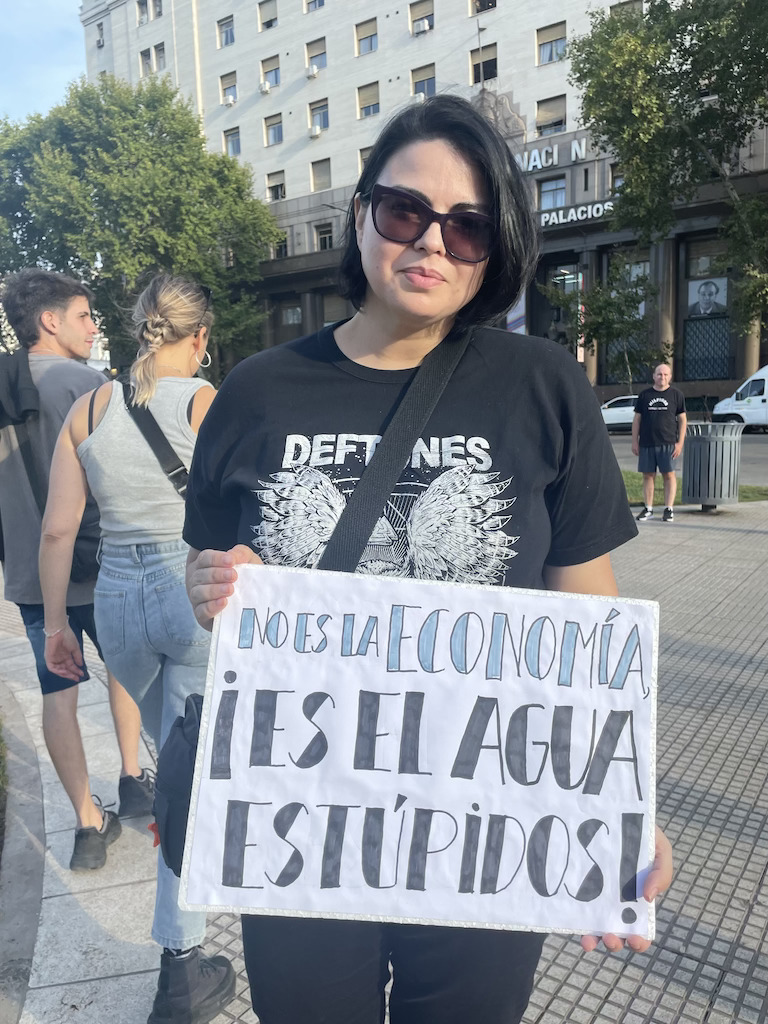
Federico Winokur, also a teacher and organizer of the anti-capitalist encampment, as well as a member of the Left, stated: “The glacier protection law is untouchable. This is a very deceitful government that claims to bring development when it actually brings plunder. They claim the law wasn't being enforced when, in reality, all the areas were designated as non-exploitation zones. And now they want to lead us toward a model of country where US companies take all our resources. We stand with the communities in the Andes Mountains, in Mendoza, and in many other places who are saying that water is worth more than gold because they will be the first to suffer the consequences of the pollution, although eventually we will all suffer.”
We are present
We are committed to journalism that delves into the territories and conducts thorough investigations, combined with new technologies and narrative formats. We want the protagonists, their stories, and their struggles to be present.
SUPPORT US

FOLLOW US
Related notes

We are present
This and other stories are not usually on the media agenda. Together we can bring them to light.