

Natalia Lane and a trial that could change the lives of trans people in Mexico
After four years seeking justice, Natalia is going through the trial for the attempted femicide she suffered. She recounts these years and what she hopes for from this process. A historic moment for justice in Mexico.


Share

MEXICO CITY, Mexico. On January 16, 2022, Natalia Lane, a trans woman, sex worker, journalist, and human rights defender, survived an attempted femicide while working at a hotel in Mexico City. The Mexican state took four years to prosecute her case. Finally, in January 2026, the trial against Alejandro “N” for attempted femicide began.
This is the first time a case of this nature has been brought to court, specifically against a transgender sex worker in Mexico. Natalia has endured a process she describes as an "attrition ," where justice is not a guaranteed right but rather a constant struggle for her as a survivor.
In an interview with Presentes , Natalia Lane breaks down the implications of living within a criminal justice system that revictimizes, the need for a testimonial justice system that breaks with the extraction of stories from trans women and sex workers, the urgency of comprehensive reparations that acknowledge the complex trauma of surviving an attempted femicide, and the recognition of knowing she is not alone.

Four years of omissions in justice and criminalization
For Natalia, access to a trial has not been entirely due to the will of the Mexico City justice system, but rather the result of her persistence and her refusal to allow her case file to be shelved by bureaucracy.
She defines this four-year period as a “chain of omissions in which it seems that survivors, families, and victims have to be constantly vigilant. I think that justice only applies to those who can afford it. And in the case of people who don't have access to these connections—I'm not just thinking about money but also social and political capital—it would seem that justice becomes unsustainable.”
He also noted that the system forces victims to sacrifice their right to rest in order to avoid having their cases closed .
“The respite, the rest, the desire to distance yourself from a criminal process implies abandonment and the forgetting of your case. It translates into concrete legal actions, like almost changing the precautionary measure against my aggressor so he could serve the proceedings under house arrest. These oversights have very different costs for trans women, for sex workers, for impoverished people. The respite means that the system responsible for administering justice abandons us,” she says.
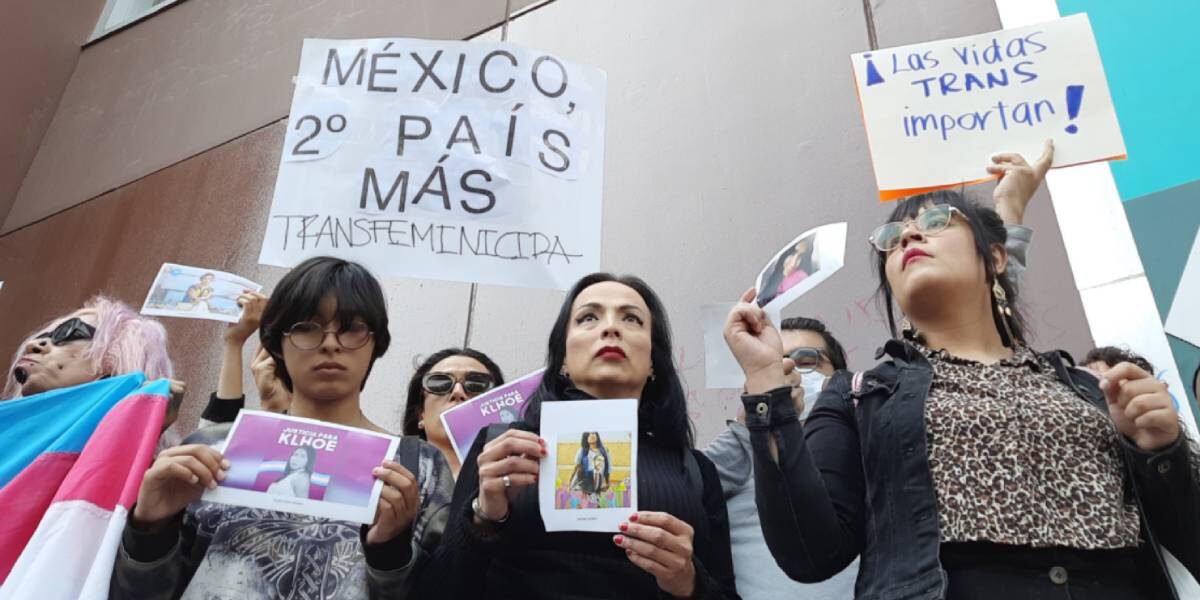
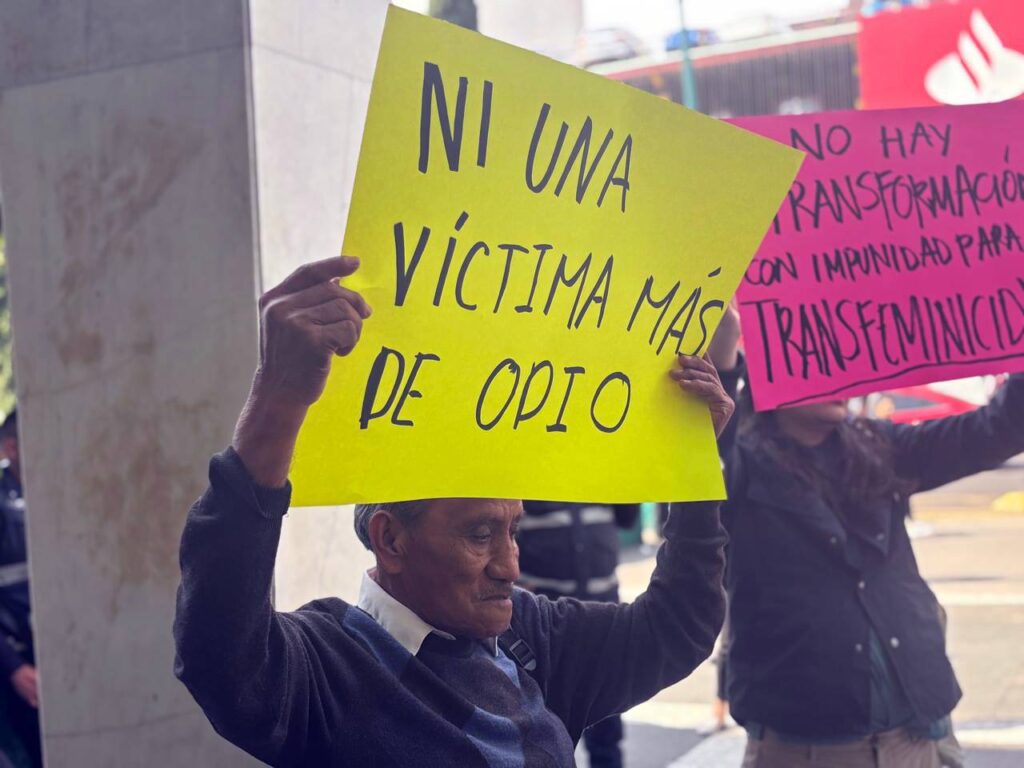
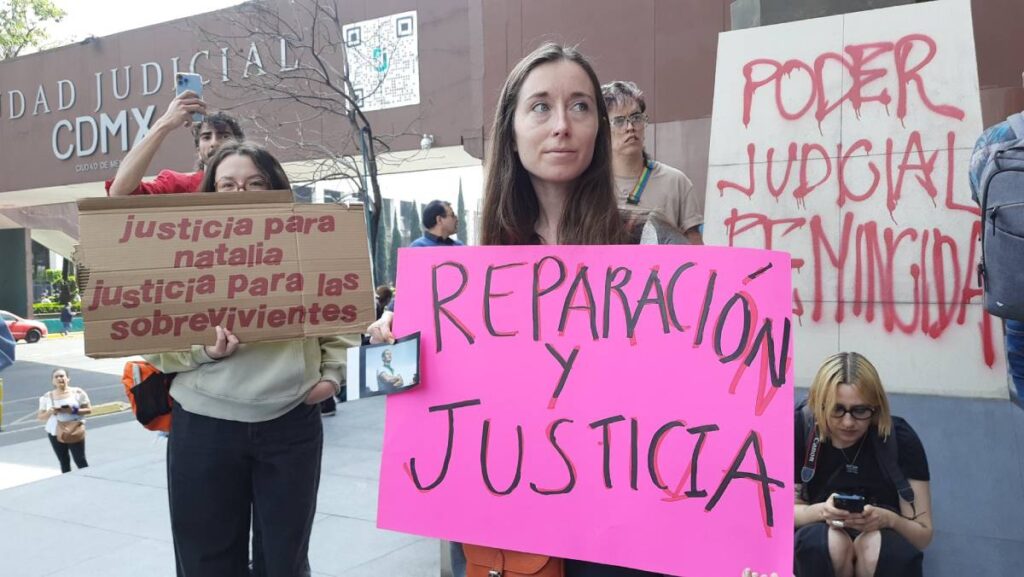
Natalia has gone from survivor to being targeted and criminalized by her attacker's circle. The shock group " No More Innocent Prisoners ," a collective that demands justice for femicide perpetrators and was founded and led by the lawyer of her attacker, Alejandro 'N', filed criminal charges against Natalia. There are two criminal charges: one for threats and another for attempted murder following protests at the Judicial Branch in Mexico City .
🇲🇽🏳️⚧️ The attempted femicide that @natalia_lane is the first case to be prosecuted in Mexico for attempted femicide against a trans woman.
— Presents (@PresentesLatam) January 16, 2025
🧵📷 @MilenaPafundi @ginxglez pic.twitter.com/TB9Nd3og3q
“I went from being a survivor to being accused, for example, of running a trafficking network, of belonging to the criminal group known as 'goteras' (a term ). If things had been done properly within the judicial system and the prosecutor's offices, I wouldn't have two criminal complaints against me today,” she explains.
The opportunity for “testimonial justice”
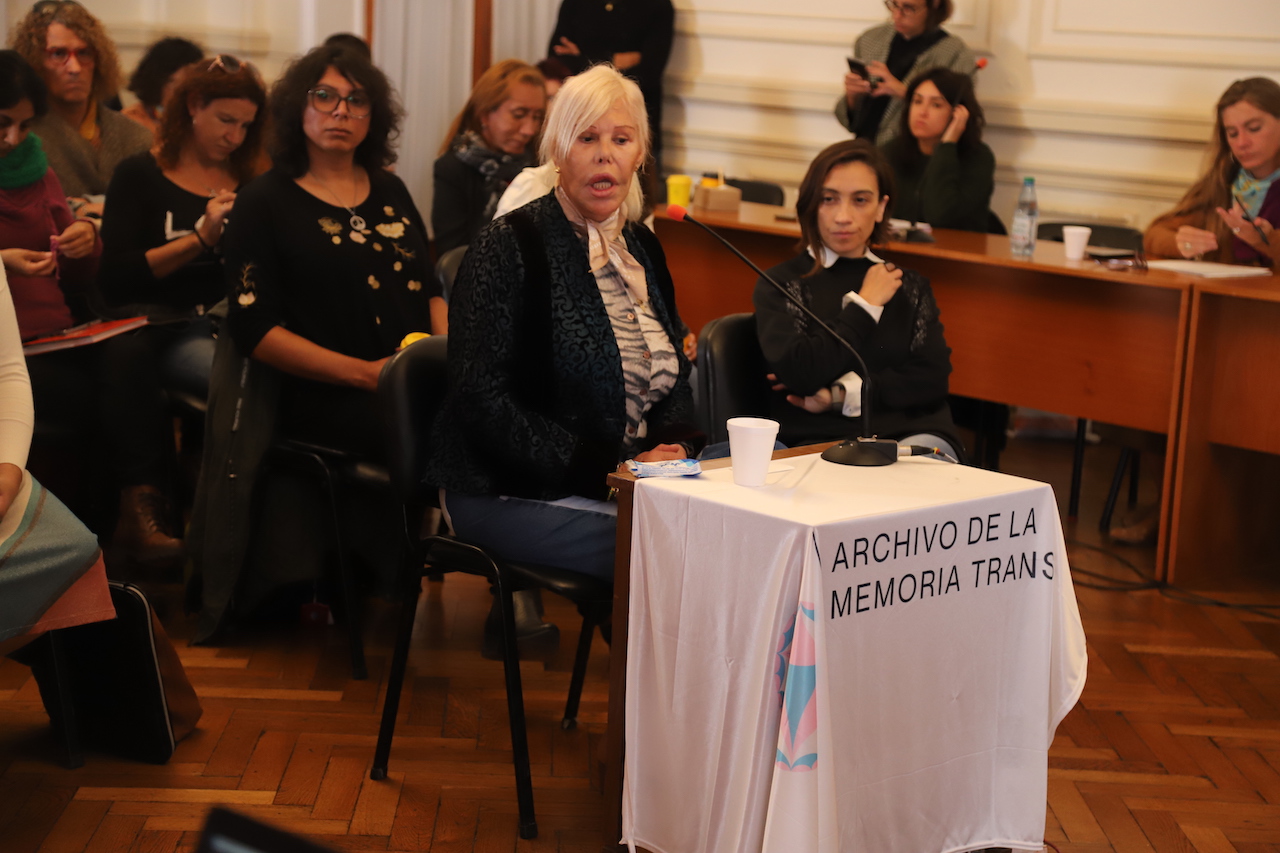
There have been more than ten hearings in the oral trial. Natalia leaves each one emotionally exhausted, but she has one conviction: the recovery of the voice of sex workers and trans women in the face of the historical exploitation of their lives, their memories, and their testimonies.
For her, testimony involves dimensions that go beyond simply testifying before a judge. “Testimony involves pain, wounds, memory, historicity, archives—archivering one’s own memory, one’s own recollections,” she explains.
She adds: “The first questions I asked myself about testimonial justice were based on my own experience: what validity can the words of a prostitute like me, a transsexual, have? Why are prostitutes and transvestites no longer believed? And if they are believed, what kind of transvestites or transsexuals are believed? Because the weight of an academic figure is not the same as the weight of someone in prostitution.”
In the judicial system, this lack of credibility manifests itself in the oral trial as a disproportionate demand for evidence. For Natalia, it is “a performance of revictimization that is legitimized by the State .
“ There is a practice by the State of saying: 'You have to convince me that what happened to you really happened.' And the aggressor has to convince me that it didn't. I feel that it is very linked to what has historically happened to transvestite prostitutes on the street, which is that we have never been believed.”
Therefore, a favorable ruling in his case would have unprecedented symbolic weight in Mexico.
“If Alejandro is sentenced, it will also be a message from the State saying: 'we believe prostitutes, we believe transvestites, transsexuals .' That is very powerful,” says Natalia.
What does comprehensive repair look like for Natalia?
What Natalia is demanding is not limited to a check at the end of the trial. She proposes the concept of “reparation in life ,” which should have begun the very day she survived the attempted femicide.
“Reparation should not be considered a final part of the justice process. It should have been accompanied from the moment they almost took my life, through everything these past four years have entailed.”.
Part of the process over these years has been that Natalia has been provided with mental health support through the Prosecutor's Office. But for her, it has been insufficient. She criticizes the State's inability to provide adequate mental health care for survivors of extreme femicidal violence.
“Our episodes of violence are more associated with what might seem like a soldier in a war losing a limb, or systematic sexual abuse by the armed forces. The level of violence and cruelty is the category that divides the type of support… how do you incorporate that into the psychological support provided by the Prosecutor's Office if they are not specialized or focused on complex trauma?” she comments.
In addition to mental health, reparations must address financial losses. Natalia reports a 90% drop in her income, as threats from the aggressor's family and groups that control the Chabacano area, a sex work hotspot in the city, have prevented her from working safely on the street for the past four years.
For Natalia, reparations also entail a public apology explicitly acknowledging the omissions and delays in the legal process by the Mexico City Judiciary and Prosecutor's Office. They also require preventative policies that include actions related to social security, housing, and labor rights for sex workers , and measures to curb femicidal violence against trans women who engage in this work.
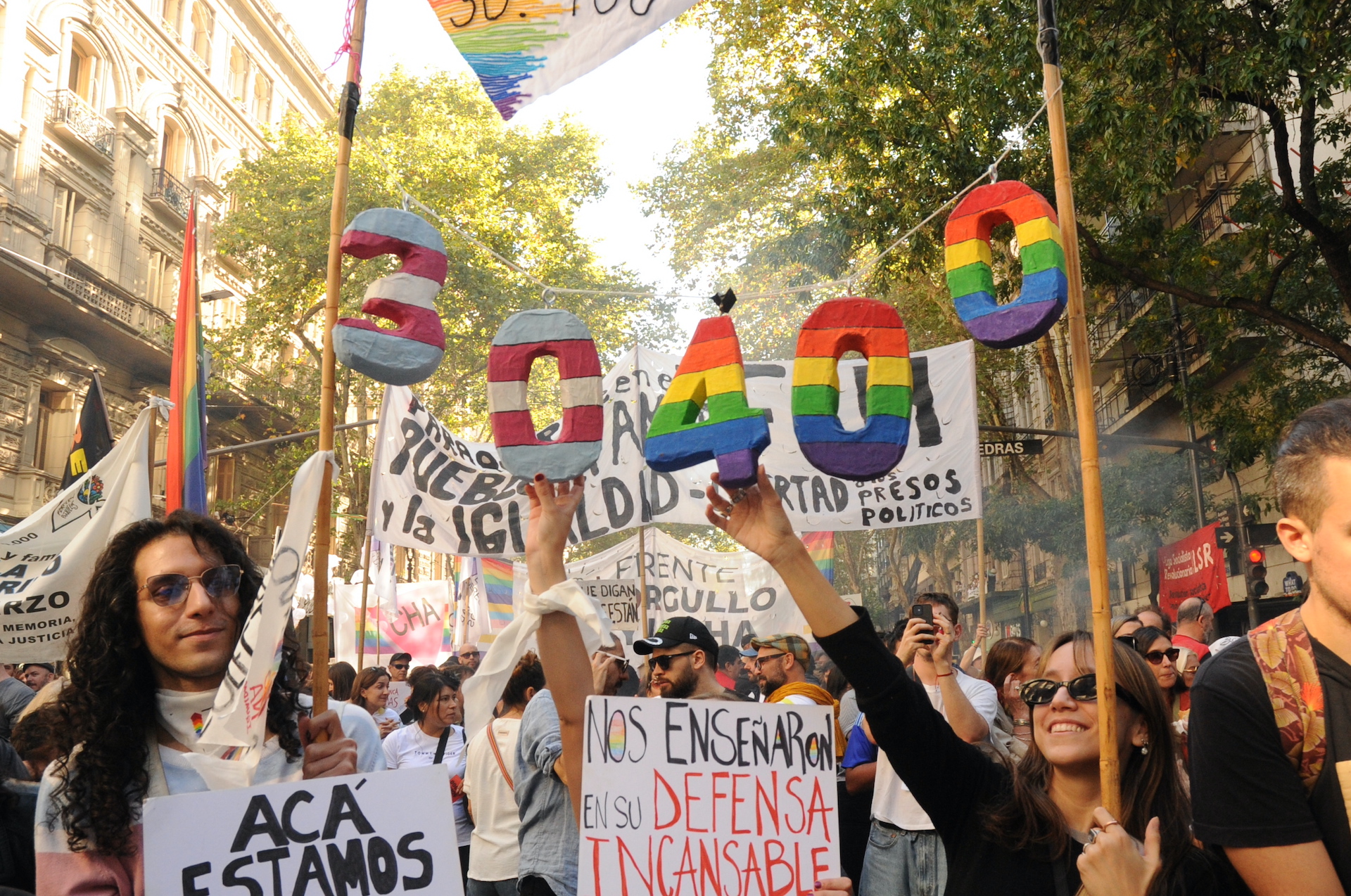
"No prostitute survives alone. No trans person survives alone."
Natalia Lane is not alone. Her everyday connections—her father, her family, her friends, her network—are the ones who have accompanied her since the day of the attack and at each of the hearings, which almost always end with a meal, a coffee, a chat, and laughter among friends.
“No sex worker survives alone, no trans person survives alone. I find this network beautiful because I feel I haven't built it from a place of 'you give me, I give you,' but rather by supporting people in whatever way I can and in whatever way I can sustain them. Finding that network and affection is a possibility, and affection isn't always a hug; sometimes it's the complicity of laughing together, of throwing shade, of going out for a quick bite outside the courtroom.”
The heroine's journey
To put the exhaustion of these four years into perspective, Natalia turns to Tolkien's epic. One of the gifts she gave herself after the hearings that end up being so draining for her was going to the cinema to see the extended versions of one of her favorite stories, The Lord of the Rings . Watching them again, she found in the figure of Frodo Baggins a mirror of her own process.
“I felt like Frodo, I mean, at the very end on Mount Doom, with the damn weight of the ring, I was fed up with everything. I connected with Frodo, but I also feel that all of you have been my Sam, right? Sam who has been there and maybe we're not there all the time, but we are, and that's invaluable.”.
At the end of the interview, Natalia recreates the dialogue between the hobbits about what to hold onto in times of darkness, and says: “What are we holding onto, Sam? And Sam turns to her and says: 'That there is goodness in this world and that it is worth fighting for.' That's a bit of the heroine's journey that I identify with.”.
Does Natalia Lane feel hopeful?
Despite the fact that the process has been "fucked up" and "revictimizing", Natalia says that the trial has had an unexpected restorative dimension.
Seeing his attacker held accountable has given him something he can't even describe. “It would be hypocritical to say I don't enjoy seeing him with his head down, seeing his distraught face. Of course I enjoy saying, 'You bastard, look at all the mess you made.' It's been healing.”.
Her hope is also collective and regional. It's common for Natalia to look south when she speaks. And this interview was no exception. For her, her case is also a genealogy of trans resistance that runs through Latin America.
Her journey for justice engages with the legacies of figures like Diana Sacayán, Lorena Borjas, and Cecilia Gentili, who also faced state persecution and criminalization, to understand that her struggle is a fight for life.
“ I’m no longer interested in narrating my story solely in terms of transfeminicide or survival . I am more than a femicide . I am more than that blood-soaked hotel room. I am more than these scars. I do see this as a form of hope for the transvestite community, for trans populations . Legally, it’s important, but the social and cultural weight is enormous.”
We are present
We are committed to journalism that delves into the territories and conducts thorough investigations, combined with new technologies and narrative formats. We want the protagonists, their stories, and their struggles to be present.
SUPPORT US

FOLLOW US
Related notes

We are present
This and other stories are not usually on the media agenda. Together we can bring them to light.