

24M: Eight stories of trans and transvestite survivors, victims of the dictatorship
Fifty years after the coup that established the last civic-military dictatorship in Argentina, we share these testimonies and memories of transvestite and trans people who survived state terrorism.


Share

Decades passed before the voices of trans and travesti victims of the dictatorship began to be heard in accounts of state terrorism in Argentina. Only in March 2024 did the courts recognize, based on the testimonies of eight of them in the Brigadas trial, that “the arbitrary and illegal detentions, sexual violence, torture, cruel, inhuman and degrading treatment, and forced labor ” suffered by these eight trans and travesti women “at the hands of police and military personnel, fall within the scope of the attack suffered by the civilian population in Argentina during the period under investigation. And such events should be classified as crimes against humanity .” This was expressed in “a unique ruling, unprecedented in the world”—as highlighted by assistant prosecutor Ana Oberlin—which convicted 11 defendants for crimes against a total of 610 victims.
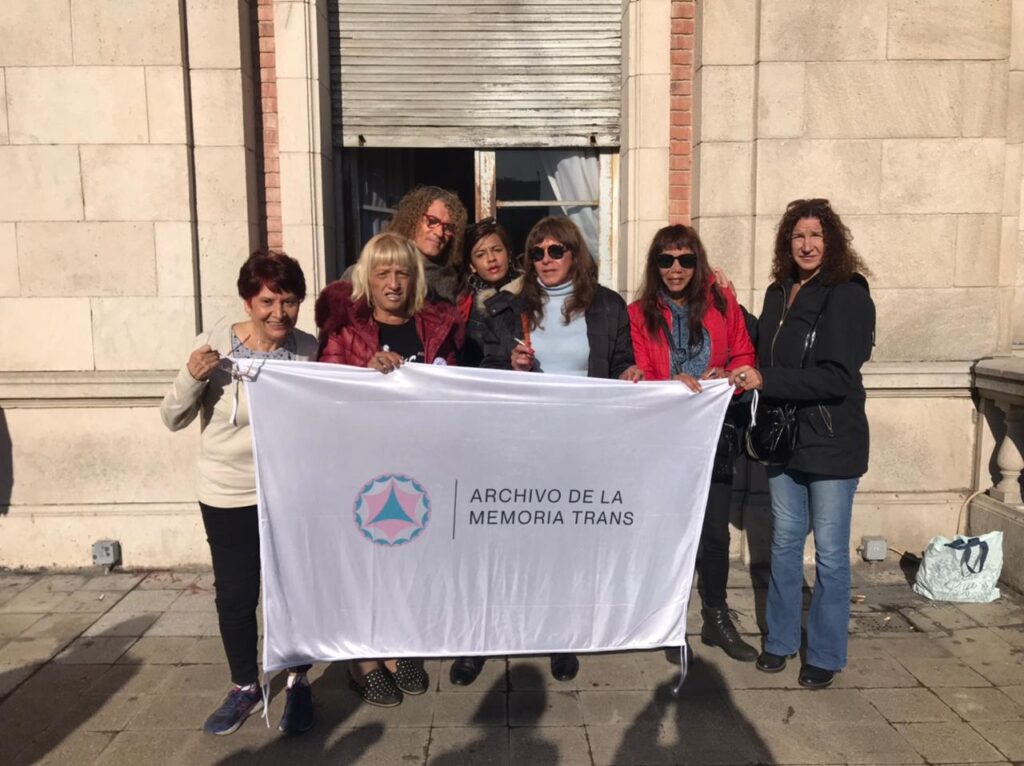
The trans and travesti victims who testified in that trial were Valeria del Mar Ramírez, Julieta Alejandra González, Claudia, Judith Lagarde, Analía Velázquez, Paola Leonor Alagastino, Carla Fabiana Gutiérrez, and Marcela Viegas Pedro. All of them were held at the Banfield Detention Center. Many victims were detained there, including at least 30 pregnant women, according to existing records. Between 1976 and 1977, a clandestine maternity ward operated there, where at least eight babies were born, six of whom recovered their gender identity.
Since the coup of March 24, 1976, the trans and travesti community has suffered systematic detentions in police stations and clandestine centers, torture, and abuse at the hands of the military. Under democracy, the persecution continued through police edicts. In 2012, the passage of the Gender Identity Law marked a turning point. However, for many, structural violence continues to make it very difficult to fully exercise all their rights.
Fifty years after the deadliest civic-military coup that Argentina suffered, from Presentes we want to spread and amplify the voices of the trans and travesti victims of the dictatorship.
The testimonies were taken from two interviews conducted by Presentes at the headquarters of the Trans Memory Archive, from an interview conducted in Córdoba (Ivanna Aguilera) and from the testimonial statements of the Brigadas trial.
“Cannon fodder for the soldiers”
Sonia Torrese Hernández
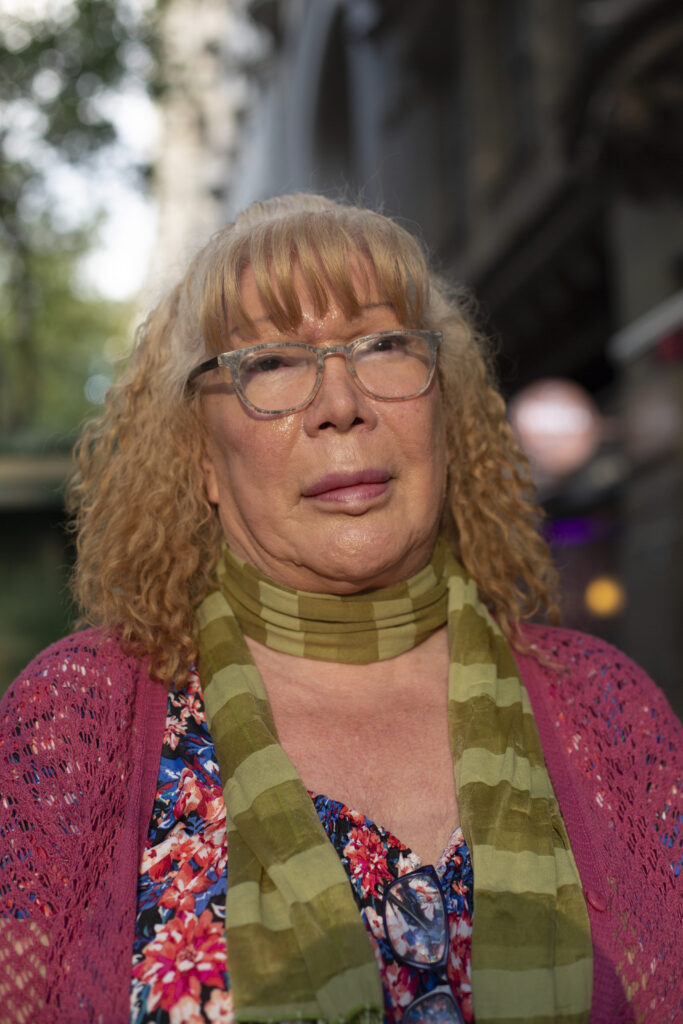
Sonia was born on December 31, 1959, in Sierra de la Ventana, and when she was eight, her family moved to Morón. Since 2022, she has worked at the Trans Memory Archive, where she trained in photograph conservation and works in the digitization department.
“I grew up under a dictatorship. When I started becoming a teenager and began to develop a girl's personality, my instinct was to turn to prostitution, with Videla as president. I didn't know what I was doing. I would sneak out of my house at night and go to a central street in Morón. I wasn't aware of the danger. On the sixth or seventh night, the Ford Falcons, where the plainclothes military officers were driving around, caught me. First, they detained me at the First Police Station in Morón. They summoned my mother and told her that if she didn't take a hard line with me, they would send me to a juvenile court judge. My mother punished me severely, and I was terrified. I stayed put at home; I didn't go out. But I still thought I was a little girl.”.
A moment that marked me was when I was 18. At that time, young men were called up for mandatory military service, and I was summoned. My mother told me, "You're going to have to cut your hair and dress like a boy." I didn't: I went dressed as a girl to Military Detachment District No. 1 in Tandil. When they saw me, they took me aside, led me to another place, and said, "Cannon fodder for the soldiers." At that time, Argentina was at war with Chile. "Let the lions eat him," were the words of the soldier who left me there. They kept me hidden and kidnapped for 37 days. I couldn't take it anymore; it was hell. They beat me. I had to be with 200 soldiers. After those 37 days, there was a medical board of psychiatrists. I was naked, as God made me. They brought in a soldier so I could give him oral sex, to see if I was pretending to be a woman. They even forced me to have sex. I thought I wasn't going to get out of there alive. After three days in the psychiatrist's office, they hit me on the back with a rubber band and told me, "Change your clothes, you're signing the book in red and leaving here." After that, I was in a very bad place psychologically. I cried, I was depressed. I was terrified of the military.
“She lived as a prisoner, even though she was a minor.”
Carola Figueredo
Carola Figueredo was born in Adrogué, Buenos Aires Province, on September 29, 1962. In 1976, she was 14 years old when her father kicked her out of the family home. Carola went to live in Cipolletti, Río Negro, where she lived with her adoptive mother, Elsa Capella.
At 18, she was summoned for a medical examination for mandatory military service for men by the Neuquén Army Commando Company. She was declared unfit because she was homosexual.
During the dictatorship, I was imprisoned, even though I was a minor. They took me from the porch of the movie theater when the film we were watching ended. We had to live in hiding.
What marked my life was that hateful persecution directed at us. I personally didn't understand why there was so much evil directed at us. We were arrested, beaten, and mistreated. It went beyond simply enforcing a law: it was a hateful persecution against our community, trans women. Prostitution was just an excuse.
Democracy arrived for me in 2012 with the Gender Identity Law, and that's when the Archive came into my life. That's when I finally had the chance to sit in a café, have a coffee, and not be bothered.
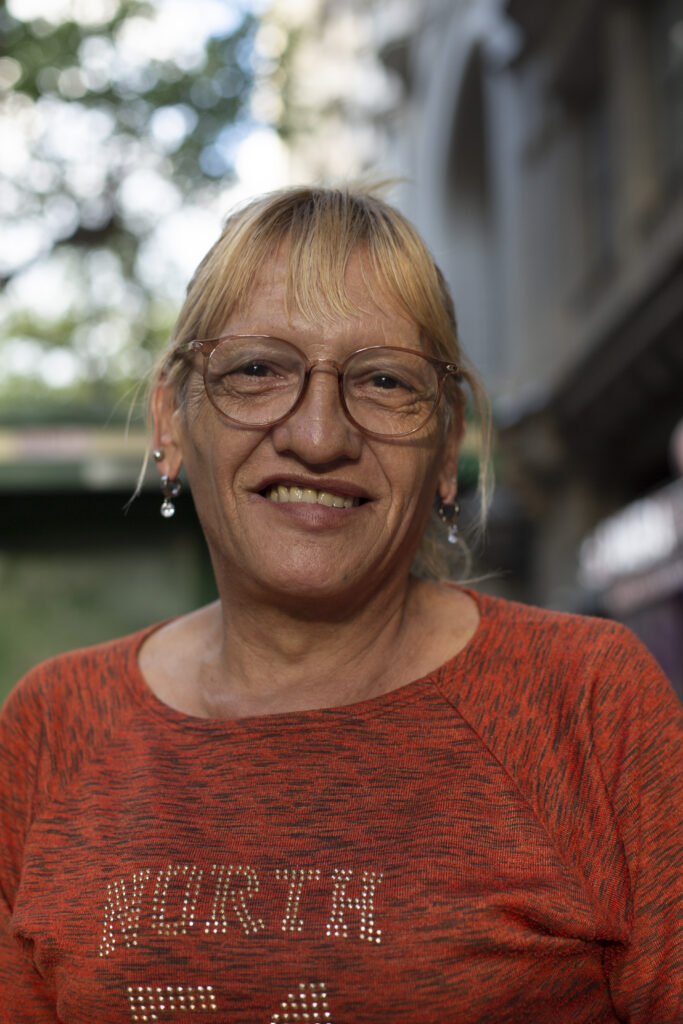
“To the Army we were just sex objects”
Ivanna Aguilera
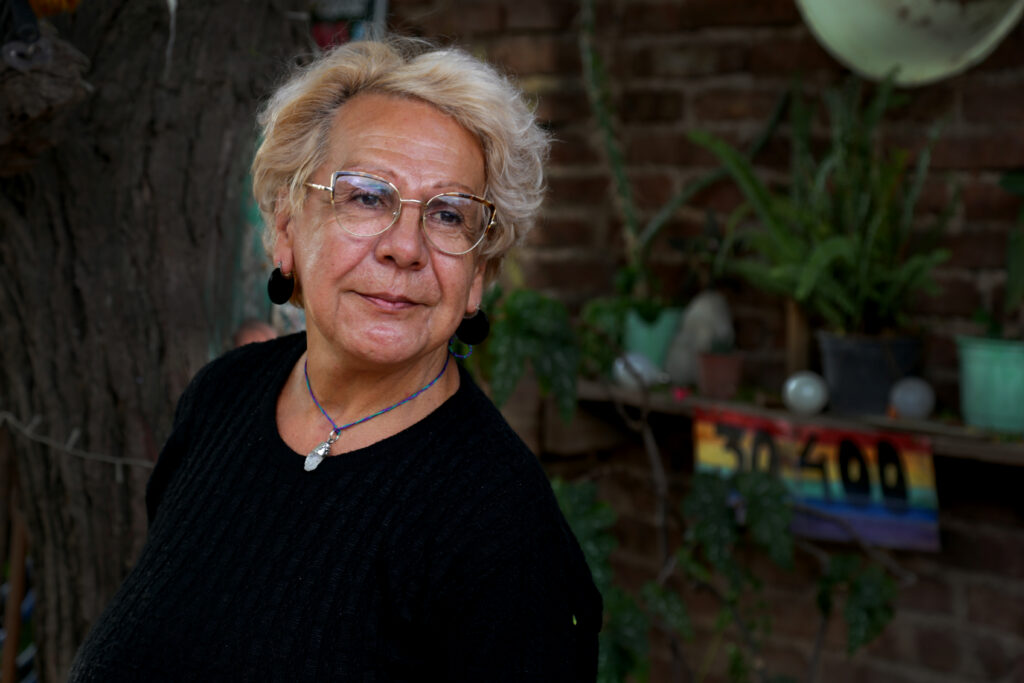
In 1976, Ivanna Aguilera was 13 years old and lived in Rosario. She and a friend often visited Poropá, the godmother who had initiated her trans identity. As night fell, Poropá would see them off before they stood on the corner by the Rosario Automobile Club. One cold August night, they lingered too long and were surprised by an army patrol.
A truck pulled up, followed by two jeeps. They jumped out, grabbed the oldest girl by the arms, and started hurling insults at her. They threw us all on top. Imagine, we were just kids. They also took another girl who happened to be there, still hurling insults at us about our sexuality. I'd never heard those words before: faggot, degenerate, pervert… all of that. We were driven around in that truck for a while, went into a place, were taken to a kind of office, and separated. I was in a large bathroom with showers and urinals, the kind with marble walls. Then we were subjected to gang rapes. My first sexual experience was a gang rape, followed by beatings and electric shocks. There we were abused for 72 hours, until they put us back in a truck and left us lying naked, hurt and broken – in our bones, me in a leg and wrist, but also morally – in an open field behind the Swift refrigerator.
With the care of her siblings, it took her three months to recover and even longer to work up the courage to return to the center to look for her friend Poropá: “I could never find her again, nor did we ever hear from her again. From then on, I was a woman who had a vision for myself. Like any other woman at that time, I lived at night and took many risks, because we had to work and bring food home.”
During that time, the Rosario police arrested them and took them to the former police station—where they were housed in the PH (Homosexual Pavilion)—and to the headquarters of the Rosario Police Intelligence Service , which also functioned as a clandestine center for detention, torture, and extermination. “But also, every now and then the Army would kidnap us to use us as sex slaves and then dump us somewhere.”
In 2021, the trans activist and survivor of the dictatorship was "detained" in Córdoba, where she currently lives, by an arrest warrant from 1988, based on a contravention code that has not existed since 2016 and an article repealed in 1994.
“We had to pay them with sex to eat.”
Carla Fabiana Gutiérrez
Between 1976 and 1977, Carla Fabiana Gutiérrez, known as "La Cariñito," was a teenager. She was arrested several times. In the Brigadas trial, she testified about her captivity at the Banfield Detention Center, where she was released after three days and then arrested again four or five more times. She has lived in Italy since 1986.
“I was very young. I lived near La Tablada, I was 14 or 15 years old, and I started working on the highway. In 1976 or 1977, I was taken in a private car. I was a minor, I was crying. I was forcibly arrested. It was the first time I had ever been arrested. They kicked me out of the car and threw me in a place that you couldn't really call a cell.”.
I was never registered. There were other girls there, and they told me not to say I was underage because it would be worse.
They took off my shoes, leaving me half-naked. To eat, we had to beg them for the leftovers, and we had to pay them with sex. If you want to eat, you have to do that. Doing that meant sucking their penis. Sometimes they'd give you some mate tea or a piece of bread.
To them, we were monsters. It's incomprehensible how they treated us. You have sex with someone and at the same time you hate them—it's just not understandable. I think they had psychological problems. I saw them bend a female colleague's arms. Or when they hit me on the head with a stick, which left me with lasting effects to this day.
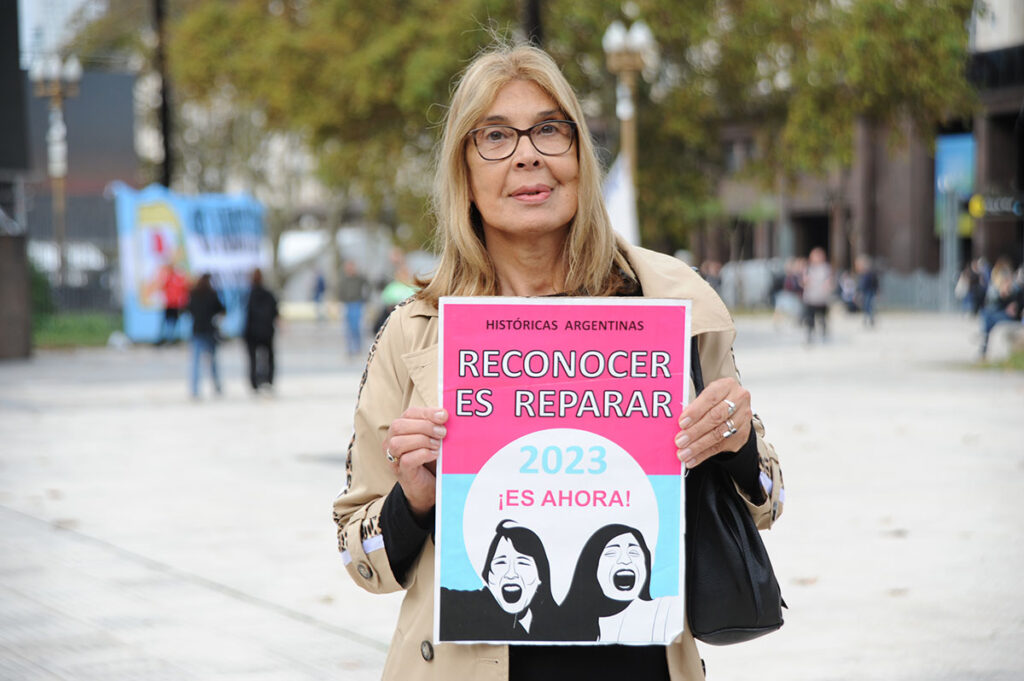
“They did whatever they wanted with us”
Leonor Alagastino
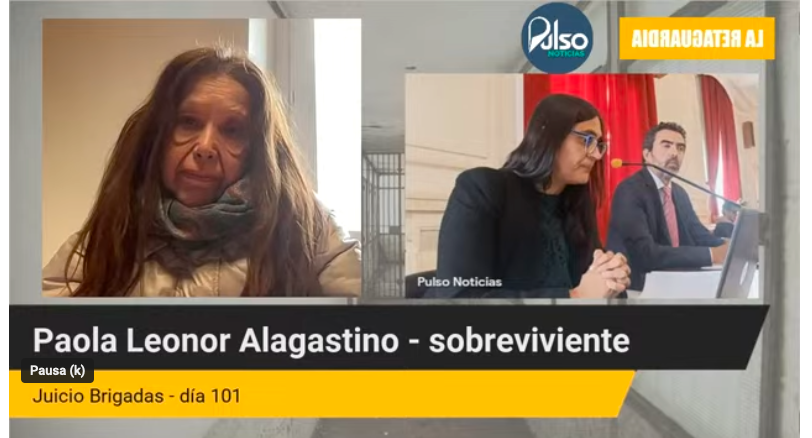
Paola Leonor Alagastino testified in the Brigadas trial via videoconference from Spain, where she lives. In the winter of 1977, she was 17 years old when she was put in the trunk of a white Ford Falcon on Camino de Cintura.
When they took me out of the vehicle, I thought they were going to kill me. Thank God that didn't happen. But I was mistreated, raped, and beaten with sticks. Some were there in civilian clothes, and some were wearing what weren't police uniforms, but gray clothes with black boots. We were scared; they treated us badly, insulted us, and said all sorts of things to us. They wanted sex, and if there wasn't any, it was beatings. It wasn't sex; it was rape. They did whatever they wanted with us. "These faggots have to be killed," they said.
They gave us the crust of the pizza. They called us faggots, queers, said we had to die, that we were going to kill them, that we were going to dump them somewhere and who was going to look for them?
We could hear the electric shocks being used on the girls and boys on another floor upstairs. It was all hell.
We knew when the soldiers arrived because of the noise of their boots. Thump, thump. They would shout and use electric shocks. We thought it was our turn. There were beatings, rapes, hunger, cold, and insults.
We were in a place where it was as if we didn't exist. Afterwards, I was even afraid to go out to do the shopping. When I arrived in Spain, I was the happiest person in the world because I knew I wasn't going to suffer anymore.
“I was kidnapped from my family’s house”
Analía Velázquez
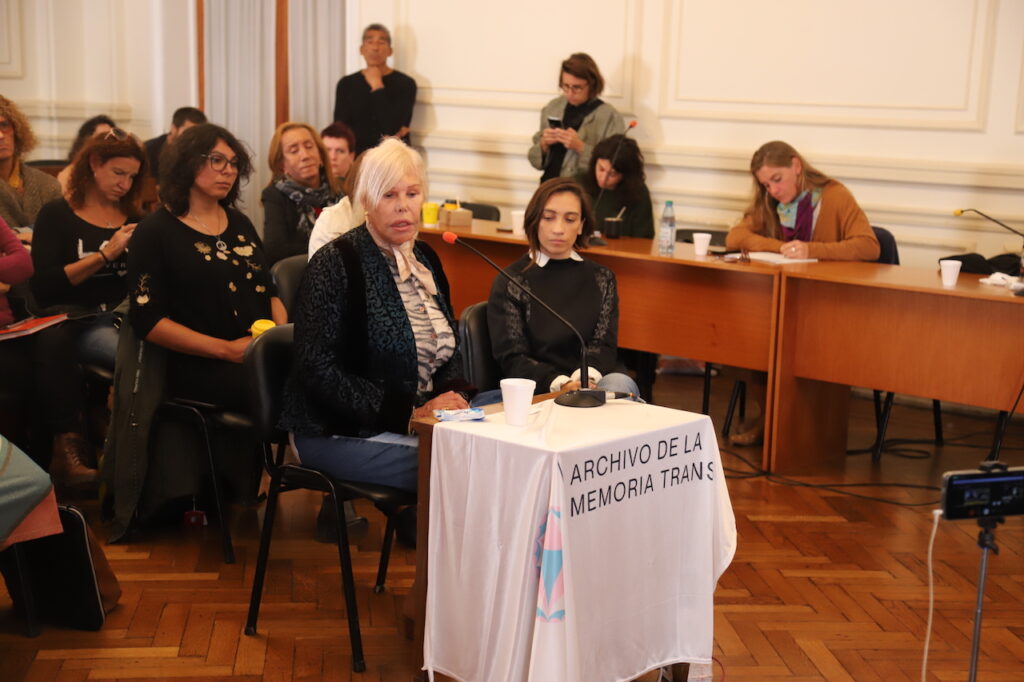
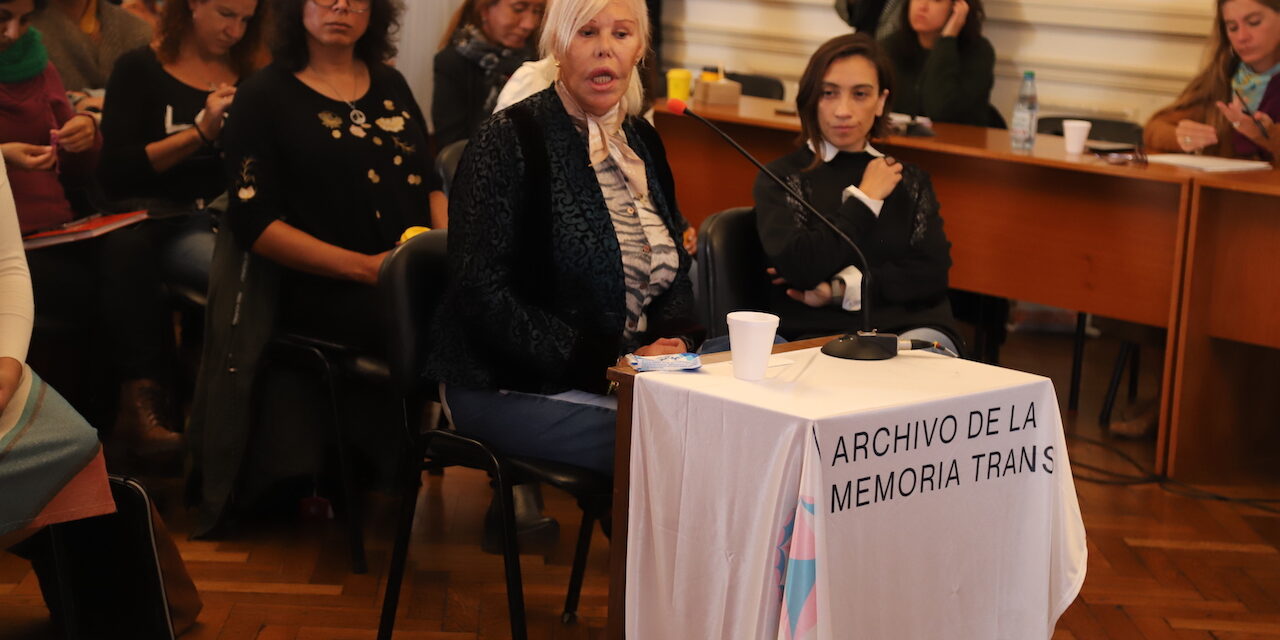
Analía Velázquez also testified in the Brigadas trial. She did so seated at a table from which hung a banner of the Trans Memory Archive . The Archive collaborated with the investigation by providing data on trans and travesti survivors of State Terrorism.
I was 22 or 23 years old. I was kidnapped from my family's house and taken to the Banfield Detention Center, where I was held on several occasions. They usually took us in the early morning.
I've endured all kinds of torture, including psychological torture. I've been raped. I've heard horrific things at night. They would say "machine," which everyone knew meant electric shocks, and they warned me it could happen to me at any moment. Once, they made me undress; I even saw a trampoline, all metal. They said it was my turn.
When they wanted, they'd take us out of our cells and make us do stripteases; they wanted us to dance for them. Sometimes they were drunk. I remember being with a female colleague, and they took pictures of us and asked which of us was prettier. I refused. I was very nervous; I've always had a nervous temperament. And I think her picture was hanging in one of the commissioner's offices. That girl's name was Claudia Lescano; I think she's gone now.
They would release us in the early hours of the morning. They would take me to a train station, and I would beg for money to get home. I never knew where I was, or which way I would leave.
“They wanted me to say the boys’ names.”
Marcela Viegas Pedro
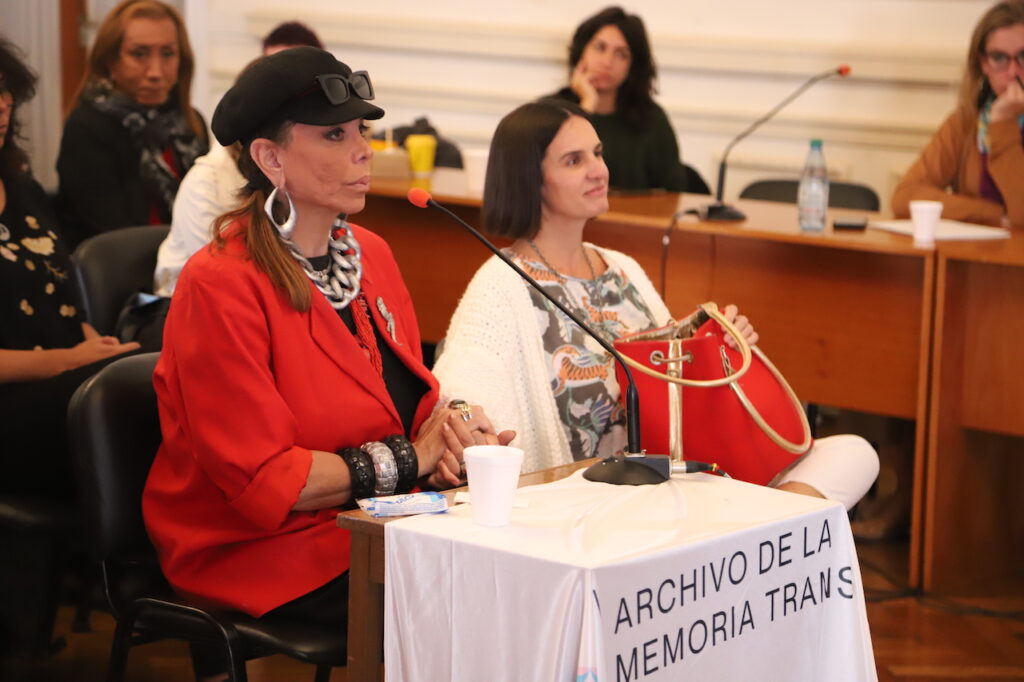
Marcela Viegas Pedro arrived at Camino de Cintura fleeing Rosario, in the province of Santa Fe. She was about to turn 15 when they put her in the police car, as she testified in the Brigadas trial. In 2018, she received the historical reparation granted by the province of Santa Fe , a right demanded throughout the country.
One of my friends in Florencio Varela, who collaborated with the police, offered me a job at her place. It was a place on the highway with a lot of factories. Every night I had to pay a fee to the patrolman and occasionally perform sexual favors. When they caught me, I said: today it's my turn to perform the sexual favor.
That night was different because when I was inside the patrol car they put bags of onions over my head, took me somewhere I don't know, and handed me over to other people I don't know. I ended up in a cell. And I remember all the words: Now you're going to find out what's what, faggot.
The next day the ordeal began. Systematically and methodically, every day they came for me. They put a hood over my head. I don't know where I was going. We had a blindfold, and I could peek underneath. They threw me on a bed. They tied me up. And they applied 220 volts (electricity) to me.
They wanted me to tell them the names of the boys I was seeing, their addresses, and what we talked about, but my only relationship with them was sexual; I didn't know their names. Besides that, they also raped me. And then they put me back in my cell.
I am a person who is 1.77 meters tall and weighs between 78 and 80 kilos and I left weighing 40 kilos.
“They made us wash cars and sexually abused us.”
Julieta Alejandra González
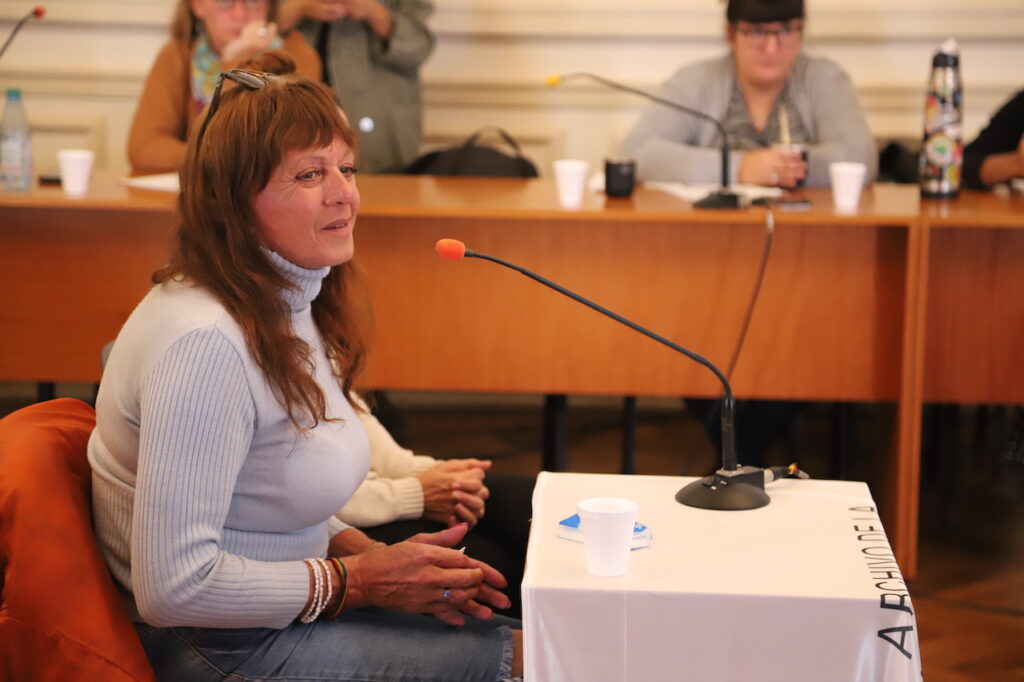
Julieta Alejandra González, La Trachyn, was kidnapped in 1977 while working as a sex worker a few meters from the Club Atlético San Isidro (CASI), on Avenida del Libertador, along with two other people.
El Negro (Claudia Gómez) and Judith were put to work breaking rocks. In the morning, we saw that the place was big. They had two pits where they made us wash the cars. They were muddy, but many had blood inside. I always remember a lot of blood in a yellow Falcon. They made us cook, wash clothes, and polish boots. They also sexually abused us.
At one point we heard a girl crying. Then we heard a baby crying. And then we couldn't hear the girl anymore, and neither could the baby. It was like the baby was born. It had amazing lungs because it was crying so loudly. To think we were there for that birth, we were saying afterward. We could hear young people screaming. Girls and boys. When they screamed, it felt like the light was going up and down.
The lives of La Trachyn and Fabiana Gutiérrez are told in this documentary , Where Memory Dwells.
We are present
We are committed to journalism that delves into the territories and conducts thorough investigations, combined with new technologies and narrative formats. We want the protagonists, their stories, and their struggles to be present.
SUPPORT US

FOLLOW US
Related notes
We are present
This and other stories are not usually on the media agenda. Together we can bring them to light.