

The case of lesbian activist Emma Zermeño: Is chatting a crime in Sinaloa?
The activist was reported by a public official. She is accused of "wolling," a concept that doesn't exist in either academic or legal circles. This accusation jeopardizes her privacy.


Share

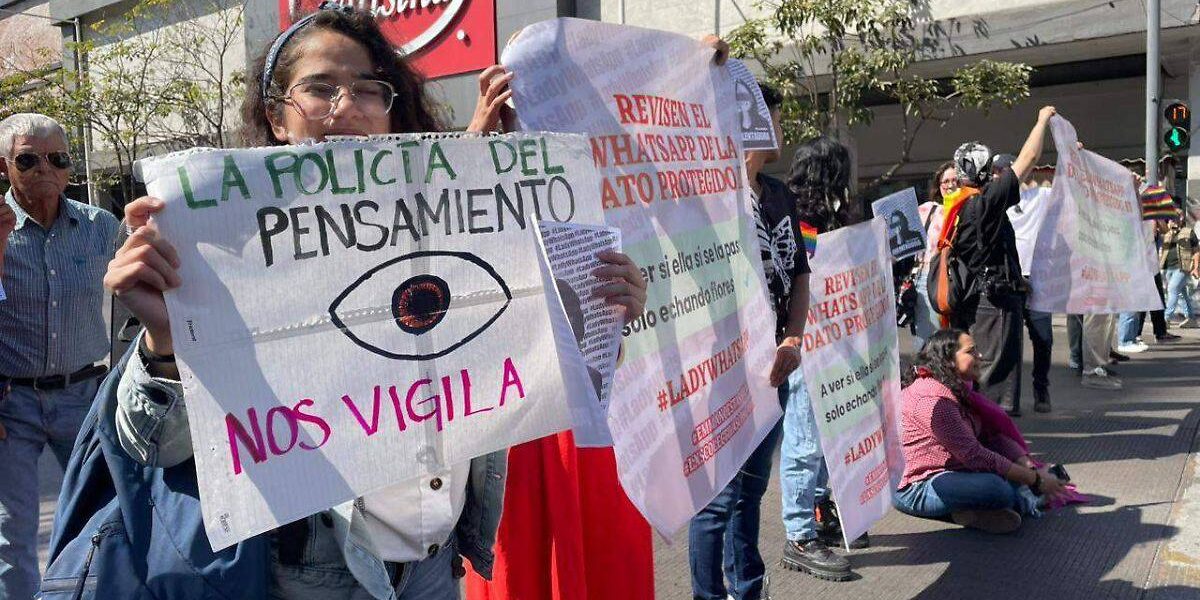
MEXICO CITY, Mexico. What began as a private chat between friends on WhatsApp has become a threat to privacy and freedom of expression in Mexico. On one side, a citizen exercising her freedom of expression in a private chat. On the other, a politically powerful official who wasn't even actively serving in her legislative role when the events occurred.
Emma Zermeño, a 34-year-old lesbian activist and employee of the Women's Secretariat in Sinaloa, is in a legal process that could set a precedent: the possibility that the Mexican State will monitor and punish what is said in the intimate sphere of digital messaging spaces.
The case involves Almendra Negrete Sánchez, a local congresswoman on leave since 2024 and the national secretary for sexual diversity within the Morena party. She sued Emma over messages exchanged in private conversations that were sent to her by a third party.
This Wednesday, March 18, the Superior Chamber of the Electoral Tribunal of the Judicial Branch of the Federation (TEPJF) reaffirmed that the contents of private messages do not fall within the scope of electoral legislation, and cannot constitute the crime of political violence against women based on gender, much less be grounds for censorship.
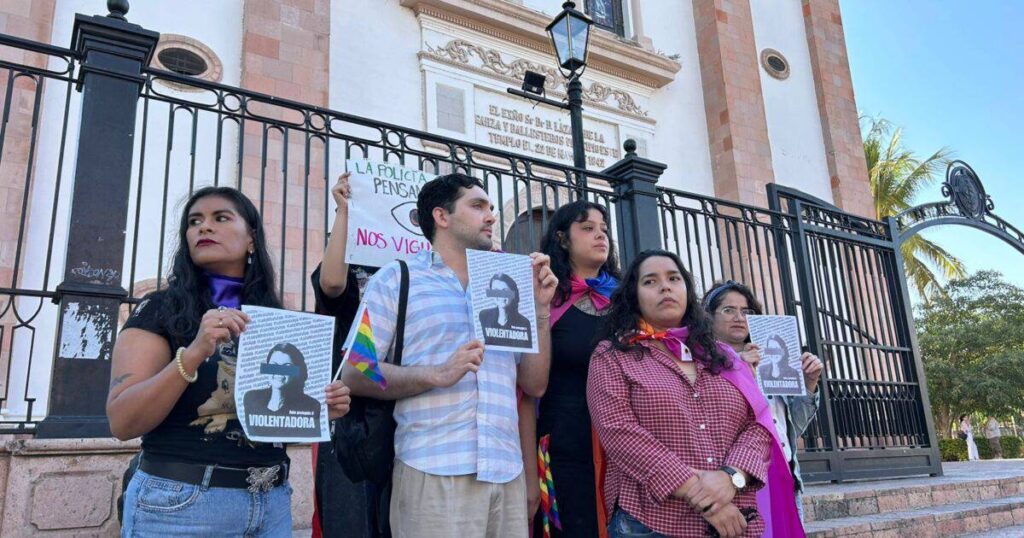
What is the complaint about?
This action ignores the constitutional protection of private communications, stipulated in Article 16. Therein “guarantees the inviolability of correspondence and private communications, and establishes that no one may be disturbed in their person, family or possessions except by written order of a competent authority that states and justifies the legal cause of the procedure, protecting legal security and enshrining the right to privacy and legality.”.
Attorney Mónica Calles Miramontes, a specialist in electoral and constitutional law and Emma's lawyer, explains: “We have the first legal problem, a violation of Article 16 of the Constitution. Something the Guadalajara court overlooked is that Emma's right to privacy is also being violated. These conversations took place in an atmosphere of absolute trust. They were simply private conversations between two friends that should never have left that realm.”.
Also at stake is the interpretation of Political Violence Based on Gender (VPRG) . A tool designed to protect women, but which, according to Emma's lawyer, "is being perverted to carry out political vendettas and silence citizen criticism."
What happened?
The conflict originated with a series of private WhatsApp conversations held between Emma and a friend between 2024 and 2025.
The leak of these messages occurred after the friend joined the staff of Representative Almendra Negrete. Emma was notified of the lawsuit in October 2025.
Although the local court in Sinaloa initially ruled in favor of the activist on two occasions, deeming the evidence inadmissible, the case was appealed to the Guadalajara Regional Court. On February 25, that court issued a guilty verdict under the concept of "wollying.".
Following the defense's appeal, the Superior Chamber of the Electoral Tribunal of the Federal Judiciary (TEPJF) received the motion for reconsideration. After an initial draft ruling to dismiss the case, Judge Felipe de la Mata Pizaña recently presented a new proposal to overturn the sanction. His final decision is scheduled for this Wednesday at 12:00 PM.
Woollying?
The Guadalajara Regional Court used the term 'wollying' to justify the sanction against Emma.
The court argued that Emma's comments in that private conversation constituted a form of "political death" for the official. But the official has been on leave as a member of parliament since 2024.
“The Regional Court of Guadalajara tried to reduce the conflict to a 'fight between women' in order to uphold a sentence that lacks a solid legal basis,” Emma explains.
Lawyer Calles Miramontes is emphatic about the lack of academic and legal rigor in this concept.
“This concept doesn’t really exist. It’s not recognized by academia, much less by the legal field. It’s a huge mistake on the part of the Guadalajara court because it also undermines legal certainty. This term they call ‘wollying’ was taken from an article someone wrote, which is more like a newspaper piece than a developed academic concept supported by established doctrine… The president of the Guadalajara court herself translates it as envy. Is an electoral tribunal really going to sanction envy?”
“There is an asymmetry of power and institutional stigmatization”
“I cannot conceive that this has entered the legal sphere, the courts. This should never have reached the courts , much less the Electoral Tribunal, because for the Electoral Tribunal to have intervened, there needed to be a minimal link between Emma's conduct and an impact on the exercise of an elected office, and there is no such impact,” Calles maintains.
According to the defense, this is a “brutal asymmetry of power” where the state apparatus was used to exact “political revenge” .
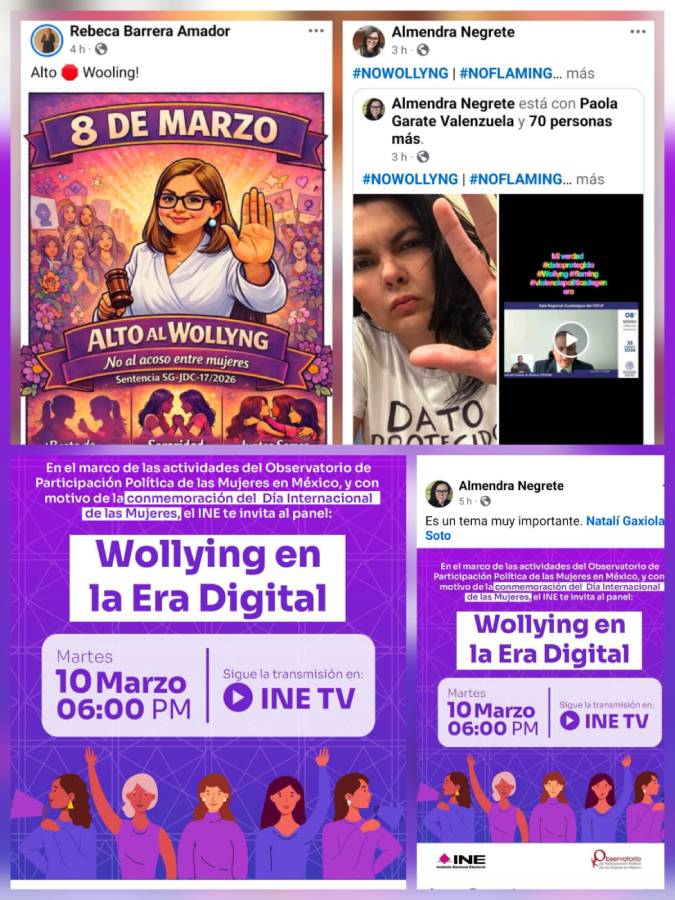
In addition to the legal battle, Emma has faced an institutional smear campaign. The Guadalajara Regional Court and the National Electoral Institute (INE) launched campaigns and forums on "bullying" in the context of March 8th. They used Emma's case as an example of aggression before a final resolution had been reached.
“This is extremely serious because the INE used its institutional channels at the national level, used public resources and gave a voice to many public officials… to institutionalize a term that does not exist in law,” the lawyer denounces.
The impact on Emma's life
“The emotional toll has been profound. This has affected my personal life, even my health. It has affected me psychologically and emotionally,” the activist says.
Emma also denounces how the precautionary measures silenced her for months.
“I have felt quite disadvantaged. I feel that the whole procedure is too much to protect the victim… but it's disregarding my legitimate right to defend myself . With the precautionary measures, I didn't know how much I could say. I was silenced for a long time,” Emma explains.
The sanctions requested by the complainant include compensation of 300,000 pesos, a public apology, and the disqualification of Emma from public service for three years.
“An uncertain future for digital privacy”
The decision made by the Superior Court this Wednesday will not only affect Emma, but also millions of Mexicans who use private messaging services. The defense argues that allowing this precedent would open the door for any politician to persecute citizens for what they say in private.
Attorney Calles reflects on this danger: “This issue puts the privacy of all Mexicans at risk and exposes us to the possibility that the State’s punitive power could reach us, even into our private phones… How can the power of the State extend into our private and intimate conversations? It’s not that this isn’t a space for the State to analyze whether what we say seems morally correct or not. Electoral law isn’t meant to monitor what we do in our private lives.”.
Despite the overall situation, there are signs of hope. After an initial attempt to dismiss the case, Judge Felipe de la Mata Pizaña has proposed reviewing it, and it has been added to the Electoral Tribunal's agenda for Wednesday, March 17.
For Emma, her fight has transcended the personal. “This isn’t just about me anymore, this is about everyone. The fact that there’s already a ruling stating that WhatsApp conversations can lead to legal proceedings is unacceptable, because today it was me, tomorrow it could be you, and so on for everyone.”.
We are present
We are committed to journalism that delves into the territories and conducts thorough investigations, combined with new technologies and narrative formats. We want the protagonists, their stories, and their struggles to be present.
SUPPORT US

FOLLOW US
Related notes


We are present
This and other stories are not usually on the media agenda. Together we can bring them to light.