

Interview with Sayak Valencia: From gore capitalism to necropatriarchy
From Tijuana, transfeminist philosopher Sayak Valencia analyzes how violence structures a system of power and consumption. She explains the phallocentric logic that strengthens ultraconservatism and offers some clues on how to counter the narratives of necropatriarchy.


Share

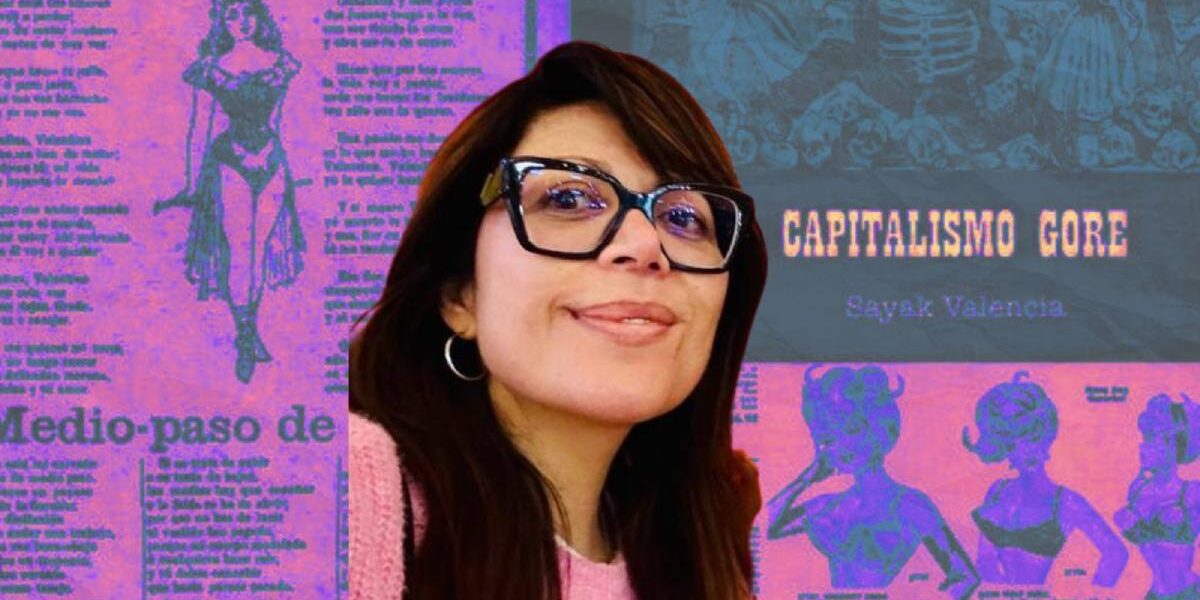
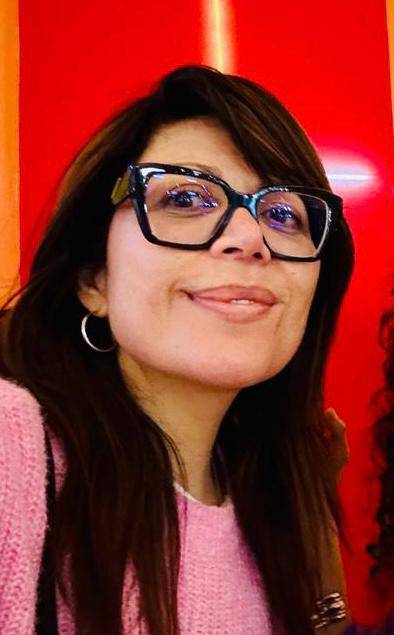
Sayak Valencia lives and works in Tijuana, one of the busiest border crossings in the world. Many of the ideas that shape this transfeminist philosopher's work—violence, feminisms, queer studies, capitalism, consumerism, exploitation—are related to issues she observes and analyzes from this Mexican city in Baja California, a gateway to the United States.
When she was a teenager in the mid-1990s, Tijuana was considered in cultural studies to be one of the greatest laboratories of postmodernism. This was how the anthropologist Nestor Garcia Canclini . But Sayak, who also works in cultural studies and was born and raised in that city, shaped new interpretations. And she created a new category to discuss it, to show that the phenomenon is no longer limited to the border: Gore Capitalism. This is the title of the book she published in 2010, which grows more relevant every day. In it, she dissects this current phase of the New World Order, the cruelest, most inhumane, overwhelming, and contradictory side of the capitalist project.
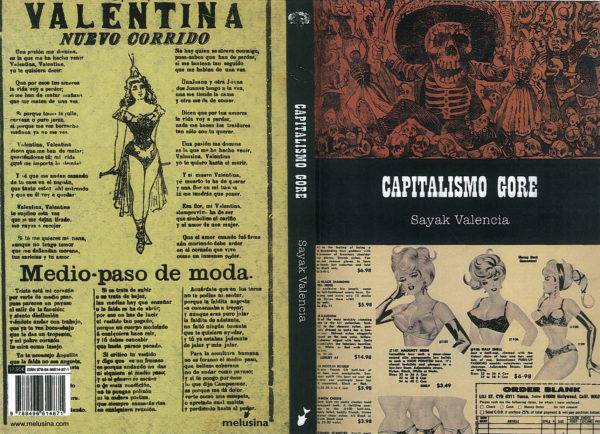
Gore capitalism—a term borrowed from the film genre of explicit extreme violence—is “the systematically uncontrolled and contradictory dimension of the neoliberal project. It is a product of economic polarizations, the information/advertising bombardment that creates and reinforces the hyper-consumerist identity, and its counterpart: the increasingly scarce population with the purchasing power to satisfy the desire for consumption.”.
Sayak speaks of “monstrous subjects”: people who use violence to acquire capital and power. “They have assimilated the logic of extreme consumption and, lacking legal means, they turn their own capacity to destroy and kill into their only currency.” They do so through multiple forms of violence: “from carjackings carried out by armed groups in broad daylight, for settling scores between drug dealers in prison, to highly specialized techniques involving toxic, chemical, and radioactive waste.”.
In gore capitalism, bloodshed is a “price to be paid by the Third World for clinging to the increasingly demanding logic of capitalism.” Her words help us understand the multiple dimensions of violence as the backbone of a system. Sayak constructs a perspective that is simultaneously a theoretical framework for the territory in Mexico and a cartography of the resistances and challenges of transfeminisms from a Latin American perspective.
From her home in Tijuana, where she lives and works as a research professor in the Department of Cultural Studies at the Secretariat of Science, Humanities, Technology and Innovation (SECIHTI), she spoke with Presentes by phone. Days earlier, El Mencho, leader of the Jalisco New Generation Cartel, had been captured . Images of the ensuing violence were circulating around the world. Trump and Israel had not yet attacked Iran, but the conversation began with this phenomenon of news coverage: “We are facing a barrage of events, each one more serious than the last.”
From fascinating fascism to fascinating violence
– Gore capitalism consolidated and expanded with new layers. During Mencho's capture, for example, fake AI-generated images went viral, causing panic. And you've been studying, precisely, the spectacularization of violence and the effectiveness of fear.
The capacity for virality didn't exist in 2010, or at least it didn't have such a significant influence on digital social networks. Neither did the construction of a narrative through them. After "Gore Capitalism," I began working with the idea of " from fascinating fascism to fascinating violence ." This led me to develop another concept: the live streaming regime . A form of governing emotions through the viral spread of content. On the one hand, there's cosmetic content—highly embellished, fashionable, and superficial. On the other, there are extremely graphic images of extreme violence, which are now amplified and transmitted in real time through fake news and AI.
It wasn't something you saw in gore capitalism. I sensed it, because the spectacularization of violence is a market almost as important as the drug trade. The media profits greatly from this. And the political agendas of neoconservatism create a viral spread of their content and use these images of violence to create an even harsher stance and a retreat to traditional values. In Argentina, these would be "family, homeland, and state," and in the United States, white supremacy against immigration.
“Between terror and the consumption of beauty”
-How does the live streaming system operate today?
What I see is a hyperinflation of content and the ability to viralize that narrative as the only possible one. The spectacularization of violence not only profits through clicks and morbid curiosity, but also disseminates very conservative agendas. At another time, these would seem inconceivable, but Donald Trump and Javier Milei went from their delusional proposals to ultraconservatism, because Trump's policies no longer even fall under the umbrella of conservatism. I believe this live-streaming regime has taken hold, shaping and revamping authoritarianism through the dissemination of cosmetic and spectacularized images. They have us caught between terror and the consumption of beauty.
In the text “The Regime Is Broadcasting Live,” I wrote about this relationship between captivating violence, the creation of market niches for populations not involved in organized crime but who consume everyday violence through the media, and also the culture of hate . Hateful comments, harassment, and intimidation, even among civilians, create an increasingly polarized agenda that benefits authoritarian regimes. Necropatriarchal is becoming increasingly polarized. It seems that the only way to resolve conflicts is through war.
-How do you link this feature of necropatriarchy with the violence associated with characteristics of the dominant and despotic masculinity of far-right leaders?.
After the "gore capitalism" debate, I said: the violence of the "endridon" subjects—that's what I call hitmen and participants in organized crime—doesn't stop at economically vulnerable populations . It also has to do with the construction of masculinity as a cartography of governance over the bodies of men and people who identify as masculine. "If you don't participate in this, you're outside the construction of masculinity ." We see the capacity to harm, to kill, in those who embody the epitome of necromasculinity . Mr. Donald Trump, constantly waging war. Or ordering the detention or killing of migrants through ICE. Necropatriarchy isn't just femicidal on an individual level; it works with necropolitics and institutionalizes it .
In Argentina, Javier Milei, with his ridiculous chainsaw, managed to change and pass a new labor law. Who is he going to chainsaw? The law, people, everything. There's a kind of phallocentric extension of power that's no longer limited to threats. It cuts off heads, budgets, lives, displaces families, pollutes. This low- and high-intensity necropolitics is no longer exceptional, nor is it limited to drug traffickers or criminals. Its foundation is embedded within the State, which is masculine, despite all the work done by feminist movements to include the participation of women and gender-diverse people. We are witnessing a refeudalization of the world, through the most conservative values held in other times, but also through economic precarity, exacerbated migration, and technofeudalism.
-What can we do from the perspectives of feminism, diversity, and non-hegemonic masculinities in the face of these modes of destruction and control of lives?
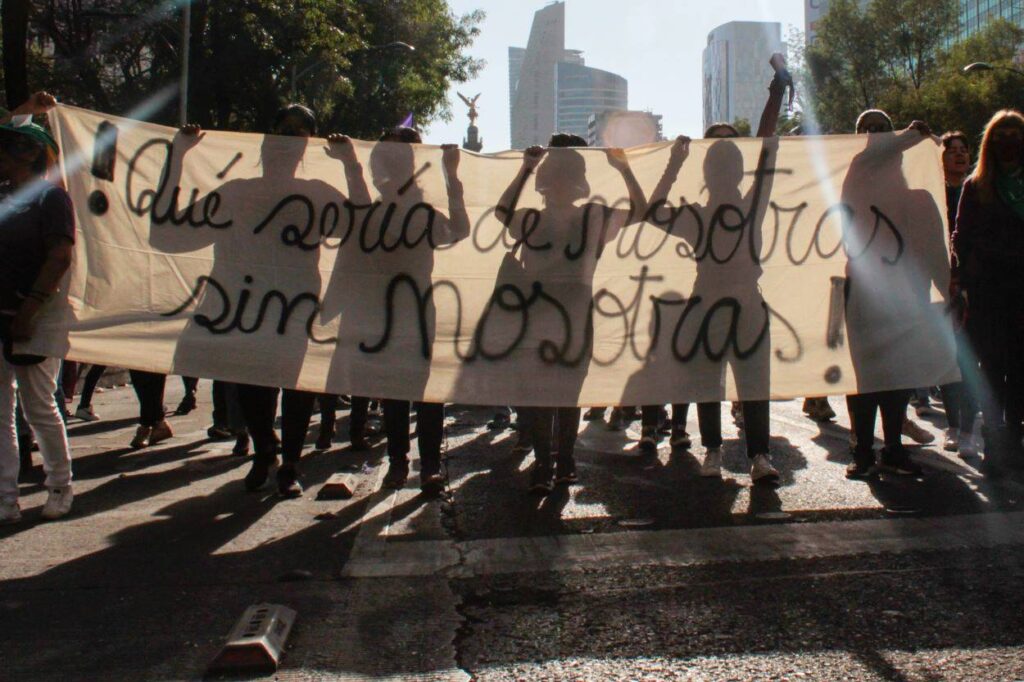
On the one hand, we must continue to take to the streets. On the other, we must not believe the narrative or recreate the catastrophic image of necropolitical masculinity . We must not believe in the apocalyptic fatigue they are trying to instill in us. They are the ones who control the narrative right now. Basically, what we can do is build an intergenerational dialogue. And yes, we can reverse the images, so that they challenge this situation.
-For example?
For example, in the case of Jalisco and Guanajuato, states with a high number of forced disappearances in Mexico , some people who work in engineering and programming are creating profiles of the disappeared. And through photography and technology, they are giving them a voice and allowing them to tell their stories. It's somewhat reminiscent of the faces of the disappeared detainees in Chile or Argentina, where we see their faces, not their remains or fragmented bodies, as if we were disposable people or trash.
Encountering these people in this way, their voices giving them new meaning, creates a different kind of sensitivity than a demeaning image. This way, we don't lose them; we update our perspectives and our affections. The face remains a place of dignity for what is human. That's why it's so easy to hate on social media. When you face another person and look them in the eye, you might temper your foolishness a bit. Some people can do it, but it's not so easy or so easily tolerated. You also have to suppress your own emotions when you're with that person, right?
-From a narrative perspective, what do you think can be done in such an unequal struggle?
Although it may sound very basic, we must continue building a narrative that isn't solely confrontational with the official one. It must have a historical and political memory of the struggle we've already endured. We mustn't forget that we got here and achieved our rights through struggle; they weren't given to us. And on the other hand, we must build communities on the ground, not only online, but also offline communities of affection, of the solidarity built on our continent over the centuries. There are communities with an ever-increasing capacity to respond, both internally and externally. And of course, we must stop reproducing the triumphalist narrative of the Milei or Trump supporters, who seem to think they've already won, when in reality they just have very good publicists and all the machinery to produce their content.
We have far less technological reach, but we produce better content, which is why it gets stolen. Many of the grammatical structures used by the right wing have come from their readings of the left and the social and decolonial movements of our continent. The Nazis' style wasn't glamorous until they realized that by stealing from the artistic avant-gardes of the 20th century, they could go further. We mustn't relinquish the affective and political-aesthetic aspects. We still possess a boundless political imagination that we can unleash in the streets and on social media. And we can encrypt images to make them unconsumable and impossible for the far right to quickly and easily deplete .
-How did you interpret the reaction sparked by the arrest of El Mencho a couple of weeks ago, at a political and media level?
Before that, we were looking at Epstein's files. They show the Sinaloa cartel's connection to the procurement of people, especially children and women, for drug use and sex trafficking. This is important because the Sinaloa cartel has been weakened for a couple of years now; its members have been extradited to the United States to face trial there, but these extraditions, in the history of Mexican drug trafficking, are usually to ensure their safety.
Things happen on the border sooner than in other parts of the country. We almost always have a more forward-looking perspective. The Jalisco New Generation Cartel, led by Mencho, was allied with the Sinaloa Cartel. And it was the strengthening of a kind of militarized cartel that began to emerge between 2008 and 2010, starting with the Zetas, and which transformed. It was a drug cartel, but it was also a militia; it had been trained by the Israeli army and was completely aligned with the U.S. military.
We are familiar with these figures of political destabilization that the United States has implemented for many years in our continent. We see what has happened with the gangs in Central America, the cartels here in Mexico, which have mutated into a kind of indirect parallel army that contravenes the will of the State. This creates social terror, but also a dismantling of not only human rights, but also civil and cultural rights of all kinds, because it essentially pushes the entire budget toward security in both the United States and Mexico.
-How are borders being reconfigured in this new scenario?
Many years ago, I said that the country was becoming more like a border. The relationship between the United States and Mexico, and the border, is being reconfigured. Narco-culture had reached many places where the border doesn't even exist. But after three years of research, I've realized that the border is no longer in the north but in central Mexico—the new economic border. Therefore, social destabilization will occur through this region.
Jalisco has the highest number of forced disappearances, and it's about to host a World Cup. Civil society is organizing strongly against the government: there are more than 15,000 missing young people, and their families are searching for them. The methods used to make people disappear fuel criminal economies, but that's not all. Very powerful organizations are emerging and putting pressure on the Mexican state. There are other neighboring states that also have this problem, but they are no longer on the border. I think this could give the army back its power and create a stronger iron fist from a state that feels very weakened by the pressure from the cartels. Mexico has been heavily militarized since 2006, and the army has been heavily involved in the violence, colluding with the drug cartels. So, I don't think anything more will happen than a highly dramatic destabilization of the current regime to give symbolic value to the Mexican state through its military. There won't be any talk of US intervention because, basically, they want to maintain sovereignty. In reality, markets are being reconfigured to favor other forms of exploitation and plunder, no longer solely by drug traffickers, but by other factors whose direction I'm still not entirely clear on. However, it's a trick those of us who live on the border are already well aware of. This doesn't mean people aren't afraid or that these events aren't real, but rather that the symbolic and political gains are geared toward a highly nationalistic agenda on the part of both governments.
We are present
We are committed to journalism that delves into the territories and conducts thorough investigations, combined with new technologies and narrative formats. We want the protagonists, their stories, and their struggles to be present.
SUPPORT US

FOLLOW US
Related notes


We are present
This and other stories are not usually on the media agenda. Together we can bring them to light.