

March 8th International Workers' Day: Do you see trans women and transvestites behind a counter?
This March 8th, in the midst of a labor and economic crisis, we ask ourselves: what do transvestite and trans people do for work? The stories of how access to formal employment changed the lives of Brisa Escobar, Allison Gebel, and Fabiana Cruz.


Share

BUENOS AIRES (Argentina). Do you see trans women working behind a counter? Do you know a trans person who is a bank manager? “No, because there aren’t any,” agree Brisa Escobar, Allison Gebel, and Fabiana Cruz. They are trans women and transvestites who stopped working as sex workers, the means by which they survived for years. “It was the only work we could do, or the only work we were allowed to do,” they agree.
Presentes , in 2026, it remains very difficult for trans people to find jobs. We also asked them to share a message with working women this March 8th, given the current labor and economic crisis in Argentina.
Brisa: “This job at the cooperative changed my life”
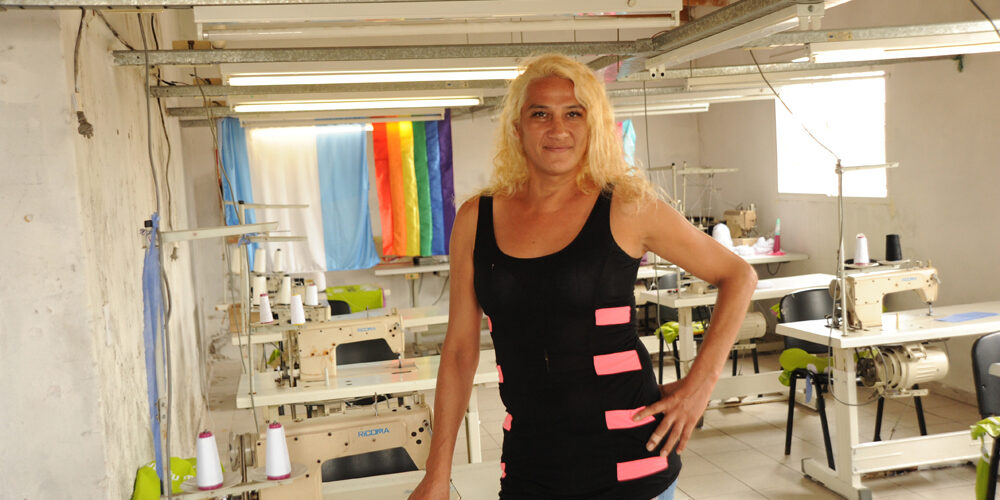
Brisa Escobar is from Salta but has lived in Buenos Aires for many years. She recalls that one of her friend Lohana Berkins's biggest concerns was "getting girls off the streets." She achieved some progress in 2007 when she presented a group of trans women with the idea of a textile cooperative. Today, almost 20 years later, the Nadia Echazú textile cooperative operates in Avellaneda and has opened branches in other provinces. Brisa is a founding member, was treasurer, and is currently serving her third term as president of the collective. "I'm just another member," she clarifies.
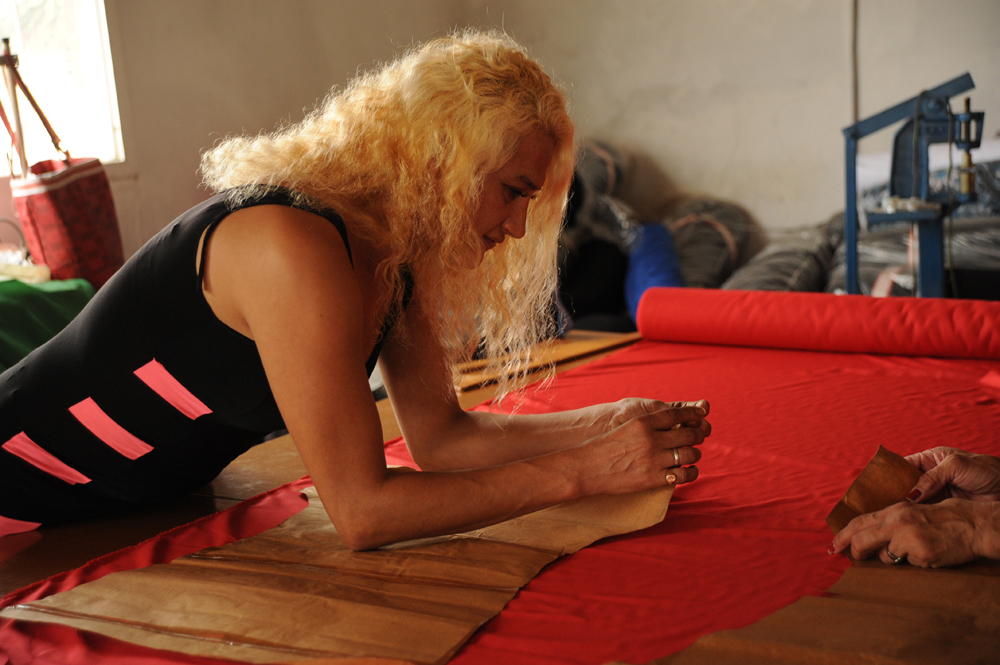
Photo by Ariel Gutraich for the article " Transvestite Love, Driving Force of the Nadia Echazú Textile Cooperative"
“This job was a complete change for me. I went from being a girl who lived at night and slept during the day, living like a bat. It was hard at first, because the streets offer easy money, or at least they did back then. The nightlife doesn't just lead to prostitution, but also to drug use and alcoholism. Sometimes, to put up with a guy who was paying you, you had to get drunk or high. I always wanted to change my life, and it was a change for the better,” she says.
Brisa was familiar with textile work. At the cooperative, she learned about the processes. “Textiles aren't just about making a t-shirt. There's sublimation, printing, embroidery, sewing, cutting, pattern making, and plotting. That's what I learned here. Thanks to that, I know how to get by in life. I know how to make a t-shirt from scratch,” she says proudly. She knows that access to work is very limited for trans people today. “There are a lot of my colleagues who are losing their jobs. Do you see a trans woman working as a cashier at a Chinese store? Do you see a trans woman as a manager? Do you see a trans woman in a bank? No. These are the complexities we face in accessing formal employment,” she reflects. “Just for being trans or a transvestite, you're labeled as a prostitute. Sometimes it's the only way to get a job.”
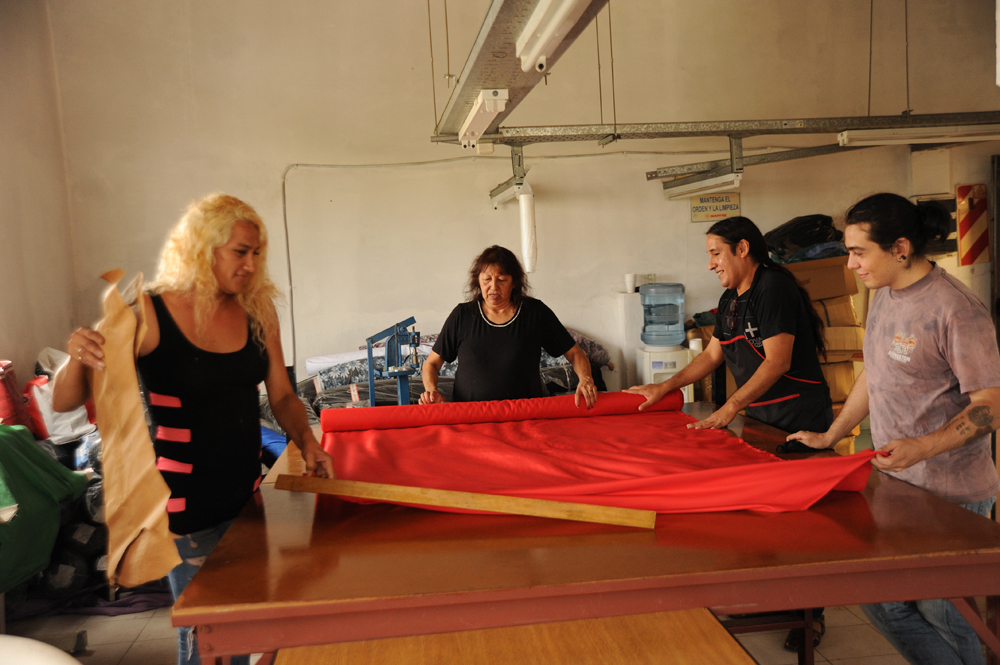
Photo by Ariel Gutraich for the article " Transvestite Love, Driving Force of the Nadia Echazú Textile Cooperative"
Right to work for all
The right to work remains an unfulfilled promise for many trans and gender-diverse people. They have been waging a constant struggle for years to access formal employment. Trans and gender-diverse leaders like Lohana Berkins, Diana Sacayán, and Nadia Echazú spent their final years fighting for this right.
The Gender Identity Law ( 2012) promised transvestite and transgender people to expand their employment opportunities, among other things. Access to education and the repeal of edicts that prevented them from living freely were fundamental in enabling them to consider other types of work.
Almost ten years later, in 2021, the Trans and Travesti Employment Quota Law (27.636) , regulating their entry into the national public sector. It also included training for these positions. By the end of 2023, nearly 955 trans and travesti people had entered the public sector to fill the 1% quota mandated by the law. The more than 900% increase in their formal employment has now diminished . Despite being protected by the law, trans people were affected by the wave of mass layoffs under the Milei administration. Some were reinstated, but many others are awaiting favorable legal intervention. And today, the law is not being enforced.
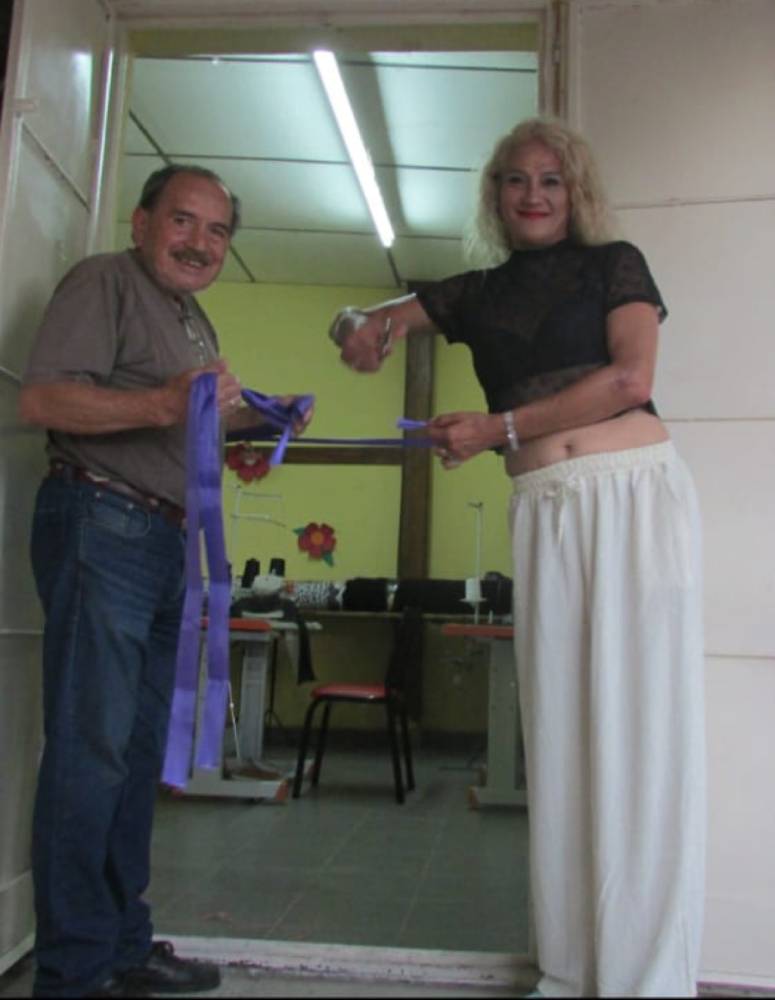
“We are trying to ensure compliance with the employment quota law. Many of us had that opportunity. But several ministries and places where trans women worked have been closed. Where did those women go back to? They went back to sex work because they have to eat, clothe themselves, and pay rent.”
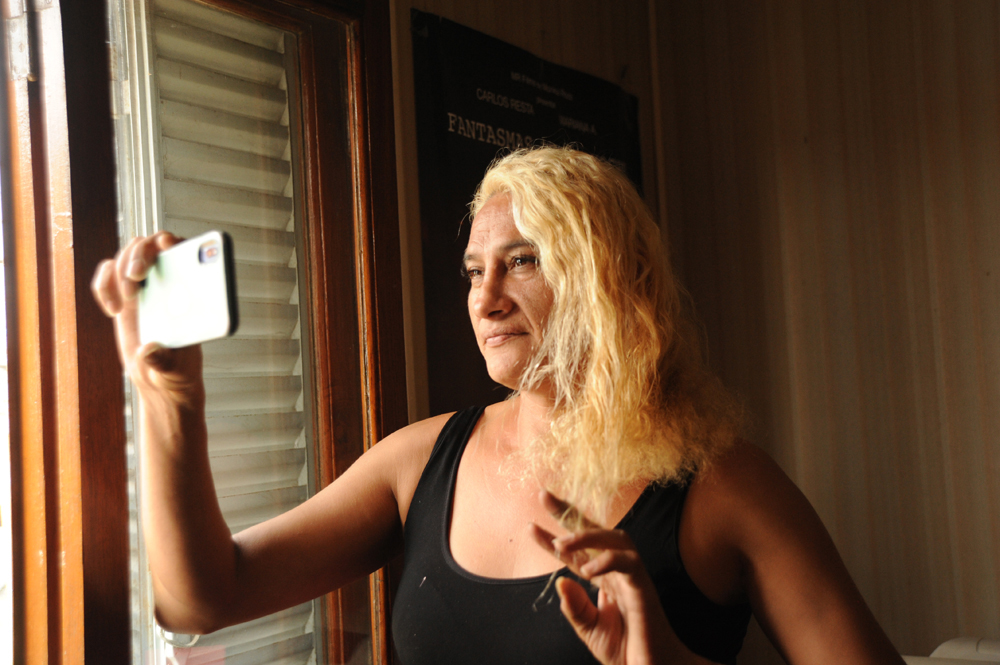
Fabiana: “Working as a caregiver is dignified”
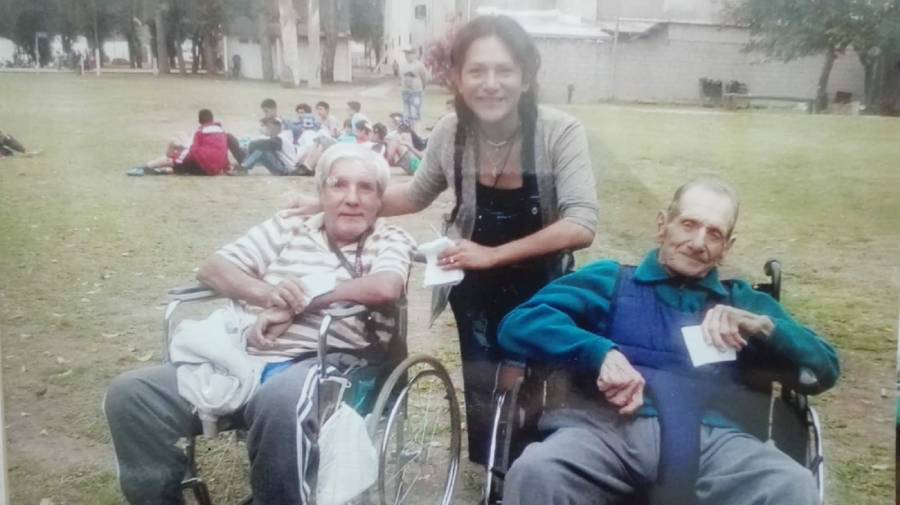
In 2012, Fabiana Cruz was offered an internship as a caregiver. This was thanks to a collaboration between the Ministry of Social Development and the Faculty of Medicine at the University of Buenos Aires. It was her first formal job. “I was so nervous, I didn’t even know what to wear!” she says in an interview with Presentes . “Now I remember that fear as something funny, but at the time it was something new for me, an opportunity. And I faced it with responsibility, a desire to learn, and commitment,” she adds.
As a caregiver, she says, she developed a greater sensitivity, especially towards the elderly. “I was with older adults, mostly people living alone, without family. Dedicating my time and energy to them was an opportunity. I could show that we, trans women, can and should be responsible in our work. I learned patience, to prove to myself that I have to find the strength to keep to a schedule, to have responsibilities, to work as part of a team. It changed my perspective on the little things in life. Caring is the most beautiful thing, and accompanying someone is wonderful. Working as a caregiver is dignified . All jobs are dignified, but you really have to feel that way about this one. Otherwise, it overwhelms you.”
In 2020, during the pandemic, Fabiana had to leave her job due to health concerns. The Ministry of Health filled those positions with nurses to combat the coronavirus. She regrets not being able to say goodbye to the people she cared for. She keeps the letters they sent her.
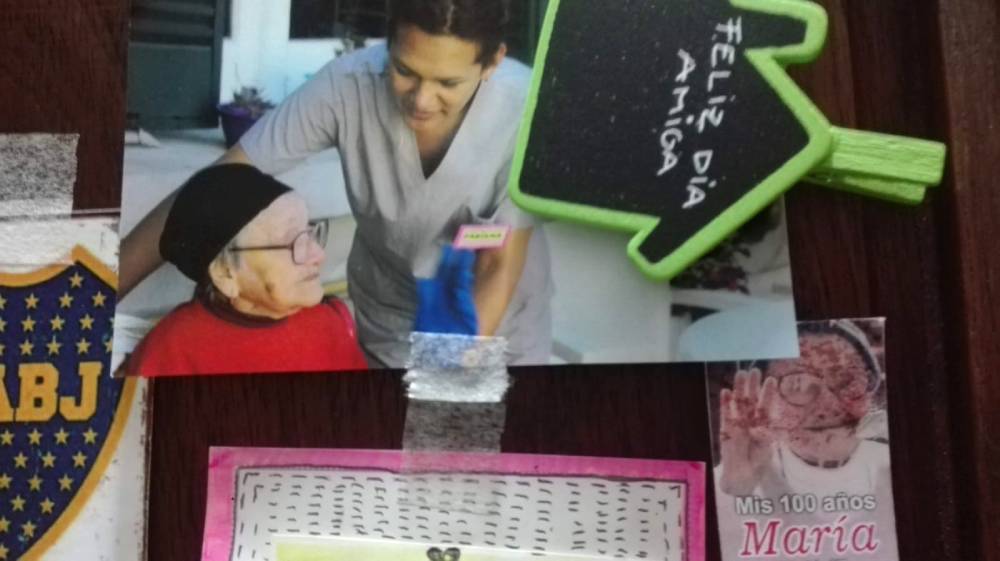
Today she works at a pharmacy in a health center. She recalls experiencing the change as a step forward, but overcoming the insecurity of being unemployed was difficult. “ There are still prejudices, and we need more visibility of women occupying positions in society. We have to break down those prejudices, that lack of opportunities for the women, the vast majority of whom have worked and continue to work in the sex industry. I also believe it's a time of transition, toward a more humane understanding of everything .”
The relationship between trans women and sex work, says Fabiana, is rooted in exclusion. “Not having access to education, employment, or professional training leads to marginalization. I see that there's a change. Now, most of the girls who are transitioning live at home, go to school, study, and are supported by their families. It's the complete opposite of what happened in the 90s when I was a teenager. Sex work is a difficult choice because in most cases you don't have any other option. There are girls who make money, who work, but they don't have opportunities.”.
Allison: “They want us to go back to a single alternative of precarious work”
Throughout her life, Allison Gebel worked as a sex worker, taught sewing and tailoring at a cooperative, worked in the administration of Bonaparte Hospital, and then joined the Ministry of the Environment. Six months after being fired, she began working at the Mocha Celis Popular High School as coordinator of the Solidarity Knitting program , one of the association's many initiatives.
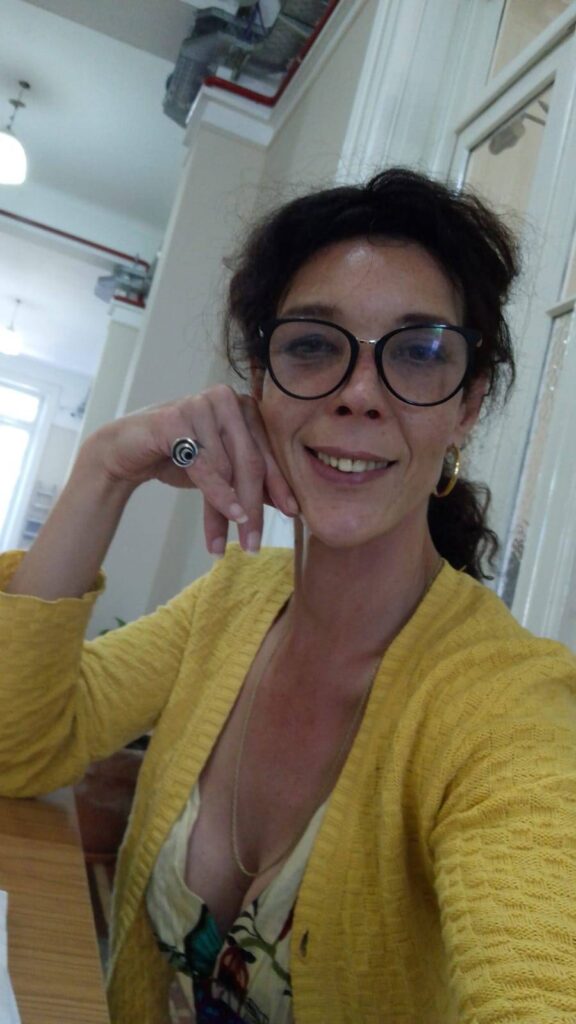
At 50, she says: “Those of us in our generation had very few opportunities. Added to that were police edicts, and we were arrested all the time. It wasn't common for a woman to have a more formal job other than sex work. We were usually offered the most informal jobs.”
Allison is from Olavarría but has lived in Buenos Aires since she was a teenager. She recalls her time as an administrative worker at Bonaparte Hospital (before the trans employment quota law) being passed, saying she was always treated “like everyone else.” “We had a different government then, more populist and more inclusive. I didn’t experience any violent or uncomfortable situations at the hospital. The presence of those of us who break the binary system creates something that isn’t always bad .”
The Solidarity Knitting program, coordinated by Allison, was born during the pandemic to meet the basic needs of trans and gender-diverse people who couldn't support themselves. And it remains essential. “Trans and gender-diverse people from the generation of the 70s, 80s, and 90s have been carrying the weight of many situations of violence and discrimination. There are women with broken hearts and complex life situations. Today, younger women have other opportunities.”
The program, she clarifies, prioritizes trans and gender-diverse people over 50. “We have almost 1,000 trans and gender-diverse colleagues, and we can support 450. In this context, we try to hold onto a little bit of hope, but it's complicated. This past year, some of our colleagues have lost their jobs. They always make excuses. The truth is, they don't want trans women in formal employment. They want us to go back to having only one option: precarious work .”
For Allison, it's essential to support trans people in transitioning to formal employment. “It's a huge process of change. A trans woman who has worked in prostitution and at night has a different rhythm, and adapting to a new job is sometimes unsustainable. That leads to the stereotype that 'trans women are lazy, they're late, they don't want to work.' Adapting isn't so easy or quick. The system fails in providing support. We need to consider how each person arrives here. Generally, they only ask for the basics, which is a high school diploma, and even then it's incredibly difficult. Imagine if someone doesn't have that; they need more support and guidance.”
Messages for female workers
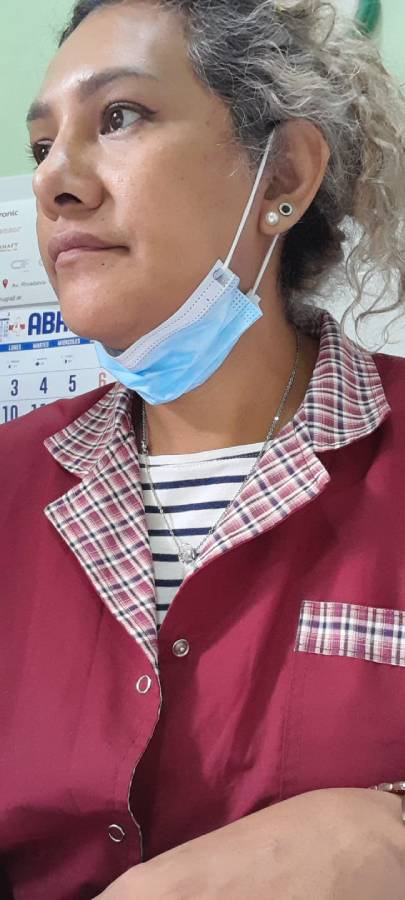
“My message is that we must remain standing, fighting for our rights, for our genuine equality. All work, when it is free, without aggression, without violence, is very dignified. We want work where there is no discrimination or prejudice, real equality. We will always stand with women in this struggle. We are resilient, we are fighters. Let nothing and no one take away our right to dream, to occupy places that have always been denied to us. It makes me very happy to support the struggle of working women,” says Fabiana.
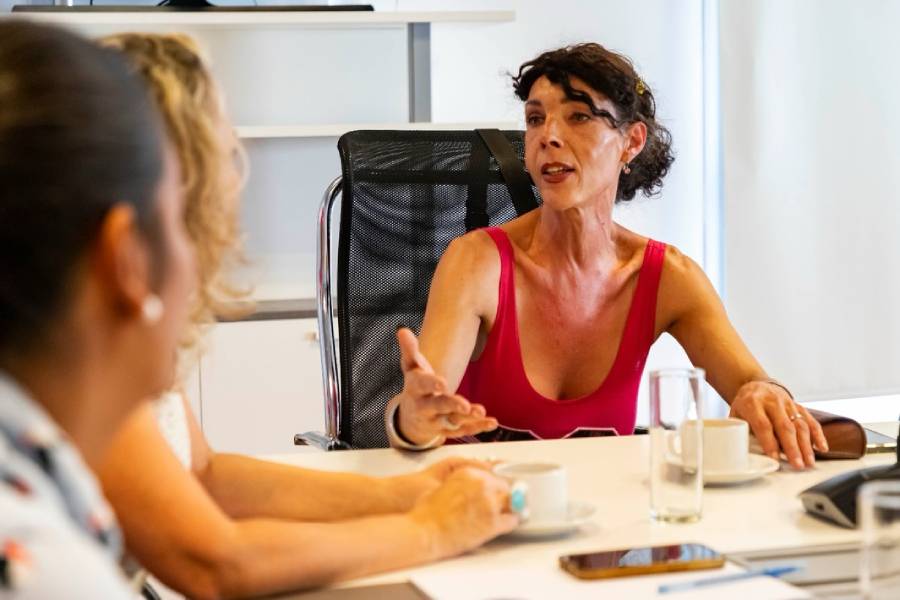
Photo: Mocha Celis / UMET.
"Once again. On March 8th, we commemorate International Women's Day in the fight for equality, for justice, to say no to gender violence. A struggle that has been going on for many years; it is not a day of celebration, it is a tribute to the entire movement of working women."
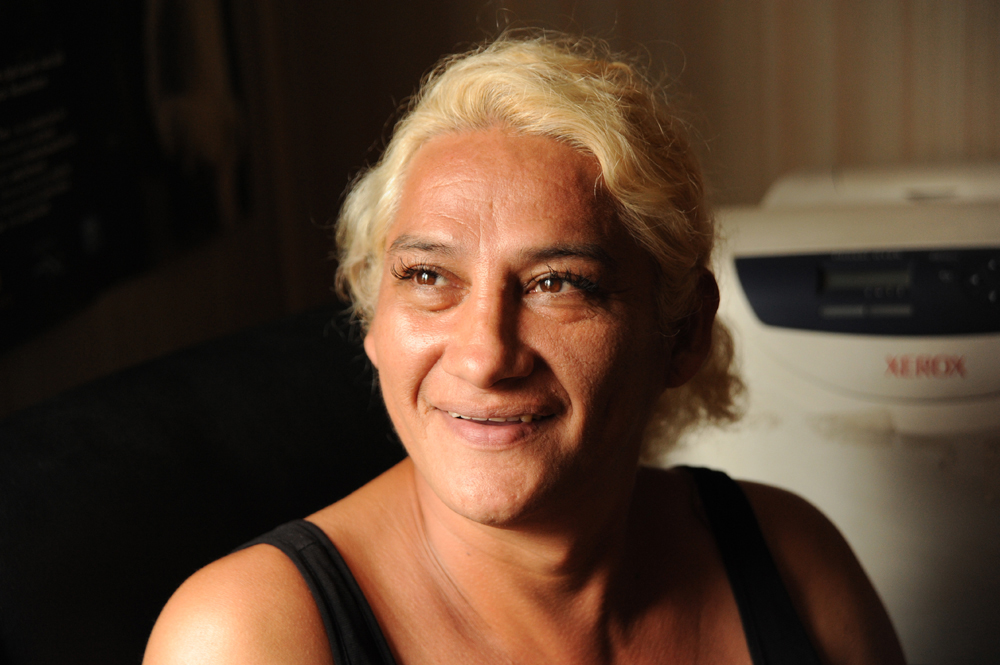
Photo: Ariel Gutraich.
“My message to working women is that we shouldn’t give up and should keep fighting. I believe that unity is strength. No matter what happens, we have to keep going. We have many activists, trans women, and transvestites. Let’s tone down our pride a little, let’s lower our egos a little. If we don’t unite, girls, we’ll be left behind. Let’s try to unite with our transvestite and transvestite comrades. Sometimes, because of the photo op, we forget about our other comrades. When we get somewhere, we have to look over our shoulders and look back. Because there are so many others behind us who also need us to keep working and fighting,” says Brisa.
We are present
We are committed to journalism that delves into the territories and conducts thorough investigations, combined with new technologies and narrative formats. We want the protagonists, their stories, and their struggles to be present.
SUPPORT US

FOLLOW US
Related notes


We are present
This and other stories are not usually on the media agenda. Together we can bring them to light.