

Mexico: Historic ruling in the disappearance of two trans women
A judge in Jalisco sentenced a person to 100 years in prison for the disappearance of two transgender women in 2020. The family is demanding to know the whereabouts of the missing women and Jaime, who disappeared along with them.


Share

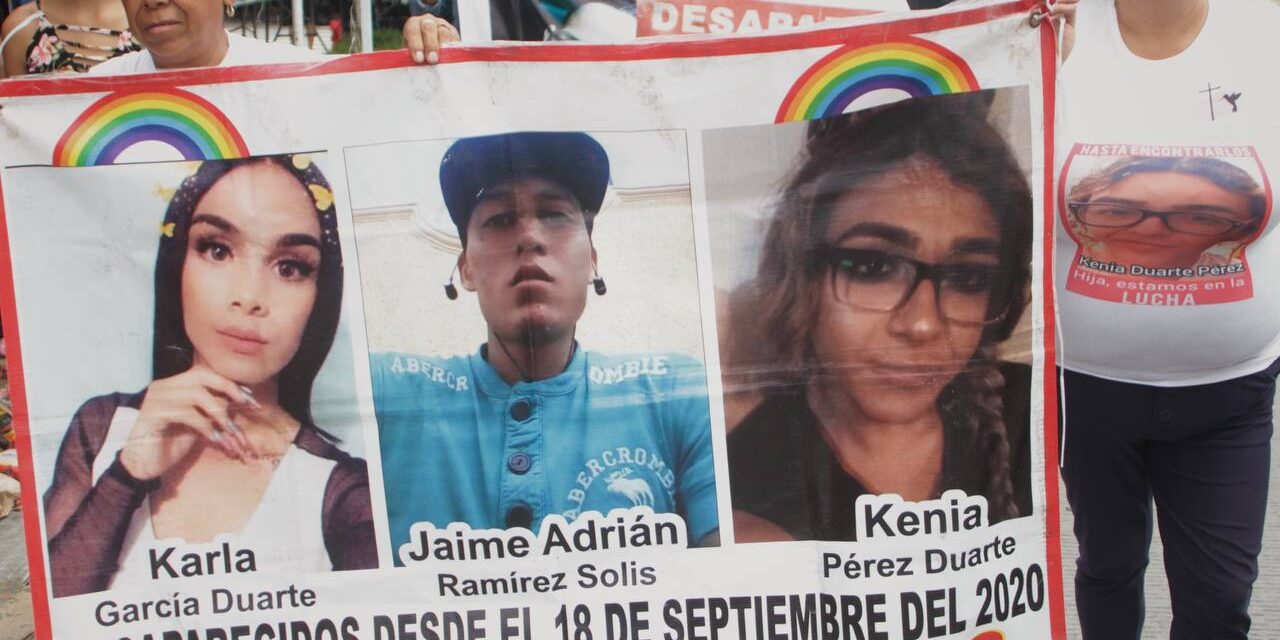
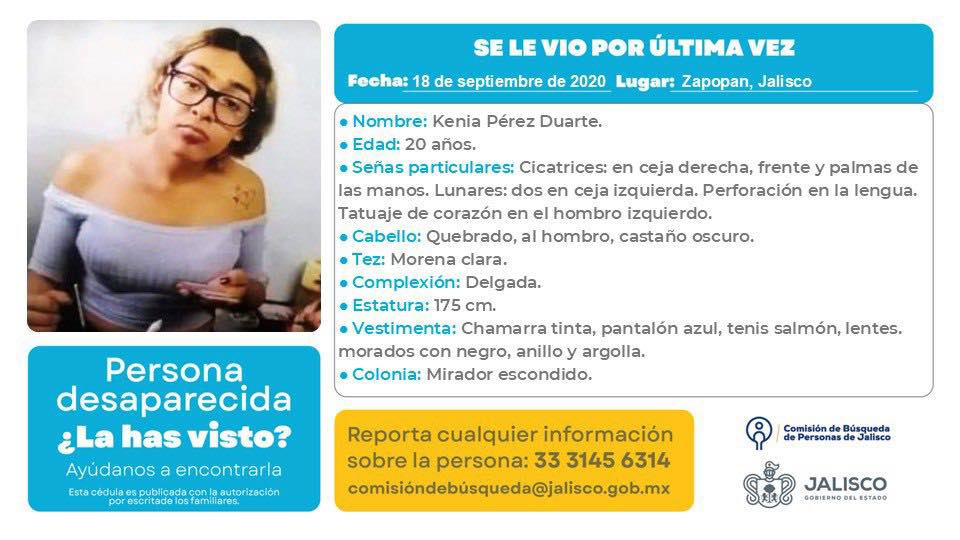
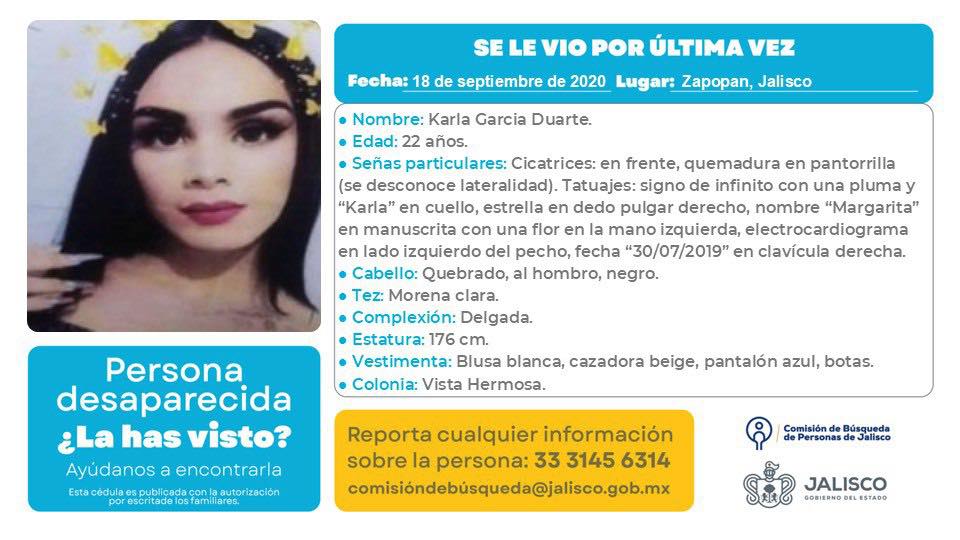
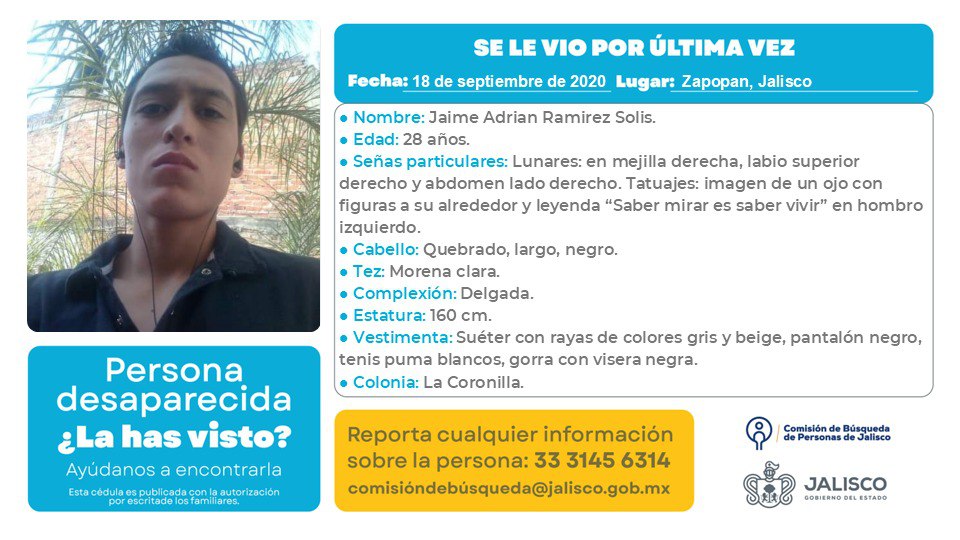
The Jalisco state prosecutor's office found Yaneth Miroslava 'N' sentenced her for the disappearance of Kenia Duarte Pérez (20 years old) and Karla García Duarte (22 years old), two trans women who were last seen in the city of Zapopan with Jaime Ramírez on September 18, 2020. This is the first time in Mexico that a person has been sentenced for the disappearance of two trans women.
More than five years have passed, and the whereabouts of Kenia, Karla, and Jaime remain unknown. In addition to the woman who was sentenced, another person has been detained, but their responsibility has not yet been determined.
The organization Unión Diversa de Jalisco (UDJ) , which has supported the case from the beginning, calls this ruling “historic.” However, it emphasizes that “justice is not complete while the victims remain missing.”
“This case painfully reflects the structural violence faced by trans people in Jalisco and Mexico, where forced disappearance or disappearance committed by private individuals intersects with transphobia, precarious living conditions, and systematic neglect. Trans people not only face greater risks of violence, but also fewer opportunities to access justice , truth, and reparations,” states a press release from UDJ.
Kenia and Karla's mothers haven't stopped searching
On September 18, 2020, Kenia, Karla, and Jaime met with friends in the area known as "Cinco Esquinas" in Zapopan, Jalisco. They left at 11:15 p.m. Since then, their families have not seen them and have not given up searching for them.
“The families have been so involved in the case. Today they are familiar with the procedures, they have joined search groups, and they participate in search efforts. Faced with the news of the sentence, they are fearful of a possible appeal by the defense. They will not rest. For them, there is no justice until they know where their daughters are Fascinación Jiménez of Unión Diversa Jalisco in an interview with Presentes
Transphobia and institutional violence
This process for justice and truth has been plagued by transphobia and institutional violence. The families of Kenia and Karla have denounced the denial of protocols, the pretense and lack of strategy in the search, delaying tactics, and the obstruction of information by the justice institutions of Jalisco.
“The first major obstacle was the authorities’ refusal to issue the ‘ Alba Alert’ (the protocol for searching for missing women), arguing that Kenia and Karla were not women. This institutional violence delayed the actions in the first hours, which are critical for locating them. Once there was social pressure, they issued the alert, but the prosecutor’s office pretended not to. Although they published the missing persons reports, these never actually reached the police stations, hospitals, or the forensic medical service (SEMEFO),” Jiménez added.
He adds, “For months, the prosecutor’s office did not conduct any real searches or develop a search strategy. When the UN intervened, the prosecutor’s office responded that its search efforts consisted simply of going to the neighborhood where the disappearance occurred with photos to ask people about it.”.
Fascinación Jiménez says that even her family was denied access to the investigation file for a time, with the argument that their involvement could "hinder" the case. This is despite the fact that the General Law on Disappearances states that families have the right to be included in the search process.
The obstacles began to ease once the UN intervened, that is, two and a half years after its disappearance.
The UN called for a search adhering to gender protocols
In 2020, the organizations IDHEAS , Litigio Estratégico en Derechos Humanos AC and Unión Diversa de Jalisco requested the United Nations Committee against Enforced Disappearances (CED Committee) to issue “Urgent Actions for the Mexican State to take all necessary measures to search for and locate two trans women who disappeared in the state of Jalisco.”
The request was addressed immediately by the CED Committee. In 2022, it issued a diplomatic note to the Mexican State regarding the lack of a gender and diversity-based strategy for the search for Kenia and Karla, and for disregarding the recommendations the organization had given to the state of Jalisco in response to the human rights crisis.
Nationally, Jalisco is the state with the highest number of missing persons in Mexico . From 1952 to the present (February 16, 2026), at least 131,837 people have disappeared throughout the country.
Mexico under UN scrutiny amid disappearance crisis
In Mexico, there are no official statistics that accurately determine how many trans and non-binary people are missing. Most missing persons registry systems maintain binary classifications or the option of "undetermined" in the gender section.
According to the National Registry of Missing and Unlocated Persons , at least 80 LGBT people are missing. However, the precise number of those missing is unknown.
In this article published in Presentes, we explain the contexts in which the disappearances of LGBT+ people in Mexico have been documented . The factors are diverse and intertwined with hatred, situations of inequality, and contexts of violence and control by organized crime, which place these populations in a more vulnerable position.
This claim has been directly rejected by President Claudia Sheinbaum, who has denied that enforced disappearances exist in Mexico. That is, disappearances committed by public officials and security forces. Furthermore, she has distanced herself from groups of mothers searching for their missing loved ones, refusing to meet with them to hear their demands for truth and justice.
We are present
We are committed to journalism that delves into the territories and conducts thorough investigations, combined with new technologies and narrative formats. We want the protagonists, their stories, and their struggles to be present.
SUPPORT US

FOLLOW US
Related notes



We are present
This and other stories are not usually on the media agenda. Together we can bring them to light.