

Glacier Law: Why does the reform threaten the right to water?
“Glaciers are the world’s water reserves,” says Marta Maffei, former congresswoman, driving force behind and drafting the Glacier Law that Congress wants to reform. What are the risks of these changes that seek to lower the protection threshold for glaciers and periglacial environments?


Share

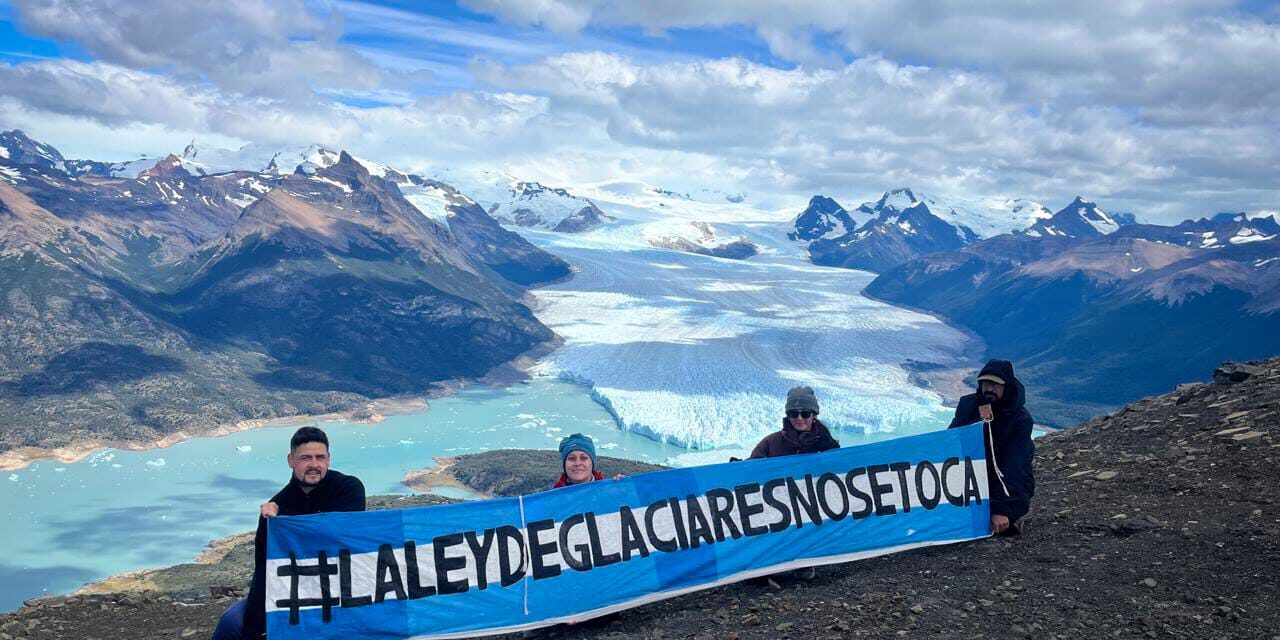
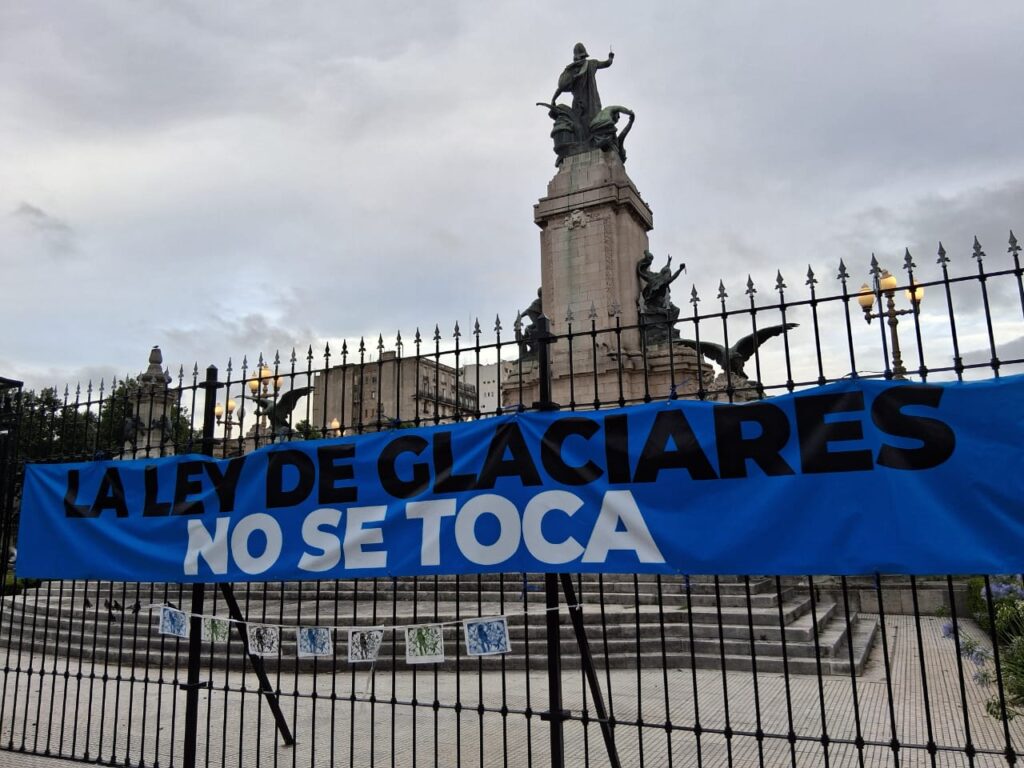
“The Glaciers Law is not to be touched.” With this slogan, the socio-environmental movement in Argentina has been promoting a campaign to warn of the consequences of Javier Milei's government's attempt to reformulate crucial articles of a law passed 15 years ago by Congress: the Glaciers Law (Law 26.639). The bill sent from the Executive branch to the Senate is raising alarms because it seeks to reduce the current protection of glaciers and periglacial environments, in a context where freshwater reserves are in danger and recent reports agree on an unprecedented global “water crisis.”.
The organizations warn that the reform is unconstitutional from a legal standpoint. Because it will allow—among other changes—each province to decide which glaciers and periglacial zones to protect and in which areas it will permit, for example, mining projects. As a result, 85 lawyers and researchers sent a letter to Congress explaining why the attempt to change the law, supported by several governors and provincial legislators, is a threat and a step backward.
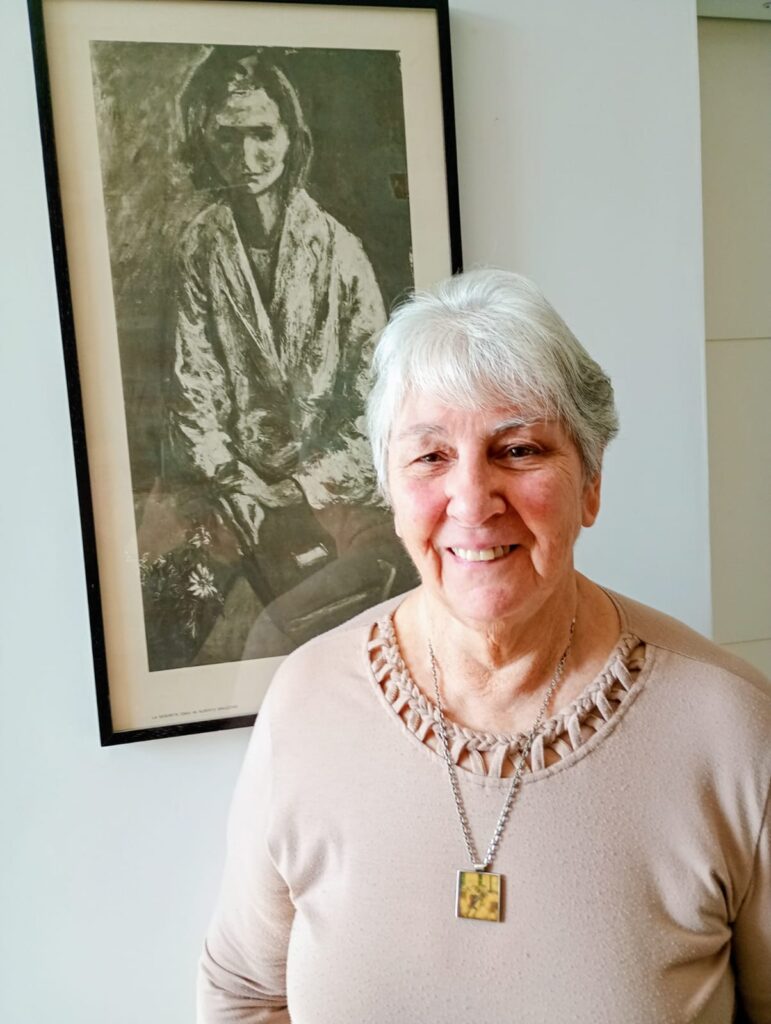
Marta Maffei, a former legislator, was one of the main driving forces behind and co-authored, along with a hundred other organizations, the Glaciers Law that Congress is seeking to reform . The former teacher and CTERA union leader also participates in PACHAS, the Ecopolitical Movement for Good Living , and the Plurinational Campaign in Defense of Water for Life , which promotes the drafting of a water protection law through popular initiative. From her home in Cipolletti, Río Negro, we spoke with her to better understand the implications of this change.
“Glaciers are the world’s water reserves”
-At a time when common sense is fighting one of its most complex battles: why defend glaciers?
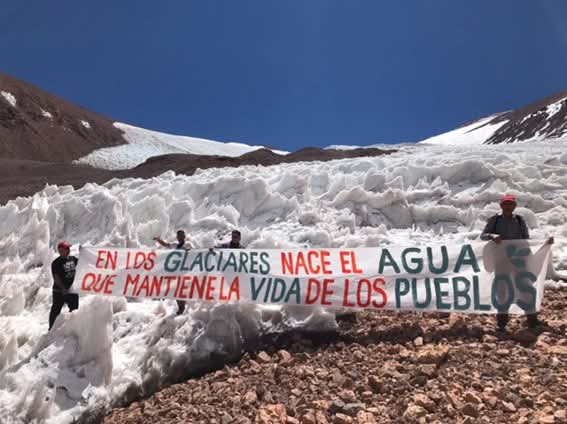
Humans and all living beings depend on water. Only 2.5 percent of the Earth's water is fresh or non-brackish. It is a scarce resource in a growing community, not only due to the human population, but also because of the number of activities and production systems, far beyond agriculture, that are based on water or increasingly dependent on it. The vast majority of the planet's fresh or non-brackish water is contained in glaciers. There, remnants of ice ages that occurred thousands of years ago are preserved. Glaciers are ice caps, ice fields, or large frozen masses that we cannot see, but they are the world's water reserve. But access to water is also a tool of social control . One example: Palestinians whose access to water is restricted by the Israeli government through Mekorot —Israel's state water company. Water is key to the possibility of continuing to live.
“They are playing with the lives of the people.”
-What is the situation of glaciers globally and in Argentina in particular?
In Argentina, these water reserves feed 39 river basins, rivers that originate in the Andes Mountains and irrigate the western part of the country. In the provinces of San Juan and Mendoza, people can live and produce thanks to these basins. Thanks to them, we have apple orchards, crops, life itself. Today, there are people deciding that the social criteria for survival can be changed. They are playing with the lives of entire communities. For a long time, we have established water governance, maintaining precautionary measures to prevent contamination and protect society. Even so, thousands of people, particularly in the greater Buenos Aires metropolitan area, lack access to water or live in areas with contaminated aquifers. This increases childhood illnesses by 200 percent compared to the average rates in the rest of the country. When we talk about water, we talk about life, and if we talk about life, we talk about health, about the right of communities to continue living.
The water “bankruptcy”
In January 2026, a report by the United Nations University Institute for Water, Environment and Health (UNU-INWEH) warned that the world has entered a global water crisis. In the report's words: “a point of no return for certain systems where human demand has irreversibly depleted aquifer reserves and dried up the wells of the future, putting the entire global water system at risk.”
“Many regions have been living far beyond their hydrological capacity. It’s like having a bank account that’s being emptied every day without a single deposit. The balance is already negative,” explained Kaveh Madani, one of the report’s authors. He made the link between water, the economy, and basic rights clear: “ The lack of water here is reflected in the food there . This crisis isn’t a local problem; it’s a systemic risk that runs through the veins of global trade,” Madani warned.
– What do we do with all the alarms that the evidence raises?
Never before has water deterioration been as severe as in the last 50 years. If humanity wants to survive this multifaceted crisis, we must negotiate a contract to avoid collapse. We have a wealth of scientific information and evidence. We're not trying to cause alarm; what we want to say is that we have options. But there are a number of political issues preventing our people from being protected . Two billion people worldwide still lack access to essential levels of water.
-What would be the main threats of this reform to the Glaciers Law?
Article 41 of the Constitution establishes minimum standards for protecting people's right to a healthy environment, stating that it is the responsibility of the Nation to enact the laws containing these minimum protection requirements. Article 6 of the current Glacier Law protects areas included in the National Glacier Inventory, compiled by the Argentine Institute of Snow Science, Glaciology and Environmental Sciences (IANIGLA). One of the changes is that provinces can decide and order the removal of this water reservoir from the inventory and its destruction. This is something I have never seen in legislation: that a country has an inventory of its assets and a province can remove something from the statistics if it finds it inconvenient. It is unacceptable that provincial governments jeopardize the lives, present, and future of communities. No province can override these principles. As the Supreme Court of Justice of the Nation stated in 2019: minimum environmental standards are established at the national level.
In 2019, the Court upheld the constitutionality of the Glaciers Law and rejected the lawsuit filed by the mining company Barrick Gold, which was joined by the Province of San Juan. The company had requested that Law 26,639, which established the Minimum Standards for the Preservation of Glaciers and the Periglacial Environment, be declared unconstitutional. Even so, illegal mining activities continued in protected areas across several provinces.
Although we've had a Glacier Law for 15 years, a mapping project carried out by researchers from the University of Zurich has identified at least 53 mining operations in violation in Argentina, located in ice fields where there is machinery and leaching ponds, among other things. What they want here is a law that provides cover for these situations, not to acknowledge that they've been operating illegally all these years and to escape sanctions. Because, inevitably, there will be sanctions.
-How does the RIGI (Incentive Regime for Large Investments) impact this scenario?
The RIGI (Regional Integrated Management Plan) tells companies they can come and set up shop, extract resources, and exploit nature without accountability. The lack of oversight and climate change further complicate the situation. Added to this is the intense pressure from provincial governments to do business with their own senators. Among the representatives, I think there's a bit more concern, and they've held meetings with experts to get informed. We have regions like Mendoza and Chubut that have been fighting for years for their right to water. Seven million people live in the Andes. They can't just decide to deprive us of water. When you deprive a people of water, you deprive them of everything. If they take our water, there is no life, and where there is a human right, a business takes over. We've had years of marches by Indigenous organizations and communities demanding their right to live.
Photos: Plurinational Campaign in Defense of Water for Life , Agustín Alejandro González, and Jáchal Assembly - No Touching It
We are present
We are committed to journalism that delves into the territories and conducts thorough investigations, combined with new technologies and narrative formats. We want the protagonists, their stories, and their struggles to be present.
SUPPORT US

FOLLOW US
Related notes

We are present
This and other stories are not usually on the media agenda. Together we can bring them to light.