

“Humanitarian aid is not an act of charity”
The consequences of the suspension of cooperation from the United States were profound but expanded local networks and alliances.



Share

We survived the first year since the US government's abrupt decision to suspend a substantial portion of its international humanitarian aid. This marked a turning point for thousands of social programs and their impact around the world. Beyond budget and foreign policy debates, the most profound consequences have been felt in the daily lives of millions of people who depended on these programs to meet basic needs related to their safety, health, and access to food.
For decades, the United States was one of the world's leading providers of humanitarian aid. Its annual contributions reached tens of billions of dollars, allocated to programs focused on health, protection, food security, and assistance for displaced persons, refugees, and those affected by humanitarian crises.
The drastic reduction of these resources, whether suspended or cut, led to the total or partial closure of thousands of initiatives implemented by international agencies and civil society organizations, particularly community-based ones that lacked the financial reserves to absorb the impact.
A structural impact
The effect was immediate. Primary healthcare programs ceased operations; community kitchens reduced portions or closed; shelters limited their capacity or suspended essential services; and specialized legal protection and psychosocial support teams were dismantled. In many contexts, these interventions represented the only point of access to basic services for historically excluded populations exposed to multiple forms of violence.
The consequences have been especially severe for LGBTIQ+ people , who in many countries face criminalization, structural discrimination, social violence, and a lack of family support networks. For our community, projects funded through international cooperation not only offered material assistance but also provided safe spaces. Access to shelter, medical care, food security, psychosocial support, and protection from violence and hate crimes was available. And they offered the opportunity and hope of building better futures in dignity.
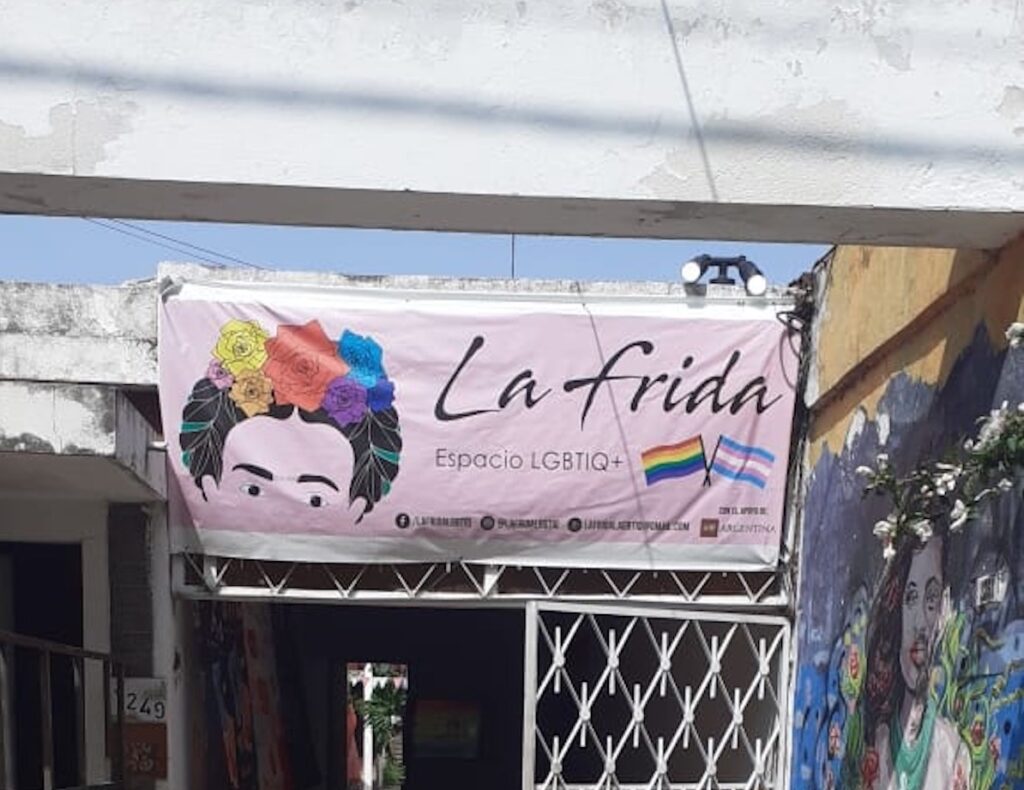
Organizations specializing in serving LGBTIQ+ people in contexts of human mobility, forced displacement, or extreme violence were particularly affected by the suspension of these funds. A representative case is that of our organization, “Casa Frida, LGBTIQ Shelter ,” which for five years operated comprehensive protection programs for displaced LGBT people, asylum seekers, and refugees. The reduction in U.S. international cooperation resulted in the loss of at least 60% of our operating budget for the 2025–2026 period. This forced a significant decrease in capacity, a limitation of services, and a reconfiguration of emergency responses.
We reaffirm our commitment to our communities on the southern border, closely monitoring the situation with the relevant authorities. These events violate human dignity and contradict the mandate of the Federal Government for a Humanitarian Migration Policy. @CNDH @CEDHChiapas pic.twitter.com/EDwLypkhOP
— LGBTIQ Shelter 🏳️🌈🏳️⚧️🇲🇽 (@CasaFridaLGBT) January 22, 2026
They are lives, not numbers
For the beneficiaries, these cuts are not just abstract figures. They are everyday decisions that directly affect their safety and well-being: fewer spaces available to protect themselves from violence, interruption of medical treatments, reduction in the quality and frequency of food, cancellation of key legal support for asylum or immigration regularization processes, and greater exposure to risks such as exploitation, trafficking, or violence based on prejudice and race.
For people displaced by armed conflict, political persecution, or widespread violence, the reduction in aid has deepened their precarious situation and increased the pressure on equally vulnerable local communities. For refugees and asylum seekers, the suspension of support programs has disrupted fundamental integration processes, deteriorating their physical and psychosocial health and reducing their chances of rebuilding a dignified life.
A year later, the effects of these decisions have not been reversed. In many contexts, reduced cooperation has become the norm, while local organizations operate at the limit of their capacity, assuming financial and institutional risks to maintain even minimal assistance. The narrative of “reorienting” or “adjusting” international cooperation has tended to obscure the human cost of these decisions, which manifests itself in increased insecurity, avoidable hunger, and lack of access to essential services.
New strategies for survival
Faced with this scenario, many humanitarian and civil society organizations have initiated accelerated readjustment processes to sustain their support for vulnerable populations. These responses have included diversifying funding sources through partnerships with private foundations, alternative bilateral cooperation, the business sector, and individual contribution mechanisms. This has revived the need for a philanthropic culture and a reconfiguration of intervention models to prioritize high-impact projects with lower operating costs; the efficient use of resources through reduced administrative expenses; and the strengthening of financial planning.
The incorporation of technologies for case management, remote care, online training, and institutional communication has made it possible to maintain the continuity of some services and expand their scope in contexts of high budget constraints.
At the same time, project innovation has been geared towards more sustainable models , including employability initiatives, livelihood generation and solidarity economy, with the aim of reducing exclusive dependence on short-term humanitarian aid.
The role of governments
The crisis has also presented an opportunity to rethink more co-responsible sustainability models. In particular, the need to strengthen the participation of local governments has been identified , through collaboration agreements, co-financing schemes, and technical support that ensure the continuity of basic services and greater inter-institutional coordination. While local budgets are limited, their involvement is key to moving toward responses that are more rooted in the local community.
In addition, strengthening partnerships with local private initiatives and business actors has emerged as a key strategy. The intersection of social and business missions, particularly in areas such as employability, training, health, and comprehensive economic development, offers opportunities to generate sustainable impacts, diversify income, and strengthen community support networks, provided these partnerships are built on principles of human rights, social responsibility, and transparency.
Another key element has been organizational unity and cooperation among organizations . This was expressed in coordination efforts, shared use of resources, exchange of capabilities, and the accelerated development of common agendas. This collaboration made it possible to optimize scarce resources and strengthen collective influence in a highly complex context.
These strategies reflect significant organizational resilience and a hope for continuity based on adaptation and commitment to our communities. However, resilience cannot and should not be interpreted as a structural solution to the withdrawal of international cooperation. The experience of the past year demonstrates that the sustainability of humanitarian action requires more diversified, predictable, and co-responsible funding models. It also requires cooperation policies that recognize the strategic value of local and community-based organizations.
«Resisting is not about enduring in solitude«
This anniversary is not merely a symbolic date. It is an opportunity to critically assess the real impact of decisions regarding international cooperation and to remember that humanitarian aid is not an act of charity . It is an essential component of human rights protection and of social stability and development. When funding is withdrawn without transition mechanisms or shared responsibility, the consequences fall disproportionately on those already facing greater levels of exclusion and risk. Naming these effects, one year later, is a way to keep at the center the people whose lives were directly affected and to emphasize the need for collective responses that leave no one behind.
A year later, I remain convinced that the most serious aspect of this crisis is not just the loss of resources, but the risk of becoming trapped in precariousness and silence. When aid is withdrawn, what is exposed are not abstract structures, but people who were already living on the brink of exclusion. Facing the erosion of the deepest human sense of solidarity and empathy should not lead us to a shared fear of losing our most fundamental purpose.
In this context, I deeply believe in unity and community resilience. In the daily decision to stay connected, to care for one another across organizations, territories, and as individuals, even when resources are scarce. Resisting is not about enduring in isolation; it is about upholding collective dignity.
Protecting the pride of our communities today means something very concrete: not allowing the crisis to strip us of the conviction that all lives matter, and that no person is expendable. That certainty, even in the most difficult times, remains our starting point.
We are present
We are committed to journalism that delves into the territories and conducts thorough investigations, combined with new technologies and narrative formats. We want the protagonists, their stories, and their struggles to be present.
SUPPORT US

FOLLOW US
Related notes
We are present
This and other stories are not usually on the media agenda. Together we can bring them to light.