

Delicia Mamani: Two months after her disappearance, they demand an active search
The young migrant woman disappeared in November. So far, there has been no progress in the investigation despite various pieces of evidence presented by the family. "Where is Delicia?" is the question that keeps being asked.


Share

CORDOBA, Argentina. Family members and organizations in the province of Cordoba are denouncing delays and omissions in the search and investigation into the disappearance of Delicia Mamani. The 25-year-old has been missing for two months. The case is fragmented across different jurisdictions, and, according to them, there has been no institutional coordination.
Various accounts attempted to suggest a voluntary departure. The family's lawyer was categorical. "Delicia did not leave voluntarily. She left under duress, coercion, or threats. She did not want to leave," stated Natalia Lescano, the family's lawyer.
Two months after her disappearance, many questions remain unanswered: how the route attributed to Delicia was carried out, where the money for the tickets came from, who accessed the security cameras, why it was explicitly requested that no report be filed, and what concrete measures the State adopted in the first few days.
What happened to Delicia?
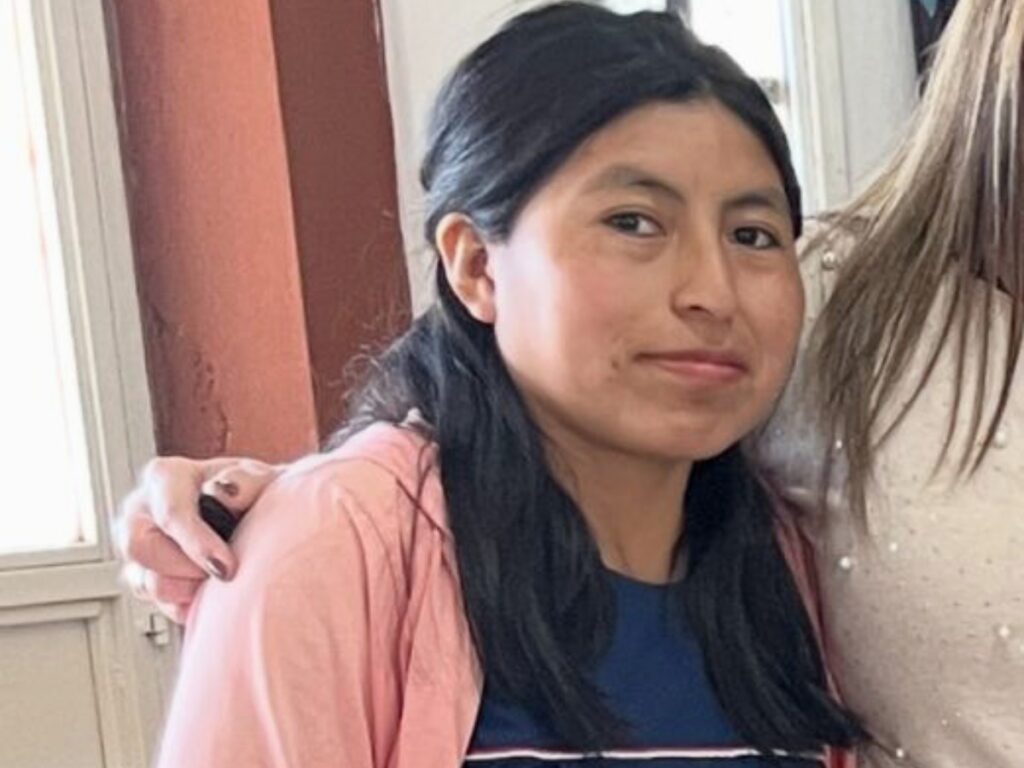
On November 21, between 5 and 6 a.m., Delicia left her house saying she was going to school. She didn't say goodbye. She was carrying a backpack with a computer, two pairs of pants, and a stuffed animal. She wasn't carrying any money.
That same day, her online activity abruptly ceased. Her last connection was recorded between 11:40 and 11:50 PM. At 11:47 PM, she left the WhatsApp groups she was part of, and her social media profiles appeared to have been deleted or deactivated. Since then, she has not contacted her family or close friends.
According to people close to her, Delicia was timid, didn't talk to strangers, and had no history of traveling abroad. She had never expressed any intention of leaving and had no support network outside her immediate circle.
“All the indicators we have from the school, based on the testimony of classmates and teachers, show that Delicia was distressed, sad, and crying,” explained lawyer Lescano.
A life marked by multiple acts of violence
Delicia was born on December 10, 1999. She is a resident of Córdoba, Argentina, but was born in Bolivia. She was 25 years old at the time of her disappearance. She lived with her mother and brother in a rural area of Malagueño, in a precarious adobe house with a dirt floor, in a context of structural poverty. She had no income of her own and no economic independence.
She had a disability in her right hand that prevented her from moving her fingers and difficulty walking due to a difference in leg length. Her movements were slow. She was studying to become a primary school teacher at the Dr. Alejandro Carbó Higher Normal School, where her absence was quickly noticed by teachers and classmates.
Delayed complaints and institutional obstacles
When she lost contact with Delicia, her mother, María Mamani, tried to report her disappearance in the town of Malagueño. According to witnesses, the report was not taken. At the police station, they told her they “didn’t understand” and no case file was opened. The woman had brought a letter that Delicia had left at home. She received no support or adequate response. The mother is illiterate, which exacerbated her vulnerability during that first contact with the state.
The formal complaint was filed two days later, but in the province of Jujuy. It was filed by Delicia's brother-in-law, Cancio Tencuri Flores, who identified himself as her brother. In that complaint, the disappearance was declared to have occurred in Córdoba. This opened a second jurisdiction even though there was still no active complaint in the province where Delicia disappeared.
In Córdoba, the complaint was only filed on November 29th. It was filed by the principal of the Dr. Alejandro Carbó Higher Normal School, along with teachers and students, at the Women's Center and later at Judicial Unit No. 1. Since there was no prior complaint in that province, the principal was the one who filed the complaint.
Evidence, versions, and control of the narrative
According to the family's lawyer, there was an attempt to create the impression that Delicia had left home voluntarily. However, videos that came into the family's possession prove otherwise.
On November 24, María Mamani received videos showing her daughter at the Villazón bus terminal in Bolivia. The footage was sent by Cancio Tencuri Flores. The recordings were presented as official copies: they were recordings made from a monitoring screen.
The images show Delicia sitting in the terminal. During the recording, two men can be seen looking at her from close and medium distance. Along with the videos, Delicia's mother received a picture of a ticket with Delicia's name on it and messages insisting that she had left of her own free will and that it was not necessary to report her disappearance or continue the search.
Between November 24 and 29, while Delicia remained missing and no active report had been filed in Córdoba, the case began to circulate in fragments on social media and in the press. During that same period, Cancio contacted Delicia's friends again, reinforcing the story of her leaving voluntarily and asking them not to report her disappearance.
Who is Cancio Tencuri Flores?
As the case progressed, Delicia's mother and her lawyer filed a complaint against Cancio Tencuri Flores. They believe his involvement in the days following the disappearance is relevant to the investigation. Among the elements cited are the sending of audiovisual material, his insistence on the hypothesis of a voluntary departure, and his explicit request not to file a report.
“The accused person had more information than we do,” Lescano said, referring to Cancio Tencuri Flores’ role in the days following the disappearance.
According to the testimony of Delicia's mother, included in the complaint, the relationship between her daughter and Cancio Tencuri Flores was strained by a financial debt. These elements are part of the complaint filed by the family, although they have not yet been explicitly incorporated into any publicly reported investigative measures.
According to the lawyer, Delicia's mother's main suspicion is that her daughter was taken to do some kind of work against her will.
A fragmented and paralyzed cause
As the weeks passed, the investigation into the disappearance of Delicia Mamani Mamani remained scattered across different jurisdictions: Córdoba, Jujuy, and Bolivia. This fragmentation makes it difficult for the family and their legal representatives to access the case files and obtain precise information about the search efforts undertaken, such as sweeps, requests for reports, or official reconstructions of the route attributed to the young woman.
In December, the family's lawyer requested that the case be investigated as human trafficking and transferred to federal jurisdiction. She argued that there were elements that transcended provincial jurisdiction and required a comprehensive investigation. The request designated Federal Court No. 3 of Córdoba, presided over by Judge Miguel Vaca Narvaja, as the competent court, although Judge Vaca Narvaja was on leave. However, the judge replacing him refused to take the case, leaving the file unattended in federal court.
“Human trafficking networks don’t operate in isolation; they also operate with varying levels of institutional complicity. That’s why this case deserves to be investigated as a human trafficking network,” Lescano stated.
Given this situation, the defense announced that the request will be reiterated on February 1, once the court recess has ended. Meanwhile, the investigation continues at the provincial level, without any public information being released about the specific measures being taken or how the work is being coordinated between the different jurisdictions involved.
To date, there are no official reports on searches in the area where Delicia was last seen. Nor are there any reports on reconstructed search routes, comprehensive analyses of audiovisual material, or effective coordination between prosecutors' offices. The lack of public information and visible actions reinforces the concern of the family and the organizations supporting the case, who denounce a stalled investigation lacking a human rights perspective and a clear search strategy.
“The State is responsible: in Malagueño, in Córdoba, in Jujuy, in Argentina and in Bolivia,” said Laura, a teacher from Delicia.
Institutional intervention and binational dimension
Two months after the young woman's disappearance, the case has taken on an institutional and binational dimension. It is marked by overlapping complaints and a lack of coordination between different jurisdictions: Córdoba, Jujuy, and the Plurinational State of Bolivia.
On December 1st, given the family's extreme economic and social vulnerability, a formal request was made for the Bolivian Consulate in Córdoba to assist Delicia's mother. "Don't be complicit in the disappearances of our young women. We want Delicia alive and back here," stated Isabel , an activist and Bolivian migrant living in Córdoba.
On December 16, a group of women went to the Bolivian Foreign Ministry to demand intervention and follow-up on the case. They were not received and received no response. The argument was that Delicia “was not Bolivian,” despite her family, community, and territorial ties to that country.
“We cannot allow authorities in a Plurinational State, such as the consulate and the foreign ministry, to fail to search for a Bolivian woman. We demand that she be searched for in Argentina and in Bolivia,” said Adriana Guzmán, a feminist activist from Bolivia.
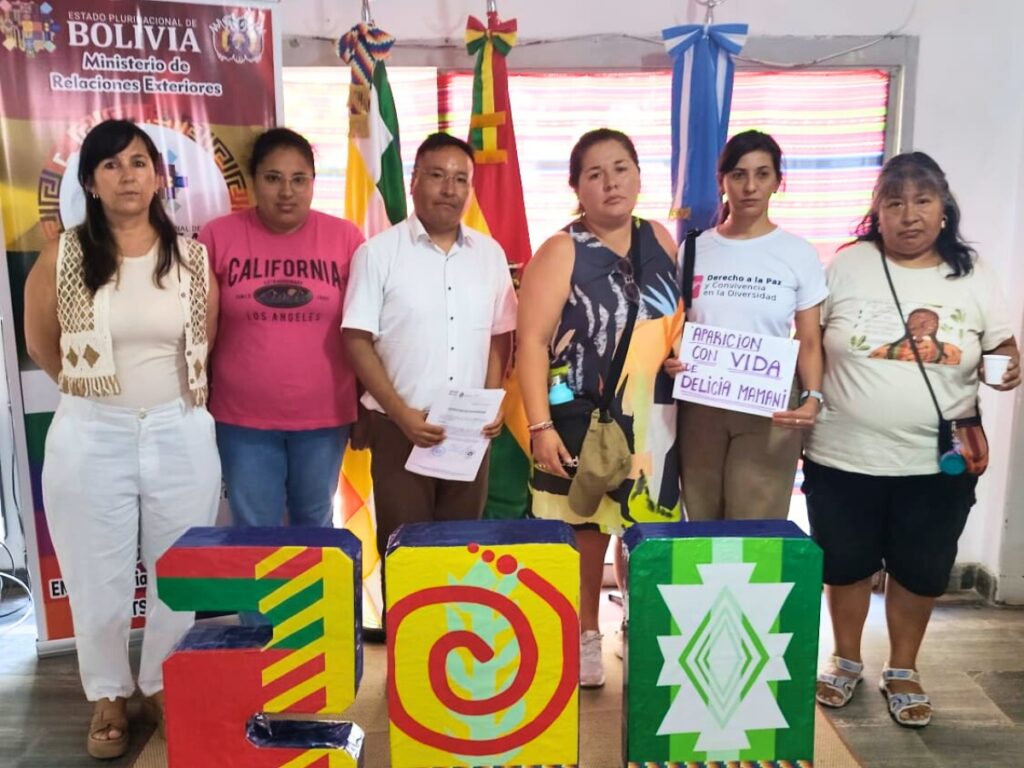
The following day, December 17, a demonstration was held at the Consulate of the Plurinational State of Bolivia in Córdoba. New evidence related to the disappearance was presented, and answers were demanded. The Consulate met with members of the group supporting the search and committed to intervening and monitoring the case.
“We are going to work hand in hand with all social organizations, with the Carbó School, with the leaders and with all of society,” said Santos Aurelio Rodríguez Laura, Bolivian consul in Córdoba.
Hours later, the Bolivian Consulate in Jujuy posted the search for the young woman on its Facebook page, dated November 28.
The sustained search from the community
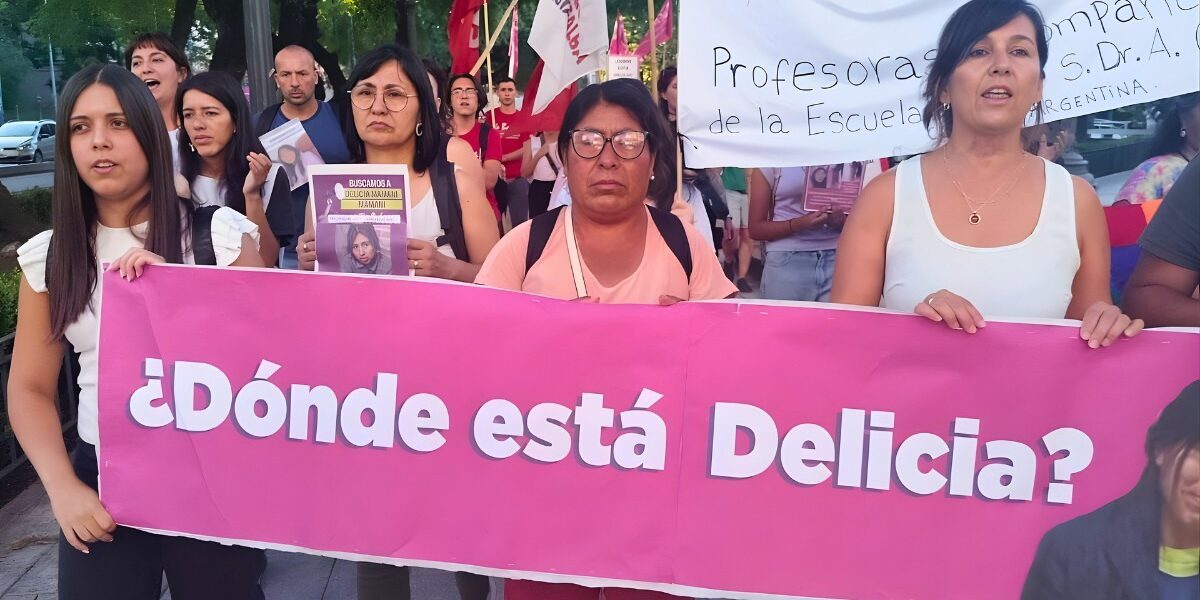
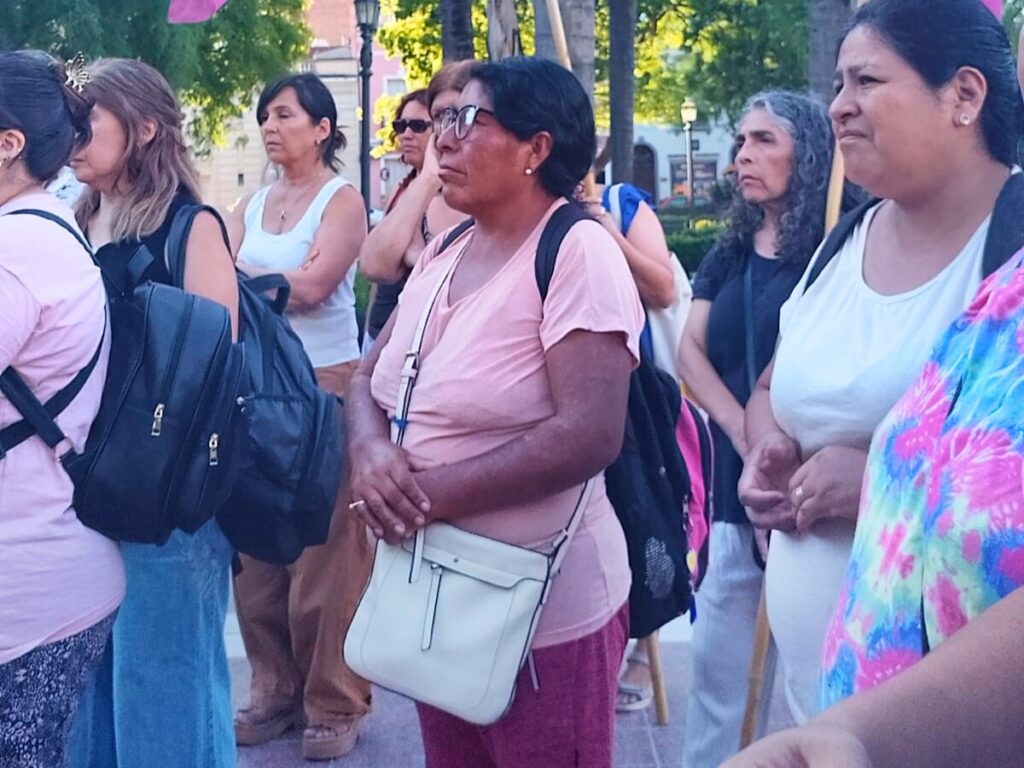
Given the lack of institutional response in the initial days, the search for Delicia Mamani Mamani was driven primarily by her close circle and community networks. Family members, teachers, classmates, neighbors, and social organizations held marches, rallies, and public demonstrations both in Malagueño and in various locations throughout the city of Córdoba, with the aim of raising awareness of her disappearance and demanding the activation of search mechanisms. In Jujuy, support was mainly expressed through the dissemination of the case on social media.
“As a student at our institution, it is a commitment we have made to sustain this fight. We want it alive, safe, and sound,” said Mara, a teacher at the Dr. Alejandro Carbó Higher Normal School.
The school's educational community played an active role in supporting the family and in public actions.
Delicia's mother, the young woman, has no state support and has had to navigate administrative procedures, media exposure, and public statements in a context of extreme vulnerability. Her status as a migrant woman, facing educational and economic barriers, exacerbated the difficulties in accessing clear information about the case and in being heard by the institutions responsible for the search. Despite this situation, her voice became central to the demand for her daughter's safe return and to denouncing state negligence.
Currently, the organizations supporting the case continue to demand access to the complete audiovisual material, official reports on the search efforts undertaken, effective coordination between prosecutors' offices and jurisdictions, and a genuine investigation that incorporates a human rights, gender, and intercultural perspective. While awaiting the formal reactivation of the search, the collective demand remains the primary means of ensuring that Delicia's disappearance is not silenced.
“Delicia was loving, grateful, and full of strength. If Deli were reading this, I would tell her to reply to the email I left her, through the secure channel that she and I both know,” concluded Laura, one of her teachers.
Where is Delicia?
Two months after her disappearance, many questions remain unanswered: how the route attributed to Delicia was carried out, where the money for the tickets came from, who accessed the security cameras, why it was explicitly requested that no report be filed, and what concrete measures the State adopted in the first few days.
While the case continues without substantive progress, the search for Delicia remains alive in the streets, in the community, and in the collective demand that her disappearance not go unpunished or be forgotten.
The lack of answers is not only a debt to her family, but an expression of the state's failure to protect young women who disappear in situations of structural inequality.
We are present
We are committed to journalism that delves into the territories and conducts thorough investigations, combined with new technologies and narrative formats. We want the protagonists, their stories, and their struggles to be present.
SUPPORT US

FOLLOW US
Related notes



We are present
This and other stories are not usually on the media agenda. Together we can bring them to light.