

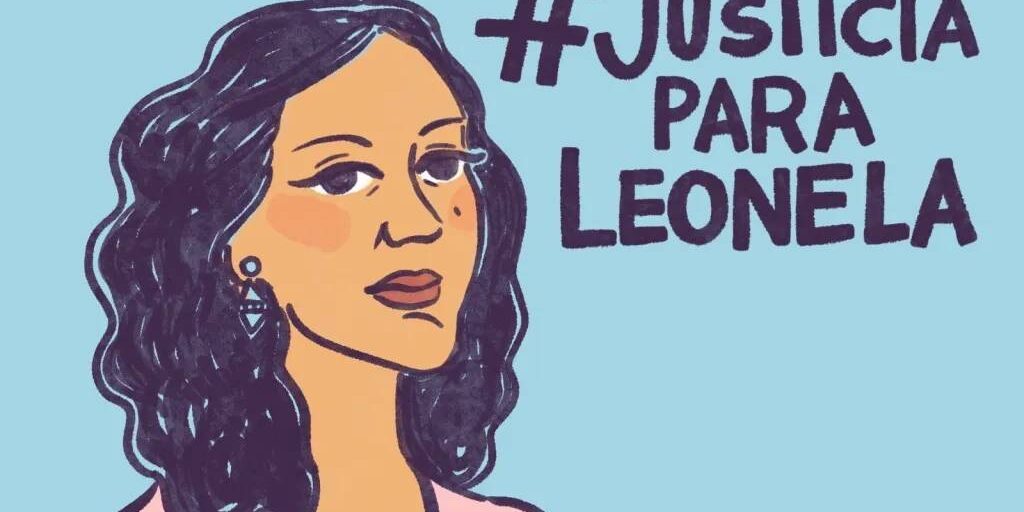
Inter-American Court condemns Honduras for transfemicide and impunity in the Leonela Zelaya case
Landmark ruling in Leonela Zelaya case recognizes violence against trans people.


Share

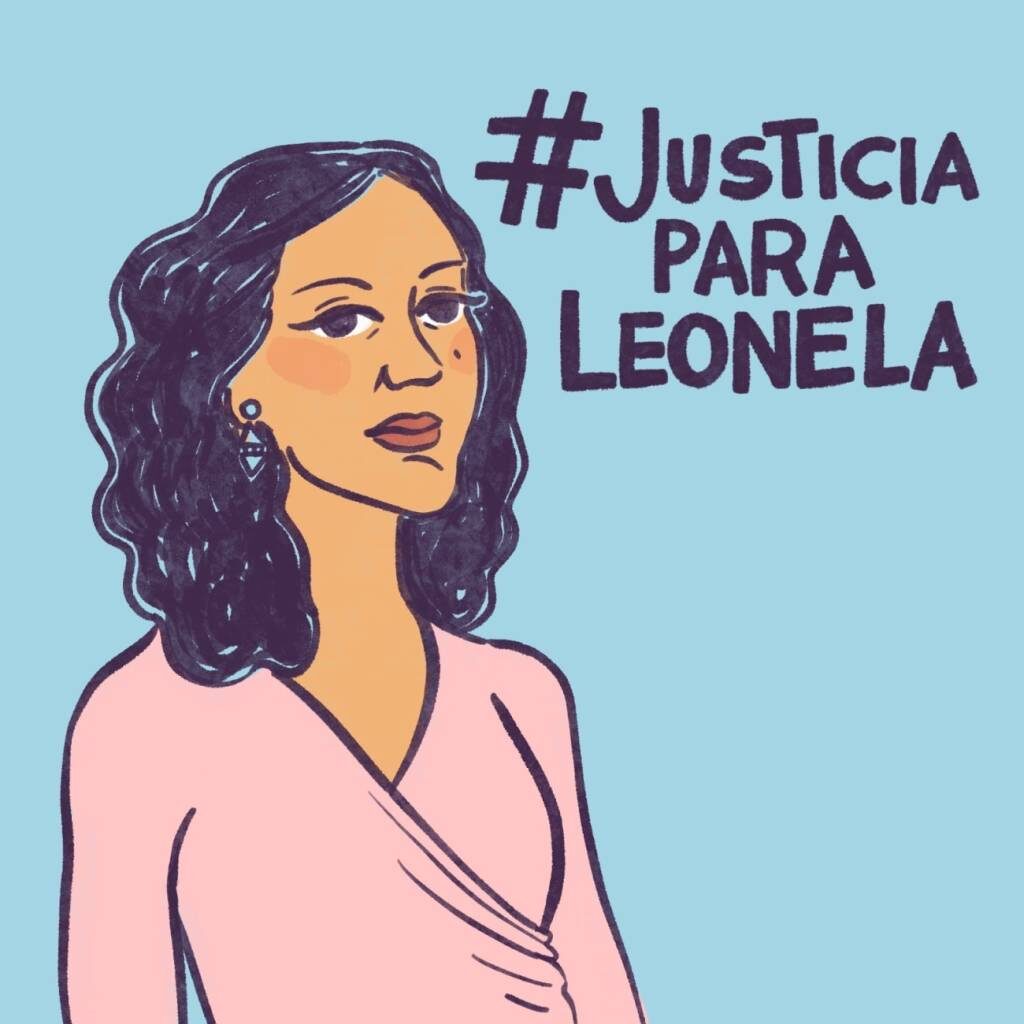
TEGUCIGALPA, Honduras . Honduran President-elect Nasry Asfura will have to apologize for the transfemicide and torture of Leonela Zelaya, according to a ruling issued today by the Inter-American Court of Human Rights against the Honduran State.
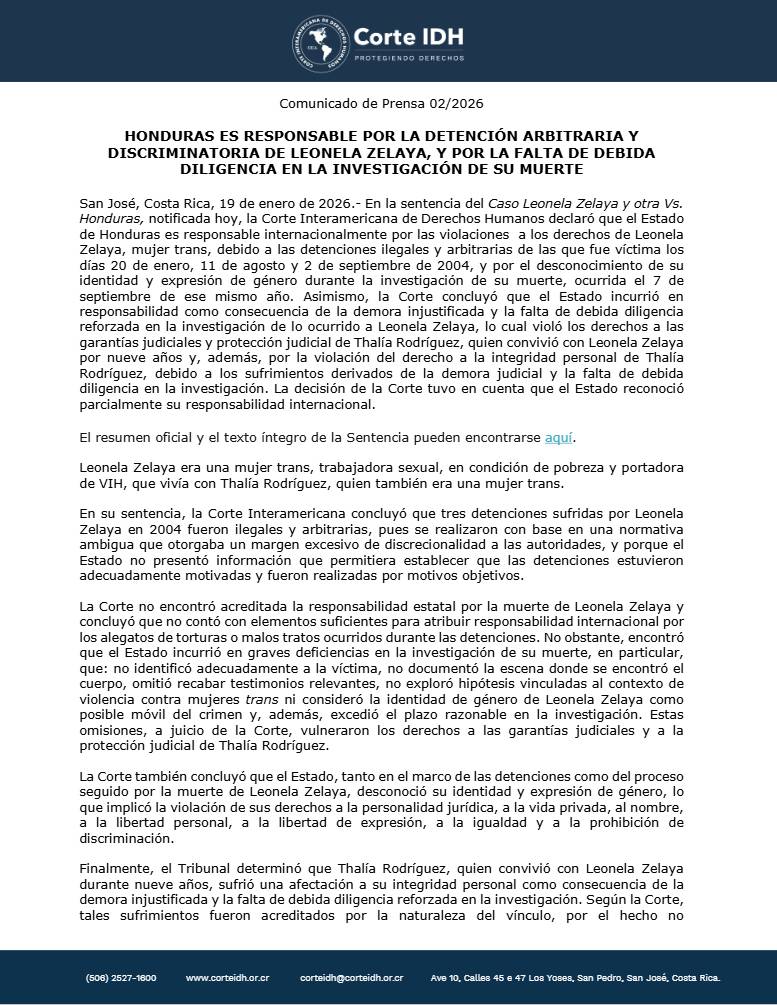
On October 2, 2025, the Inter-American Court of Human Rights issued a landmark judgment declaring Honduras internationally responsible for the human rights violations against Leonela Zelaya, a transgender sex worker murdered in 2004, and her partner, Talía Rodríguez. The judgment, formally notified on January 13, 2026, represents a milestone in regional jurisprudence on gender-based violence and the rights of the LGBTI+ community.
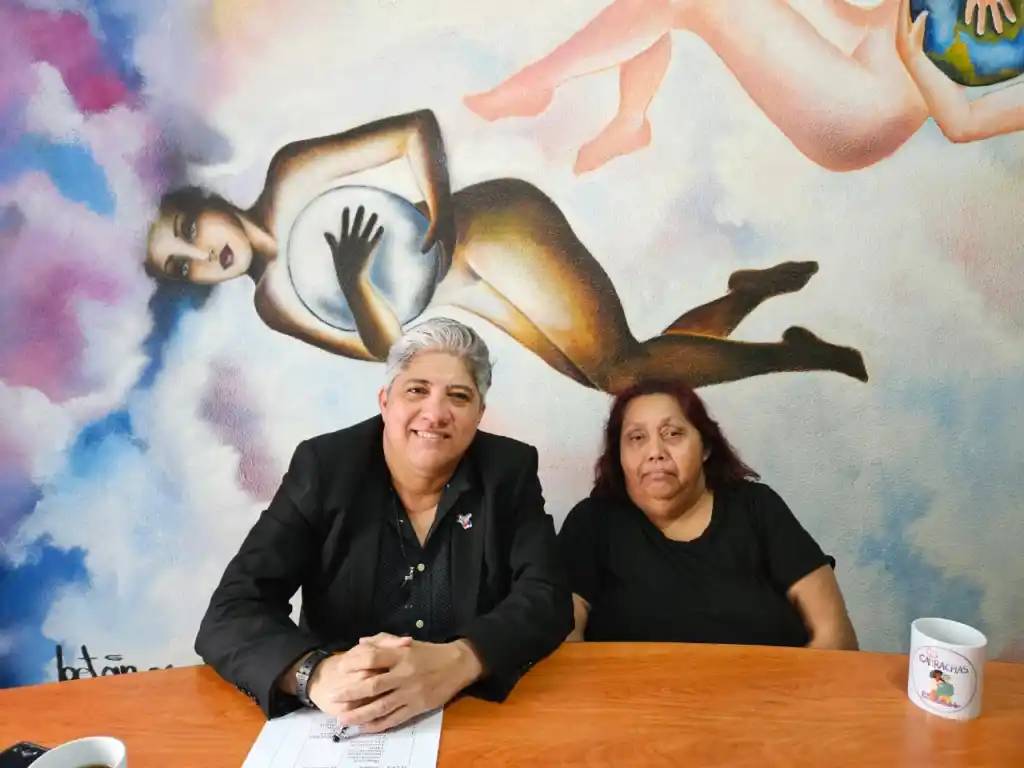
"Our most important reparation is non-repetition. Leonela's memory and the LGBTI resistance deserve truth and justice," stated Indyra Mendoza of the Cattrachas Lesbian Network.
"This ruling is a long-awaited victory that strengthens the path against hate-motivated violence in the region," said Angelita Baeyens of the Kennedy Human Rights Center.
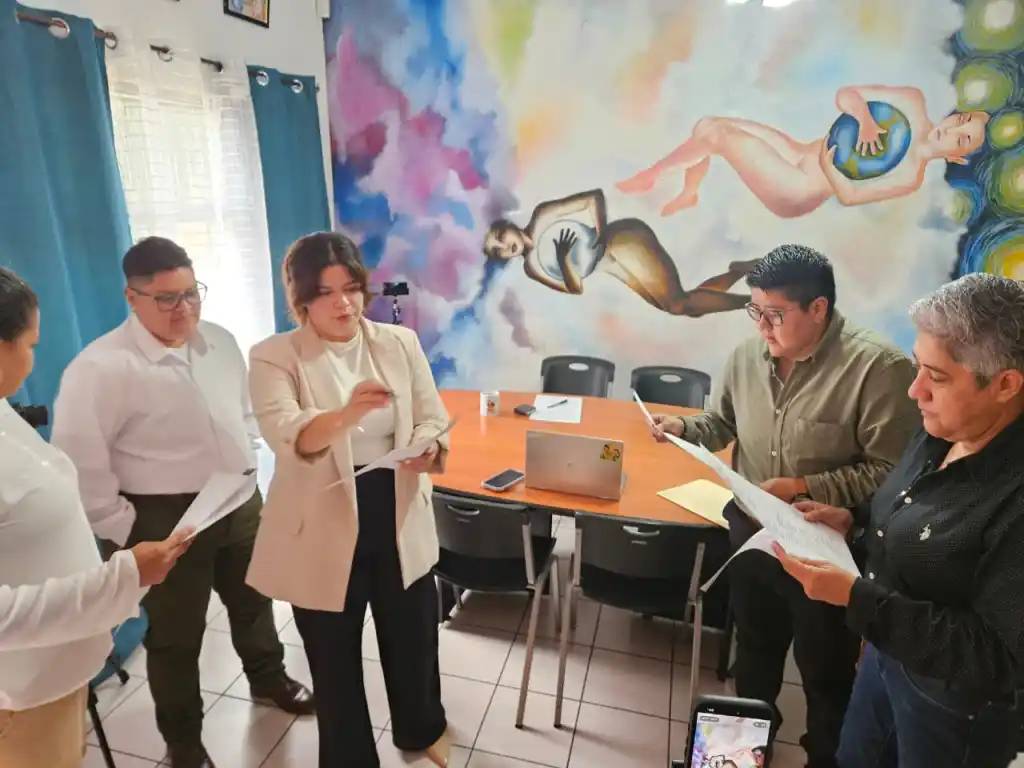
Photo: Cattrachas
The Court accepted the Honduran State's partial acknowledgment of responsibility and was emphatic in concluding that the authorities violated multiple rights . The tribunal determined that "the State disregarded her gender identity and expression," which implied the violation of her rights to legal personality, privacy, name, freedom of expression, and equality before the law.
This ruling sets a crucial precedent by applying the principle of enhanced due diligence in the investigation of violent deaths of trans people, a standard that the State flagrantly failed to meet.
Why is this ruling important?
This ruling against Honduras reinforces the obligation of states to conduct investigations with a gender perspective and without discrimination. The Court emphasized that the state failed to develop logical lines of inquiry that considered transfemicide—the hate crime against a trans woman—despite being aware of the context of violence and discrimination against the LGBTI+ community.
Furthermore, for over 17 years, the investigation stalled on a simplistic hypothesis, omitting key elements and leaving the crime unpunished. Moreover, the ruling innovatively recognizes Talía Rodríguez as a relative of Leonela. In doing so, it broadened the concept of family to include the community ties, friendships, and sisterhood that transgender people build in the face of exclusion.
State to carry out repairs
The Court ordered Honduras to implement a series of comprehensive reparations. These include conducting an effective criminal investigation, publishing the judgment, holding a public act of acknowledgment of responsibility, including data on violence against the LGBTIQ+ community in its statistical systems, adapting its legal framework, and paying compensation.
The Inter-American Court of Human Rights will oversee compliance, ensuring that the case does not fall into oblivion again. This decision not only seeks justice for Leonela and Talía, but also sends a strong message to the region about the urgent need to protect the lives and dignity of transgender people through concrete policies and a justice system free from prejudice.
National and international reactions
The Office of the United Nations High Commissioner for Human Rights (OHCHR) highlights the progress represented by the Inter-American Court of Human Rights' ruling against Honduras in the death of Leonela Zelaya, a trans woman living in extreme poverty. The ruling, which identifies a pattern of police persecution, orders structural measures: gender-sensitive investigations, police training, and reform of the Police Law to protect trans women. This decision consolidates the path opened by the Vicky Hernández case toward justice for the LGBTIQ+ community.
(OHCHR) welcomes the progress made in recognizing the rights of the LGBTIQ+ population through the Inter-American Court that declares the State of Honduras internationally responsible for the serious human rights violations committed against Leonela Zelaya… https://t.co/hkOERa56fX
— OACNUDH Honduras (@OACNUDHHN) January 20, 2026
A new ruling by the Inter-American Court of Human Rights against Honduras, regarding the murder of transgender woman Leonela Zelaya, exposes two structural flaws: impunity due to negligent investigations and discrimination protected by the Police Law, according to Radio Progreso. The ruling orders reforms to this law to eliminate discretionary power for security forces. "It is up to society to pressure the next National Congress to comply with this mandate.".
📌 #OurWord : A new international ruling against Honduras.
— Radio Progreso HN (@RadioProgresoHN) January 20, 2026
Read and share our latest editorial:
👉 https://t.co/ONG9TUlmFc pic.twitter.com/74eQCuK2VW
Cladem Regional emphasized that the Inter-American Court of Human Rights' ruling sets a vital precedent. The decision in the Leonela Zelaya case reaffirms that gender identity must always be respected and that violence against LGBTIQ+ people requires enhanced due diligence. After more than 20 years, the ruling finally recognizes the justice that Leonela and Thalía Rodríguez deserved.
Justice for Leonela!
— CLADEM Regional (@CLADEM) January 20, 2026
The Inter-American Court condemns Honduras for arbitrary detentions and lack of due diligence in the investigation into the death of Leonela Zelaya, a trans woman murdered 20 years ago. pic.twitter.com/PKihhwwi1V
The National Human Rights Commission (CONADEH) warned that the ruling in the Zelaya v. Honduras case is a condemnation of structural discrimination and the State's lack of due diligence. It emphasized that the ruling is not only about individual reparations , but also a mandate for comprehensive measures to eradicate exclusion and violence against transgender people. CONADEH expressed concern about the inaction in the Vicky Hernández case and warned that the State must treat this case as an opportunity for a thorough review , not as a mere formality. The organization reiterated its commitment to monitoring State compliance.
📌The National Human Rights Commission (CONADEH) issues a statement regarding the notification of the judgment in the case of Zelaya and Another vs. Honduras and the State's obligation to structurally address discrimination against transgender people. pic.twitter.com/uBBgHHgqbk
— CONADEH-The Ombudsman's Office (@CONADEH) January 20, 2026
Trans organizations in Honduras emphasize that the Inter-American Court in the Leonela Zelaya case brings to light the systemic violence against trans women in the country, many of whom are sex workers in extremely vulnerable situations. The ruling, which acknowledges police persecution , should be the definitive impetus for a profound reform of the Police Law . It should also aim to create a specific investigation protocol that guarantees justice. The ruling honors Leonela and all trans women murdered with impunity; it now demands immediate action from the State to transform discrimination into real protection.
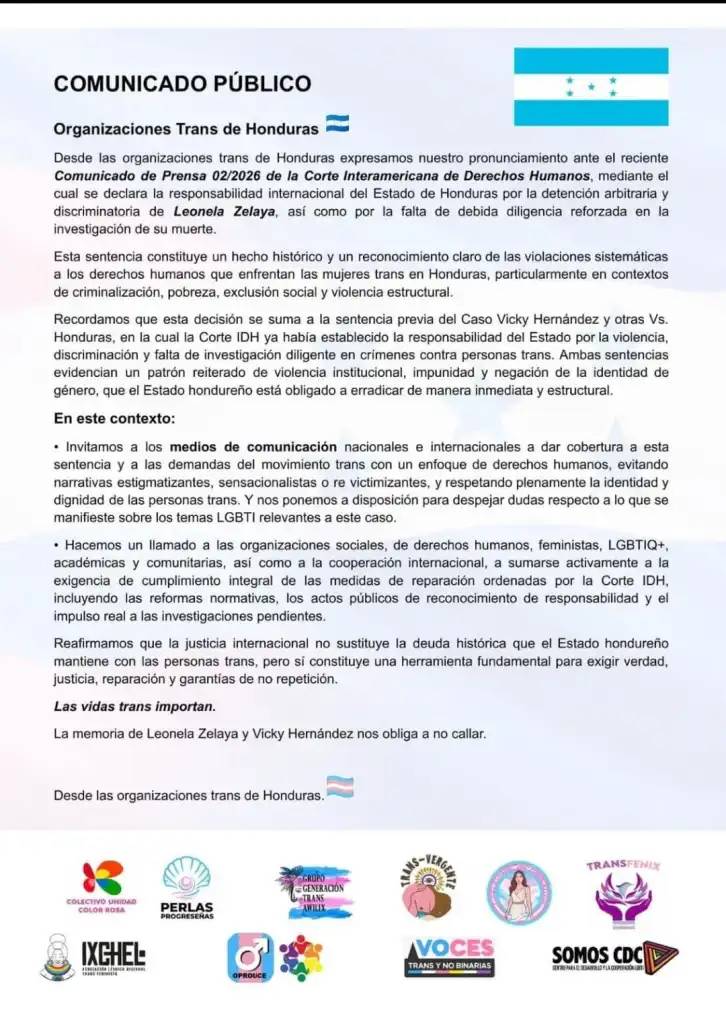
Caribe Informativo reported that a landmark ruling by the Inter-American Court of Human Rights holds the State of Honduras responsible for the human rights violations against Leonela Zelaya, a transgender sex worker . The judicial decision represents a hopeful development in terms of justice for LBT women in the region, establishing state responsibility and paving the way for reparations and guarantees of non-repetition.
📣🏳️⚧️Hopeful news in terms of justice for LBT women: the @IACHR confirmed a landmark ruling holding the State of Honduras responsible for human rights violations against Leonela Zelaya, a trans woman and sex worker. pic.twitter.com/TYPrYLHCr6
— Affirmative Caribbean (@Caribeafirmativ) January 20, 2026
The LGBTI Litigators Network congratulates its members, Cattrachas and Kennedy HRC , for their tireless efforts in litigating this landmark case. It urges the State of Honduras to fully comply with all measures ordered by the Inter-American Court of Human Rights.
This article was originally published by Reportar Sin Miedo , our partner media outlet in Honduras. It is republished on Presentes through our cooperation and content exchange agreement.
We are present
We are committed to journalism that delves into the territories and conducts thorough investigations, combined with new technologies and narrative formats. We want the protagonists, their stories, and their struggles to be present.
SUPPORT US

FOLLOW US
Related notes


We are present
This and other stories are not usually on the media agenda. Together we can bring them to light.