

Why exotic pine trees intensify fires in Patagonia and displace native forests
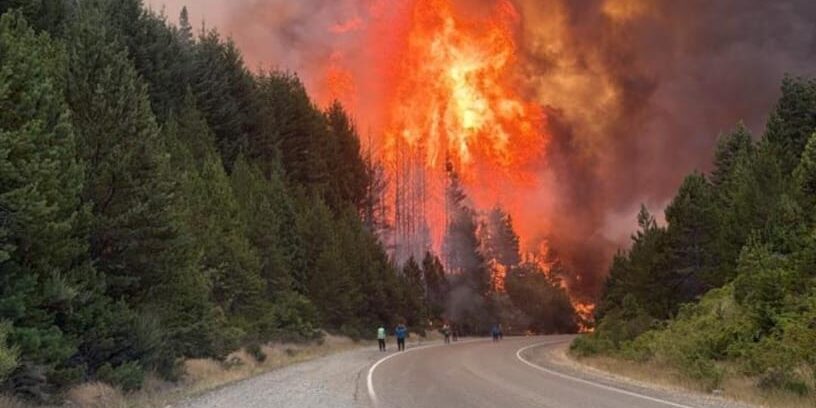
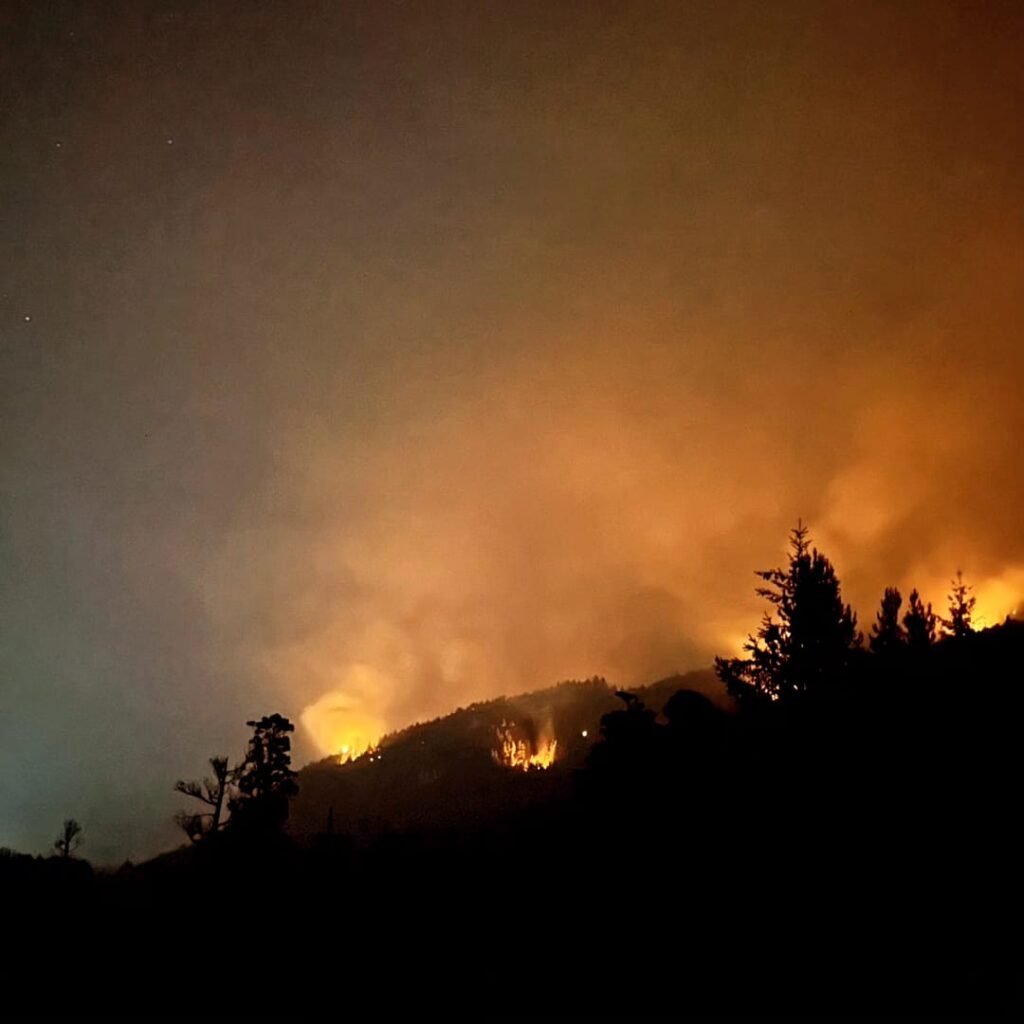
Large forest fires are becoming increasingly frequent in the Andean region of Argentine Patagonia. Amid rising temperatures, dry weather, and winds, experts warn of a key factor in the spread and intensity of these fires: pine trees.


Share

Large forest fires are becoming increasingly frequent in the Andean region of Argentine Patagonia. In recent summers, images of fire ravaging hectares of forest and homes have multiplied. Amid higher temperatures, dry weather, and winds , experts warn of a key factor in the spread and intensity of these fires: pine trees.
It is an exotic plant, brought to Argentina from the United States, with a great capacity to adapt to fire and displace native plants. Its presence on hillsides has become a “characteristic” of the Patagonian landscape, but for years the scientific community has been warning about its dangers.
What is the link between pine trees and forest fires?
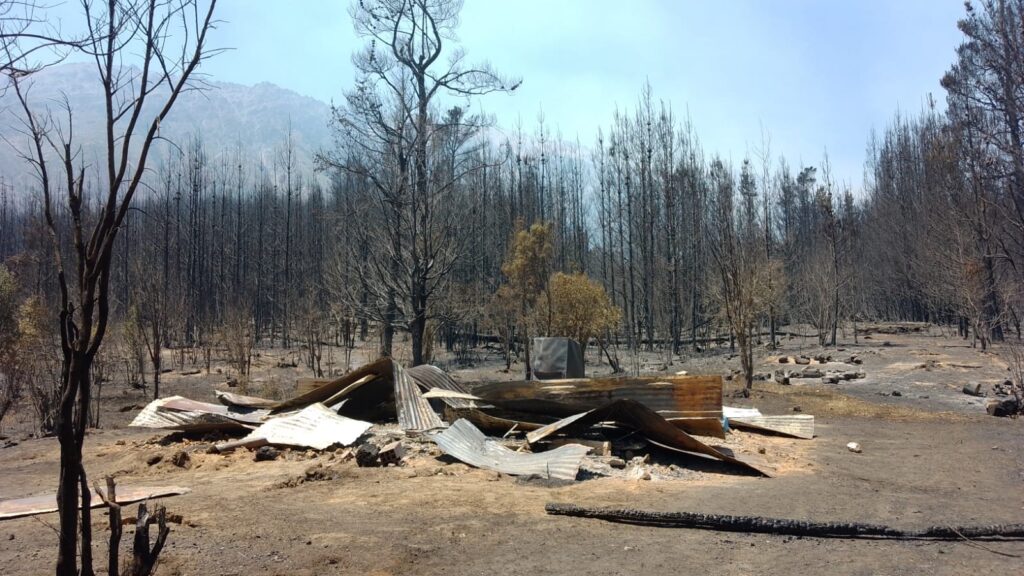
In Puerto Patriada (Chubut), the area affected by a fire that ravaged 12,000 hectares this year (now 85% contained), radiata pine was planted, among other species. The fire destroyed the homes of the Pulgar Mapuche community, but the national and provincial governments blamed them , just as they had done in previous years with other Mapuche communities .
“(The radiata pine) is one of the most widely planted pine species for forestry use in the Southern Hemisphere and is highly adapted to fire. It accumulates seeds in cones and pinecones at the top of its canopy, which only open when a fire occurs or when there is extreme heat, generally associated with fire. These seeds, in turn, germinate and establish themselves much better in burned soil than under other conditions. It has a complete feedback loop: the more fire, the more it benefits, and vice versa,” Melisa Blackhall, PhD in Biology and adjunct researcher at CONICET Presentes
The number of pine trees per hectare can vary widely, from fewer than 1,000 to nearly 100,000. However, in all cases, a very high level of invasion is observed after a fire. In Puerto Patriada, the most aggressive invasion of radiata pine occurred after the fires of 1987, 2012, and 2015, reaching 465,000 pine seedlings per hectare. This is documented in the article “A New Land Degradation in Patagonia: Positive Feedback Between Fire and Pine Invasion,” by Estela Raffaele, Jorgelina Franzese, Ramiro Ripa, Alejandra Moreyra, Clara Pissolito, and Melisa Blackhall.
The most commonly used conifer species in Patagonia's forestry plantations are Murray pine, ponderosa pine, and Douglas fir. Some of these pines are invasive species, meaning they spread spontaneously and uncontrollably. This has negative effects on biodiversity, local ecosystems, and native species.
Exotic and invasive plant
Pine trees belong to the Pinaceae family, native to the Northern Hemisphere, with a climate different from that of southern Latin America. They were introduced to Argentina from the United States in the 19th century, and their forestry exploitation began in the second half of the 20th century.
The first pine trees arrived in Buenos Aires and Patagonia in the 1920s by government decree. To promote a forestry economy, the national nursery on Victoria Island was established, driven by the Ministry of Agriculture, and exotic species, such as conifers, were introduced.
“Since then, these tree populations, with a great capacity to adapt to fire, have been invading, reducing the land available for native species,” emphasize researchers Jorgelina Franzese and Melisa Blackhall, members of the Institute of Research on Biodiversity and Environment (INIBIOMA-Conicet) in the article “They warn that the proliferation of pine species contributes to forest fires .
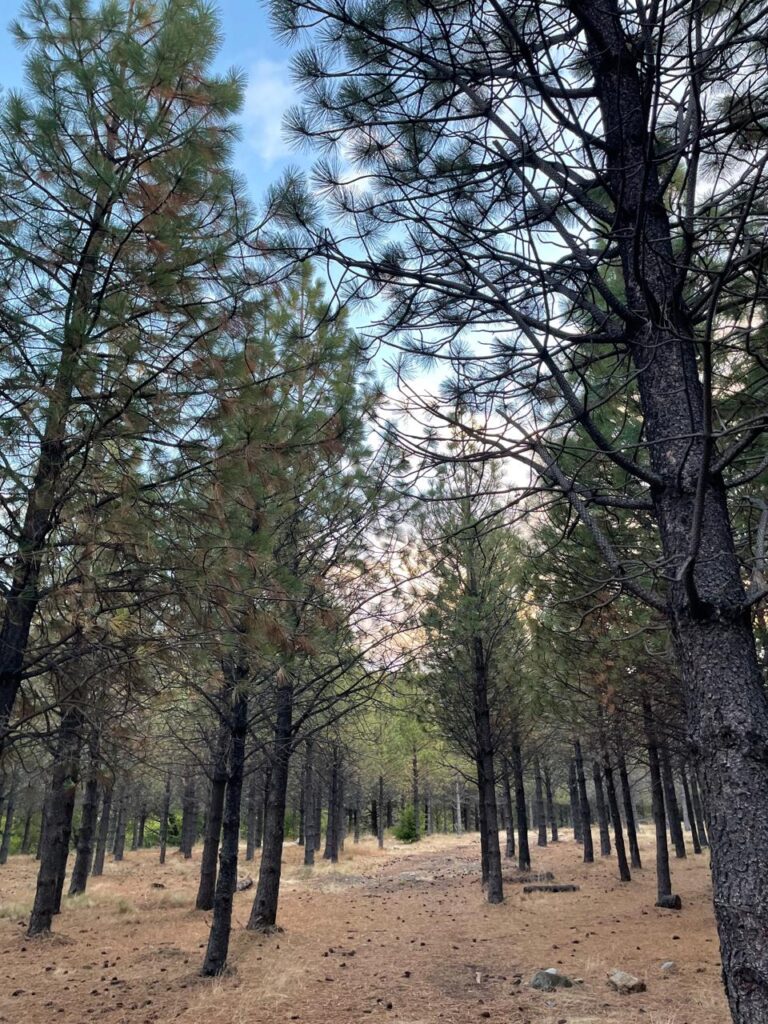
Why are fires more intense when pine trees are present?
Pine trees are more flammable than other plants. “It’s a species that accumulates a lot of fuel from the leaf litter it collects, dry branches, and resin. It generates very high temperatures and turns the area into a tinderbox, highly prone to catching fire. A fire under these conditions is more intense and severe,” says the researcher.
“Today, fires are occurring in other areas that are not associated with pine trees,” he adds. “Our native species are adapted to certain types of fires, but not to those that are so severe and intense, for example, the one in Puerto Patriada. The soil, with the pine trees, rises in temperature, and that causes plants that could resprout under other conditions to die.”.
Pine seeds are fire-resistant, and with each fire, the species reproduces more vigorously. Native vegetation, on the other hand, cannot recover as easily. Thus, the pine trees gradually encroach on the space available to native plants.
In a study conducted in Puerto Patriada, researchers Franzese and Blackhall observed the germination and annual growth rate of a pine species compared to that of the cypress, a native tree. While the former grew about one meter per year, the latter barely managed to gain a few centimeters in height during the same period.
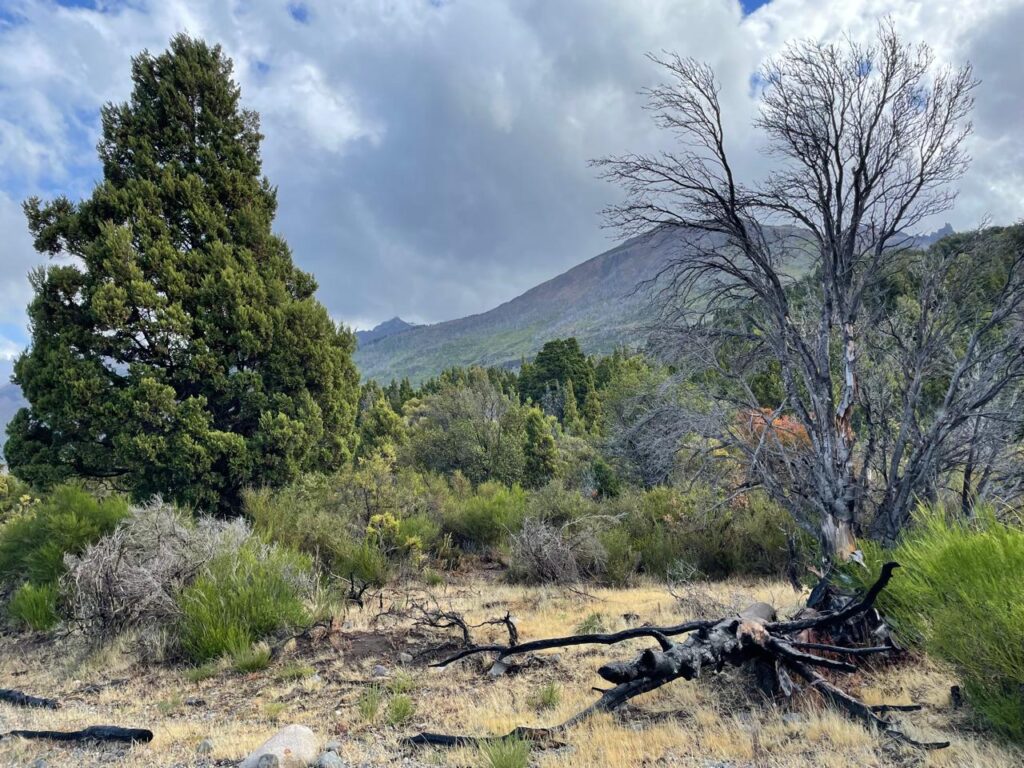
How does monoculture affect the environment?
Pine plantations also alter the structure of the surrounding environment. “The highly invasive Pinus coriander and Pinus radiata replace native species and homogenize the environment. This reduces the biodiversity of native species and disrupts the interactions that previously occurred. It also affects native fauna. That's why we don't call it a 'forest,' since it lacks diversity, but rather a ' pine invasion , a plantation , or a monoculture ,” explains Blackhall.
In addition to displacing other plants through its fire-prone reproduction, the pine tree has invasive characteristics. The shade cast by its canopy alters the amount of sunlight, and few species are adapted to these light conditions. This is compounded by the modifications to the soil caused by the presence of a very dense layer of leaf litter. And its potential impact on the region's water balance is still under study.
“We have data showing that people living in this urban-natural interface zone have noticed that, over the years, the water supply has decreased in the areas where pine trees have taken over. There is a shortage of water in the aquifers, and they are feeling it,” says the researcher.
Proposals for working on prevention
“We are surrounded by pine plantations, which are like phosphorescent lights; we saw a lot of them in the region. We need to defend the laws that protect our forests. It’s easy to go and blame the people,” says Zamira Ulloga Tacuman, a member of the Mapuche people and a resident of Esquel, referring to the raids and persecution that communities suffer every summer when they are blamed for the fires. “We need to raise awareness in society about the monoculture pine plantations and return to native species,” she says.
“The State must repair this with a depine eradication plan. Because the pine trees didn't just appear here on their own. The State promoted their planting when the forestry industry started. Then it all fell apart and became the spearhead used to displace the original inhabitants, many of them Mapuche . In that process, the State promised the economic “solution” of the pine trees. Hundreds and hundreds of ponderosa pine plantations were subsidized in the area. It is the State's responsibility to take charge of the disaster it caused,” explains Azu Noah Gatti Yapur, a young trans woman from Epuyén and member of the Assembly of Victims Rebuilding Epuyén, in an interview with Presentes .
Like Azu, many residents of the areas affected by fires in Patagonia are looking for a solution to the problem of the pine trees.
PINOS Network was created , a collaborative initiative comprised of members of non-governmental environmental organizations, natural resource managers, and researchers from science and technology institutions. It is a participatory action and governance network that seeks to halt the invasion of exotic pine trees in Patagonia. It promotes environmental education and maps the pine invasion in Bariloche and the surrounding area.
“Prevention is paramount throughout the year. Not just when fire is upon us and we all remember the problem. With environmental education, municipal management programs, or neighborhood association initiatives, we could manage fuel and reduce the likelihood of high-intensity fires around homes and neighborhoods,” says Blackhall, who is also part of the network.
But a policy to remove the pine trees is also essential. “Pine trees not only influence fire regimes, but also the conservation of our ecosystems. They are native environments that represent a very important ecosystem resource, as well as providing services in many ways, from maintaining watersheds and water resources to supporting tourism. Managing the pine trees would be crucial,” he concludes.
We are present
We are committed to journalism that delves into the territories and conducts thorough investigations, combined with new technologies and narrative formats. We want the protagonists, their stories, and their struggles to be present.
SUPPORT US

FOLLOW US
Related notes



We are present
This and other stories are not usually on the media agenda. Together we can bring them to light.