

Berta Cáceres: why her murder was a political and corporate crime
“The murder of Berta Cáceres is the result of a carefully planned, organized criminal operation” with state complicity, said the Interdisciplinary Group of Independent Experts. The global paradigm of a new type of crime and why it matters beyond Honduras.


Share

By the Reportar Sin Miedo Editorial Team. Photos: Seidy Irías and Etel Valladares
TEGUCIGALPA, Honduras . The murder of Berta Cáceres was neither a crime of passion nor an isolated incident. It was the final execution of a meticulously planned scheme , financed with money from international development banks and carried out by a network that included trained hitmen, active military personnel, paid journalists, and state complicity. This is the conclusion of the Final Report of the Interdisciplinary Group of Independent Experts (GIEI) , presented almost a decade after the crime that shocked the world.
“ The murder of Berta Cáceres is the result of an organized criminal operation, carefully planned and executed through a structure of co-participation that included hitmen, intermediaries with military training, DESA personnel and directors, as well as networks of support, tolerance and omission from different areas of the State ,” stated the GIEI Honduras report.
The mechanics of the crime: from the BAC checks
The report details the financial machinery that made the crime possible. Approximately 67% of the funds for the Agua Zarca project—some $12.4 million from the Central American Bank for Economic Integration (CABEI) and the Netherlands Development Bank (FMO)—were diverted to illicit activities. These funds not only paid hitmen but also bought silence, manipulated the truth, and corrupted institutions.
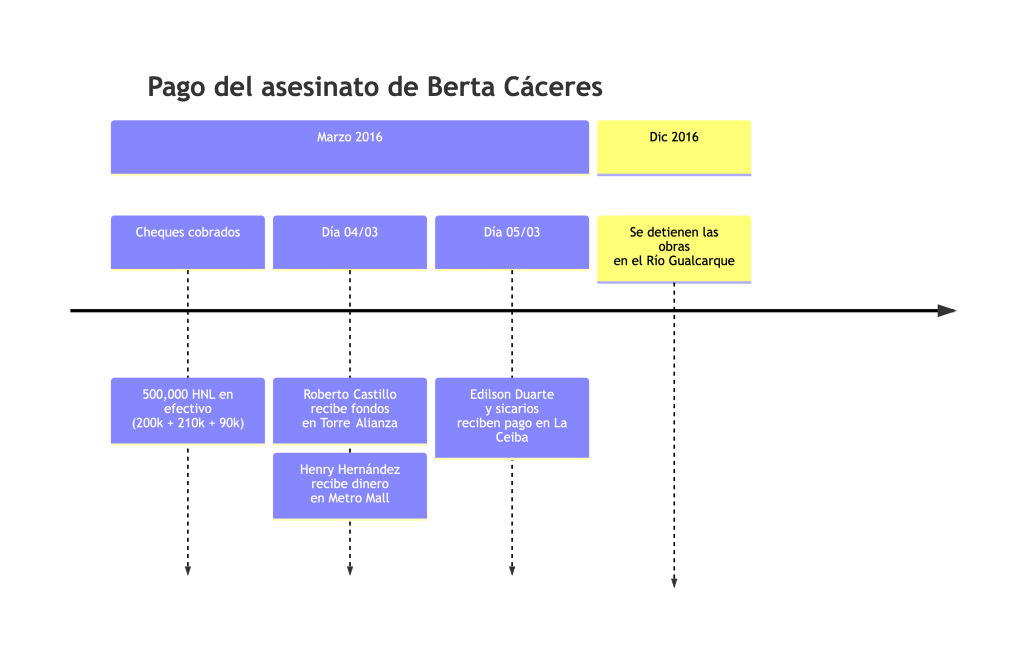
The checks of death: three checks from BAC totaling 500,000 lempiras were cashed , an amount that exactly matches the confession of hitman Mariano Díaz Chávez regarding payment for the crime. The checks, cashed by "trusted" DESA employees whose salaries did not justify such transactions, reveal a deliberate scheme to evade anti-money laundering controls .
Paid disinformation: Simultaneously, DESA was carrying out a media disinformation campaign . GIEI expert Pedro Biscay revealed that "the Atala Zablah family's company made payments from international banks to journalists, police officers, for illegal land purchases, to officials, and to media outlets." Journalists like Arístides Aceituno of Hondudiario and Ángel David Muñoz of HCH received direct payments to criminalize Berta, publishing articles that labeled her "anti-development" and a "criminal," while remaining silent about state and corporate violence.
The report mentions that Daniel Atala claimed to have Televicentro and La Tribuna under his control. "Similar conversations were recorded in messages exchanged between Daniel Atala and his partner on July 16, 2013. On that occasion, Daniel Atala stated: 'I blocked Tribuna with Carlos Flores, I blocked TVC with Rafa Villeda. It came out on HCH, but under control... I paid the journalist 10,000 pesos to get the story presented in a way that was very favorable to me.'".

The core of impunity: the Atala family and the complicit state
The report points to a “hard core of impunity” protecting high-ranking officials. The Atala brothers —Daniel, Jacobo, Pedro, and José Eduardo—majority shareholders of DESA through Inversiones Las Jacarandas SA, are not distant observers. The GIEI documented their participation in the “PHAZ Security” , which coordinated surveillance and monitoring of Berta and COPINH.
“Members of the Atala family participated directly or indirectly in coordination spaces aimed at managing the territorial conflict… Efforts were identified to coordinate state interventions—including evictions—through high-level contacts in the Ministry of Security and the National Police ,” the GIEI Report states.
Expert Roxanna Altholz was emphatic: “During the planning of the crime, communications were identified between the hitman and business network, specifically between Daniel Atala and Jacobo Atala .” After the crime, geolocation data places them in the same areas of Tegucigalpa, coordinating damage control.
The State, for its part, was complicit through both action and omission. It had wiretapped phone conversations dating back to January 2016 in which the incursions were being planned and payments to the hitmen were being negotiated, but it failed to act . Later, it obstructed the investigation with false narratives, planted evidence, and by criminalizing COPINH.
With political clarity inherited from her mother, Bertha Zúniga Cáceres defined the report not as a final point, but as a weapon for the legal and social battle to come .
And he concluded with the slogan that has united the family, COPINH, and the international solidarity movement:
“Today we clearly state that this report is a tool for the struggle. As our comrade Berta said, it is not the end of the investigation process nor the prosecution of all those responsible. We demand that its recommendations be implemented: the full truth, comprehensive justice, and guarantees of non-repetition .”
"For Berta, the whole truth and all justice. As long as there is impunity, we will continue fighting for life."”.

Why does this matter beyond Honduras?
This case is a global paradigm of a new type of crime: corporate-environmental murder . It shows how international capital (development banks), local elites (the Atala family), and the state apparatus join forces to silence, through assassinations and disinformation, those who defend the commons.
The GIEI proposes a Comprehensive Reparations Plan that includes the dissolution of DESA , the titling of Lenca territory , and the creation of a compensation fund . But true justice requires what the State has avoided: investigating and imprisoning the entire chain of command , from those who signed the checks to those who authorized payments to journalists and hitmen.
The truth, now documented, is undeniable: Berta Cáceres was murdered to protect an investment. And they did it with money meant for "development," with the complicity of those who were supposed to protect her, and with the corrupt pens of those who were supposed to report the news.
Aristides Aceituno responds to accusations and clarifies DESA payments
In response to the publication, Arístides Aceituno identified himself as the owner of SEPROC, a professional communications and media monitoring services company. In a message to Reportar Sin Miedo, he categorically denied that the payments he received from David Castillo, a representative of the company DESA, were due to "foul play" or illicit compensation. He maintained that the funds corresponded to a legitimate business transaction for the monitoring services his company provides, and highlighted that his clients include institutions such as the National Anti-Corruption Council (CNA), the Association for a More Just Society (ASJ), the U.S. Embassy, the Public Prosecutor's Office, the UN, the European Union, and the IDB.
Aceituno expressed his disagreement with the way he was included in the GIEI report, stating that, in his opinion, an adequate investigation of his case was not conducted. He also questioned why his full name was revealed in the social media post, instead of just the initials "AA" that appear in the document, warning that this exposure could put him at risk of attack. He concluded his message by providing the user with what he called "evidence" of the service agreement and leaving the decision to address his public clarification in her hands.
Aceituno presented this evidence to Report Without Fear
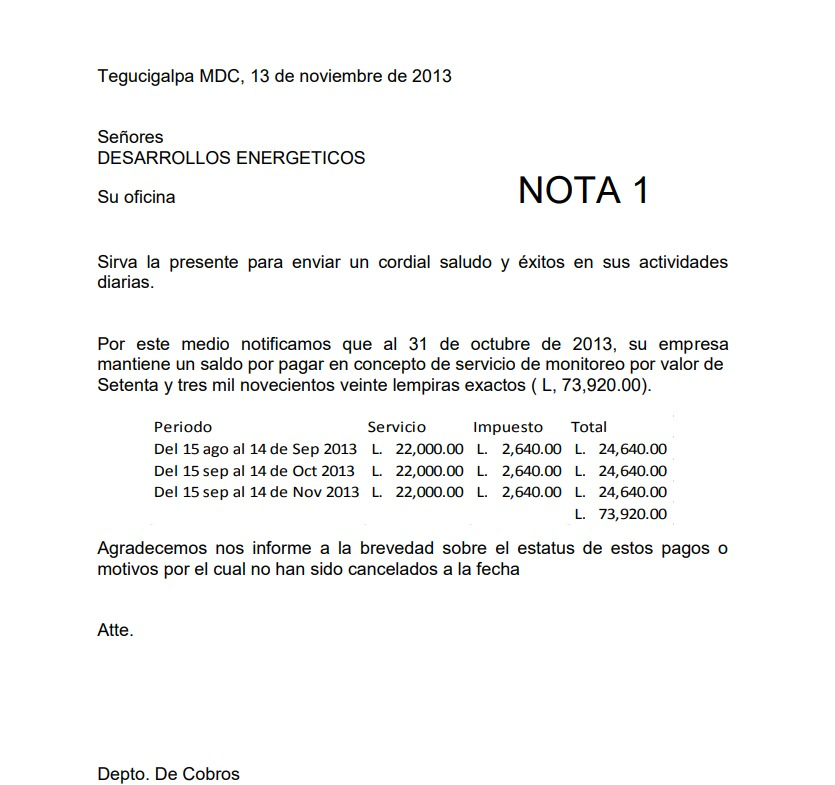

Images by Aristides Aceituno.
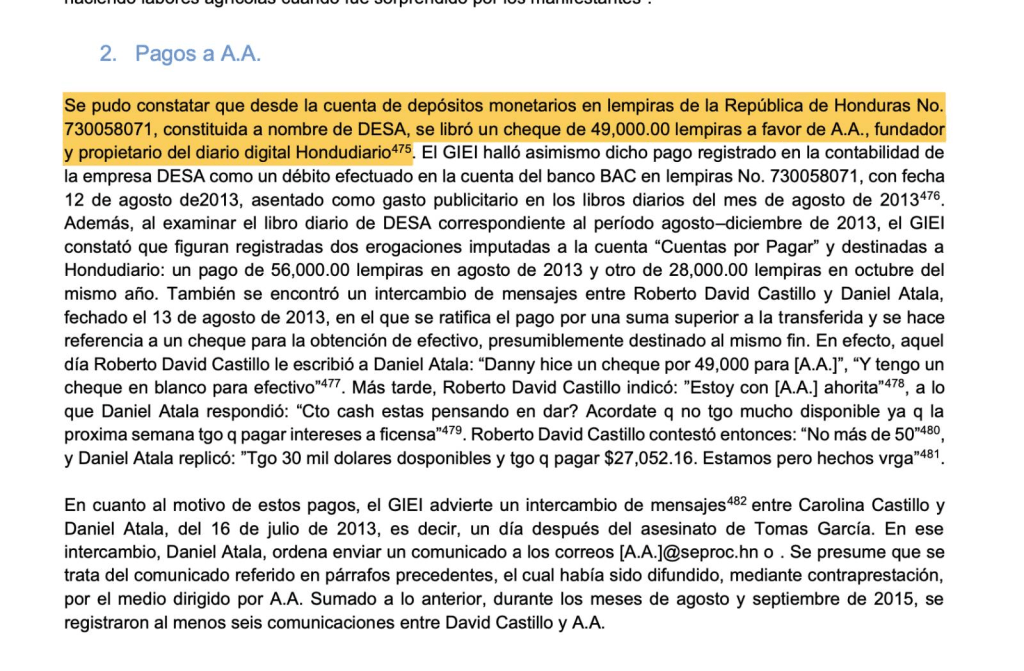
Image from the Final Report of the Interdisciplinary Group of Independent Experts (GIEI) , explaining the checks given to AA
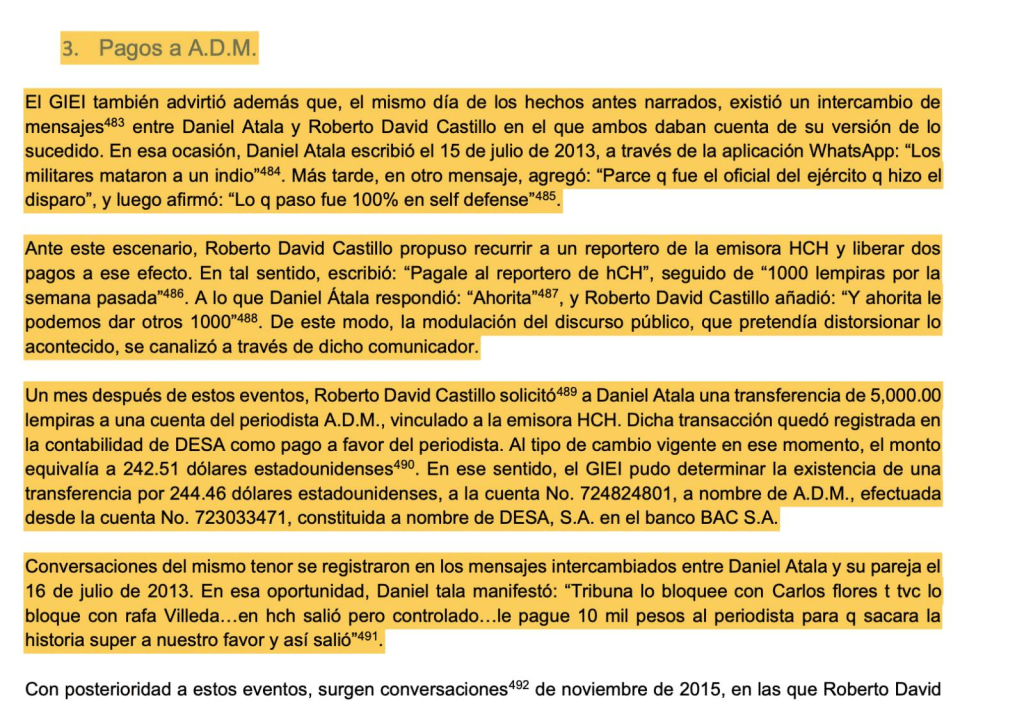
Here is the full report
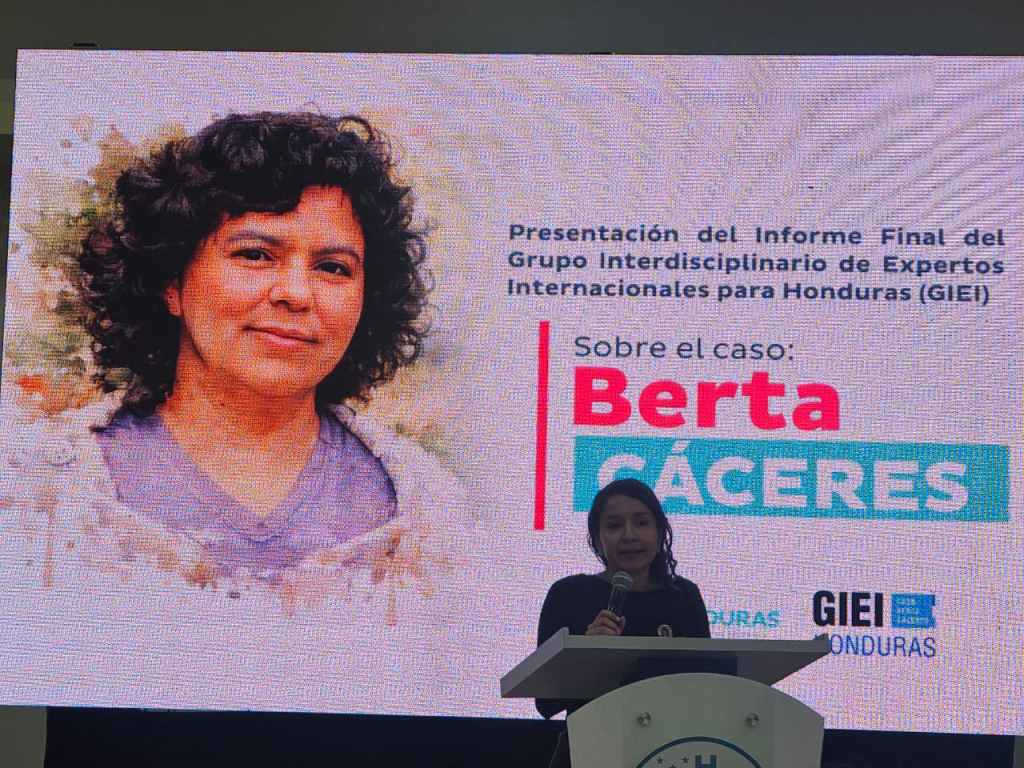
The Interdisciplinary Group of Independent Experts for the Berta Cáceres Case (GIEI Honduras) presented its Final Report at an official ceremony in Tegucigalpa. With the presentation of this report and the conclusion of its mandate, a crucial moment has arrived: the need to transform its conclusions and recommendations into concrete actions aimed at truth, justice, comprehensive reparations, and guarantees of non-repetition.
This article was originally published by Reportar Sin Miedo , our partner media outlet in Honduras. It is republished on Presentes through our cooperation and content exchange agreement.
We are present
We are committed to journalism that delves into the territories and conducts thorough investigations, combined with new technologies and narrative formats. We want the protagonists, their stories, and their struggles to be present.
SUPPORT US

FOLLOW US
Related notes
We are present
This and other stories are not usually on the media agenda. Together we can bring them to light.