

“Moving is resisting and imagining”: diversity and care to change migration policy in Mexico
Mexico faces an opportunity to transform its migration policy and embrace diversity. Community-based care practices exist where dissident groups have demonstrated that migration is not a security issue but rather a driver of human development, writes Raúl Caporal from Casa Frida, a shelter for LGBT+ people.


Share

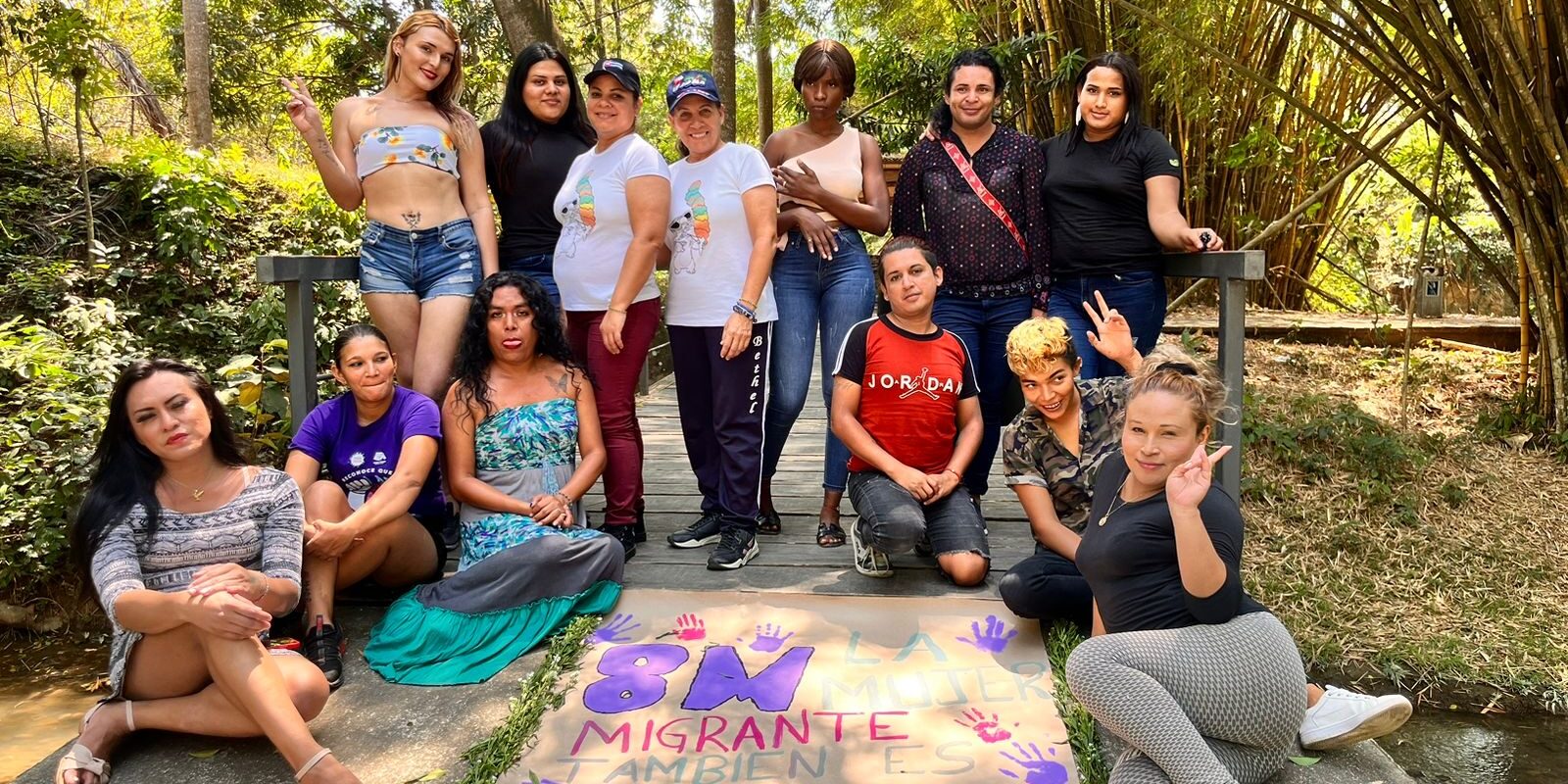
In a country where migration and displacement have become a mirror of our fractures and our hopes, gender and sexual minorities have always been on the move, even before being labeled migrants. We have fled diverse forms of violence, but we have also built refuges, paths of dignity, and strengthened host communities that sustain life. From there, from the margins we have transformed into a trench, we want to rethink Mexican migration policy with a critical, anti-punitive, and profoundly human perspective.
Today, Mexico is experiencing an unprecedented migration phenomenon. In 2024, more than 266,700 asylum applications were registered, with approximately 150,800 people granted international protection, according to recent data from the United Nations High Commissioner for Refugees (UNHCR) and the Mexican Commission for Refugee Assistance. This places Mexico among the countries with the highest number of asylum requests in the world.
For years, migration management in Mexico was based on a logic of control and containment. Borders became instruments of fear: detention centers disguised as shelters, overwhelmed bureaucracies, and fragmented policies that were faceless and unheard. In this context, LGBT+ people—mostly those under international protection facing forced displacement—were rendered invisible in statistics and organizational and institutional categories . Diversity was seen as an exception, not as a key to understanding the human complexity within the dynamics of migration and forced displacement.
In addition, for a long time, humanitarian responses were led by faith-based approaches, generally driven by churches with more conservative views. While this support saved lives and offered assistance in the absence of government action, it also reinforced a hegemonic and paternalistic view of human mobility , often contingent on faith and conversion.
From the univocal narrative of the migrant to the diverse embrace
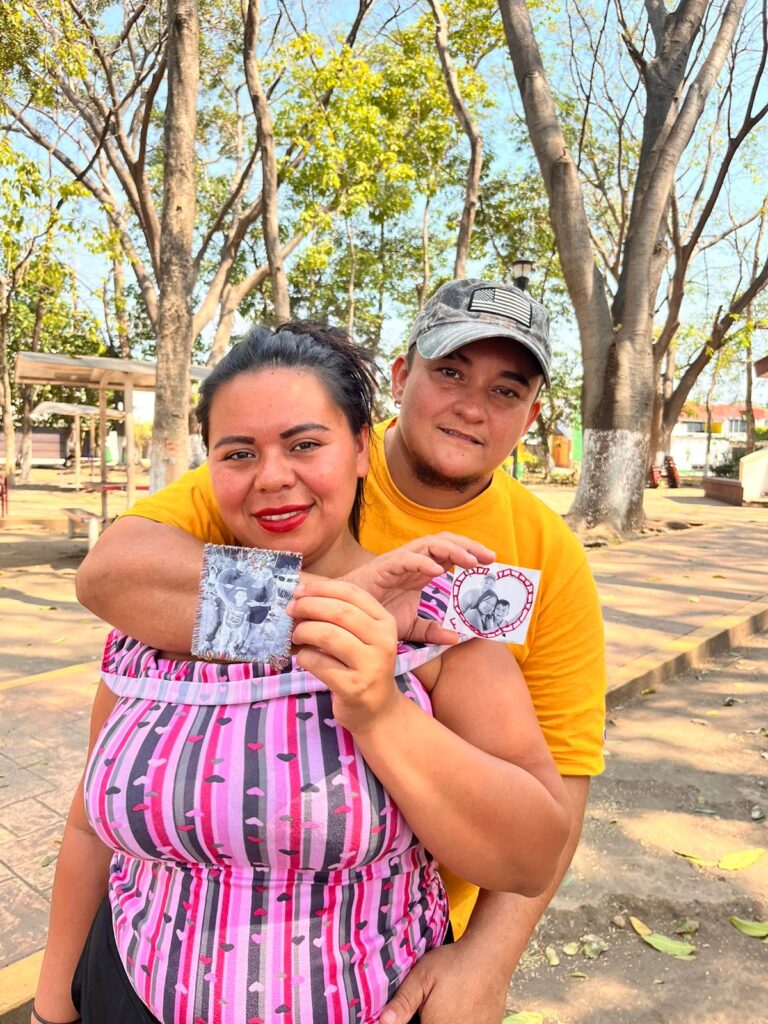
narrative was constructed in which the “migrant” was mostly represented by a young , working, heterosexual, and devout , displacing other experiences and identities. Only in recent years has the intersectionality of migration begun to be recognized, along with the diverse family configurations that converge in migratory flows, stemming from various social determinants.
Today we know that there is no single identity in migration . The caravans, the shelters, the streets, and the borders are inhabited by a multitude of people: trans and non-binary individuals, women and men of diverse gender identities and orientations, same-sex and lesbian-parent families, displaced youth, and survivors of state persecution and harassment. Furthermore, the LGBTI+ communities that welcome and embrace those who find in Mexico a country of opportunity to protect their lives and well-being , with the confidence to rebuild their future, have begun to be recognized. They are an example of how migration policy can be transformed through practice, solidarity, and community care.
What does the reform to the Refugee Law propose?
In this context, and as a result of years of political advocacy stemming from transitional justice experiences and demands from organizations such as Casa Frida, an LGBT shelter, an initiative to reform the Law on Refugees, Complementary Protection, and Political Asylum has been launched. This initiative received approval from the Foreign Relations Committee of Congress with the support of the Diversity Committee, bringing the bill to the point where it will be debated in plenary session.
The reform proposes expanding the framework for international protection in Mexico, expressly recognizing violence motivated by sexual orientation, gender identity and expression, and sex characteristics as direct grounds for granting refugee status . This expansion represents a substantial change from the traditional approach, which limited refugee status to political persecution or generalized violence, without fully considering experiences of structural violence and hate based on sexual and gender diversity. If approved by the full Congress, the law could transform the legal and administrative interpretation of refugee status in Mexico, aligning it with human rights standards and the realities of LGBTIQ+ people on the move.
Migration, a driver of human development
From shelters, refuges, and collectives, we, as dissidents, have demonstrated that migration is not a problem to be contained, but rather a driving force for human development that can be sustainable over time, a field where the struggles for recognition, social justice, and the right to a life without fear intersect. To advocate for a migration policy that considers sexual diversity and gender identity is to advocate for a nation that dares to envision itself through empathy, inclusion, and plurality.
Mexico has another opportunity today to break with the mistakes of the past: the criminalization of poverty, institutional xenophobia, and structural violence. Moving toward a new paradigm based on comprehensive protection and community participation means recognizing migrants and displaced persons not only as “beneficiaries” of the system, but as subjects of rights and contributors to our national history.
Because there is no just migration policy without memory.
There is no possible refuge if the dignity of those who inhabit it is not acknowledged.
And there will be no development if human mobility continues to be treated as a matter of security and not of humanity. We, the dissidents, have learned that to move is to resist, but also to imagine. And in that movement—constant, diverse, ever-evolving—there is a possible nation, a possible politics, and a future that can be more just, freer, more truly ours. But the challenge continues. It is up to us to continue calling for self-criticism, solidarity, and the collective construction of utopias that embrace, without exclusion, all those who trust in Mexico to live with pride and dignity.
*Raúl Caporal is a human rights activist for the LGBTIQ+ community, president and founder of Casa Frida, LGBTI+ Refuge, an organization dedicated to the protection, support and social integration of LGBTIQ+ people who are victims and survivors of extreme violence, crimes and hate crimes in Mexico.
We are present
We are committed to journalism that delves into the territories and conducts thorough investigations, combined with new technologies and narrative formats. We want the protagonists, their stories, and their struggles to be present.
SUPPORT US

FOLLOW US
Related notes
We are present
This and other stories are not usually on the media agenda. Together we can bring them to light.