

Three deaths of LGBT youths in 8 days involve police officers from Salta, Córdoba and Buenos Aires
Fernanda (34) in Salta and Samuel (34) in Córdoba died surrounded by police, under unclear circumstances. Treinti (29) was run over by a patrol car.


Share

Between November 18 and 26, police officers in the provinces of Salta, Córdoba, and Buenos Aires attacked the lives of three people under 35 years old: Fernanda and Samuel, both 34, died in police operations that have not been clarified, and which, in line with what usually happens in cases of institutional violence, are surrounded by confusion and different versions.
Treinti, 29, was allegedly run over by a police vehicle in La Tablada, Buenos Aires province, while crossing Route 4. The officers are under arrest.
Data from the latest report of the FALGBT Observatory (Argentine Federation of Lesbians, Gays, Bisexuals and Trans, semi-annual 2025) speaks of a 70% increase in hate crimes during 2025 and the increase in police participation in many of them, as stated below.
CASE 1: Fernanda, 34 years old, Rosario de Lerma, Salta

Fernanda Daniela Arias, a 34-year-old trans woman, was taken by police officers from Plaza Evita to Police Station No. 2 in Rosario de Lerma, Salta, where she lived. It was Wednesday, November 26, around 9 p.m. Three hours later, a police officer went to her sister Gladys's house and told her she had to go to the station urgently. Gladys was finishing bathing her daughter and within minutes got into the police car with her husband. On the way, she worried that her sister might have been beaten. When the officer informed her that her sister "had taken her own life," she was stunned and didn't ask any further questions.
“They told me she hanged herself with the top she was wearing. Afterward, I thought, 'how strange.' She was thin; the top couldn't have gone around her neck. The ceiling is high. And the window? Impossible: there's nowhere to step. I didn't believe she could have done that. My heart never told me it was possible. I think someone did something to her. She had a scar on her head,” Gladys shared in a phone interview with Presentes .
Fernanda, the supportive sister
She also said that she had recently seen Fernanda happy. She had received her new document, corrected with her name and gender. “That day, around 1:30 or 2:00 in the afternoon, she told me, 'I'll be right back.' She went to the house of a woman who was like a mother to her, a friend, and she left happy.”
Fernanda lived with her sister Gladys, her children, and her family. “She’s lived with me for many years, she’s helped me with my children. She never said ‘I can’t,’ ‘I’m sick.’ It was always ‘I’ll make it,’ ‘I’ll do it.’ She was the cook here,” she told us, laughing and getting emotional at the same time. She liked to cook barbecue and make anchi, a dessert made with semolina, lemon, and cinnamon. When Gladys woke up from her nap, Fernanda would be waiting for her with mate and toast with cheese.
“When she was little, she didn’t like playing ball or with toy cars; she liked dolls. She was a little boy, but she was determined to be a woman. When she decided to change, my dad and my brother didn’t accept it. But later, with time, they did. That’s just how she was,” she said.
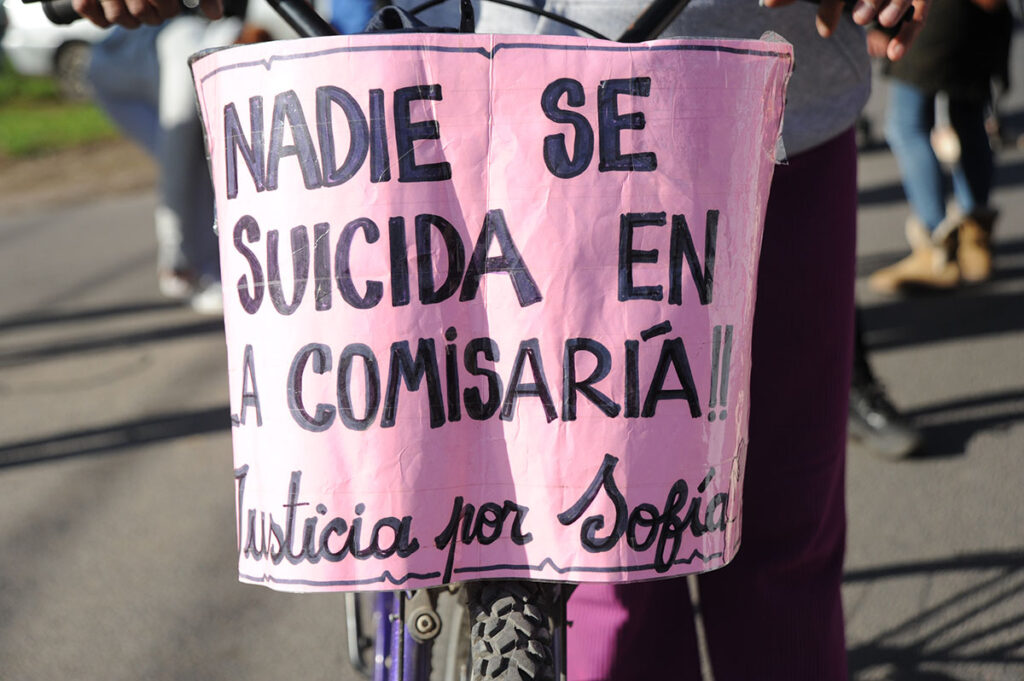
Nobody commits suicide in a police station
The circumstances surrounding Fernanda's death at the police station are being investigated by the criminal prosecutor of the Femicide Unit (UFEM), Luján Sodero Calvet.
The Public Prosecutor's Office (MPF) of the province of Salta released a statement indicating that , according to initial reports, the woman "was allegedly approached by police officers in a public place while consuming alcoholic beverages." When she refused to provide identification, she was taken to the police station. The use of "allegedly" is by the Public Prosecutor's Office itself.
“Upon being informed of her release, after verifying her background, the police personnel detected that the trans woman had attempted suicide, so they immediately proceeded to perform resuscitation maneuvers (CPR) and subsequently transfer her to the zonal hospital,” the MPF indicated.
Why the police and judicial version raises suspicions
The version raises many doubts. “Little is said about the investigations into police power, into the police station,” questioned María Pía Ceballos, a trans activist from Salta and member of Mujeres Trans Argentina (MTA ), in an interview with Presentes .
“We find the situation very strange. We began to notice irregularities in the news reports about the case. She died two hours after being detained. That's a very short time. Some media outlets said she was intoxicated. Others reported that she was a prostitute and had been denounced by neighbors. Many versions circulated. On the other hand, we began to hear from neighbors that Fernanda was taken away violently, dragged through the plaza. We believe this is a complex situation involving human rights violations. We immediately notified the Provincial Committee for the Prevention of Torture and are in contact with her sister, Gladys,” added María Pía Ceballos.
MTA emphasized: “Fernanda’s death cannot be treated as an isolated or natural event. It represents an extremely serious act that undoubtedly constitutes an expression of institutional violence perpetrated by state security forces. The State, through its agents, had the inescapable obligation to safeguard Fernanda’s physical integrity.” This was stated in a press release .
The organizations and activists who publicized Fernanda's death agree: "No one commits suicide in a police station." The incident brings to mind what happened to Sofía Fernández, the 39-year-old trans woman murdered in 2023 at the 5th Police Station in Derqui, Pilar district, Buenos Aires province. Nine of the ten police officers accused of Sofía's murder and its cover-up were sent to trial.
CASE 2: Samuel, 34 years old, Villa Parque Síquiman, Córdoba
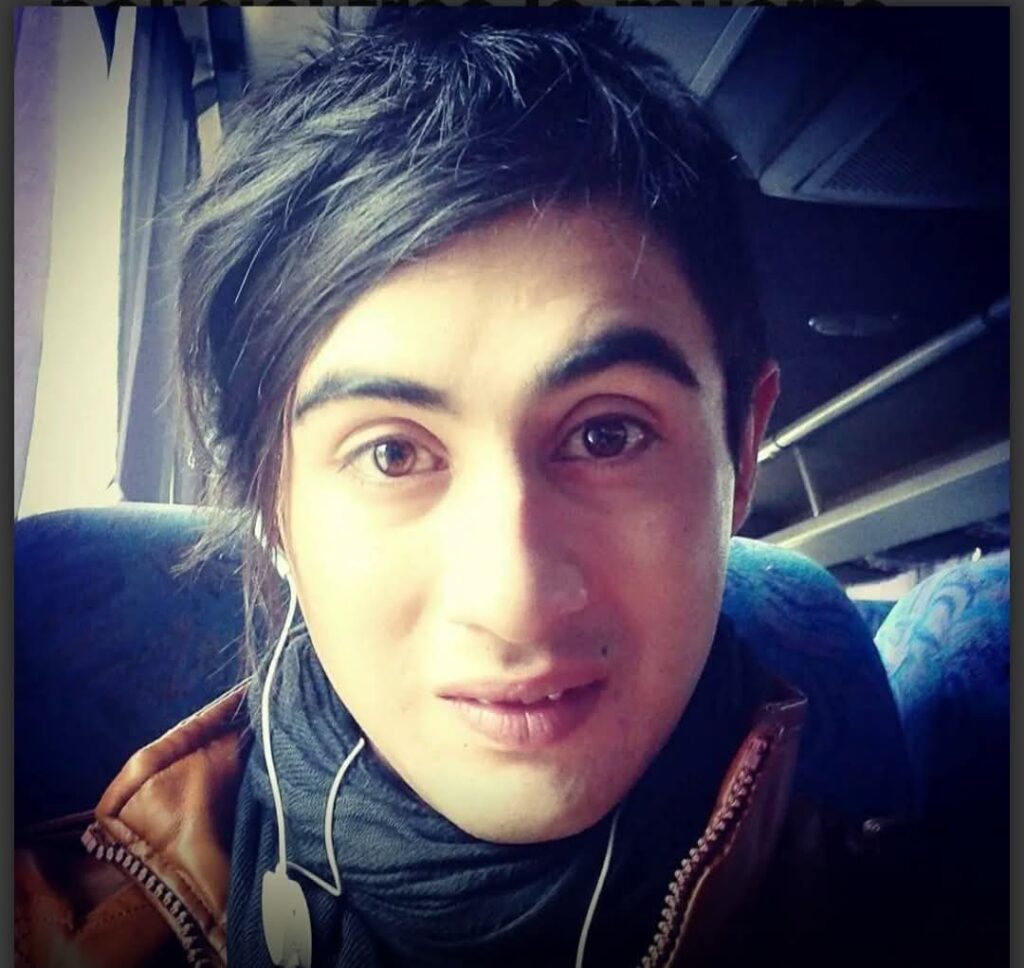
At the Tobares family home in Villa Parque Síquiman (Córdoba), two police officers knocked on the door at 2:00 a.m. On November 24th, they informed the family that Samuel, 34, one of the six siblings, had had an “interaction with police officers ” and had suffered a medical episode, subsequently dying. That was the only explanation the family received.
Later, listening to witnesses, the Tobares will be able to reconstruct that on Sunday, November 23, Samuel was returning from his job as a receptionist at a hotel in Villa Carlos Paz and got off the bus at the Villa Parque Síquiman tollbooth, on Route 38, where he was beaten to death by police officers.
The police gave the family two versions of events. One version said that Samuel was stopped by police after a neighbor reported him, though they didn't explain what the report was about. The other version claimed they had mistaken him for someone else. The only thing that's certain so far is that Samuel was beaten to death.
Daniela, Samuel's sister, told Presentes that at first they couldn't get any information; everything was confusing. But after midday on November 24, she began receiving messages from witnesses who had seen the police handling Samuel. "They told us there were a lot of blows, a lot of mistreatment, and insults involved," she says.
In an interview with the Carlos Paz news outlet Villanos, Samuel's other sister recounted that as soon as they found out, they went to the place where the young man had the argument with the police. “On the ground, we found his TIN card (an Intelligent Transportation card used in Córdoba), the cigarette he was about to smoke, a water bottle, and a piece of his t-shirt. We imagine and think that they didn't even get to ask for his information,” she added.
Justice for Samuel
One witness stated that the police attack on the young woman began with shouts of “fucking faggot,” among other offensive remarks. Her family does not wish to discuss Samuel's private life. Various organizations in Córdoba have joined the call for justice.
The Organizing Committee of the Córdoba Provincial Pride March (COMO) is demanding a meeting with the Ministers of Security, Juan Pablo Quinteros, and Justice, Julián López.
LGBT activism, such as the Assembly of Sexual Dissidents , linked the event to a context: "It was a hate crime, encouraged by the climate of violence and hostility sown by the national government."
Samuel Tobares, remembered by his family
As soon as he graduated from high school, Samuel dedicated himself to traveling. This marked the beginning of a career in the hotel and tourism industry. Almost three months earlier, he had settled in Siquerman to help his mother care for his father, who suffers from a neurological condition. He found work at a hotel in Carlos Paz where two of his sisters also worked. He was returning from there when the police arrested him and beat him to death.
“He was always in a great mood and loved meeting people. I worked with him and it was a wonderful pleasure. He had such a tender look… he made you understand things in such a beautiful way… I have the best memories of my brother. That’s why we won’t stop until we get justice,” says Daniela. “We want to understand why they did this to him. We grew up there. If they saw him as a suspect, we’ll never understand why they attacked him like that,” she adds.
According to the Córdoba Public Prosecutor's Office, the Carlos Paz Prosecutor's Office No. 2, headed by Ricardo Mazzuchi, arrested Sergeant Guillermo Serafín Arce and Officer Franco Sebastián Romero, charged with unintentional homicide. The family is organizing a silent march in Síquiman on Saturday at 6 p.m. and is demanding that the charges be changed to "aggravated homicide."
CASE 3: Treinti, 29 years old, La Tablada, Buenos Aires province
Treinti was 29 years old, transgender, and worked as a photographer . Many of her portraits of major figures in music and entertainment are posted on an Instagram account. It is on that same account that comments demanding justice for the young woman can now be seen.
According to witnesses, on the night of November 18th, a police patrol car without lights struck her on Route 4 near the La Tablada housing complex. The officers picked her up in the same patrol car, took her to Ballestrini Hospital, and left. Treinti did not survive surgery and died. The case was handled by the UFI N°2 (Special Prosecutor's Office) of La Matanza, and two police officers were charged: Martín Silva and his partner, Commissioner Oscar Moyano.
There is still very little reliable information surrounding the case. This week, the Ministry of Women and Sexual Diversity of the Province of Buenos Aires is supporting the case. LGBT organizations are demanding justice for Treinti.
This is how police violence increased in 2025
In the first half of this year, the National Observatory of LGBT+ Hate Crimes recorded 102 hate crimes motivated by the victims' sexual orientation, gender identity, or gender expression in Argentina. This represents a 70% increase compared to the same period last year. Police involvement in these crimes is alarming, according to the Observatory's latest report (2025 semiannual). In 52.9% of cases, the violence was perpetrated by members of the security forces while on duty , compared to 23.8% the previous year.
“We’ve noticed that in the last two years, the police have reverted to more violent practices, especially in arbitrary arrests in certain areas . Our female colleagues aren’t reporting these incidents because they seem to go nowhere. But we’re receiving testimonies about how they were getting out of their cars wearing helmets to prevent their faces from being filmed. And often, they break their phones because the women use them to film them,” Ceballos shared.
“I believe the increase in crimes linked to the Security Forces is related to the fact that this is where the discourse of political power has the most direct impact. The Security Forces feel more emboldened to perpetrate violence against the LGBT community based on the hate speech of the national government. When local governments are allied with the national government, this sends a message to the local Security Forces as well ,” added María Rachid, a member of the board of directors of the Argentine LGBT Federation , which spearheaded the creation of the Observatory report.
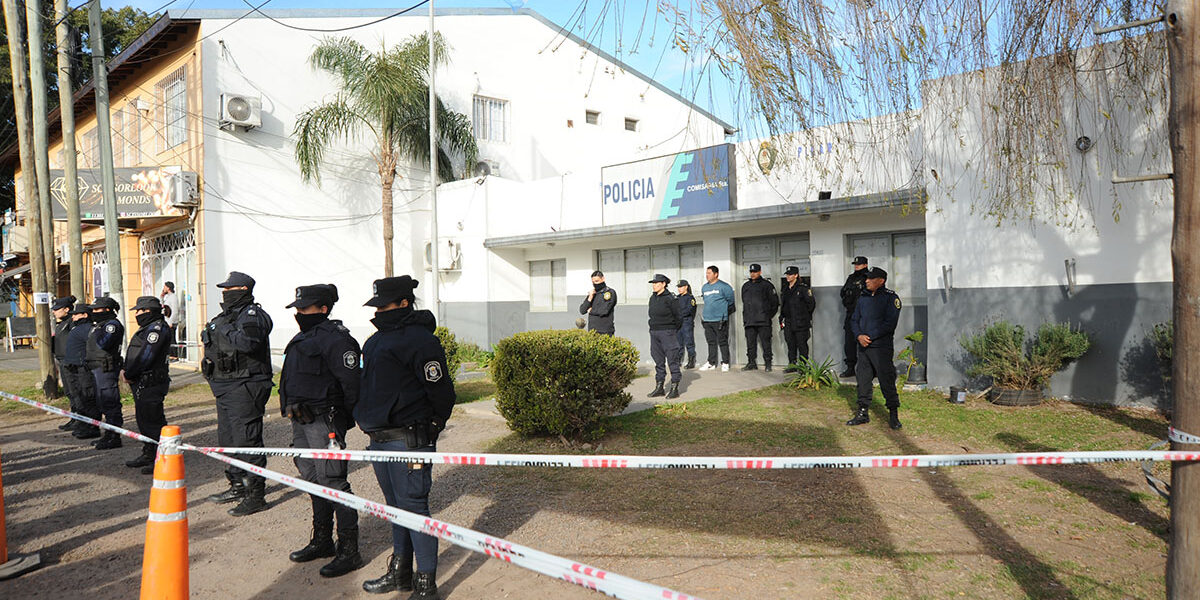
The photo illustrating this article is from the Agencia Presentes archives and was taken at a protest demanding justice for Sofía Fernández in front of the Derqui Police Station (Pilar, Buenos Aires province) in July 2024. Sofía was a trans woman who "appeared" dead in that police station in April 2023.
We are present
We are committed to journalism that delves into the territories and conducts thorough investigations, combined with new technologies and narrative formats. We want the protagonists, their stories, and their struggles to be present.
SUPPORT US

FOLLOW US
Related notes

We are present
This and other stories are not usually on the media agenda. Together we can bring them to light.