

Diversity and old age: when the pension system ignores non-binary identities
Ale's case illustrates how non-binary older adults face obstacles that violate basic standards of equality. In line with the "Age Strong" campaign, their story challenges a state that still needs to guarantee that identity and old age are not grounds for discrimination, but rather protected aspects of life.


Share

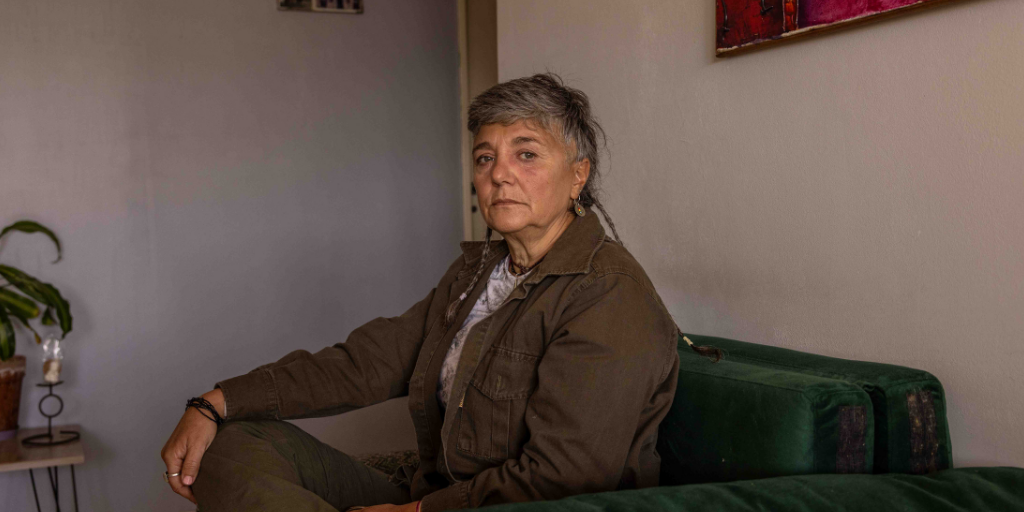
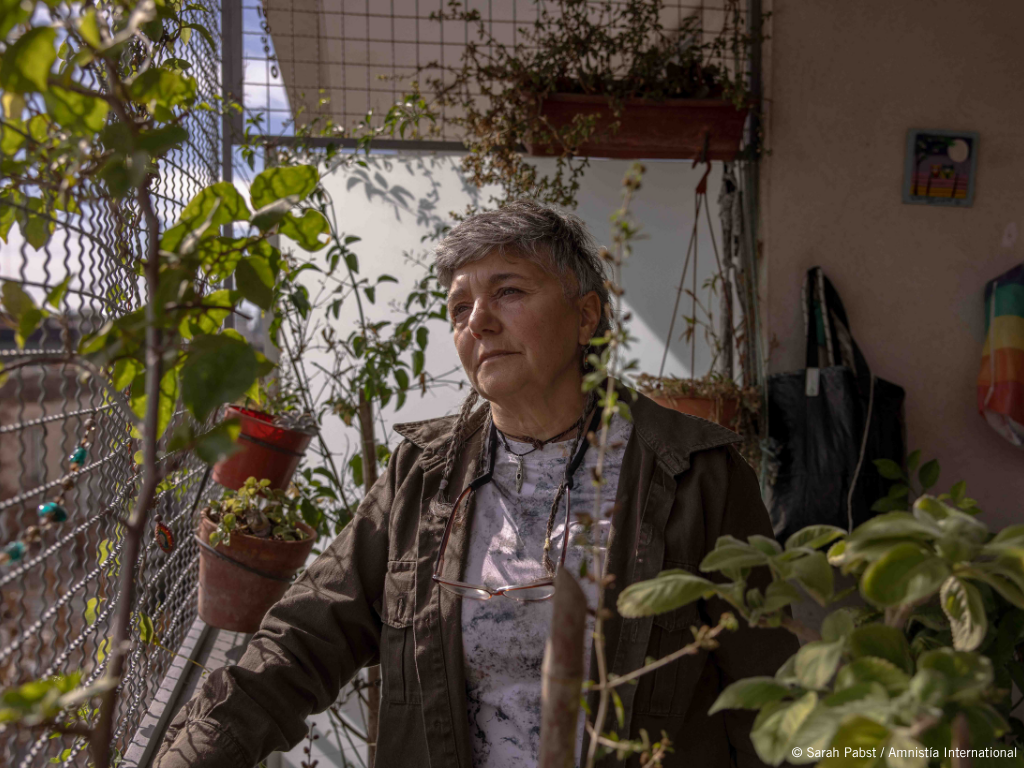
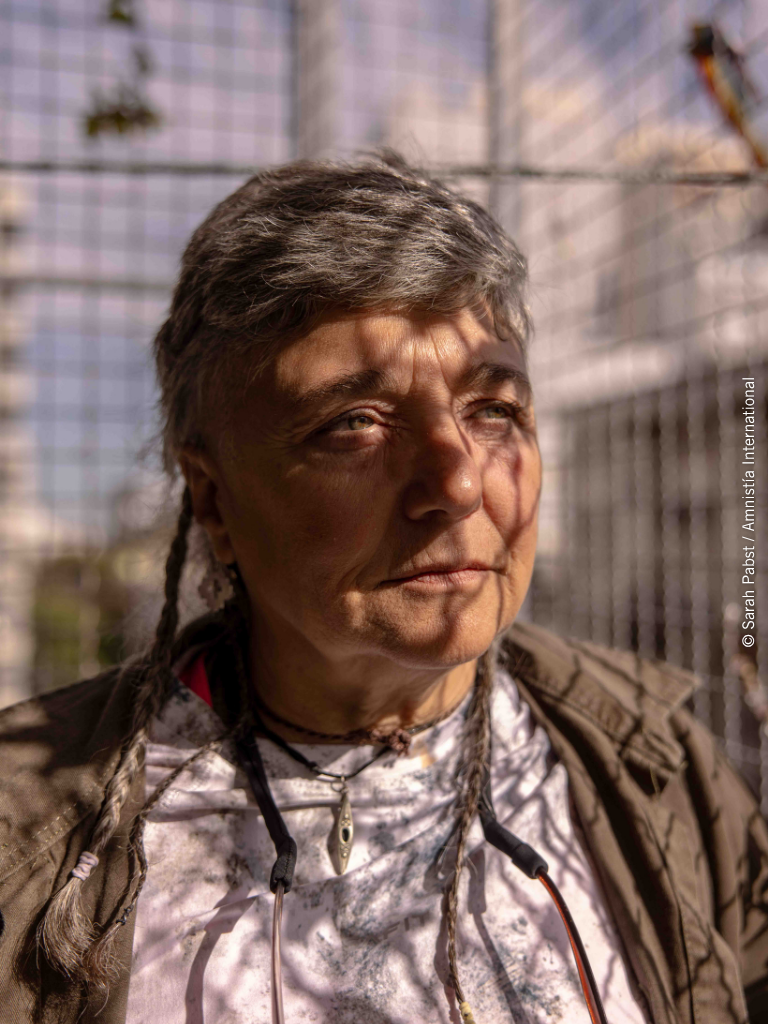
Light filters through the balcony's ironwork and falls on Ale's face, who gazes at the city with a weary, yet firm expression. She is 60 years old, has made all the required contributions, and possesses a national identity document with an X recognized by the State. But the pension she should be receiving hasn't arrived: the pension system doesn't include non-binary identities, and her case is trapped in that legal loophole.
“For me, growing old with rights would mean having enough money every month, being able to do what you want, what you need, not having to go to the plaza every Wednesday to shout, to beg,” says Ale. Her voice doesn’t sound broken by sadness, but by a weariness that is also collective.
A life of teaching and activism
Her life was always intertwined with stages and blackboards. She was a teacher, researcher, and school principal. A story marked by her activism in lesbian and LGBTI+ groups.
In 2023, having reached the legal retirement age and made the necessary contributions, she began the process of retiring. What seemed like a natural step turned into a labyrinth: the system doesn't know what to do with a person who doesn't fit into the male/female binary. This happens even though her paperwork was in order and the ID card reflecting her identity was issued by the same state that denies her rights. The process stalled in the legal department of the National Social Security Administration (ANSeS). "There's no non-binary legislation," they told her. They ignored the Gender Identity Law and the decree that recognizes non-binary ID cards .
Ale filed an appeal for protection of constitutional rights. In September 2024, the court issued a ruling: she was to begin receiving her pension. To this day, the State has not complied with the order.
Meanwhile, she returned to the school where she had been principal. She is no longer in charge of classrooms with teenagers, but performs “passive tasks” in a position that guarantees her a basic income to survive, although it does not redress the underlying injustice.
The double burden: ageism and discrimination based on gender identity
Ale's case condenses two forms of discrimination that are rarely thought of together: ageism - that is, discrimination based on age - and violence towards dissident identities.
In a country where the minimum pension falls far short of the basic food basket, old age already means a sentence of precariousness for millions. But if that person is also non-binary, the system simply excludes them: they don't exist in its categories, they don't fit into its formulas, they don't recognize them.
“There comes a point when your body starts to take its toll and you need to do what you want with dignity,” says Ale. And that word —with dignity— hangs in the air like a motto.
Ageism operates silently. It's present in the media that reduces older people to "burdens," in institutions that infantilize them, and in policies that render them invisible. And in Ale's case, it intersects with discrimination based on gender identity: a pension system that denies rights to those who don't identify with traditional gender categories.
Wednesday of protest and fear
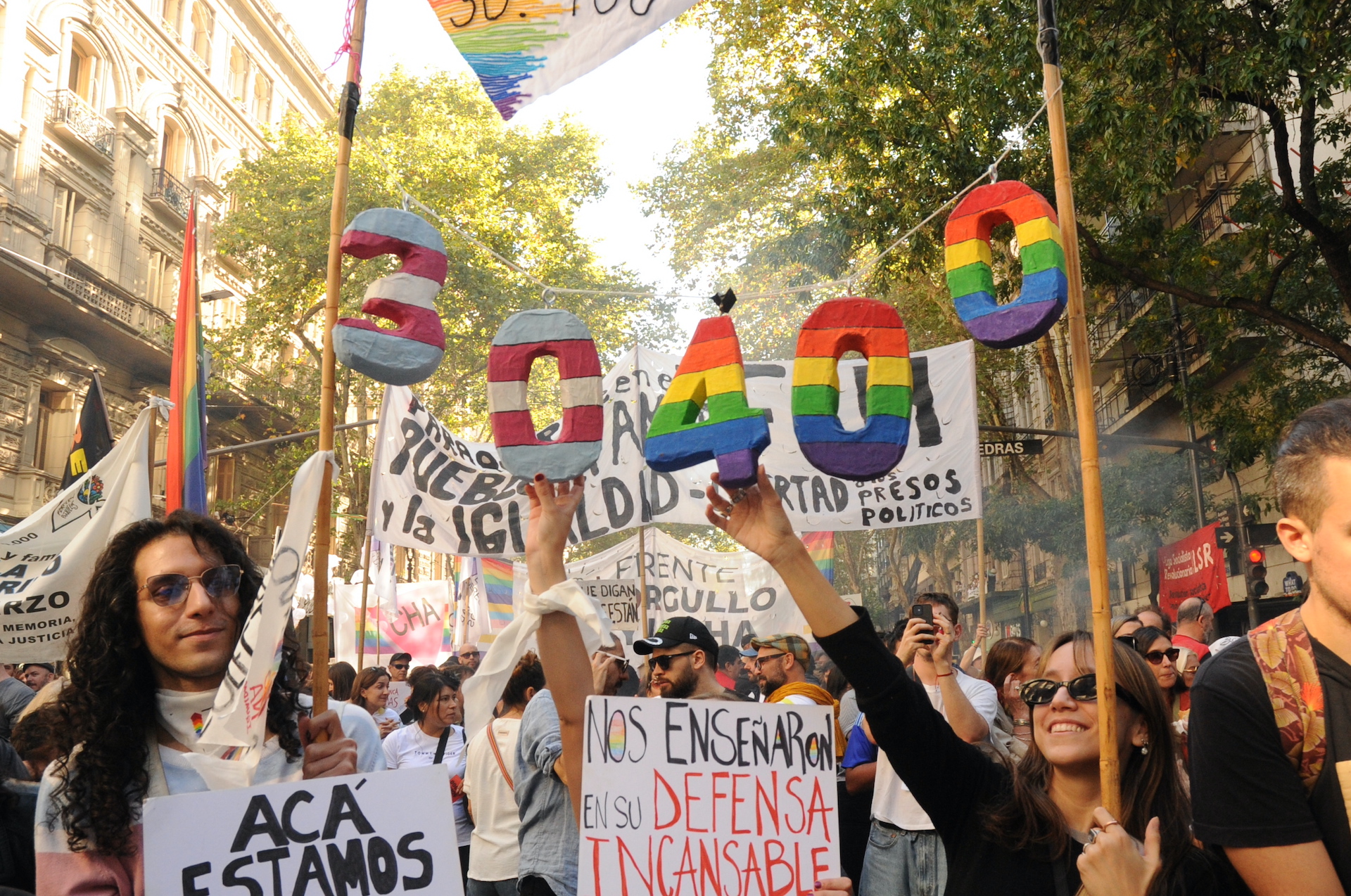
Like so many other retirees, Ale sometimes joined the Wednesday protests in front of the National Congress. She especially remembers the march following the repression in which photojournalist Pablo Grillo was injured in March 2025.
“If I go on a Wednesday, I go to the Plaza with fear; I go very cautiously. We all have to look out for each other, and they're succeeding in making us afraid,” she admits. The fear is not abstract: the repression against demonstrations by senior citizens has become routine in recent years . Pepper spray, beatings, shoving, and rubber bullets. A violence that combines police brutality with social indifference.
In these marches, Ale shares the street with pensioners receiving the minimum pension, with migrants who only have the PUAM (Universal Pension for Older Adults), with older men who must continue working odd jobs because their pensions aren't enough. There, diversity merges into a common demand: dignity in old age.
The mirror of a society
Ale's case reveals an uncomfortable truth: in Argentina, the promise of universal rights still excludes those who don't fit the mold. The national identity document with an X represented a historic step toward equality and the full recognition of diversity. But when facing bureaucratic procedures and applying for benefits, a gap persists between this legal advancement and the state's obligation to guarantee rights without discrimination.
The situation is not merely an administrative problem: it reflects how society treats older people who are part of the LGBTQ+ community. The mistreatment of older people—ranging from police repression to stigmatizing expressions in public discourse—coexists with a rapid erosion of LGBTQ+ rights. As Amnesty International warned in its report, “The Offensive Against LGBTQ+ Rights in Argentina,” hateful narratives emanating from the highest levels of power do not only generate symbolic violence. They translate into concrete measures that dismantle state protection structures and fuel a climate of hostility. In both cases, what is eroded is the guarantee of dignified treatment that the State is obligated to ensure.
Ale doesn't see it as a personal exception, but as a collective symptom: "They are trampling on our dignity. What more can we lose?"
The right to age with dignity
Age Strong campaign emphasizes a simple yet powerful idea: aging should not mean losing rights. Old age is a part of life, and like every stage, it deserves to be lived with autonomy, respect, and recognition.
In Ale's case, the right to choose translates into the most basic things: being able to retire after decades of work, receiving a sufficient income, and planning a future without depending on charity or street resistance.
However, history shows the opposite: a system that expels, a Justice system that orders but fails to enforce its rulings, a State that postpones and excludes.
A struggle that challenges everyone
Ale's story reflects the plight of those currently left at the mercy of a bureaucracy that still fails to recognize their identity on paper . Her case raises questions beyond the LGBTQ+ community: what value do rights have if they vanish in old age? What kind of society celebrates legal recognition but postpones access to essential needs?
Ale's story is that of many older people in Argentina: surviving amidst economic hardship and institutional violence. But it is also the story of someone who refuses to accept invisibility. A person whose very existence forces us to consider that diversity and old age are not separate worlds, but rather rights that must go hand in hand.
Because retirement shouldn't be a privilege reserved for those who fit into the system's categories. Otherwise, identity itself will also retire late.
*This article is part of " Age Strong !", Amnesty International's international campaign dedicated to highlighting the contradictions of aging in Argentina. Its development and expansion were made possible through the collaboration between Agencia Presentes and Amnesty International Argentina.
https://amnistia.org.ar/envejececonfuerza
We are present
We are committed to journalism that delves into the territories and conducts thorough investigations, combined with new technologies and narrative formats. We want the protagonists, their stories, and their struggles to be present.
SUPPORT US

FOLLOW US
Related notes

We are present
This and other stories are not usually on the media agenda. Together we can bring them to light.