

The Olympic Committee seeks to limit the participation of trans women in sports
The anti-trans wave is drastically impacting access to sports. The International Olympic Committee (IOC) is planning regulations for 2026 that would limit the participation of trans, intersex, and cisgender women under the pretext of an alleged "unfair advantage," without any evidence.



Share

The International Olympic Committee (IOC) is planning new regulations for 2026 that would limit the participation of transgender, intersex, and cisgender women. The argument is that those who naturally express high levels of testosterone “have an unfair advantage” in women's Olympic sports. This alleged “unfair advantage” is based on no conclusive scientific evidence.
Prior to this announcement, the IOC itself was governed by the “ Framework on Equity, Inclusion and Non-Discrimination on the Grounds of Gender Identity and Sex Variations, ” with an emphasis on eligibility criteria in the women's categories. There, it emphasizes that “ there is no scientific consensus on how testosterone affects athletic performance .
The announcement of this new stance comes during the first year of the new Committee Chair, Kirsty Coventry's, term. She is fulfilling her promise to "defend women's sport." Within three months of taking office, she formed the Working Group for the Protection of the Women's Category.
Jane Thornton, the IOC's chief medical and scientific officer, recently presented the findings of a "scientific review on transgender and gender-diverse athletes competing in women's sports." This document is not yet public, but news on the matter is expected in February 2026, in the lead-up to the Winter Olympic Games in Milan-Cortina.
According to the British newspaper The Guardian , “the working group on the issue continues its deliberations. Summer 2026 is a more realistic timeframe for the implementation of the new policy.” The article also notes that the IOC could consider a total ban on transgender athletes for the 2028 Los Angeles Olympic Games.
A nod to Trump's anti-trans policies?
In recent years, it has been argued, without conclusive scientific basis , that the participation of transgender women in sports represents an alleged “unfair advantage” for cisgender women. This narrative has been used by both international sports federations and anti-rights groups in decision-making positions.
Powerful figures like Donald Trump have drastically influenced sports policies. After assuming the presidency in February 2025, one of his first orders was to ban the participation of girls, teenagers, and transgender women in school sports competitions. He also instructed the Secretary of State to try to change the IOC rules .
So far in 2025, 95 bills have been introduced in the United States to prohibit transgender athletes , especially girls and women, from participating in school sports. Furthermore, 54 of these bills have advanced and are now law in 6 states.
In this context, international federations of various sports such as swimming, athletics and boxing have further tightened their regulations on the participation of trans and intersex athletes.
Why are these regulations sexist?
Historically, regulations governing sports participation have disproportionately impacted transgender, intersex, and cisgender athletes who naturally exhibit high levels of testosterone. These regulations have been criticized by the United Nations (UN) for violating fundamental rights, including the rights to privacy, health, and non-discrimination . Human Rights Watch (HRW) has documented that they foster discrimination, surveillance, and coercive and unnecessary medical intervention in female athletes, resulting in physical and psychological harm and economic hardship. They also exhibit a racist bias.

This surveillance of bodies has focused on athletes like South African runner Caster Semenya and boxer Imane Khelif , who have been subjected to scrutiny of their bodies and gender identities. Khelif, an Olympic boxing champion, was falsely labeled as a trans woman, resulting in transphobia and media scrutiny. Both are taking their cases of discrimination and human rights violations to court.
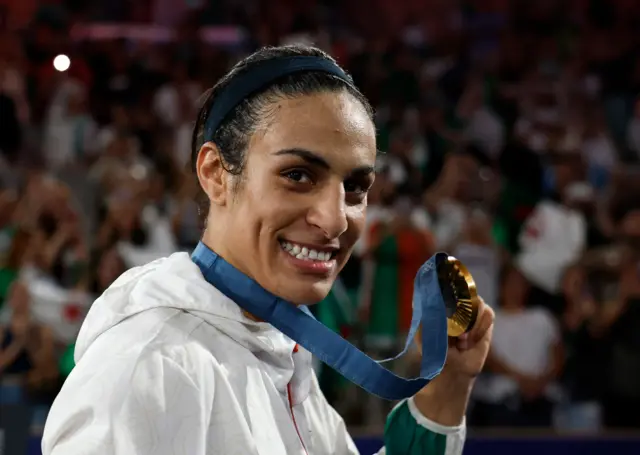
Until now, each sports federation has created its own regulations. But with the new declarations from the IOC, it is expected that the regulations will cover all international sports federations.
Only 3 trans women in Olympic competitions
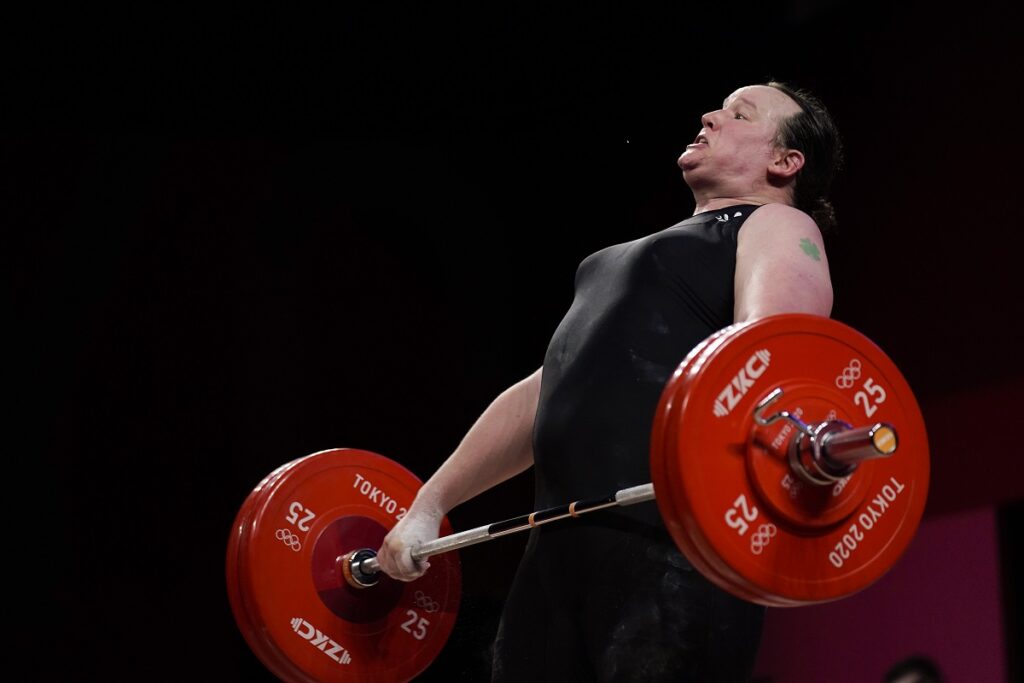
It's important to remember that only one transgender woman has ever competed at the Olympic level . Laurel Hubbard participated in the 2020 Tokyo Olympic Games and was eliminated in the final of her weightlifting category. Following her participation, a wave of misinformation and arguments began, claiming she had an "unfair advantage" over cisgender women.
At the Paralympic level, two transgender athletes have participated. Dutch discus thrower Ingrid van Kranen finished ninth in her event's final at Rio 2016, but her participation had no global impact. At Paris 2024, Italian Valentina Petrillo (pictured above) was eliminated in the 400-meter T12 semifinal and faced criticism from other athletes.
In a global scenario marked by the advance of anti-trans narratives and increasingly restrictive regulations, the IOC's decisions will not only define who can compete, but also which bodies are considered legitimate in sport.
While federations, governments, and anti-rights groups seek to shape the future of women's categories based on arguments without conclusive evidence, the lives and careers of trans, intersex, and cisgender women athletes with body variations are exposed to surveillance and scrutiny that limits their human right to sport.
We are present
We are committed to journalism that delves into the territories and conducts thorough investigations, combined with new technologies and narrative formats. We want the protagonists, their stories, and their struggles to be present.
SUPPORT US

FOLLOW US
Related notes



We are present
This and other stories are not usually on the media agenda. Together we can bring them to light.