

Presentes analyzed the increase in hate crimes before the Women's Caucus in the Senate
The Presentes news agency was invited by Senator Eugenia Duré to analyze the situation of diverse groups in Argentina. Those present included Micaela García's parents, economist Mercedes D'Alessandro, and city councilwoman Eva Mieri.


Share

BUENOS AIRES, Argentina. The Women's Caucus of the Argentine Senate held its final committee meeting of the year to address the setbacks in gender, women's, and diversity policies. Presentes News Agency was invited to participate in a panel discussion to discuss the increasing violence and hate speech directed at the LGBTIQ+ community.
Also present were relatives of Micaela García, economist Mercedes D'Alessandro, Quilmes councilwoman Eva Mieri, and senators Stefanía Cora and María Eugenia Duré, president of the commission.
The event took place on Wednesday, November 12, at the Senator Alfredo L. Palacios Building, one of the Senate's headquarters, in the Balvanera neighborhood of Buenos Aires. With approximately fifty people in attendance, the session focused on the national situation of women and LGBTQ+ individuals, and in particular, on the work of the Commission.
Moving forward despite setbacks
“We have experienced two years of setbacks in policies regarding gender, women, diversity, and also children and adolescents. For two years now, we have had a president who has called us his enemies,” shared the host and national senator for Tierra del Fuego (Union for the Homeland) Duré, who finishes her term as president of the commission this year.
And he warned, regarding the functioning of the Chamber to which he belongs: “This Committee didn't function for a year and a half. As a result, we couldn't move forward, we had no space for discussion, and our projects were stalled. In the last committee meeting, we were able to approve more than one hundred projects, and today we're going to discuss 30. It's important for us to address them so they can reach the floor and become effective laws.”
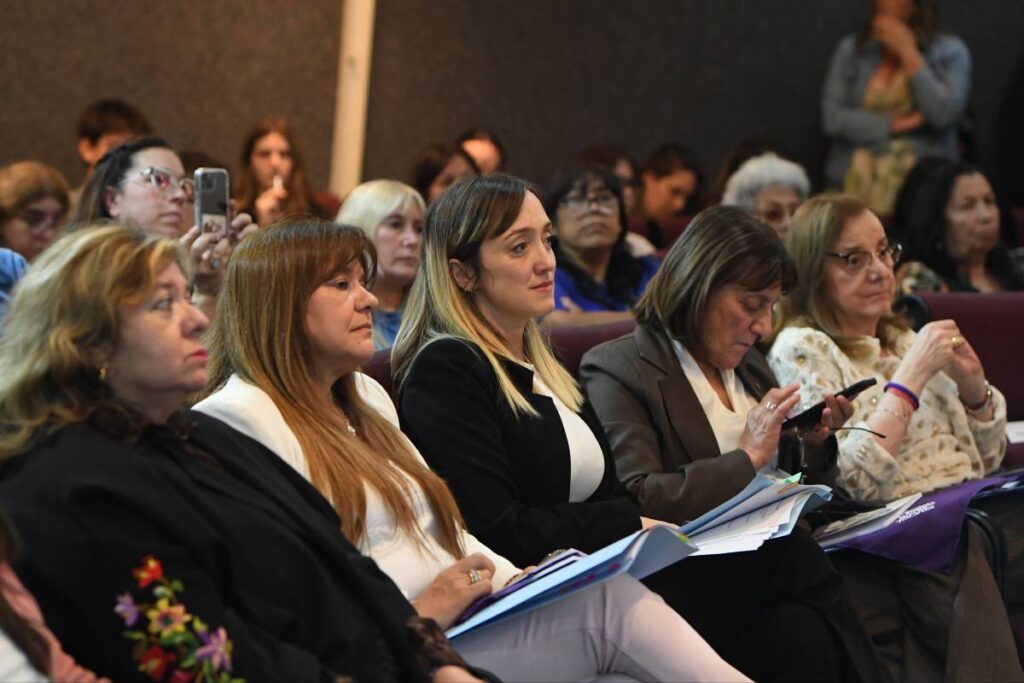
For more political decisions
Her colleague, the national senator for Entre Ríos, Stefanía Cora, president of the Population and Human Development Commission, recalled part of the recent history of feminisms in Argentina.
“The Ni Una Menos movement of 2015 was a wake-up call. It was a warning that if we weren't mobilized and organized, these crimes would continue to worsen. We often sang: 'Sir, Madam, don't be indifferent, they're killing our girls right in front of everyone,' because what we need is for society to get involved,” she said.
In this regard, she emphasized: “We need society to recognize this pandemic that women and gender minorities are experiencing: they are killing us. And from there down and from there up, there is a wage gap, women are missing from positions of representation, political decision-making, clubs, and companies. We are here trying to send a message: we are here. In 2015, we weren't here.”
Concern over the increase in femicides
In April 2017, a femicide occurred that deeply affected activists, women, LGBTQ+ communities, and public institutions, in a context of burgeoning feminist activism since the first Ni Una Menos (Not One Less) march on June 3, 2015. The victim was Micaela Garcia, a 21-year-old feminist activist and member of the Evita Movement in Entre Ríos. Her family began a tireless struggle that continues to this day. In her honor, Law No. 27,499 was named the “Micaela Law .” It mandates gender perspective training for all public employees at all levels and branches of government.
His mother, Andrea Lescano, and his father, Néstor “Yuyo” García, participated in the panel. He recalled when, at the beginning of Javier Milei's administration, the proposed "Bases Law" sought to modify the Micaela Law. He noted that the capacity for resistance still exists and that some social agreements are not easily broken. “I spent two days meeting with all the political blocs in the Chamber of Deputies. And the government had to withdraw the entire section that attempted to modify the Micaela Law. That gave me peace of mind,” he said.
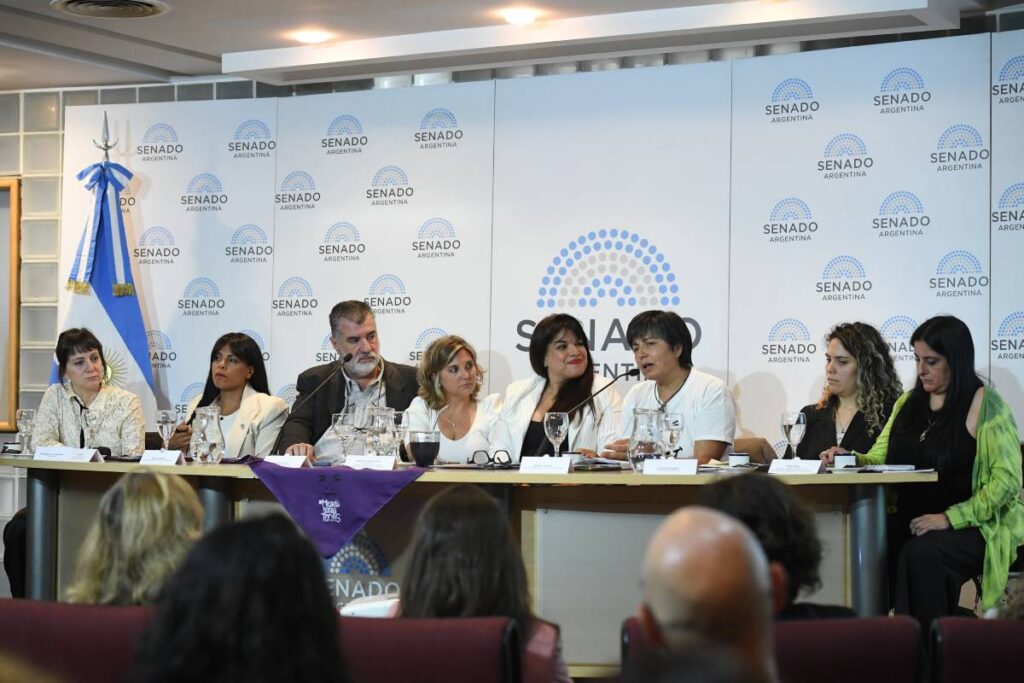
The mother, Andrea, shared their experience providing training across the country. “One thing Mica used to say was that if we all do our part well, in our own small circles, the sum of those efforts will make us better and improve everything. That's what we encourage in each of our training sessions,” she explained.
She also highlighted a statistic: so far in November, there has been one femicide per day. “Last month we had the same. Globally, there is one femicide every eight seconds. Let's not wait until it happens to us, as it did to us, until it hits close to home, before we take action. We have the power to reduce this. It won't be easy, but it's up to each of us to decide how we commit to this issue,” she emphasized.
Hate crimes: the role of the State
Regarding sexual diversity, another enemy constructed by the national government, hate crimes increased by 70% in the first half of this year compared to the same period last year. This occurred within a context of proliferating hate speech, disinformation, and the dismantling of state policies and institutions responsible for addressing gender-based violence.
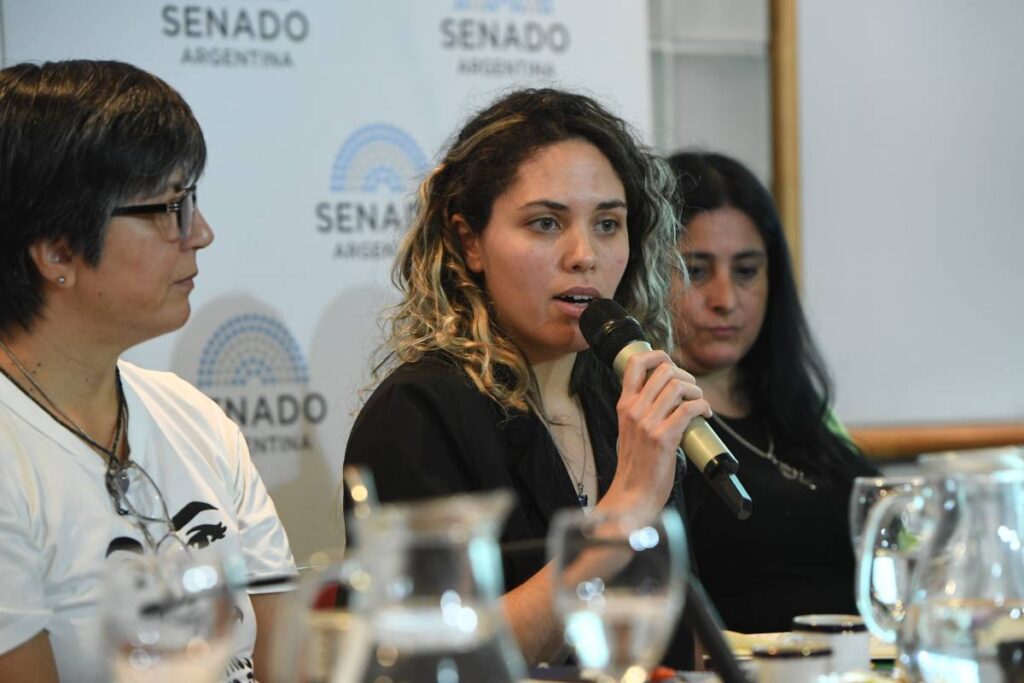
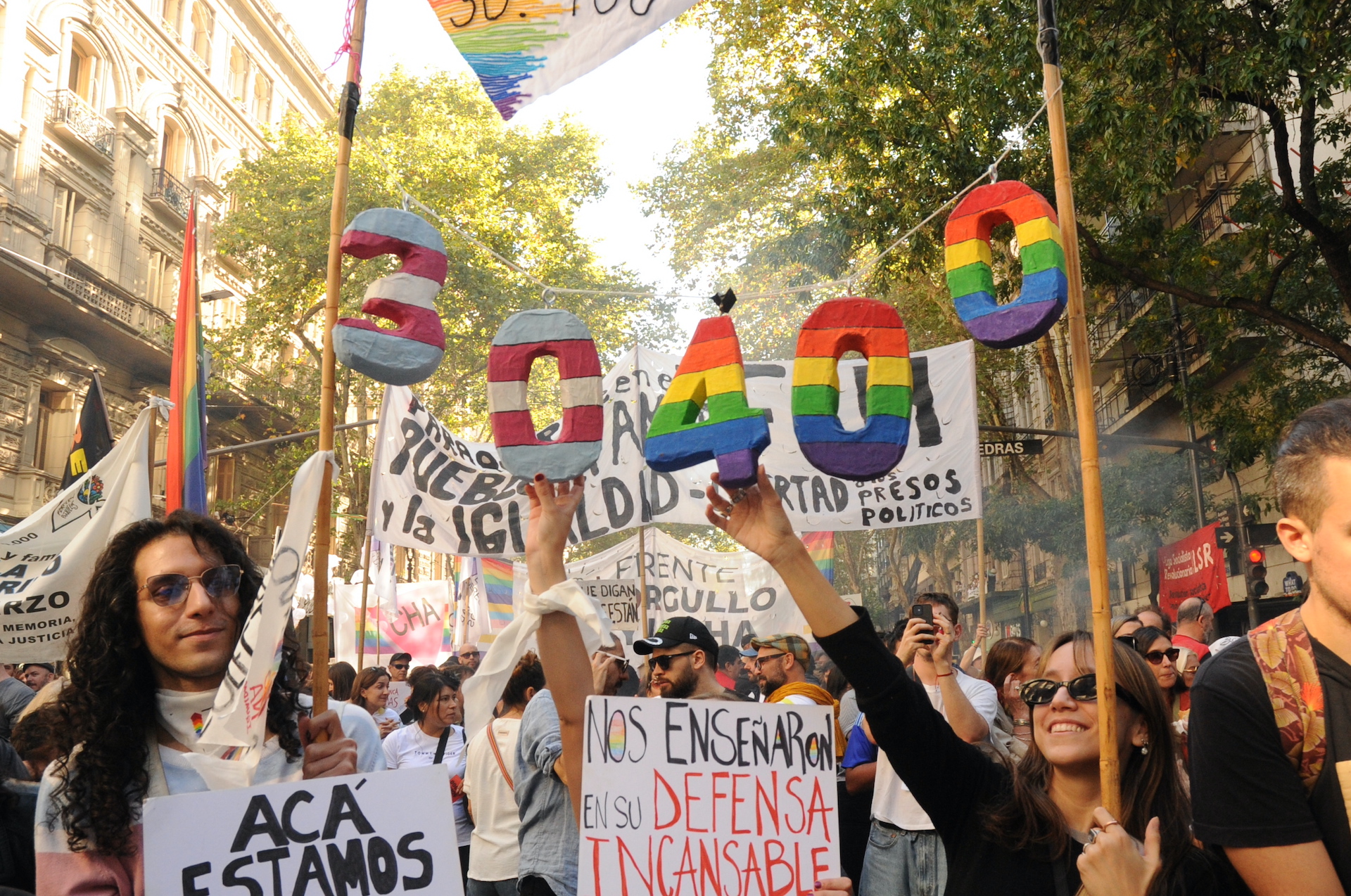
“This year began with our president’s speech in Davos, where, among other things, he compared homosexuality to pedophilia. It provoked a strong response: days later, a massive Antifascist and Antiracist Pride March was spontaneously organized in downtown Buenos Aires. But we also saw an increase in violence in the following days. In fact, we recorded four attacks on lesbians in two weeks. While this isn’t a direct consequence of a speech, we understand that it creates a hostile environment, in which people who may have thought something but didn’t say it, now feel completely legitimized by the government to do so,” shared Agustina Ramos, a journalist with Presentes Télam employee .
The place of journalism
“In recent years, we’ve faced a dilemma: what to do in the face of each government attack, especially against diverse communities. The LGBT population in Argentina is one of the hardest hit by this government. From our perspective, we wanted to emphasize the need for this issue to be communicated collectively. We want to contribute, on the one hand, to education, understood in terms of what we report and what our purpose is. As journalists, we try to generate a discourse that also includes positive news, sharing the positive experiences of the LGBT community,” shared Maby Sosa, who is also the Gender Editor at Tiempo Argentino and a member of the Network of Gender Editors promoted by the United Nations Population Fund.
She also emphasized the importance of quality journalism in contexts of disinformation. “This government has not only attacked women and sexual minorities. It has also attacked non-hegemonic journalism, journalism that tries to do on-the-ground work and contribute to an egalitarian society with social justice.” She highlighted the role of the National News Agency Télam—now gutted by the national government—in producing stories that later served as input for observatories that track femicides.
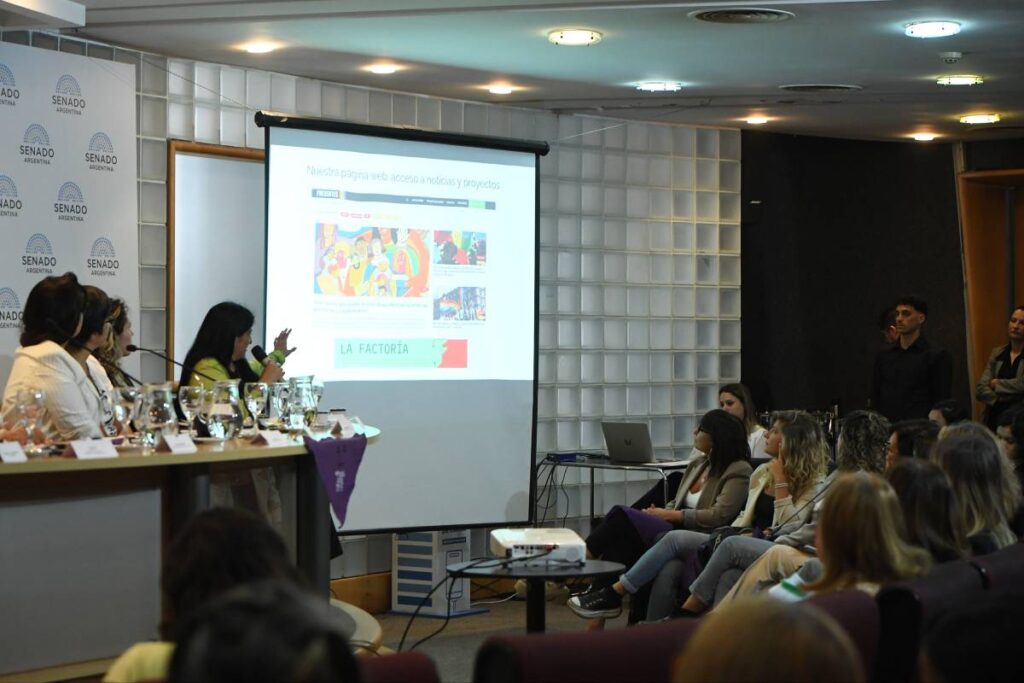
Today, Presentes is conducting a Hate Crime Mapping project La Factoría which aims to contribute to the fight against disinformation with more journalism and less prejudice .
“We don’t have a budget, and that’s a fact in itself.”
On the budgetary front, economist Mercedes D'Alessandro was emphatic: "There is no standard, no accounting record, and no objectives."
“Since Milei’s government took office, we haven’t had a budget, and that’s a fact. All the debates surrounding funding to address gender violence, as well as the wage gap, employment inequality, and the construction of care spaces (building kindergartens, schools, cultural centers, a sports field), are now being handled haphazardly,” she said. She highlighted some data: “The Acompañar Program reached more than 300,000 women between 2020 and 2024. Today, it has fewer than 8,000 beneficiaries due to its dismantling.” Furthermore, 9 out of 10 women will not be able to retire because they lack the necessary contributions when they reach retirement age.
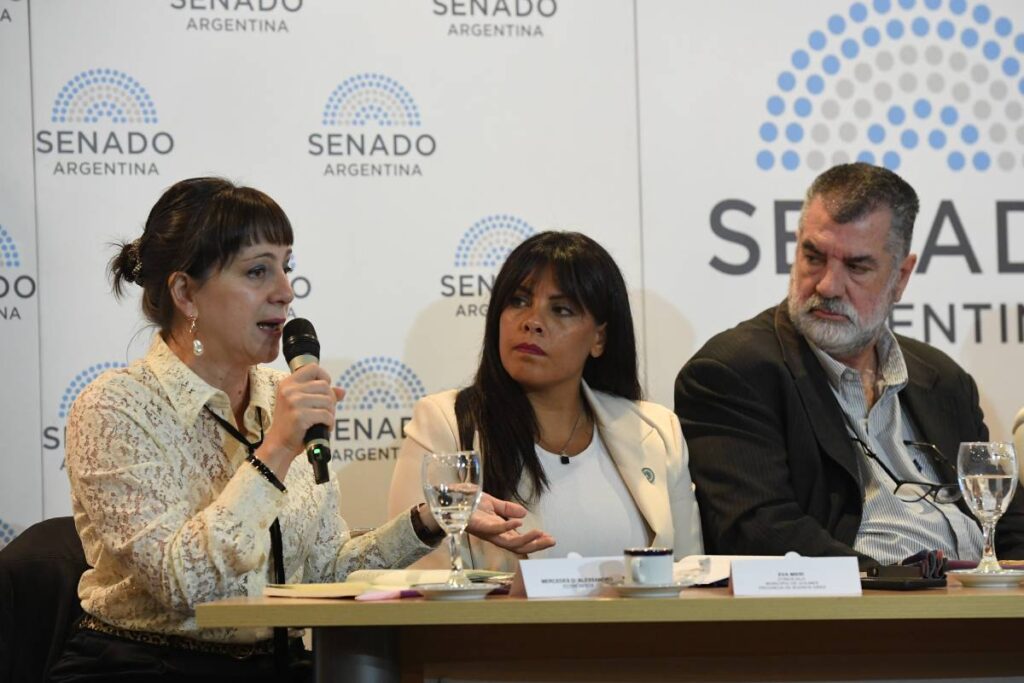
During the event, teenage students from a technical school were present, and the panelists emphasized the need to think about and with young people. “It is essential that young people once again feel that politics is a safe space, a space for transformation, a place of engagement,” shared Councilor Mieri. She also stressed the need to move to action. “There is a difference between empathy and solidarity. Empathy is the emotional understanding of others. And solidarity is action. It seems to me that today our country tends more to seek empathy between individuals and not collective solidarity, which is the fundamental element of social justice, of politics as a tool for transformation,” she said.
“Let’s not lose sight of the bigger picture,” Senator Cora added. “We are living through a terrible reality, with a president and officials who publicly despise us, yes. But underneath it all, at the grassroots level of our community, there are public servants who are still promoting the Micaela Law, who are committed to ensuring that comprehensive sex education is a reality in their communities. That is happening too. I urge you to continue fighting for a more just society.”
We are present
We are committed to journalism that delves into the territories and conducts thorough investigations, combined with new technologies and narrative formats. We want the protagonists, their stories, and their struggles to be present.
SUPPORT US

FOLLOW US
Related notes

We are present
This and other stories are not usually on the media agenda. Together we can bring them to light.