

Pride 2025: True freedom took to the streets in Buenos Aires
Pride celebrated and protested in the streets of Buenos Aires, in a march that called for people to put their bodies on the line to demand and to make visible the existence and resistance of sexual diversity.


Share

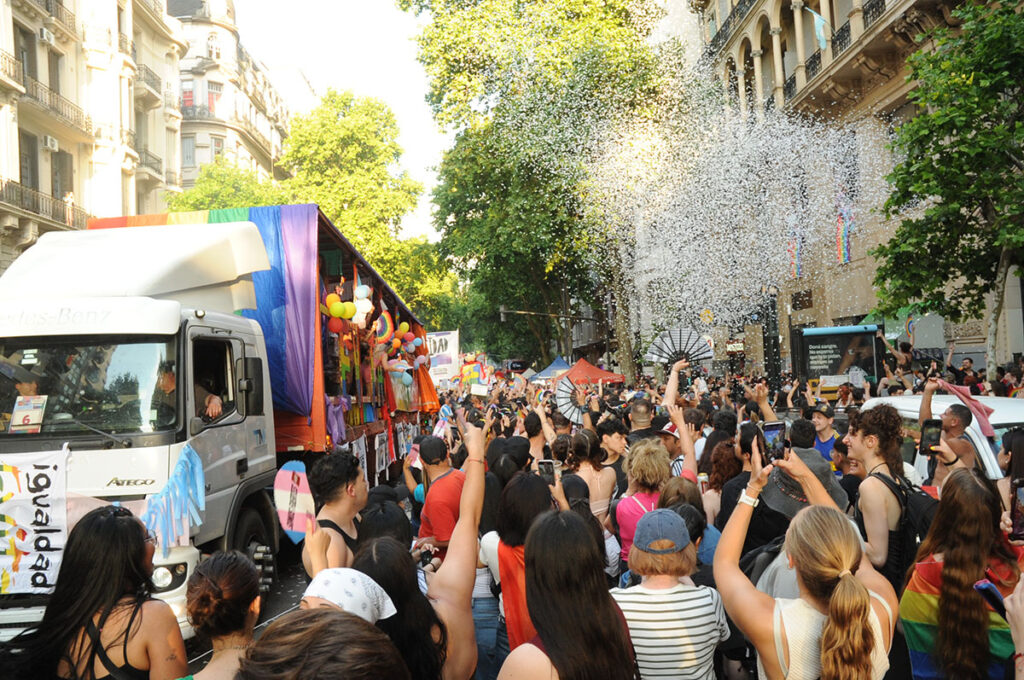
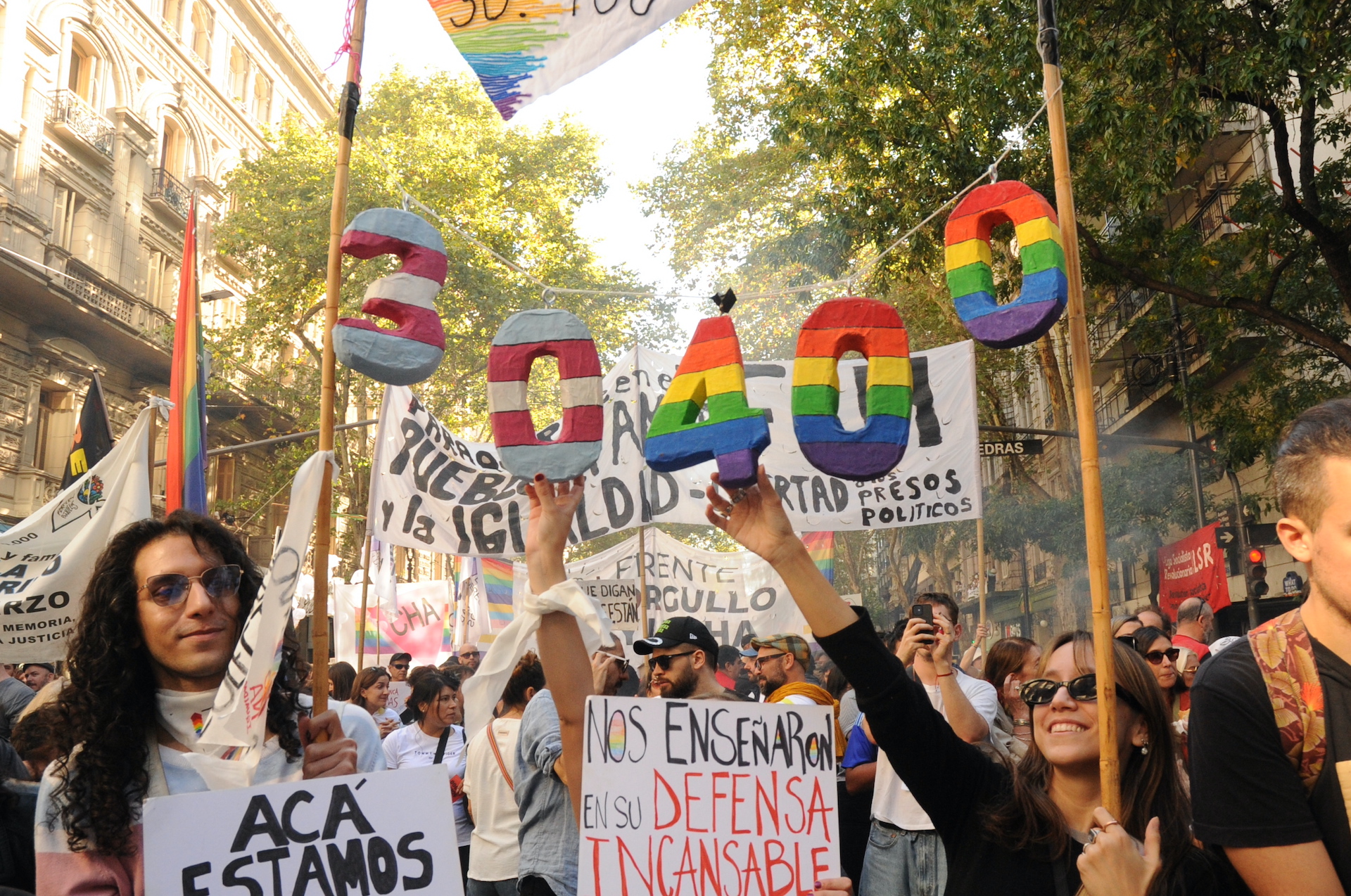
BUENOS AIRES, Argentina. The 34th LGBTIQ+ Pride March showcased a diverse array of bodies and identities in freedom, in the face of a context of setbacks and cruelty. The streets of downtown Buenos Aires were once again filled with hundreds of thousands of people, activists, children, and families who celebrated their existence and demanded an Argentina where Pride triumphs over hate.
“True freedom” and “Long live freedom” were some of the phrases that were repeated on signs and balloons throughout this edition of the most important mobilization of sexual diversity in the country.
The latest edition of the march took place almost a week after the ruling party's electoral victory. Regarding this, María Rachid, a leader of the Argentine LGBT Federation, said: “I am convinced that the majority of Argentine society supports our rights, the laws we proudly achieved in our country, the rights of people with disabilities, and the dignified upkeep of the Garrahan Hospital. This march is a great opportunity for that majority, which I am convinced holds all these values, to come and express them in the streets.”
“In the face of hatred and violence, more pride and unity!” was the main slogan – there were 39 others – promoted by the Organizing Committee of the Pride March, in which more than 60 organizations participate.
Pride and celebration as a political response
How can we talk about celebration in these times? Hate crimes and patriarchal violence are on the rise. Hate speech is becoming increasingly virulent. The government has criminalized LGBT people, dismantled public policies for diversity, and curtailed the rights of trans youth. And it was precisely diversity that was at the heart of one of the largest mobilizations against Milei's government: the anti-fascist march in February, after the president equated homosexuality with pedophilia in Davos.
“Diversity has been expressed through celebration in many hostile times. In fact, the Pride march was born out of a very hostile situation: a police raid. And even that first march had a celebratory element. There are always things to celebrate, even in the worst of times. This expresses that pride and celebration are a political response to the shame that some minority sectors of society want to impose on us .”
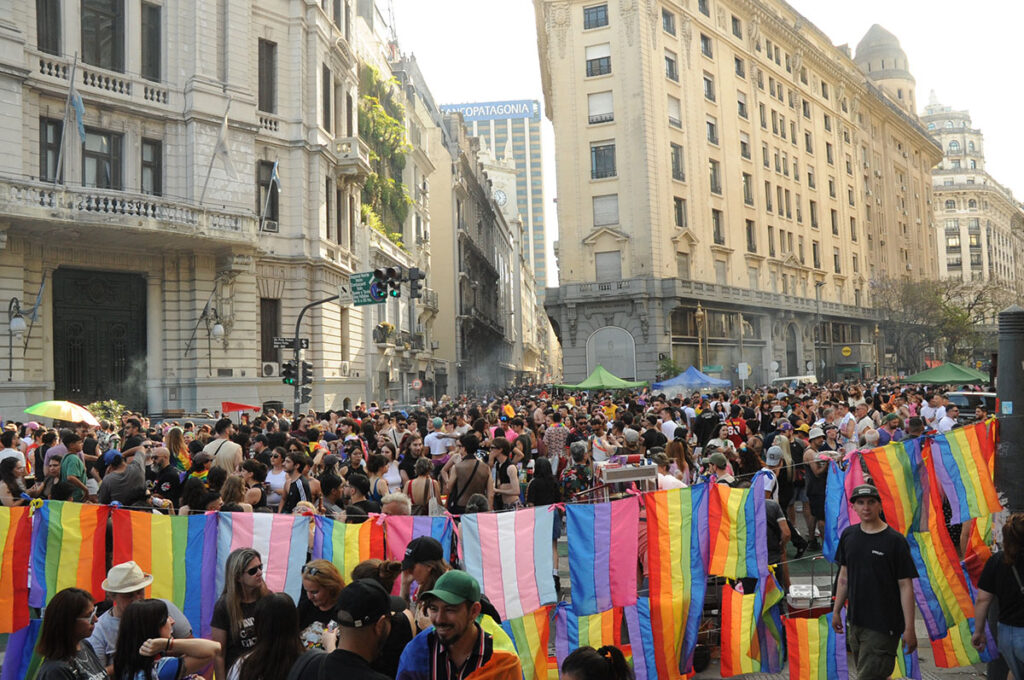
Pride triumphs over hate
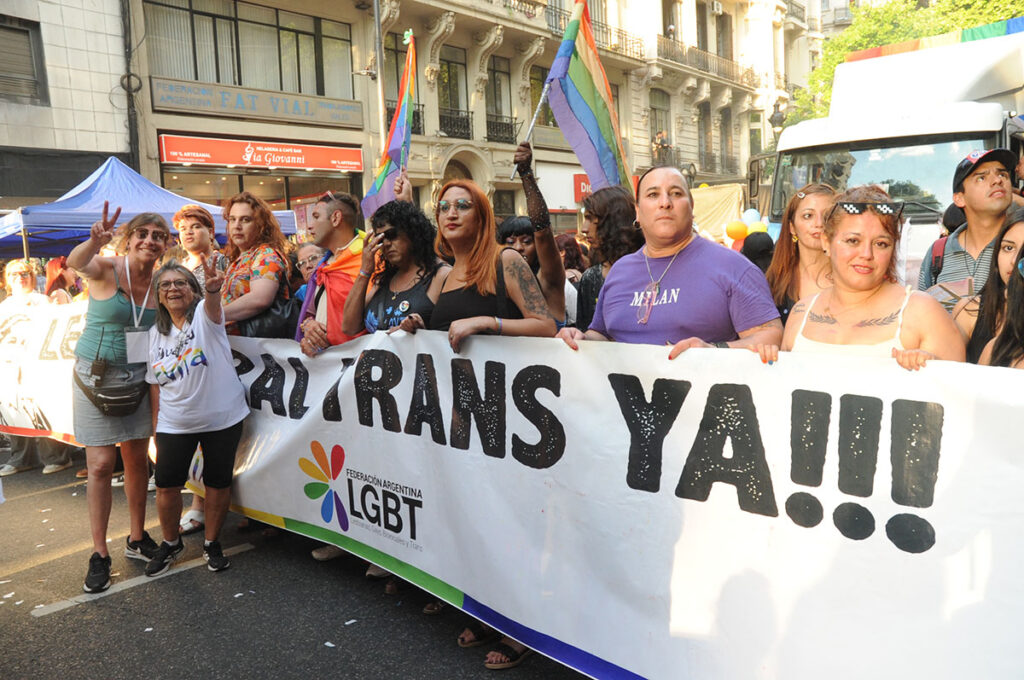
At the corner of Florida and Diagonal Norte, the float of the Historical Line Pride March Organizing Committee was set up, bearing the slogan "Pride triumphs over hate!" Ricardo Vallarino, one of the members of that group, told Tiempo / Presentes , "We came up with the slogan, 'Pride triumphs over hate,' to send a message of visibility and also of hope. We have gone through many difficult times, with feminism and the LGBT movement, and we have always been able to overcome them."
“The response after so much hate speech is to come together again, to celebrate again, to show ourselves in the streets that we exist, that we resist, that we will not remain silent, that we point out and demand the changes that this government is making backward; we are regressing on these issues. And we are going to celebrate again and recharge our batteries with many emotions.”
Florencia Guimaraes, a trans activist, came from La Matanza and joined Orgullo y Lucha (Pride and Struggle). “It’s very important to be here today, organized and united, in the face of so much hatred and the neo-fascist advance of the government of Javier Milei, Patricia Bullrich, and their allies, who are trying to take advantage of LGBTQ+ people. We, in an organized way, tell them, ‘ Here we are ,’ as Lohana, Diana, and many other comrades taught us, in the trenches and in the struggle.”
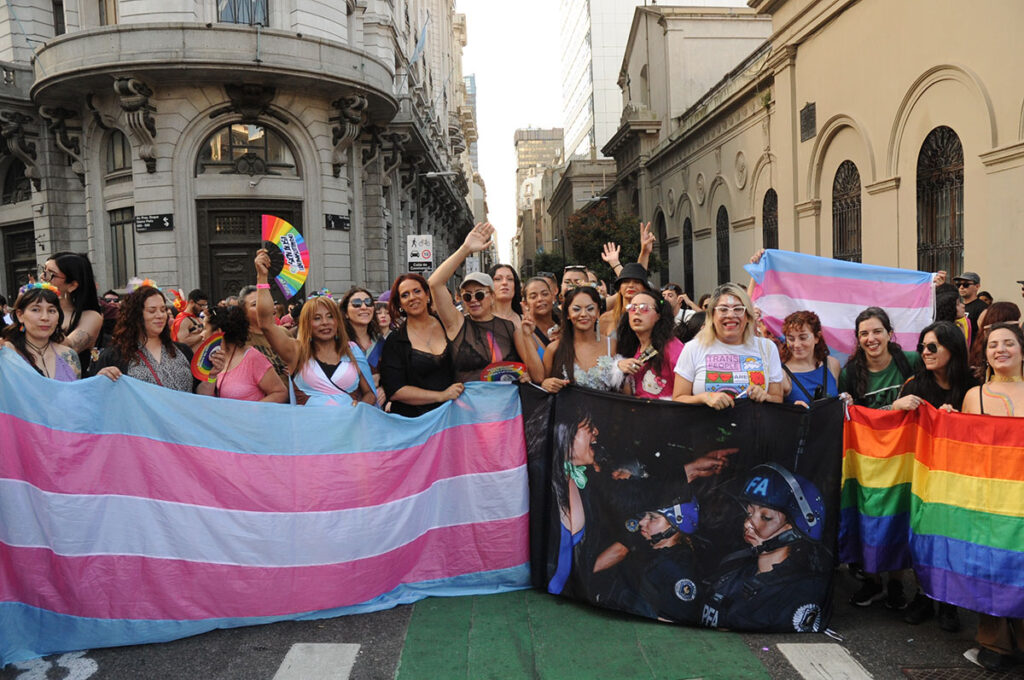
Virginia arrived on her own, with her family, from Sarandí (Avellaneda), wearing a fuchsia jumpsuit, the same color her sister Al chose for her top and leggings. She carried a hand-drawn sign in blue and pink letters: “Trans Lives Matter.” “I come every year, and today I’m fighting harder than ever, unfortunately. The government’s actions are very worrying; they cause me a lot of anguish. How can people be so unempathetic toward vulnerable people, retirees, and those with disabilities? My little sister, who is trans, and I came to say: Here we are, don’t play with us .”
Let's all demand it
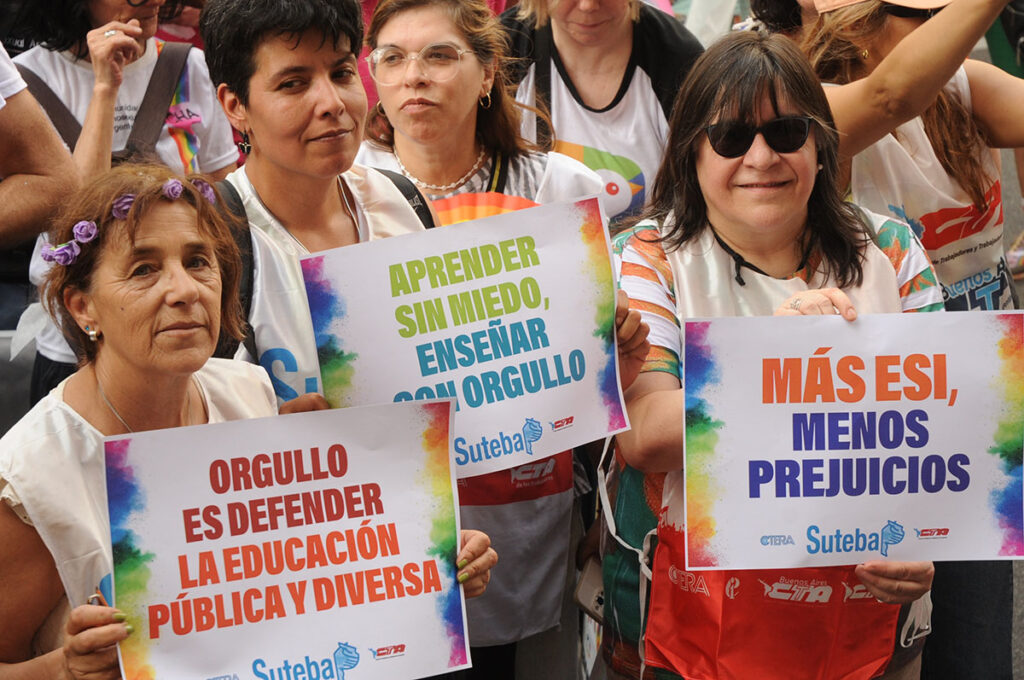
Argentina is diverse, and the mobilization showed it. On Diagonal Norte Avenue, next to a float from which candombe music blared from loudspeakers, a group of people swayed their arms and hips. Briggette Zuñiga Medina, from the Afros LGBTIQ Argentina collective, separated herself from the rest for a few minutes. “One of the reasons we are here today is the need to have our bodies present , as has always been the case. Within this global and national context, where everything is moving towards the far right and fascism, it is fundamental that people have social, class, and racial awareness, and set aside their privileges. We are not ceasing to celebrate, but today is a day of struggle,” she shared with Tiempo / Presentes.
Dante and Ivan, two young trans men aged 20 and 19, who came from the western part of Buenos Aires province, also criticized the government. “I came to celebrate the rights we’ve won, but also to fight against the current political climate, which jeopardizes all the laws we’ve won through struggle,” Dante shared. He was carrying a flag with the colors white, light blue, and pink. “I’m afraid that in the future I won’t be able to be who I want to be,” his friend added.
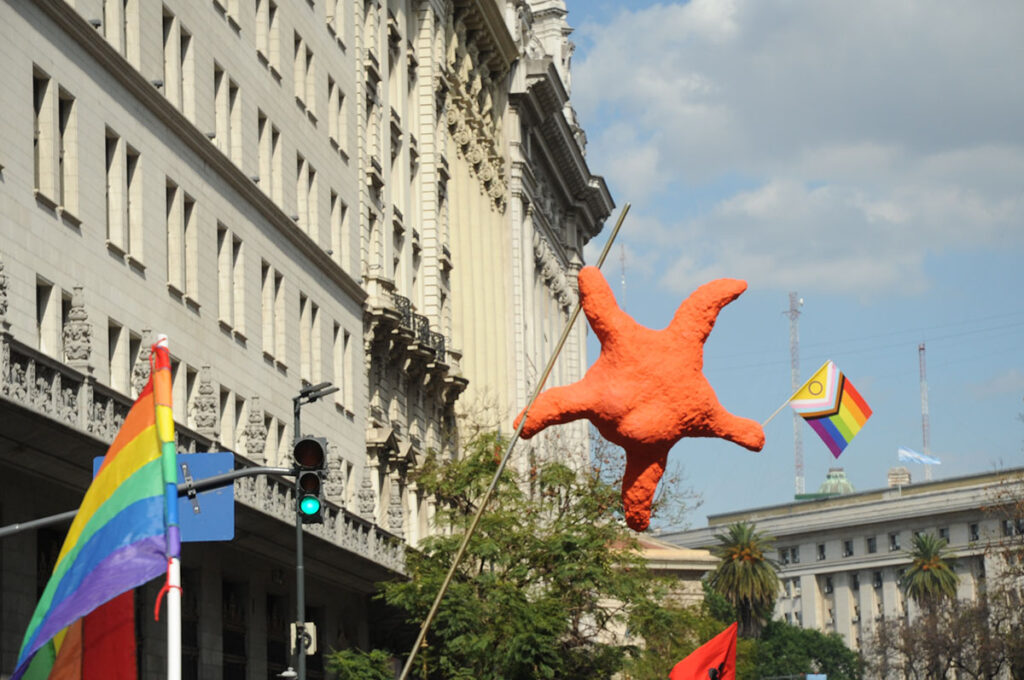
Families, children, and mothers with their kids in tow participated in the march. For the first time, Eliana Maturana came with her mother, her two daughters, ages 5 and 7, and her sister-in-law. “I came today because my mother always taught me that love is love, there are no barriers, what matters is what you feel. And that’s what I want to teach my daughters. That tomorrow they won’t have to come out of any closet, that it will be a completely natural situation. I think it’s important to show support, to take to the streets and make it clear that we’re here,” she shared.
Melisa De Luca arrived from the Pompeya neighborhood with her wife, whom she married three years ago. “I think it’s important to celebrate Pride, especially in a context where there’s a government that represses,” she said. She recalled the triple lesbian murder in Barracas, which occurred in May of last year. “Today there are so many of us, many more than I thought there would be,” she said, her voice filled with hope.
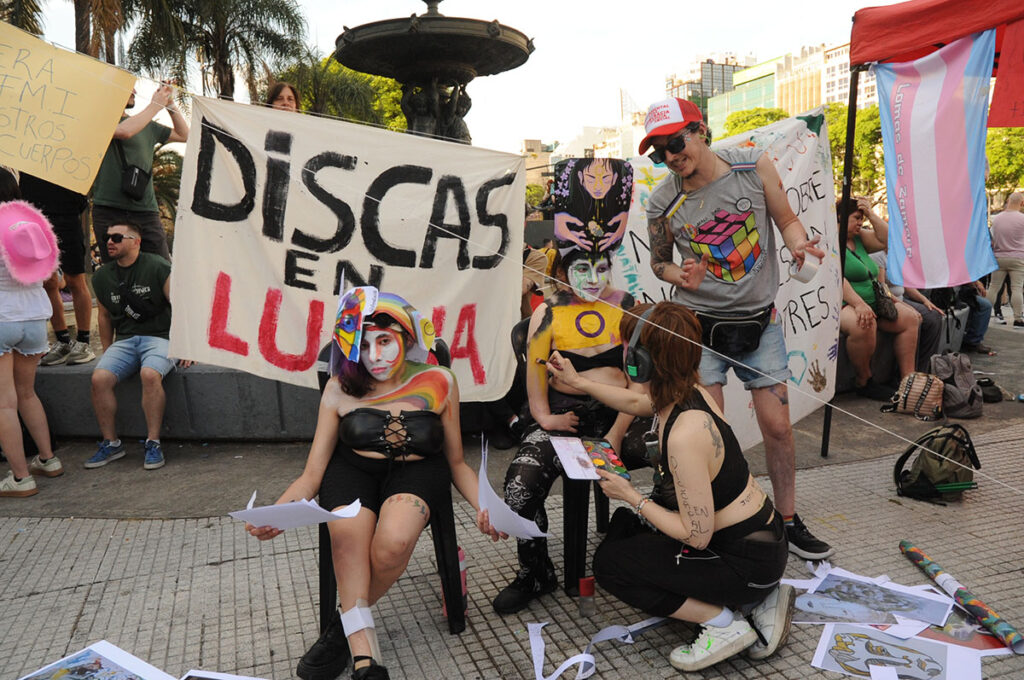
Ciervos Pampa set up a stand on Diagonal Norte. Ciervos is an LGBT club that fights against LGBTphobia in sports. “We want to show a little bit of what we do, so everyone can see that they have the right to enjoy sports just like in any heteronormative space,” they explained. “In the current context we live in, it’s absolutely necessary that we take to the streets to say, ‘We’re here, don’t make us invisible.’ Also, to fight for our place in society, to live peacefully, happily, and to always be who we want to be.”
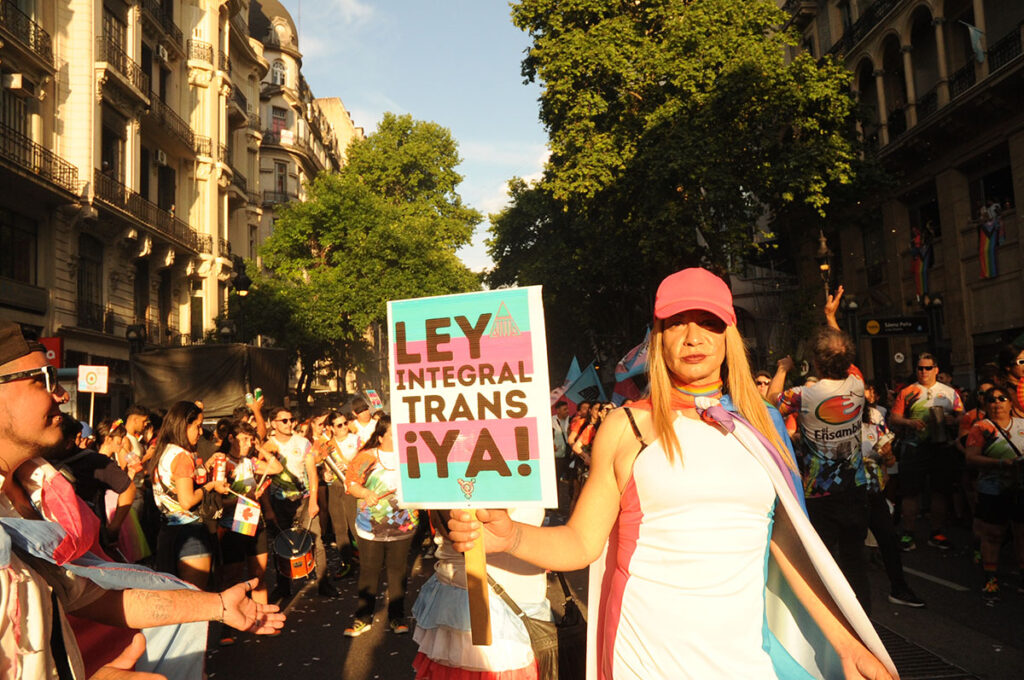
Sol Ruiz is a trans survivor and the first trans woman to be hired at the University of Luján through the trans and travesti employment quota. She came, she says, to support the Quota Law, demand historical reparations, and advocate for survivors. “There is a need for visibility. What isn't said isn't known, and what isn't shown isn't seen. We are here to uphold all rights and what still needs to be done. But above all, to embrace each other and raise awareness that the vote is the only socio-political tool we have.”
Increase in hate crimes
Hate speech materialized in public spaces, and in the first months of this year, Inés, a lesbian woman, was attacked because of her gender identity. The attack left her terrified to walk around her own neighborhood. This year, Pride March took on a new dimension for her. “It’s a moment of celebration and commemoration. We celebrate because we can be together, but also because of the struggle. This year in particular, we’ve experienced many setbacks in terms of our rights, so it’s important that we stand united and vigilant. In many cases, we aren’t even recognized as people,” says Inés. Joy Yeguaza is a trans artist, a migrant, and a leading figure in Ballroom culture. In April, she was brutally attacked in her own neighborhood. She says that the current political climate gives this year’s march even more significance. “Now is the time to say, ‘Help change this.’ We can’t be so indifferent to a society that seems to care that a trans person dies, that a dissident person can’t find work because of their identity, because of their perception, and that this complicates their life. That makes this year more important than ever.”
The latest report from the National Observatory of LGBT+ Hate Crimes revealed an alarming figure. Between January and June of this year, 102 attacks and hate crimes motivated by the victims' sexual orientation, gender identity, or gender expression occurred. This figure represents a 70% increase compared to the same period last year.
Transvestites and transgender people were the most affected, accounting for 70.6% of the cases, and four murders were recorded: three gay men and one lesbian.
Green scarf protest for Memory, Truth and Justice
One of the moments that has become emblematic of the Pride March in Buenos Aires is the Green Scarf Protest for Memory, Truth, and Justice. Organized by Orgullo y Lucha (Pride and Struggle) at the corner of Florida and Diagonal Norte, it featured Taty Almeida of Madres de Plaza de Mayo Línea Fundadora (Mothers of Plaza de Mayo Founding Line), Charly Pisoni of HIJXS (Children for Identity and Justice Against Oblivion and Silence), members of NIETS (Grandchildren of the Disappeared), and had the support of Abuelas de Plaza de Mayo (Grandmothers of Plaza de Mayo) and human rights organizations. Taty's arrival in a wheelchair was met with cheers from a crowd gathered around the stage, which was mounted on one of the trucks that later traveled down Avenida de Mayo to the National Congress.
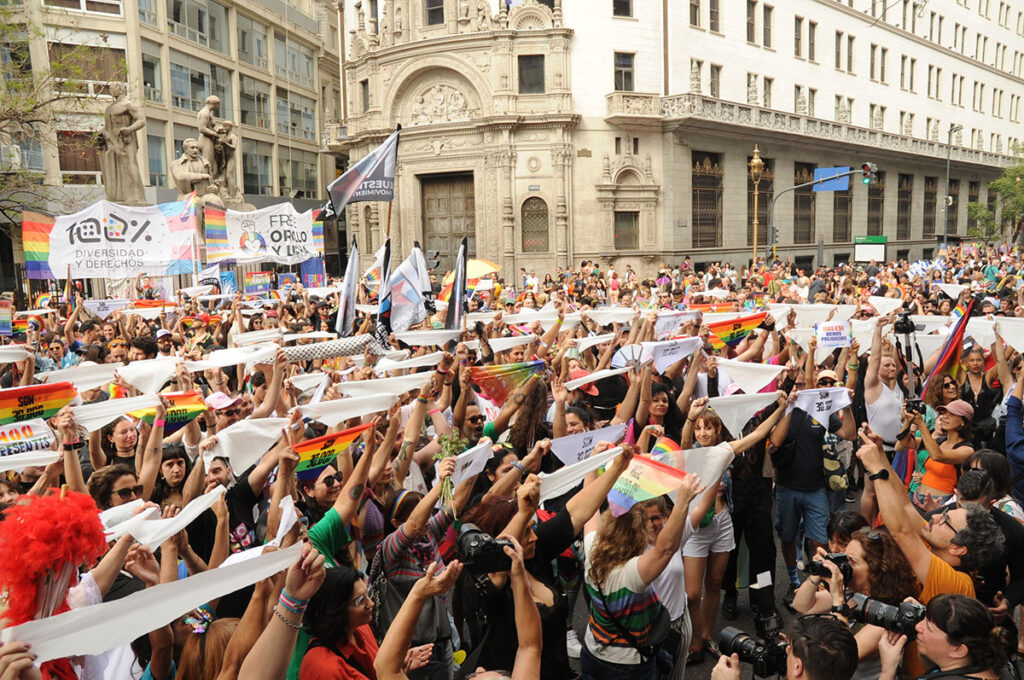
“The Mothers and Grandmothers taught us that love conquers hate and that memory cannot be archived. We raise our green scarves against state denial, violence, and exclusion. For the murdered trans women. For free children. Pride is resistance. It is not for sale, it is to be defended,” said Martín Canevaro from the Pride and Struggle microphone to welcome Taty.
“In this dangerous and sad moment we are going through, everything you are telling me and us today is a balm for the soul. Today we are here demonstrating that the resistance continues; we must not give up. We must not allow this government to erase what we have achieved with so much effort. We, the queers, tell you this, we who, despite the wheelchairs and canes, remain standing,” Taty recalled, with a trans flag in her lap and raising a handkerchief with the colors of the rainbow and the message: there are 30,000 of us.
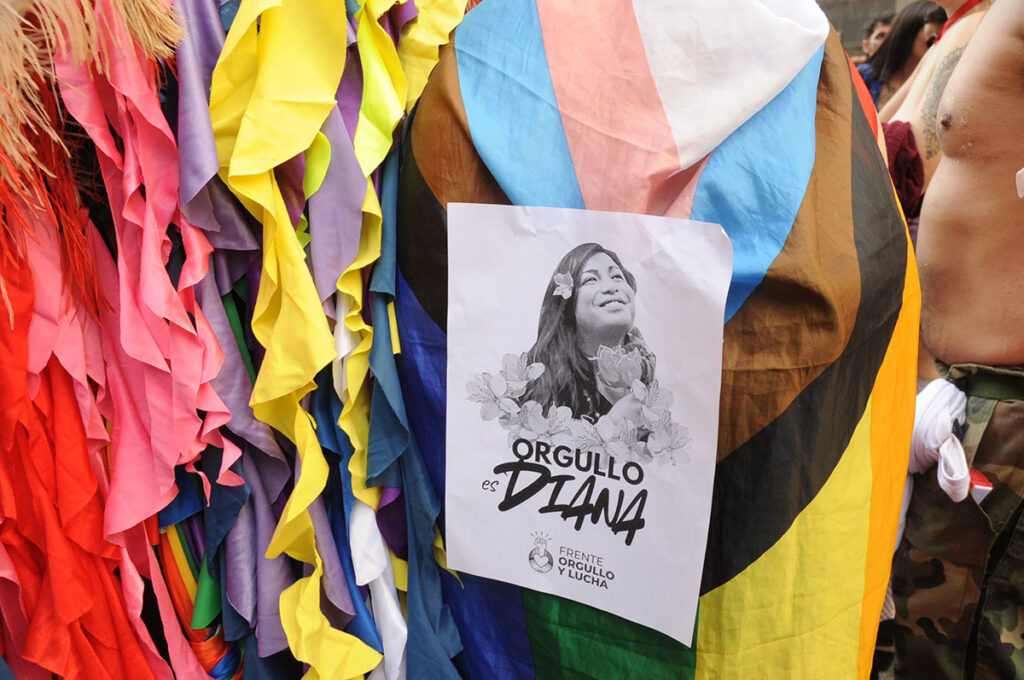
Meanwhile, around them, white handkerchiefs and flowers were raised, and the names of Diana Sacayán—in this march there was also a special tribute to her on the 10th anniversary of her transvesticide—, Lohana Berkins, and César Cigliutti were shouted, "Present, now and forever!", in an embrace of the struggles for human rights to crucial figures of the LGBT collectives.
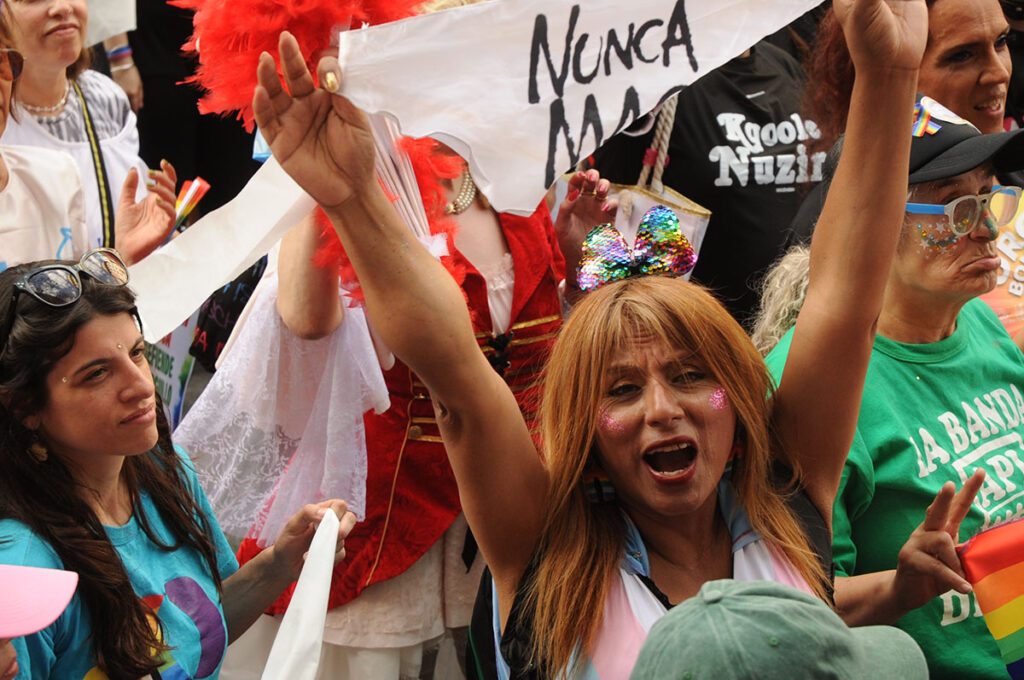
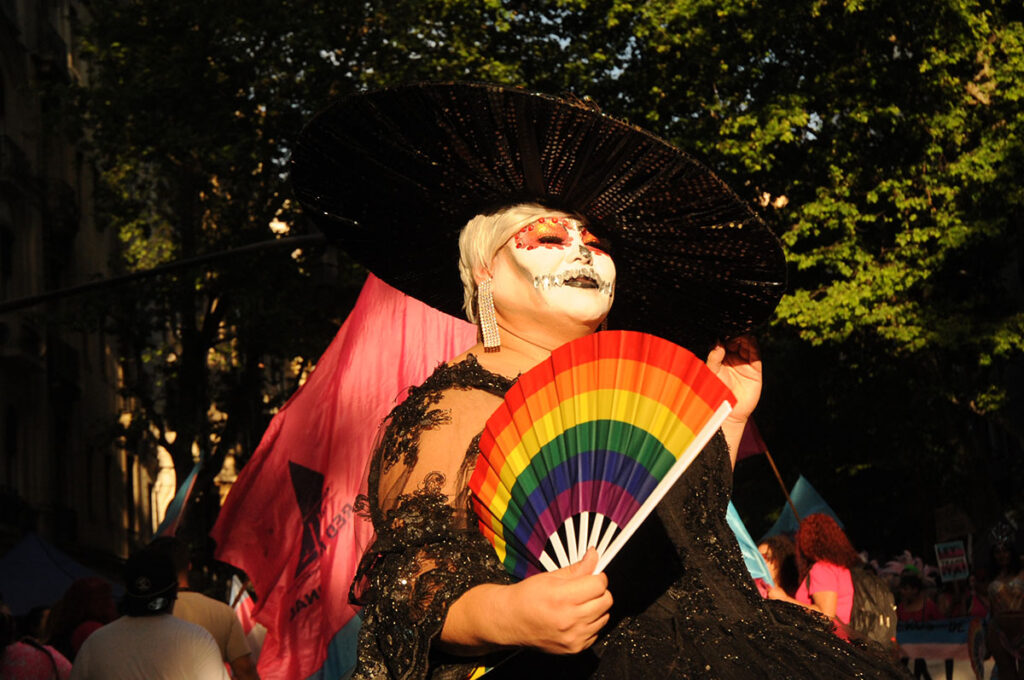
Dancing, performances, and a palpable sense of joy unfolded among the crowd. The essence of the Pride March is its celebration in the streets. It was there, amidst festivities and demands, that two of the most important laws that have distinguished Argentina internationally in the last 15 years of democracy were forged. The diverse bodies and the held-high signs showed once again that living with Pride is true freedom.

This article is part of a collaborative coverage agreement with Diario Tiempo Argentino, our partner publication. It is published today, Sunday, in the print edition and is also available online.
We are present
We are committed to journalism that delves into the territories and conducts thorough investigations, combined with new technologies and narrative formats. We want the protagonists, their stories, and their struggles to be present.
SUPPORT US

FOLLOW US
Related notes


We are present
This and other stories are not usually on the media agenda. Together we can bring them to light.