

What is happening in Ecuador? Voices of the dissidents
"Ecuador's crisis stems from years of neglect," says Lía Burbano, a lesbian activist. She and Víctor Carreño, a journalist and director of Edición 111, explain and analyze the current situation and how it affects sexual minorities.


Share

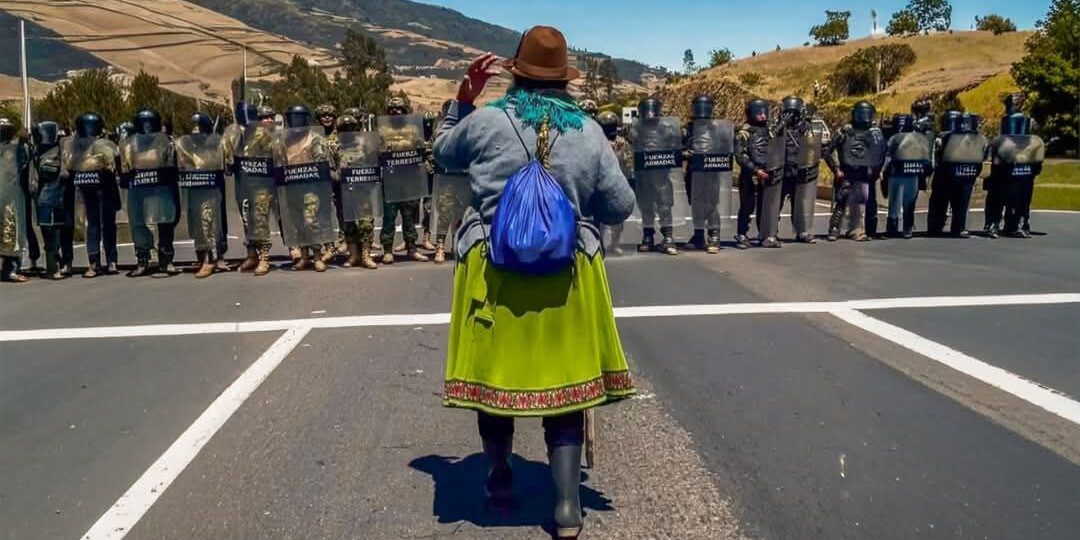
The presidential declaration of an “internal armed conflict” through Executive Decree No. 111 in Ecuador, and the subsequent military deployment to combat groups classified as “terrorist organizations” and “non-state belligerent actors,” has plunged the country into a human rights crisis. Legal experts warn that the decree, while responding to a “legitimate need to control public order,” involves “excesses that could compromise the rule of law.”
To understand what is happening in Ecuador and the risks for diverse populations, Presentes interviewed Lía Burbano, lesbian activist and director of the Mujer & Mujer Foundation , and Víctor Hugo Carreño, journalist and editorial director of Edición 111 , an independent LGBT+ media outlet.
Indigenous people, Afro-descendants and peasants at risk
The current crisis stems from years of neglect. Lía Burbano explains that the violent context arises from “the neglect of public services and the abandonment of institutions .” The government of Daniel Noboa addresses social issues through welfare programs, resorting to cash transfers and palliative measures instead of creating subsidies or sustainable public policies.
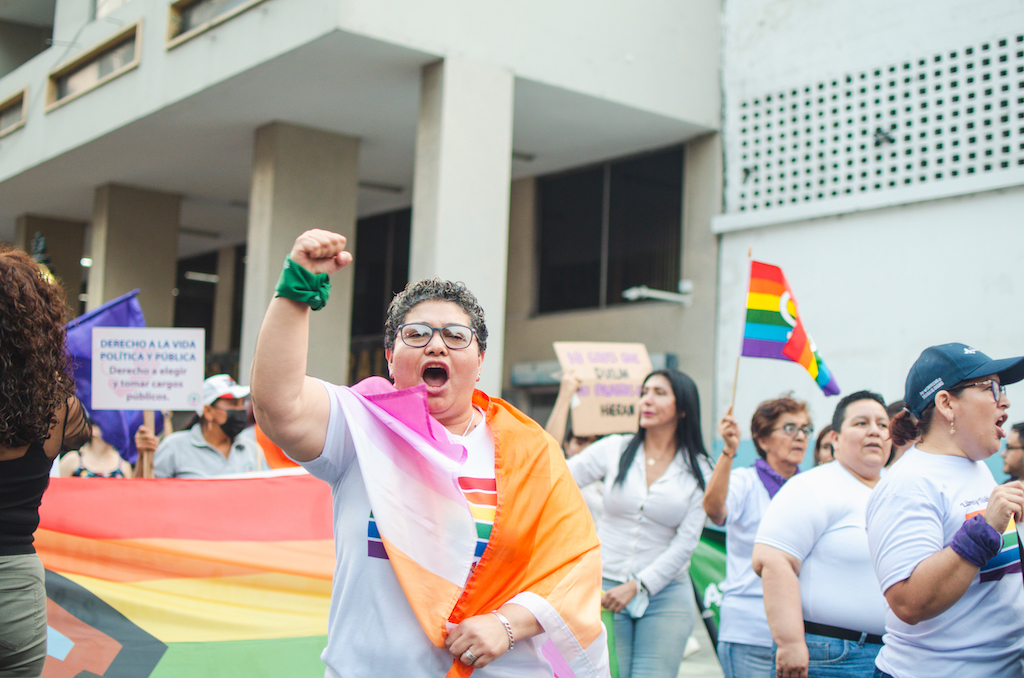
“The lack of state presence in vulnerable sectors has allowed the penetration of drug-related criminal gangs, where those most at risk are indigenous people, Afro-descendants, and peasants ,” explains Lía Burbano.
She and Victor Carreño agree: the elimination of the diesel subsidy is just “the straw that broke the camel’s back” in a deeper crisis rooted in structural problems. In this context, dissident groups are especially vulnerable, particularly trans women sex workers who live or work in the peripheries, “where the State doesn’t reach,” Burbano comments.
“Some lives don’t matter”

“Transgender sex workers are victims of ‘protection money’ (extortion payments demanded by drug trafficking groups to allow them to occupy a space on the street).” Or they are forced to sell drugs. The problem isn’t just that; it’s that people who have refused to pay these extortions have been murdered, and their bodies are being left in the street,” explains Carreño.
One of them was Becky G. She was 25 years old, worked as a sex worker in the Primero de Mayo neighborhood of Guayaquil, and was murdered with a firearm. On October 10, 2025, Becky's body was found in the street. According to information from the LGBT Federation , “she was approached by several individuals allegedly linked to extortion rings operating in the area. According to preliminary testimonies from other trans women, the murder occurred when Becky refused to pay protection money demanded by these individuals.”
Carreño laments the government's indifference. “There hasn't even been a gesture to speak out, much less investigate what is happening with diverse communities and the unleashed violence. This reflects the anti-rights narrative and this government's vision where some lives don't matter ,” she adds.
The usual suspects: neither white nor straight
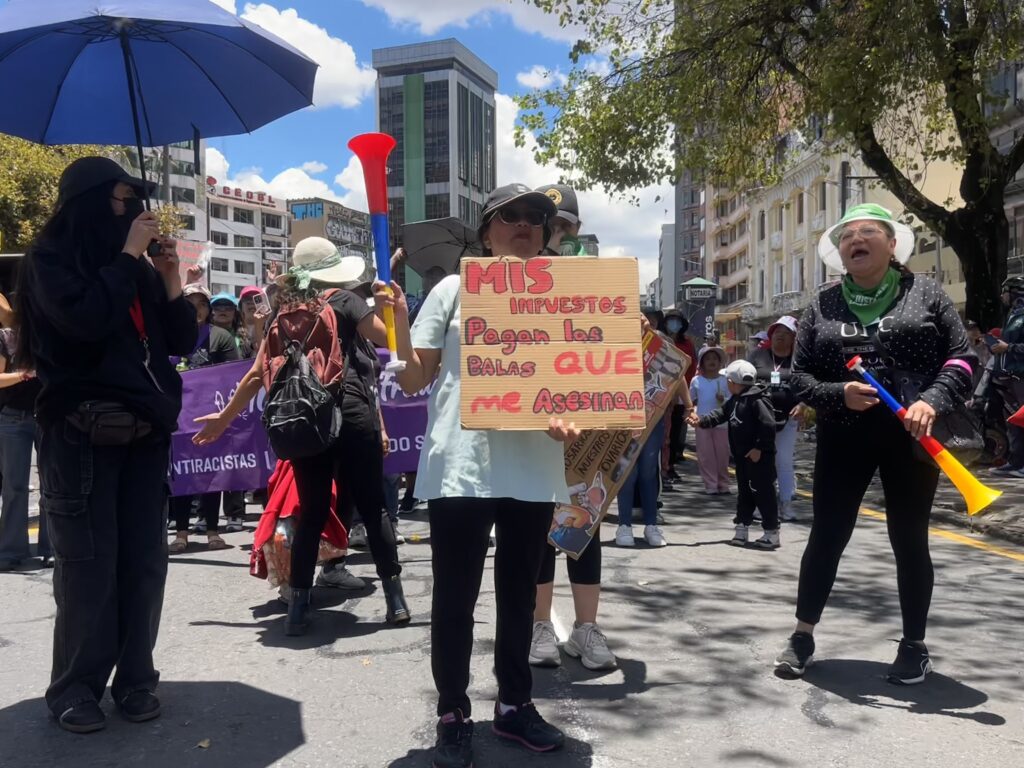
In addition to this criminal violence, there is institutional violence exacerbated by daily militarization, where the violence has been directed mainly towards community members, peasants and indigenous people who protest.
Amnesty International has documented serious human rights violations, confirming that the Public Prosecutor's Office has opened 43 cases of enforced disappearance since 2023. Amnesty suggests there is a systematic pattern of targeting residents of historically marginalized and racialized areas. The operations have included mass raids without warrants, arbitrary detentions, and a military presence in public spaces, disproportionately affecting Afro-descendant and Indigenous communities.
Lía Burbano argues that the recurring states of emergency in Ecuador have made the military presence “very commonplace ,” leading to the “profiling of people as suspects.” She warns that this intensifies vulnerability to institutional violence: torture, degrading treatment, and discrimination against dissidents.
The profiling done by state security forces can be based on: “skin color, tattoos, piercings, effeminate mannerisms, gender expression, way of dressing (…) All non-white and non-heterosexual people can fall into the category of 'under suspicion' ,” explains Lia.
The activist also fears for her fellow activists: “On the street, in front of a soldier or police officer, we will automatically be considered suspicious. Especially lesbians, who, because of their gender expression, are easier to perceive as such .” She had been commenting on this same issue since last year in an article published in Presentes .
An example of abuse of power was reported by the Washington Blade last year. The news story told of a gay couple who were stripped naked and sent home by police after a curfew.
Why a new Constitution puts diversity at risk
In this context, other alarms are being raised. One of the biggest concerns about the future is the announcement of a possible new Constitution in Ecuador , which is being used by anti-rights groups to reverse progress in human rights, directly affecting the rights of LGBT+ people and women.
“Conservative groups and powerful groups are already preparing their candidates to eliminate everything related to 'gender ideology.' This is crucial. Ecuador's current Constitution is the only achievement in this country that has stopped the mockery of LGBT people. If this Constitution changes, many things will change,” Lia explains.
Other risks of eliminating the current Constitution are that it could also eliminate protections such as the right to nature or prior consultation with indigenous peoples in Amazonian territories in order to advance the extractivist agenda .
Víctor Carreño agrees on how alarming this change could be: “The mere announcement of a possible new Constitution has led to anti-rights groups emerging and unabashedly using hate speech. A new Constitution could definitely lead to a setback in rights (…) I admit I'm pessimistic, but the situation is worrying. I'm sure this year will be the most violent, and consequently, it will also be detrimental to LGBTQ+ communities ,” he says.

Care and resistance strategies
Faced with the panorama of violence and persecution, the organizations have activated strategies of resistance and "compassion".
Lía Burbano says that in Guayaquil, to minimize the impact of any persecution or specific type of violence, they are adopting a "low profile", without using flags or overly visible gender expressions.
Strategies include strengthening safe networks, creating community communication channels, having safety protocols, and generating spaces for self-care and healing to counteract stress.
“Despite the polarization, there is a solidarity movement in the streets of Guayaquil, with considerable diversity, where dissidents, young people, feminists and social organizations join with the indigenous peoples and nations,” Lía comments.
At the same time, she emphasizes: “ The future is uncertain, but as a feminist, I choose life.” Lía says it’s impossible for her to say that other worlds aren’t possible. “ To sustain the fight against the global right wing, it’s vital to strengthen regional networks . The struggle, even if it’s difficult and seems inert, must take place in the streets, but also in assemblies, congresses, schools, and fields.”
We are present
We are committed to journalism that delves into the territories and conducts thorough investigations, combined with new technologies and narrative formats. We want the protagonists, their stories, and their struggles to be present.
SUPPORT US

FOLLOW US
Related notes
We are present
This and other stories are not usually on the media agenda. Together we can bring them to light.