

All lives matter: from the pain of the triple femicide to the collective outcry
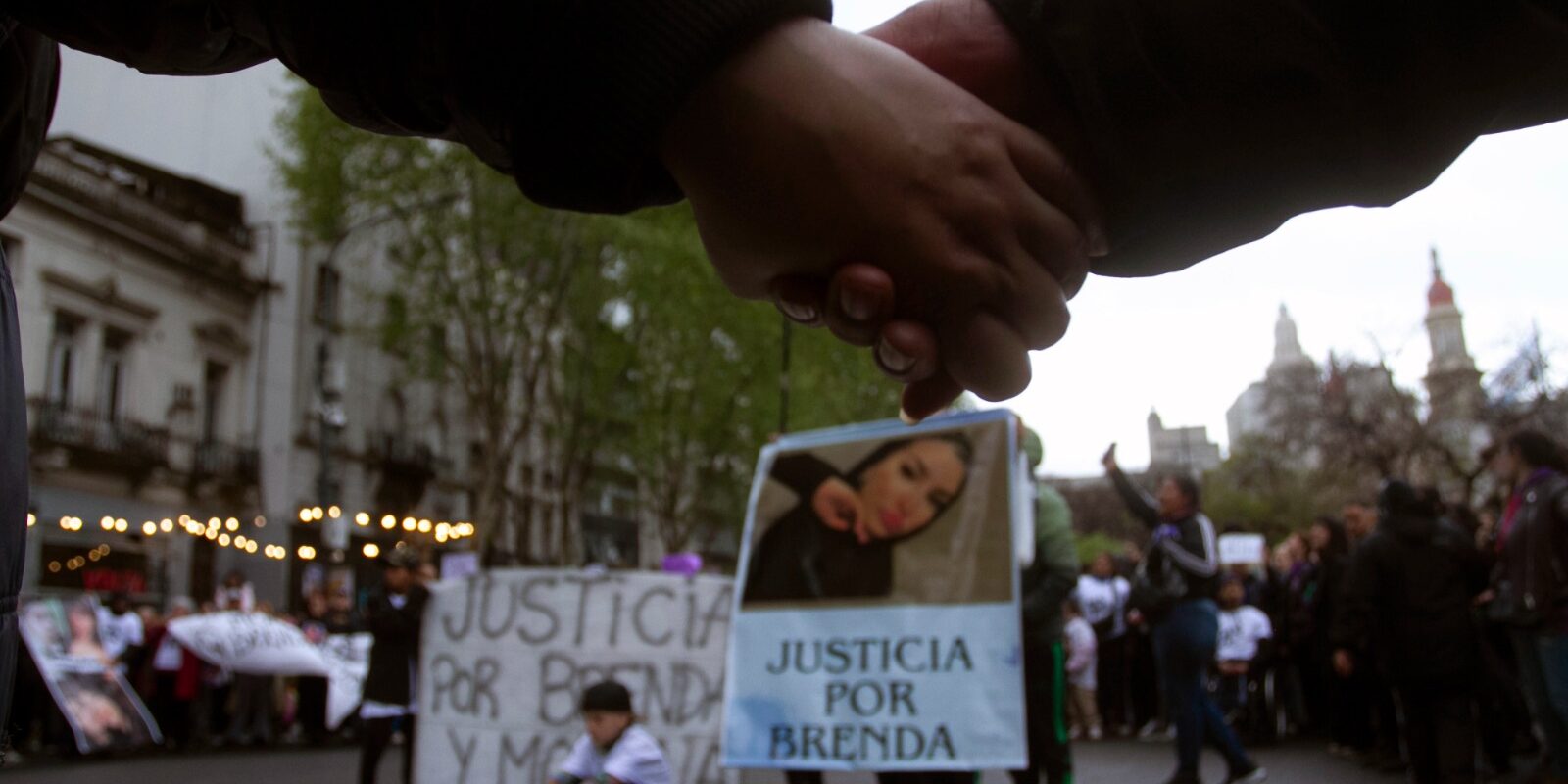
Thousands of people marched from Plaza de Mayo to Congress to demand justice for the triple femicide of Lara, Brenda, and Morena. Relatives of the victims led the demonstration in Buenos Aires.


Share

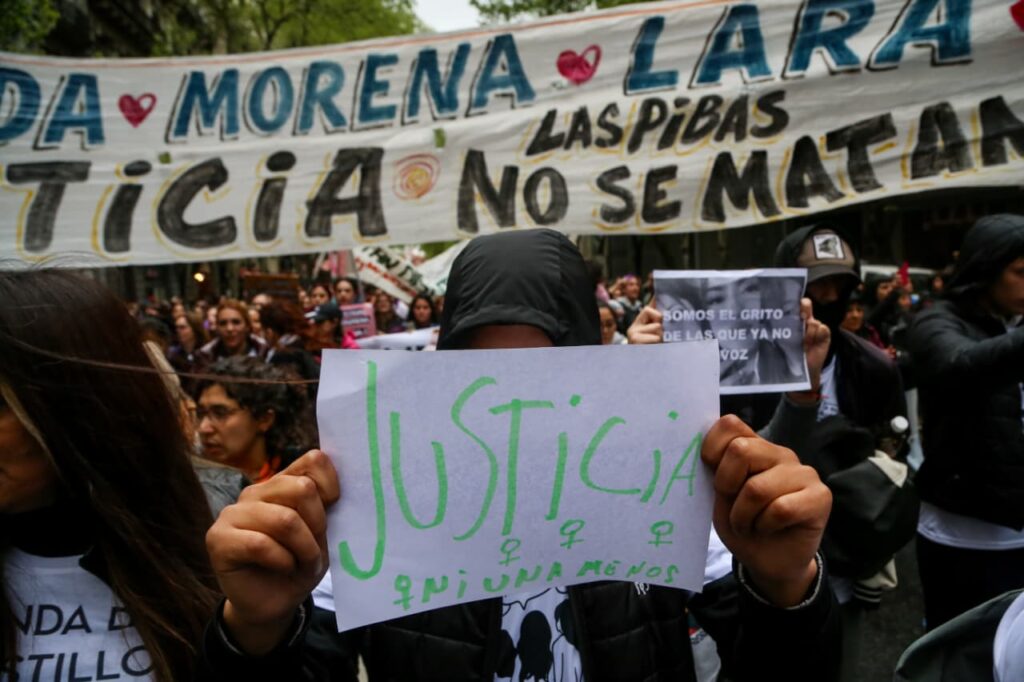
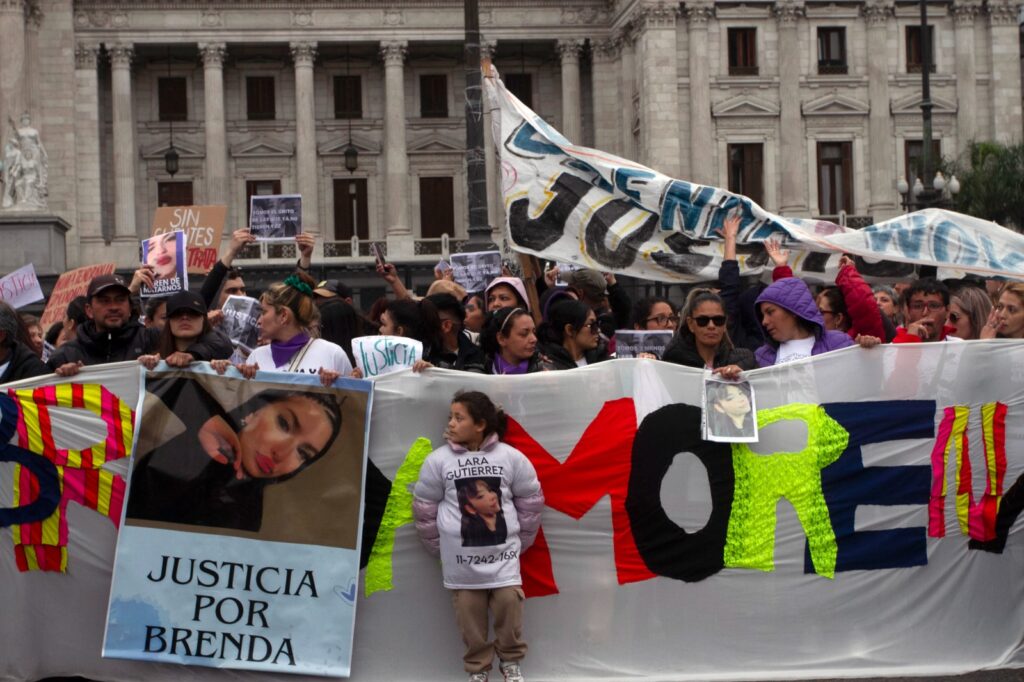
A crowd of women, along with their friends, mothers, aunts, and daughters, arrive at the National Congress after walking 12 blocks from Plaza de Mayo. Leading the march are a group of young people, children, and adults, the families of Morena Verri (20), Brenda Loreley Del Castillo (20), and Lara Morena Gutiérrez (15), who were murdered last week in a crime that shocked the nation.
A father's t-shirt reads: "You will always be my More More." The chants of "Not one less, we want to live!" subside. Those who can gather around the family, and silence takes over. They look at each other's faces. A bell rings, and someone shouts "Justice!" Brenda's mother thanks everyone for being there.
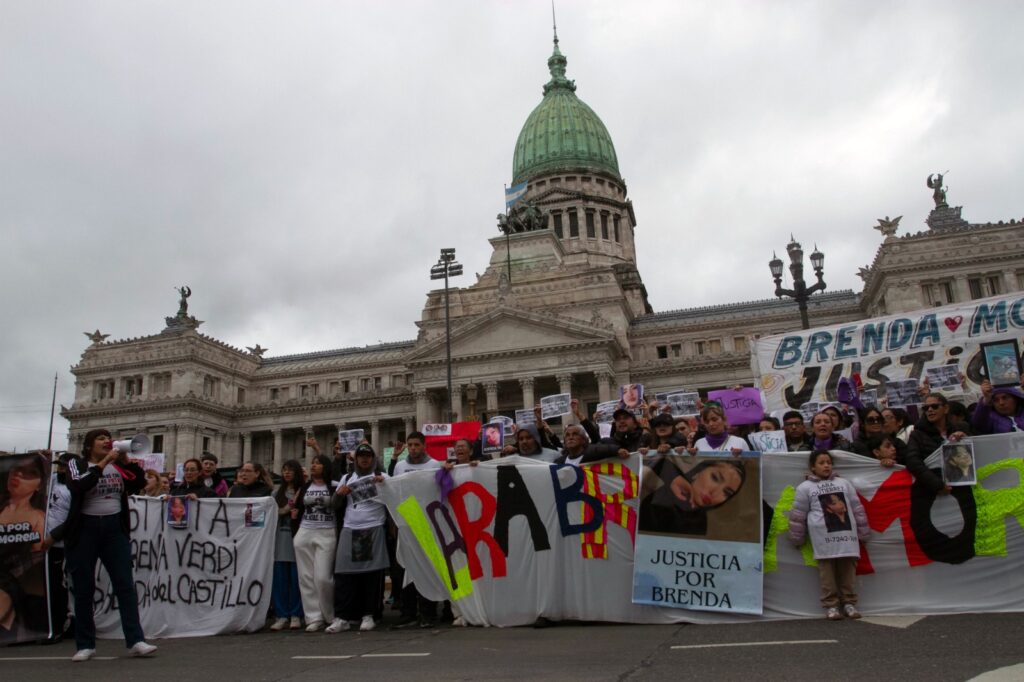
Despite the rain and the overcast day, thousands of people gathered this Saturday to demonstrate and demand justice for the triple femicide. Eight blocks of self-organized individuals and groups filled Avenida de Mayo in the march that began at 5 p.m. in Plaza de Mayo and proceeded to Congress. The demand is urgent: “All lives matter. Stop killing us.”
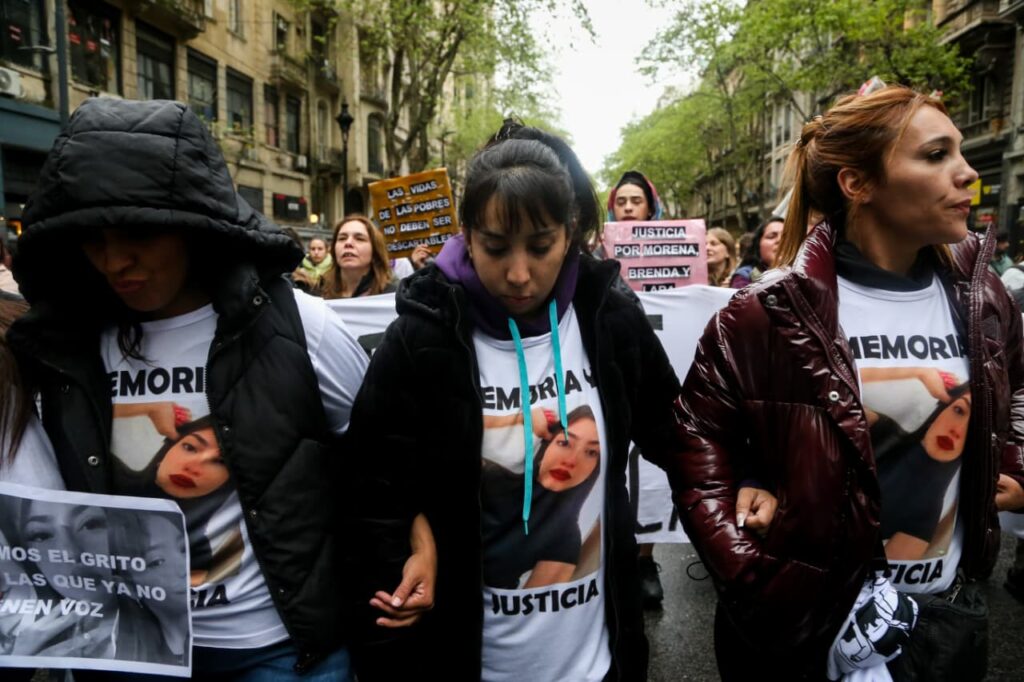
I feel pain, anguish, sorrow, anger, and helplessness. All we hope for is justice. That those who committed this horrific crime pay. They were three good girls, from the neighborhood, one of them a mother. We ask for your help. Politicians and governments do nothing to protect girls. This must not happen again,” Lara’s aunt told Tiempo / Presentes .
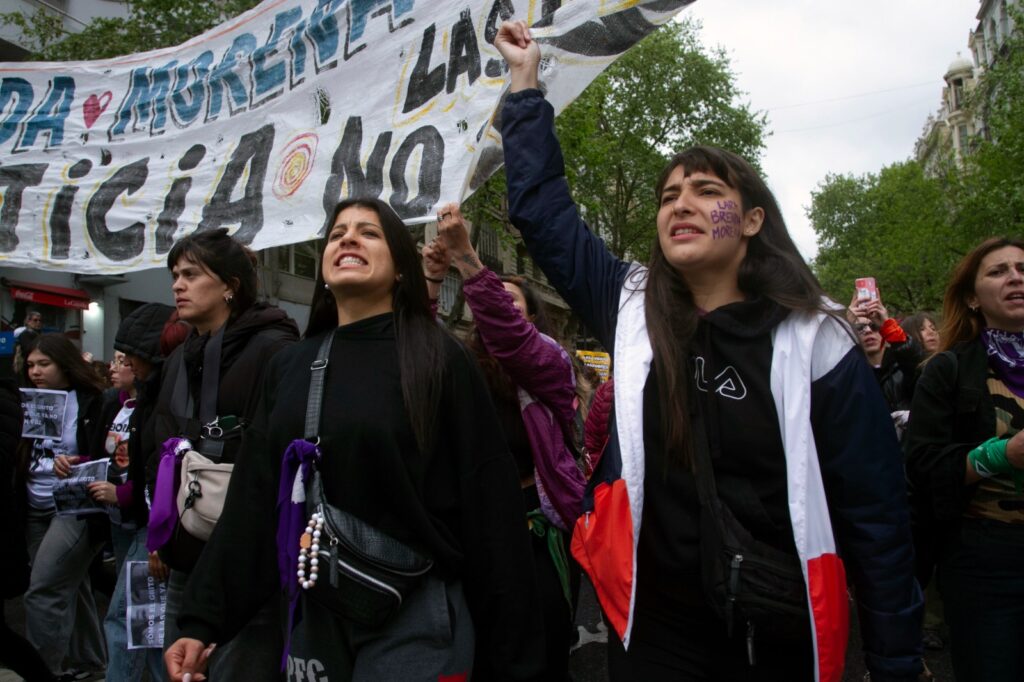
The march proceeded without incident, with singing and music to support the families in their grief. However, during the dispersal, the Buenos Aires City Police formed a cordon at the intersection of Solís and Alsina streets, preventing the families from leaving peacefully. They were forced to leave amidst a tense atmosphere. Moments earlier, journalist Robertito Funes mocked the protesters who criticized his coverage of the case on LN+ and left amidst a stampede.
People came to the demonstration from various places, mainly from the greater Buenos Aires area and the city itself. Luisa, 48, is a community organizer and traveled from Villa Domínico, in the province of Buenos Aires. “I think it’s unfair that they say that because the girls were involved in prostitution, they had the right to kill them. This is happening because they defunded the rights we’ve been demanding in the streets. We’ve been fighting for equality and gender policies for years. They eliminated departments that helped our colleagues and neighbors in low-income neighborhoods, crucial areas. Then this happens. I’m a great-aunt, and I came for those who are here and for those who aren’t.”
During the mornings she works as a nanny and in the afternoons as a teaching assistant at a school. Through her work as a community organizer, she has come to know the realities faced by many of her neighbors. “The situation is getting worse and worse in the neighborhoods. My niece is staying with her boyfriend because she has a baby who's a little over a year old, and she says, 'Am I supposed to end up on the street with my child?' There are tons of cases like this. This is happening because they defunded the rights we were demanding in the streets. They eliminated government offices that helped women and neighbors in low-income neighborhoods, crucial areas. I'm a great-aunt, and I came here for those who are here and for those who aren't.”
Laura Meza, a sex worker and member of the Association of Sex Workers of Argentina (AMMAR), said that “Lara and Morena were colleagues from the Flores Assembly”: “They approached the organization demanding an end to the institutional violence experienced in the Flores neighborhood. As a union and as fellow workers, we are demanding justice for them and that it never happen again.”
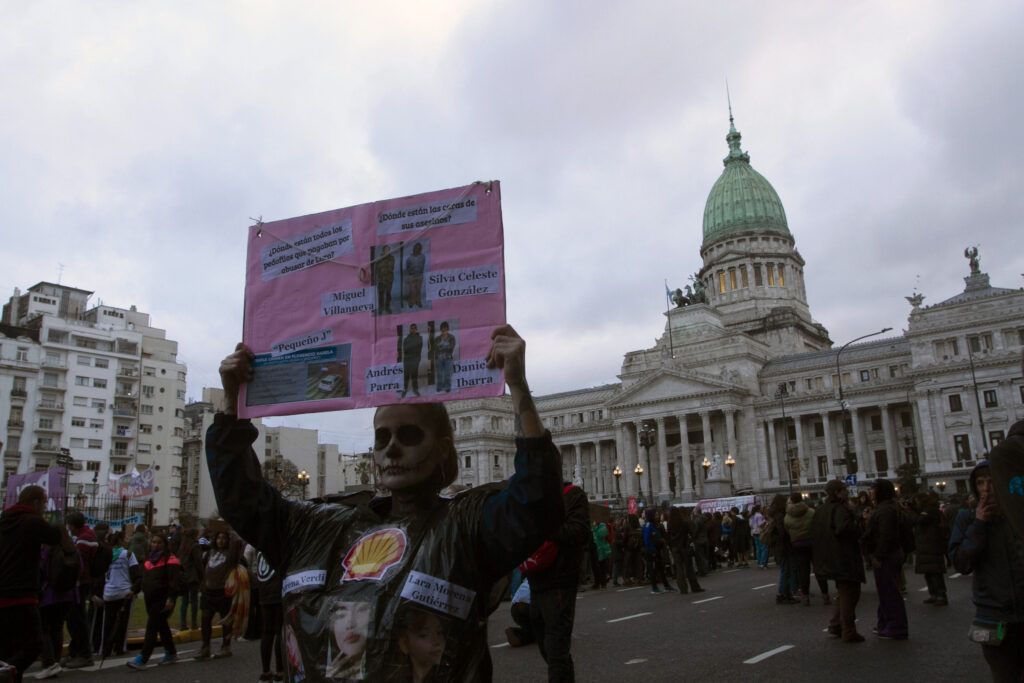
The mobilization was called by various feminist organizations, including the Ni Una Menos collective. “We are in the streets, a place we never left, but today is a special occasion because of the brutality of this triple femicide. Also because of the attempts by officials to deny that it was a femicide, that femicide has nothing to do with drug trafficking. They are trying to deny the reality of the working class in our country. And what we are seeing are the effects of a deregulated, indebted economy, of wages that don't stretch far enough, a recession that leaves no life options for young people in these communities. Also, the abandonment by the State, which eliminated thirteen public policies for the prevention and treatment of violence, and destroyed the Acompañar Program and the 144 hotline. It is within this context that this triple femicide must be analyzed,” stated sociologist and Ni Una Menos activist Luci Caballero.
The march was attended by social and political organizations of various stripes. “ Today we are more united and more organized. We must continue. We all have the same rights. All lives matter. It is important to come together because of the crimes that women are suffering,” shared Sasha Solano, a leader of ATE and a trans activist.
National Deputy Mónica Macha (UxP) warned about the context in which this crime occurred. “I believe this triple femicide reflects the precariousness of life in which we are currently immersed, the situation of so many young women who find it increasingly difficult to pursue their goals. This is a historical, political, and social problem. It is yet another sign of this wounded democracy.”

“There are no good or bad victims, there are femicides,” “Justice for Brenda, Morena and Lara,” “All lives matter,” “Not one less. Stop killing us,” were the slogans that echoed through the massive mobilization that was self-organized after last Wednesday’s rally in Plaza Flores.
“Today has to be a turning point because the scene we saw shows us that women’s bodies cannot be the spoils of war and a site of cruelty for these economies,” Caballero concluded.
Network coverage: Aldana Somoza, Clara Pardi, Noelia Torres and Maria Eugenia Ludueña.
This article was produced in a collaborative effort with the newspaper Tiempo Argentino and is published in both media outlets simultaneously.
We are present
We are committed to journalism that delves into the territories and conducts thorough investigations, combined with new technologies and narrative formats. We want the protagonists, their stories, and their struggles to be present.
SUPPORT US

FOLLOW US
Related notes


We are present
This and other stories are not usually on the media agenda. Together we can bring them to light.