

Five stories of Sport and Pride for everyone
Access to sports for LGBT people has historically been difficult. At both the amateur and professional levels, the need for safe and violence-free spaces is creating new opportunities, leagues, and competitions.


Share

BUENOS AIRES, Argentina. Sport has historically been a space of exclusion for LGBT people, particularly transgender people. In recent years, civil society organizations have worked intensively for inclusion and access to sporting activities, both amateur and professional. Despite significant progress internationally, the participation of athletes with gender-nonconforming identities in competitions and tournaments has been questioned in recent years.
In Argentina, LGBT people have become more visible, but access has not been easy. Last week, a significant step was taken: the Argentine LGBT+ Federation signed its membership agreement with the Argentine Sports Confederation , an organization that brings together Olympians and non-Olympians. “This alliance marks the beginning of joint actions to expand rights and accessibility, with a special focus on the participation of transgender people in competitive sports,” the Federation announced.
Before and after in sports life
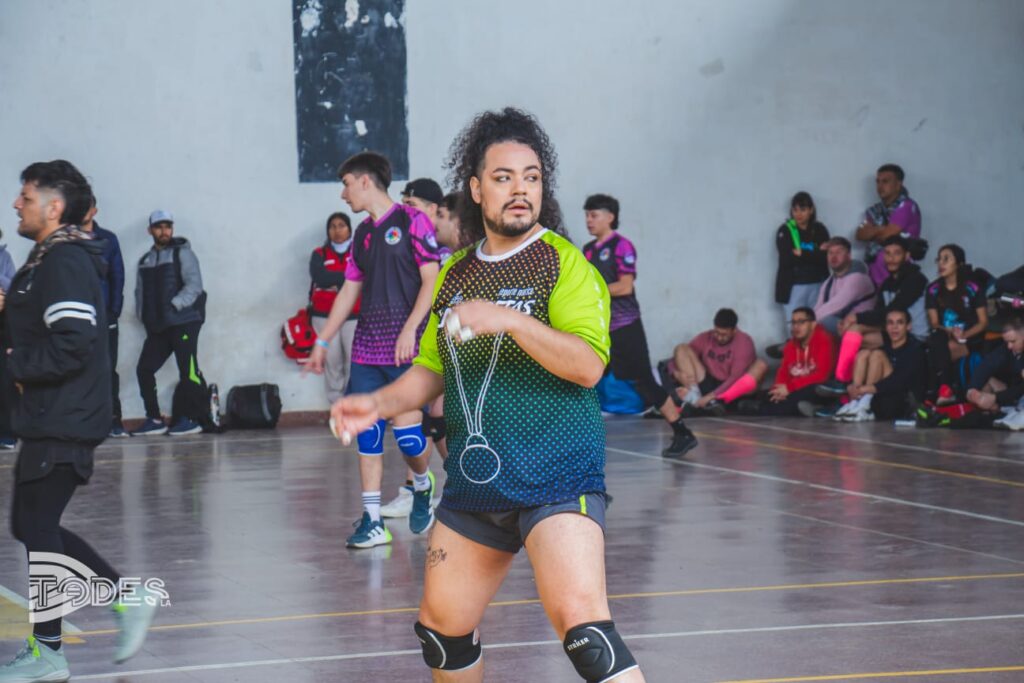
Maco Santucho is a 32-year-old non-binary trans woman from the province of Tucumán, Argentina. She is multifaceted: an actress, performer, host, student at the National University of Tucumán, and volleyball player. She started playing sports at a very young age. Her family encouraged her to practice various disciplines, such as taekwondo, swimming, hockey, and basketball. At age 12, she discovered volleyball and was captivated.
“Sport has taught me many lessons and values: teamwork, learning from others, getting to know my body better, and acquiring the tools to take care of it. But most importantly, it has allowed me to meet people all over the country, giving me the opportunity to forge bonds based on love and support, making many of them part of my family,” she tells Presentes .
There were ups and downs: “My experience was sometimes painful. Especially when I was coaching at clubs, it was very difficult and painful. Sometimes, because of the discrimination and harassment I suffered daily on the field, in the locker rooms, and during training, from some teammates and coaches. Sometimes because of the fans, who came to watch the games and shouted hurtful things from the stands,” he explains.
“Access to sports for the LGBT+ community is very difficult, especially for trans people. Most clubs and sports venues, such as tournaments, have discriminatory, misogynistic, and binary practices that exclude our experiences and violate our identities,” she adds.
Because of this, Maco stopped training at clubs and stepped away from sports for a while, until she discovered teams for LGBTQ+ people and started training again. “These safe spaces, created by and for LGBTQ+ people, are truly important. They're places where we can learn, be active, share our lives as ourselves, and above all, build bonds of affection and respect with others in the same situation. It changed many of our lives for the better,” she says.
Friendly and safer spaces
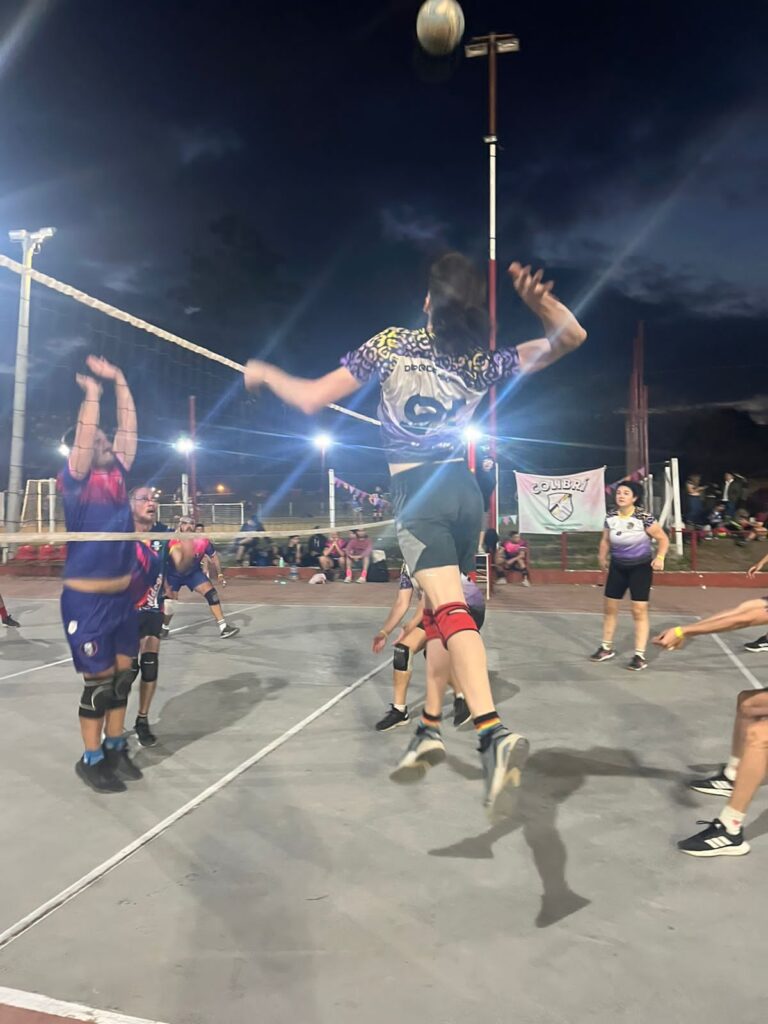
Emanuel Navarro was never interested in soccer. “It seemed to be the only thing we 'little boys' were destined for,” he says. He is 28 years old, gay, was born in Victoria, Entre Ríos, and has lived in Rosario for ten years. His first experience with the sport was hockey, when he was nine years old and was invited by a group of teachers to a club.
“It turned out to be a mixed team, where 3 or 4 of us played as 'men' (today they're all gay) and the rest were cis women. Obviously, there weren't any straight men because it was (is?) a sport associated with femininity. I will be eternally grateful to those teachers who went to a public elementary school to find this gay man and gave him a place to enjoy himself,” he recalls.
She enjoyed hockey, the tournaments, the team. The problems were off the field. “The routine to get to the club consisted of leaving my house walking with the stick slung over my shoulder, swaying my hips a little. I frequently received accusing looks in the street, taunts, and insults, which I didn't respond to because I felt defenseless. At the club, the hockey field was behind the soccer field; to get there, I had to walk along the side. The taunts continued along that path,” she recalls.
As a teenager he discovered volleyball, the discipline that was his gateway to Yaguaretés , a dissident sports group in Rosario, where he is a teacher.
“It’s very important to build role models and make our experiences visible. To show that we exist and that we resist. To break into spaces that were denied to us and work to change them, to make them more welcoming and safe. When someone reaches an important place, we celebrate with fervor, but we can’t rest on our laurels. It’s necessary to act as an amplifier for a lot of voices that are hidden, silenced. We have to stand firm, make a nuisance of ourselves, challenge the status quo,” she says.
Connecting with the body and Pride
Kei Castillo is a swimmer and was the 400-meter freestyle champion at the 2024 IGLA World Championships . He believes that sport is a fundamental part of everyone's life. “It's about belonging, self-improvement, discipline, camaraderie, and the continuity of rights, but specifically within the LGBT community. It has the added benefit of being a space for achievement, for reclaiming and recovering what was taken from us for so many years.”
“As a trans person, I can say that it also means connecting with my body from a different perspective. It's about being a source of sporting pride, education, national and neighborhood representation, and a reason for celebration, when a few years ago it was a source of exclusion and fear. In some cases, it still is, but since Law 26743 on Gender Identity, sport and my body are one, in a struggle that also paves the way for others.”.
Kei is also the president of the sports league for and by transvestite, trans, and non-binary people. “Many of these difficulties stem from a lack of experience and understanding of what we can and cannot create in sports environments, from the smallest to the most complex (registration, locker rooms, discipline, competition, etc.). Faced with this lack of knowledge, society presents a barrier.”
And she adds, “Our job as a league is precisely to create the experience, occupy the spaces, break down myths, expand participation, and act as mediators between these spaces and trans people in sports. We have achieved many changes, but like everything else, in the end, it all comes down to shedding light on prejudice and ideas about what has not yet been built.”.
Playing sports is a human right
Access to sport is a human right recognized by the United Nations and enshrined in Argentina by Law No. 20,655. However, it remains difficult for LGBTIQ+ people , those interviewed agree.
A 2023 report by a group of United Nations (UN) experts urged “elite sports bodies to consider the implications of their decisions not only for LGBT and intersex athletes and people who participate in sports at all levels,” but also their impact “on general societal perceptions and the ideal of inclusive sport.”
Foxes: the non-binary sports community
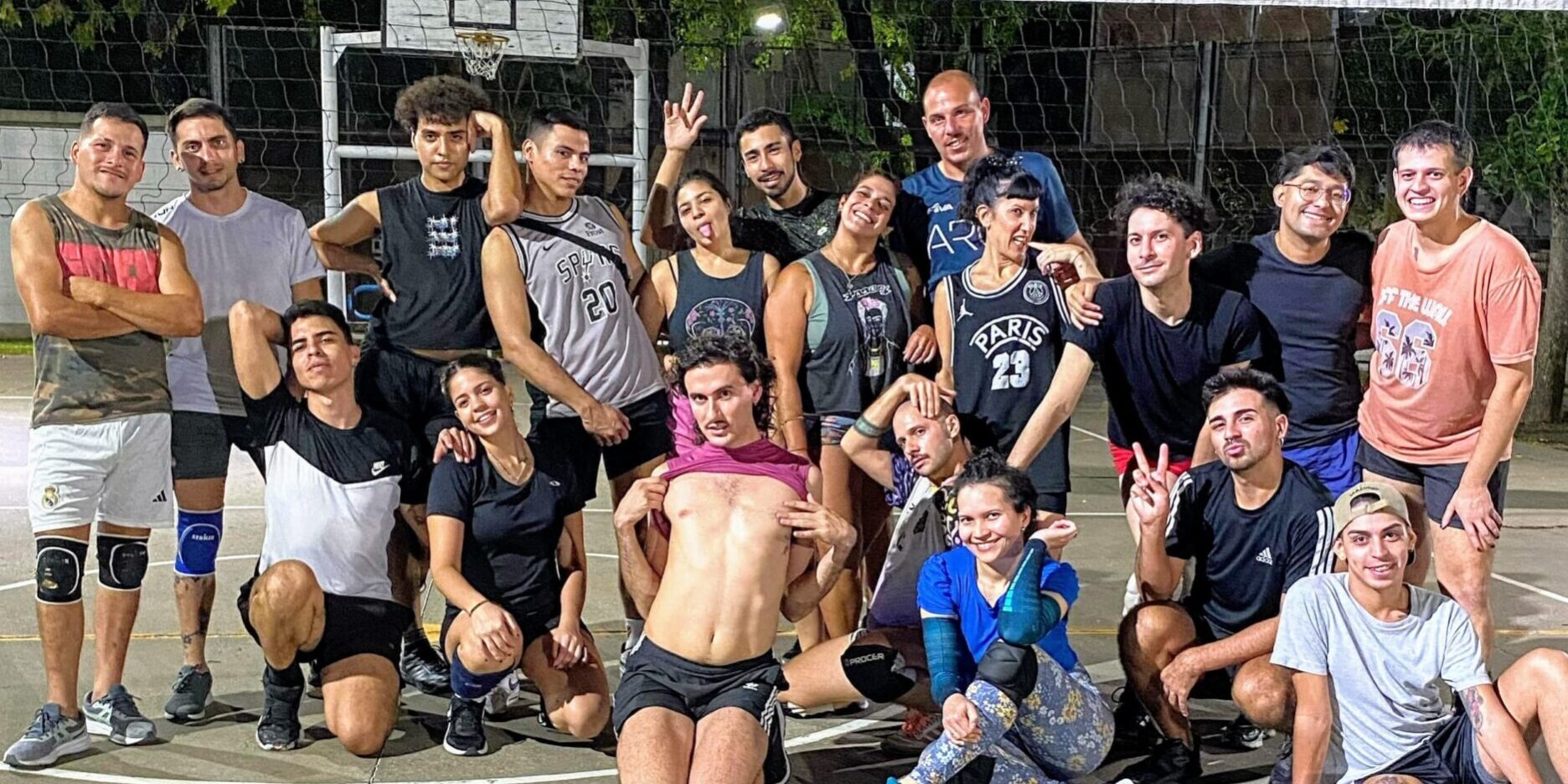
In this context, teams and meetings emerge so that people of diverse sexual orientations can enjoy sports in spaces of respect and free from discrimination.
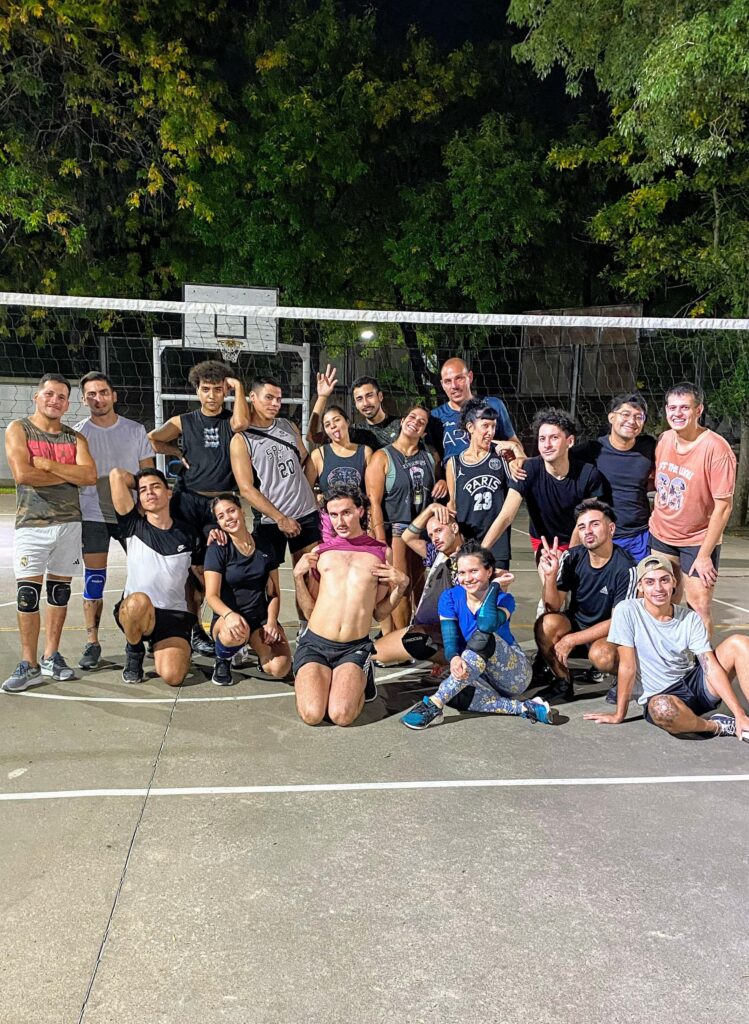
One of them is Zorres , in the City of Buenos Aires. It's a non-binary, non-competitive sports community with a dissident perspective. It's an open and horizontally managed civil association whose board of directors is mostly made up of transvestite, trans, and non-binary people. It has 50 members and about 70 people who train weekly in volleyball and/or basketball.
“Zorres was born with the goal of creating a safe space for the LGBTTTIQ+ community, enabling the return to, and (in many cases) the first experience of, sport for people historically excluded from experiencing and enjoying it. We propose other ways of inhabiting sport: we celebrate both a successful point and a failed attempt, and we seek to guarantee access, participation, and enjoyment, without ableist or exclusionary rules,” Kiki Rodríguez, a trans, brown, and non-binary activist and president of the Zorres Civil Association, tells Presentes . She is also a primary school teacher and a secondary school teacher for young people and adults at the Mocha Celis Trans and Non-Binary Popular High School.
First TTNB sports league in Latin America
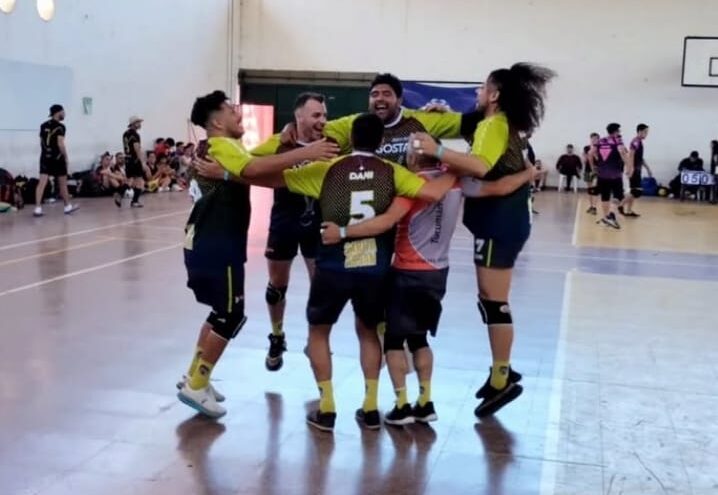
The TTNB Sports League was born alongside Javier Milei's rise to power and is two years old. “We are the first association of its kind in Latin America. That idea of putting ten trans kids in a pool opened a Pandora's box of needs that had been bottled up,” says Kei.
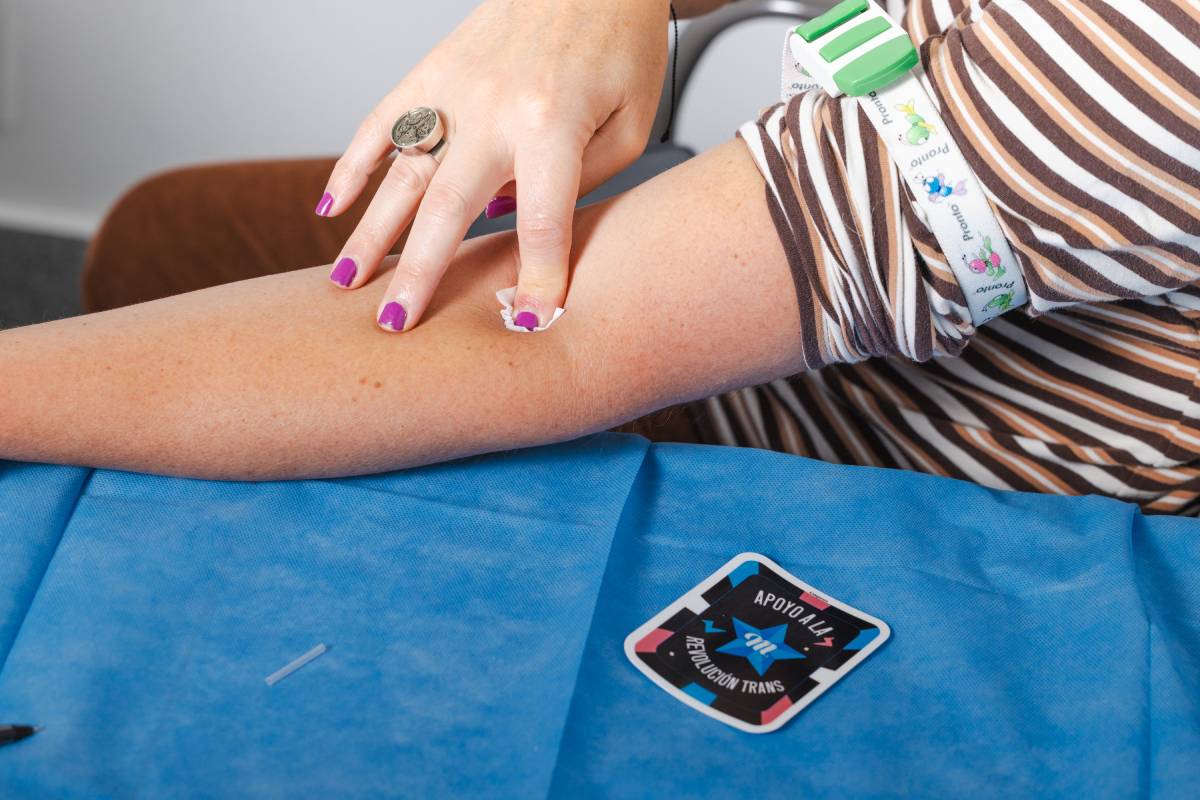
“We get together to play sports because trans people basically don’t have the space to do this. We work to modify international and national sports legislation to create more inclusion. But what started as a way to play sports peacefully has now become a comprehensive support network. Because when you play sports, you need to be able to eat and sleep. To compete, you have to be in good shape. And we basically find ourselves providing food assistance, help with obtaining hormones, and creating resource networks,” Kei explains.
Among the most outstanding actions was the support for workers at Bonaparte Hospital, where they created a kind of Tinder to link doctors with patients who were left without care.
National Meeting of Dissident Teams
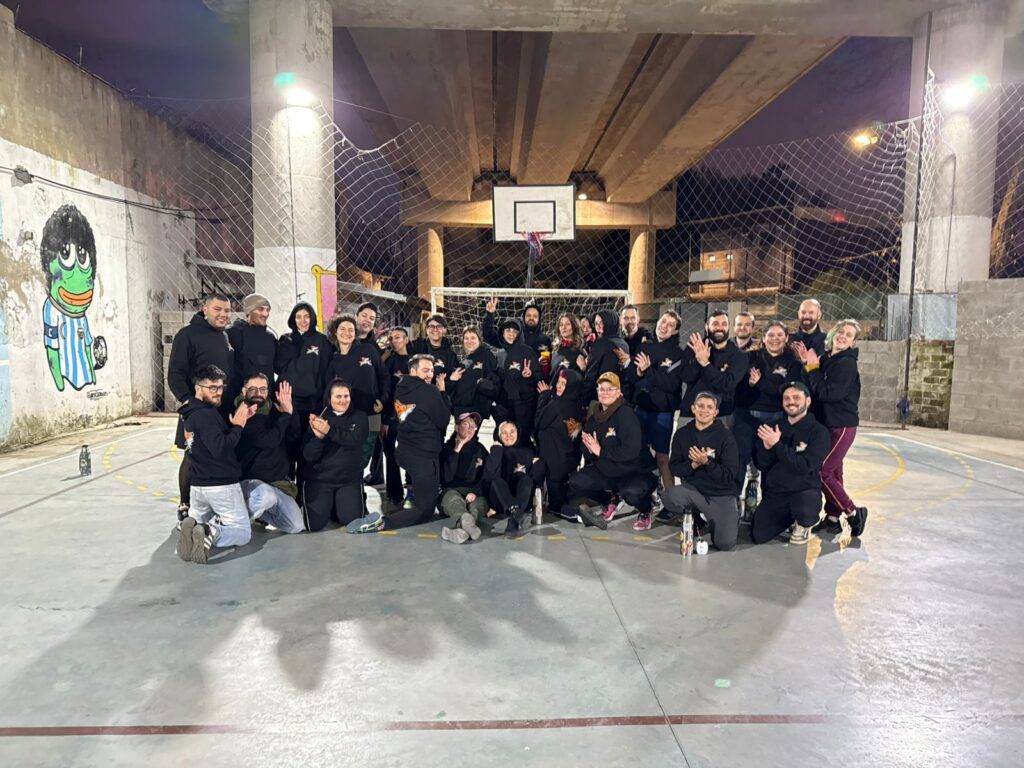
For the past five years, Zorres has been promoting a National Meeting in which more than 300 athletes from dissident sports teams from different parts of the country participate.
“The Gathering arose as a way to celebrate our anniversary as a group and share it with those who work for inclusive sports throughout the country. We celebrate through play, proposing the same logic of non-competitive sport that we practice in Zorres. In addition, the event includes a space for reflection on how non-competitive play and non-binary sport can prevent violence,” Kiki shares.
This year marks the 5th edition of the event. More than 30 teams will gather on Saturday, September 13th at the Colegiales Sports Center in the Autonomous City of Buenos Aires to enjoy basketball, soccer, and volleyball. The event continues on Sunday, September 14th at the Cueva Social Club, where they will share a meal and a bingo game with prizes.
“Our proposal is that, regardless of age, gender, or body type, everyone can enjoy themselves on equal terms. The goal is simple and powerful: that each person can participate, touch the ball, make decisions, and enjoy the game without being labeled as 'better' or 'worse.' We play with people, not against them. That's why, while other spaces talk about tournaments, we call it a gathering,” she explains.
Make visible, always
In addition to these spaces, increasing the visibility of LGBTQ+ people in sports is crucial to breaking down the barriers they face in this arena. In July of this year, Boca's basketball team won their second consecutive championship after defeating Instituto 78-77. During the celebration, Sebastián Vega climbed onto a basketball hoop with the LGBTQ+ flag . "It's a message of overcoming adversity: everyone can be who they want to be and achieve their goals," he told the media after the celebration.
“Our presence on the courts, in neighborhood clubs, and in municipal sports facilities is a political act: we show ourselves as protagonists, we open up the possibility of access and participation for everyone, and we fulfill a role that the State still doesn't guarantee, which is the right to be who we are and enjoy sports. We also pave the way for children and adolescents, so they know that there isn't just one way to play and that their lives are as valid as anyone else's,” says Rodríguez.
We are present
We are committed to journalism that delves into the territories and conducts thorough investigations, combined with new technologies and narrative formats. We want the protagonists, their stories, and their struggles to be present.
SUPPORT US

FOLLOW US
Related notes

We are present
This and other stories are not usually on the media agenda. Together we can bring them to light.