

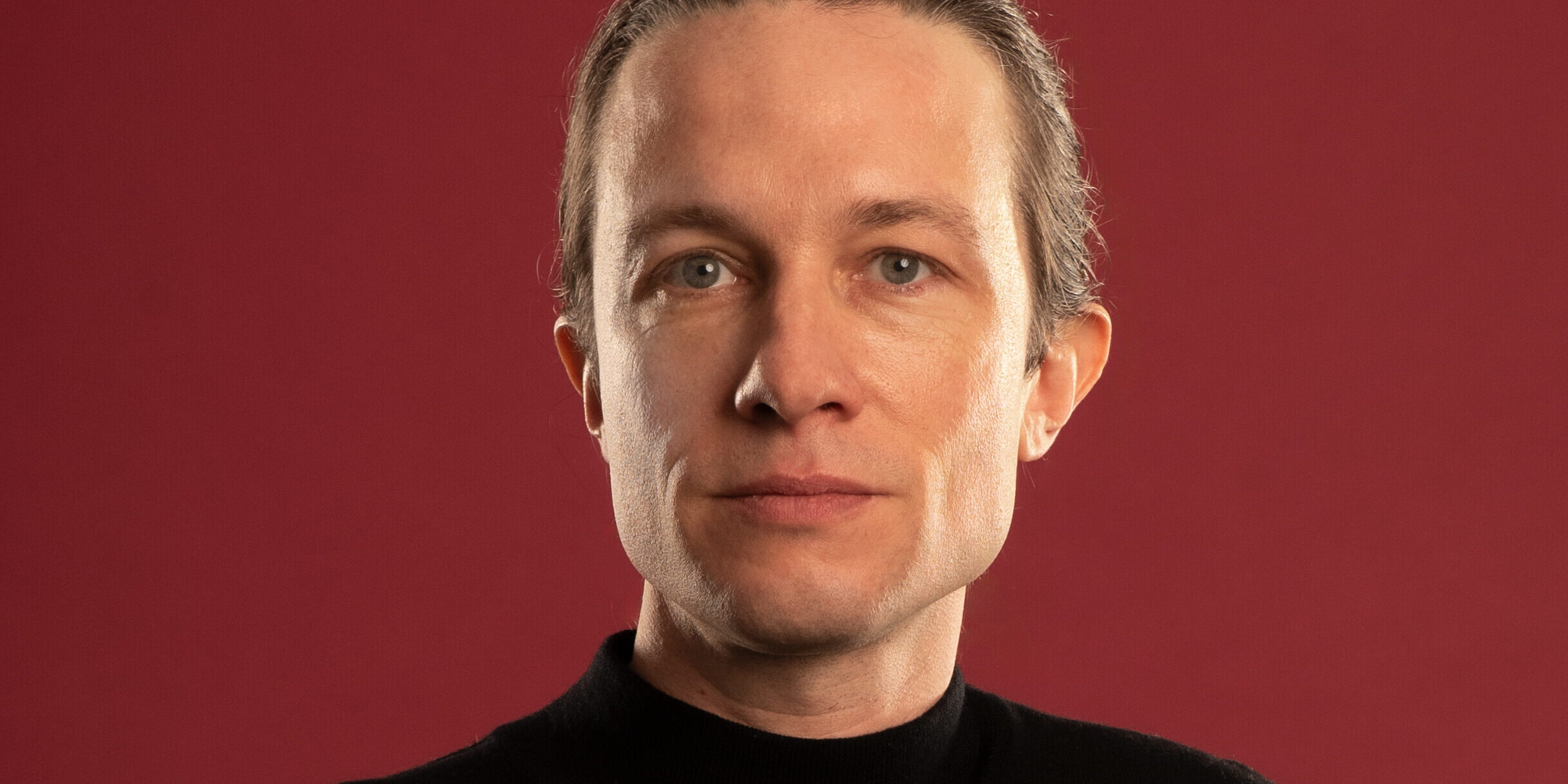
Manu Fanego: "Being a non-binary person means having the power to create my own destiny."
Manu Fanego is a performer, actor, musician, and artivist. “Just as activism involves taking to the streets, so does staging works that push the boundaries of meaning that are being restricted,” says the protagonist of Le Frigó, Copi’s play.


Share

Manu Fanego realized that theater was his calling in 2008 during the Theater for Identity (TxI) cycle. “I made my acting debut thanks to my father,” says the son of actor Daniel Fanego. The Grandmothers of Plaza de Mayo were in the front row of the packed María Guerrero Hall at the Cervantes Theater. The play was called “Regarding Doubt,” and it recreated the Trial of the Military Juntas.
Theater for Identity is a series with political objectives: a strategy of the Grandmothers of Plaza de Mayo that proposes “acting until the last of the grandchildren is found.” Daniel Fanego was a key figure in this initiative, which also proved crucial for his son's vocational identity. Because that day at the Cervantes Theater, even though Manu's acting role was brief, remained in his memory as a turning point. That emotion defined a passion, a profession, and a family ethic that continues to resonate to this day.
Today, at 44, he recalls that “living surrounded by the dampness of theaters on 25 de Mayo, 9 de Julio, or Pergamino streets also made me fall in love with all of this.” Alongside these tours, there was also an artistic upbringing, thanks to his mother, Alejandra, an artist and now a landscape designer. A great-grandmother, a pianist, introduced him to his first love: music. Acting didn't come until he was almost 30; before that, he had his rock band, The Keruza.
Manu and his friends toured festivals everywhere; the world became one big stage. They also busked and used their stage talent to sell CDs.
Between the keyboards and the accordion, Manu brought out the sequins, the megaphone, and a speech that “came easily to me, I liked it, and it made me connect with the audience.” The revelation came in a clowning course. It was alongside Guillermo Angelelli—a leading figure and founder of El Clú del Claun—that the moment arrived when he said to himself: “Yes, I am an actor.” Shortly after, he had already enrolled at the University of the Arts (at that time IUNA) to study Dramatic Arts.
On Corrientes Street and on Netflix
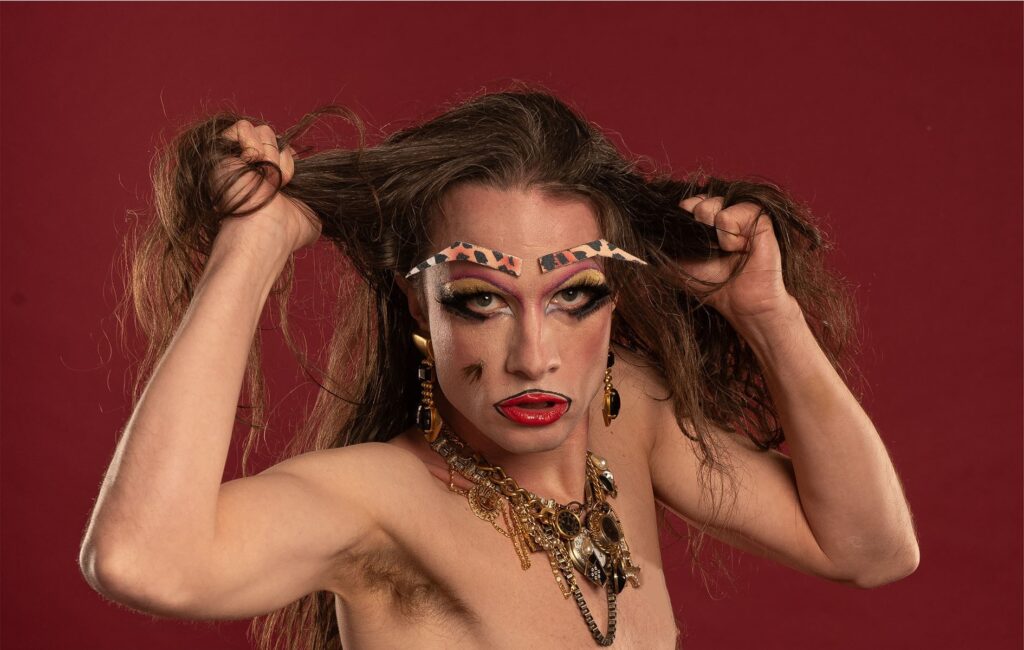
Today on Corrientes Street, he shines as part of Bla Bla & Cía in “Modelo Vivo Muerto” (Living Dead Model). He started with this team in 2010 and they didn't take a break until the pandemic in 2020. Now they are celebrating their 15th anniversary at the Metropolitan Theater. Manu also shone as Guille, the friend of the iconic showgirl Cris Miró in the series alongside Mina Serrano. In “El amor después del amor” (Love After Love), he can be seen as Andrés Gallo, Fito Páez's first manager.
She moves between the underground, the mainstream, television, and streaming platforms, and more than once she's made a home at Mu Trinchera Boutique. There, she portrayed a trans candidate, drawing on the ideas of philosopher Paul B. Preciado. At this venue and at various events, she could and can be seen with one of her most enduring creations: Mika de Frankfurt, an international trans artist who, accordion in hand, sings of her adventures.
“Thanks to portraying female characters on stage, I discovered my own more androgynous, more non-binary feelings,” she says. “I was able to discover my own transvestite self, who is Mika.” She expands this universe with the announcement of a documentary, an album, and more performances starring herself. Meanwhile, she is preparing to play more than 10 roles in the theatrical production Le Frigó, based on texts by the artist Raúl Damonte Botana, better known as Copi.
“Copi gives you a jolt”
“The first time I read the play, it repulsed me,” he explains now, sitting in the Maricafé bar during the press presentation. “Because Copi gives you a jolt. It horrifies you a little, and that’s okay, it means you’re on the right track,” says the protagonist, who will perform four shows at the Picadero Theater in Buenos Aires during September.

The play was first performed by Copi in 1983 at the Fontaine Theatre in Paris. In this production, a trans woman turns 50 and receives a red refrigerator as a gift from her mother. Manu, in addition to playing Madame L, embodies more than 10 characters and even a puppet in a production that requires a large team working with clockwork precision. Tatiana Santana will direct.
“Copi is a great provocateur,” he says. And he explains that in this context, it's necessary. While he acknowledges that Copi's activist method doesn't have the same approach and messages as, for example, Carlos Jáuregui, that doesn't diminish its power. The script deals with a universe of themes that are anything but tame: “It addresses mental health, gender identity, drugs, social class, and homosexuality at that time.” Neither the years nor the distance make what those characters say seem anachronistic. “Copi is very relevant,” he asserts, and we're talking about a play written in the early 1980s, while homosexuality wasn't removed from mental illness manuals until 1990.
The author brings us, through time, a politically incorrect and uncomfortable proposition that this team decided to take up and put into action. “We need Copi’s works to be performed, to be staged more often and to have a longer run. It’s Argentine literature that needs to be there, fighting from its trenches,” Manu said at the press conference alongside the director, producer Raúl Santiago Algán, and Emiliano Damonte, journalist, writer, and Copi’s nephew.
“Just as activism means taking to the streets, so does creating works that challenge the very notion of meaning that is now being suppressed ,” says the performer from Le Frigó. “It’s necessary to revisit texts that break with this misconception.” For Manu Fanego, every project, every performance, every interview, and every time he lends his voice, has a sociopolitical dimension where he unfolds his art. And there is always an element of manifesto made manifesto.
Theatre as a tool
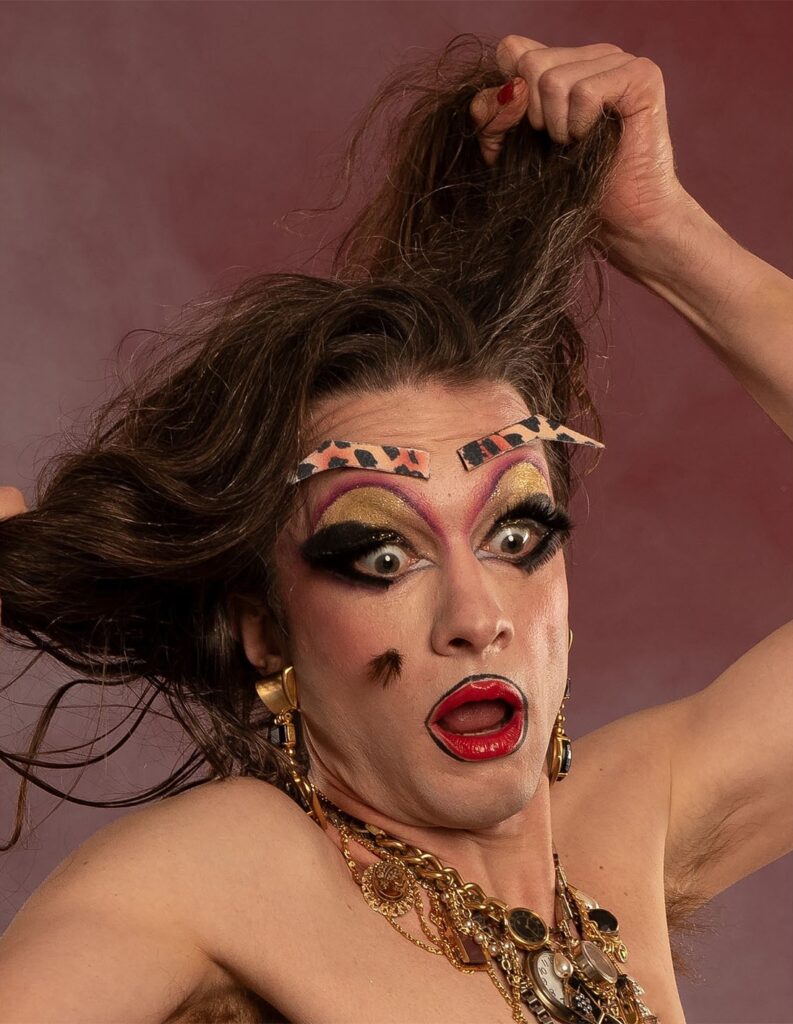
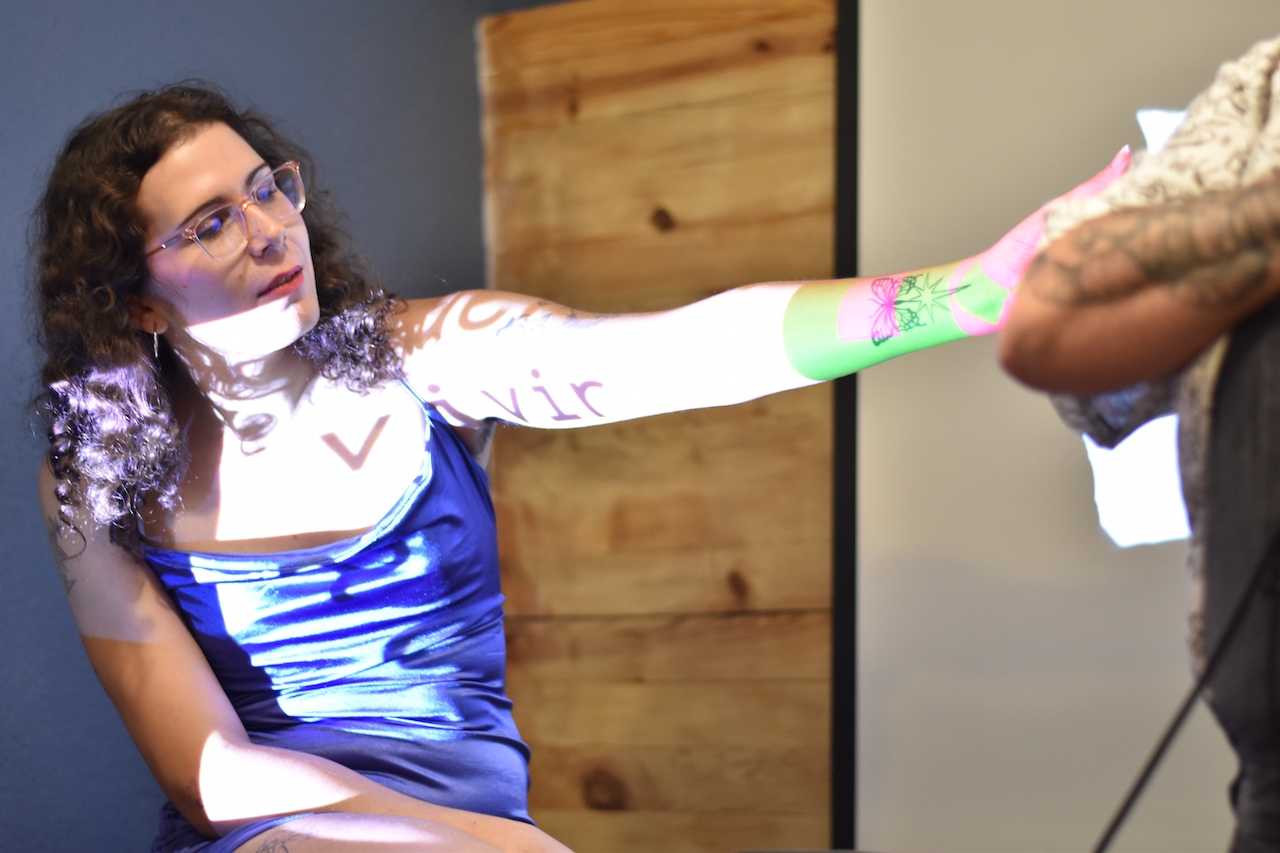
Manu is a non-binary person. And for them, that identification is a political stance. “For me, being a non-binary person means having the power to create my own destiny ,” they explain to Presentes. In a system where identity-based oppression is the norm, they defend the legitimate right “to be the only person who defines themselves as different moments unfold.”
If we are all born with an assigned name and gender, Manu was also born with a surname that carries weight in the acting world. Just as he was able to define his identity in a constant flow, he transformed his father Daniel's surname, "Fanego," into his own banner and a celebration of the family legacy.
“Theater is our tool for fulfilling a function we consider essential: to act so as not to forget, to act to find the truth,” explains the website . While the Grandmothers of Plaza de Mayo continued their search for their families and for justice, theater positioned itself as a fundamental tool in this endeavor. That origin remains present in everything Fanego does.
On his art-activist path, he believes that art can "nourish minds with associative possibilities that would otherwise be forbidden." He speaks with a philosophy that has one foot in that realm of ideas and convictions, and the other in the current context "because you also have to eat." Here he recalls the words of his father/colleague Daniel: "An actor lives in streaks ," he repeats.
This September 2025, Manu Fanego premieres Le Frigó at the Picadero Theater. It's the first time she's been called upon to start a project from scratch. "It's a first experience, and I'm experiencing it with great excitement and love. Because the team is incredibly loving," she shares about this production, where, although she's at the helm, there's a strong artistic vision, direction, and choreography that make it work.
“I try to express my vision in the theater and hope that it stirs things, people, feelings, thoughts, and associations,” he says. “To create better possibilities so that everyone who sees us can find something, can search.” In Manu’s universe, everything flows. And it flows with the love that this artist infuses into everything he does, says, and sets in motion.
Le Frigó

PREMIERE: Sunday, September 7th at 4pm
ONLY 4 FUNCTIONS
Picadero Theatre (Enrique Santos Discépolo 1857, CABA)
Starring: Manu Fanego
Book: Copy
Translation: Guadalupe Marando
General Director: Tatiana Santana
General production: Raúl S. Algán
Original music: Rony Keselman
Choreography: Valeria Narváez
Press: Prensópolis – Alejandra Pia Nicolosi
We are present
We are committed to journalism that delves into the territories and conducts thorough investigations, combined with new technologies and narrative formats. We want the protagonists, their stories, and their struggles to be present.
SUPPORT US

FOLLOW US
Related notes

We are present
This and other stories are not usually on the media agenda. Together we can bring them to light.