

Why talk about an emergency in disability and how the adjustment made it worse
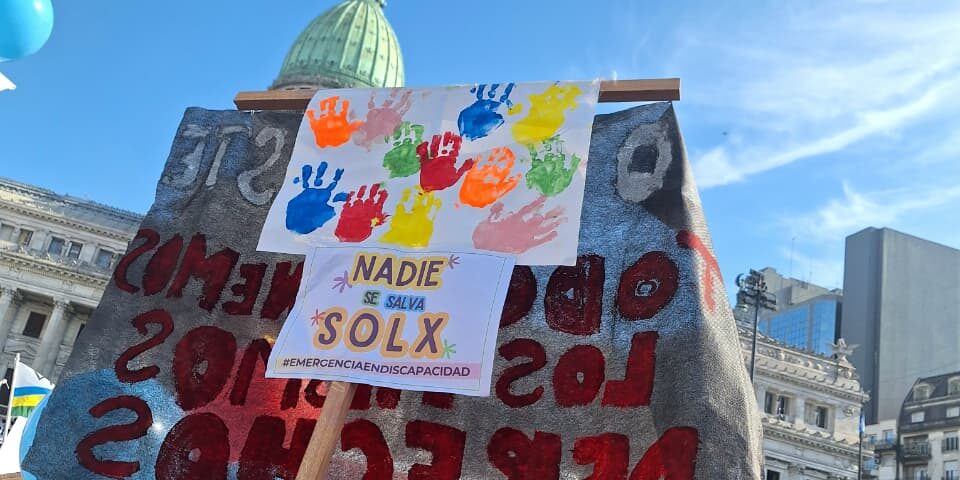
Children without transportation to school, centers closing, and people of all ages abandoning their treatments. "The situation is more critical than ever," warns disability activists, calling for support outside Congress where the Emergency Disability Law, vetoed by Milei, will be debated.


Share

BUENOS AIRES. Children without transportation to school. Centers closing down because they can't afford the costs. People unable to receive their treatments. Providers with frozen rates since December. Payments delayed by up to three months. "The situation is more critical than ever," warns disability activists.
For years, organizations, families, and activists have been denouncing the disability emergency in Argentina. This is nothing new: no government has ever prioritized disability issues to guarantee rights, they point out. But the situation today is critical. Furthermore, unlike in the past, dialogue between the Executive Branch and those demanding to be heard is currently impossible.
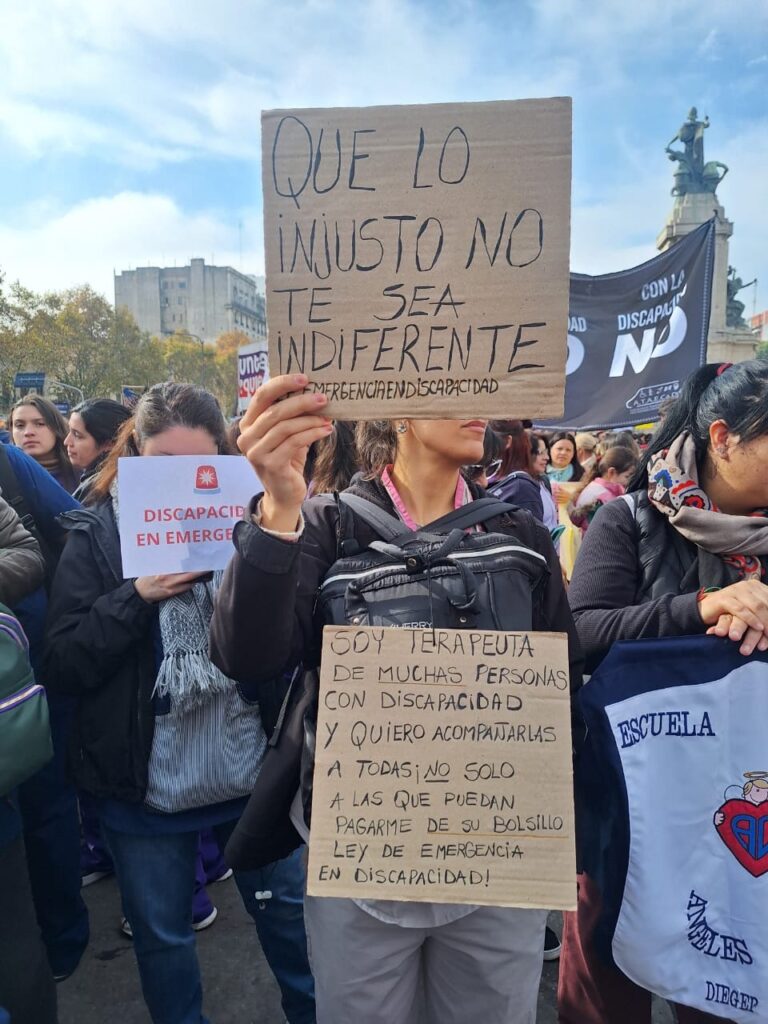
“While the situation of neglect within the area has been around for a long time, we find ourselves in a situation where that crisis is greatly deepened as a result of the adjustment policy that this government is carrying out ,” Rocío Librandi, a therapeutic companion and social psychologist, member of the Organization of Precarious Providers in Health and Education and of the Tribuna Disca Struggle Front Presentes .
Starting today, self-organized groups and activists are gathering at the National Congress because the Chamber of Deputies will debate Javier Milei's veto of the law approved by the Senate on July 10th this Wednesday. This comes just after the Federal Court of First Instance of Campana ruled against the decree , granting an injunction sought by a family who argues that the veto jeopardizes the continuation of treatments for children that are essential for a dignified life.
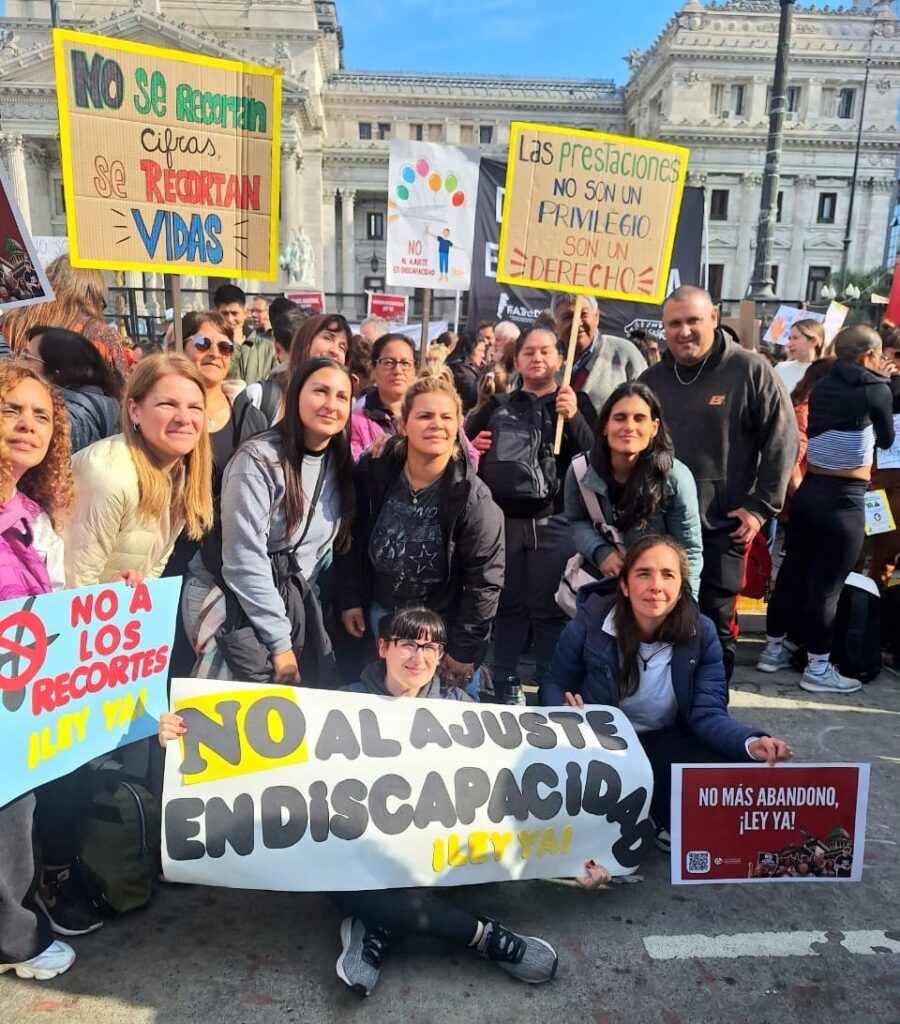
The law declares a disability emergency until December 2027. According to the Congressional Budget Office, the cost of its implementation is estimated to be between 0.28 and 0.51% of the Gross Domestic Product.
Data from the Civil Association for Equality and Justice (ACIJ) recently indicated that only 20 percent of the population with disabilities in Argentina receives benefits . Of the 5 million people with disabilities, only 1.1 million have access to these benefits. And in the first quarter of the year alone, the government terminated 28,000 of these benefits.
What does the Emergency Disability Law propose?
The regulations being updated have been demanded for years. Even the Committee on the Rights of Persons with Disabilities, in its 2023 Concluding Observations on Argentina, recommended “harmonizing its legislation and public policies on disability at the federal, provincial, and local levels with the Convention (on the Rights of Persons with Disabilities), including the adoption of a new law on the rights of persons with disabilities aligned with the human rights model.” This responds to a critical situation. Providers of care and rehabilitation services for people with disabilities have had their rates frozen for eight months and are being paid with delays of 60, 90, and even 120 days.
-The Emergency Disability Law proposes to regularize debts with health providers, in addition to emergency compensation.
– Also, update the Comprehensive Care Basic Benefits System monthly and provide adequate and sustainable financing for Non-Contributory Disability Pensions for Social Protection.
-It also plans to improve the database of the National Disability Agency (ANDIS), by conducting audits to identify and resolve problems in the management of benefits, among other issues.
“It’s truly impossible for us to keep our jobs because of job insecurity, low wages, and the lack of labor rights. The precariousness we’re subjected to is truly distressing,” Librandi shared. But above all, the situation is unsustainable for people with disabilities and their families, especially those with children, she warned. “ They’re being forced to abandon their therapies. Often, health insurance companies stop covering their treatments, or therapists and other professionals stop working in the field they studied and trained for over so many years,” she said.
“Basic benefits are supported by the workers”
“Today, the basic disability benefits system is not supported by the State or social security organizations. It's supported by us, the workers. Despite this precarious employment situation, we continue to provide the treatments that people with disabilities need. We have a commitment to these families, to the individuals we see every day, and we know the importance of their continued care,” she said. However, she shared a stark reality: “Many special education centers and schools are closing because they can no longer sustain themselves.”
Ana María Bogarín is the director of Colegio Nuevo Día, a psychopedagogue, and holds a degree in Educational Sciences, with 30 years of experience in special education. In an interview with this agency, she described the difficult situation facing these institutions. “At the school, we have to find ways to allocate resources so that other things can be sustained. There are many delays in payments from health insurance providers. Most of the students in the special education school attend full-day programs. This means, in addition to their education, providing breakfast, a mid-morning snack, and lunch for about 400 students. And quality nutrition is paramount. All the cafeteria and maintenance staff are not subsidized,” she shared, referring to the institution she directs. However, through hard work and by decision of the school's legal representative, “no child has ever been left without schooling due to this situation.”
Among the most common problems she sees in families are: the loss of jobs by parents, social services not accepting people registered as self-employed (monotributo social), difficulties attending parent-teacher meetings, and the loss of access to external treatments due to inability to pay. She also acknowledged that many children are being left without school transportation.
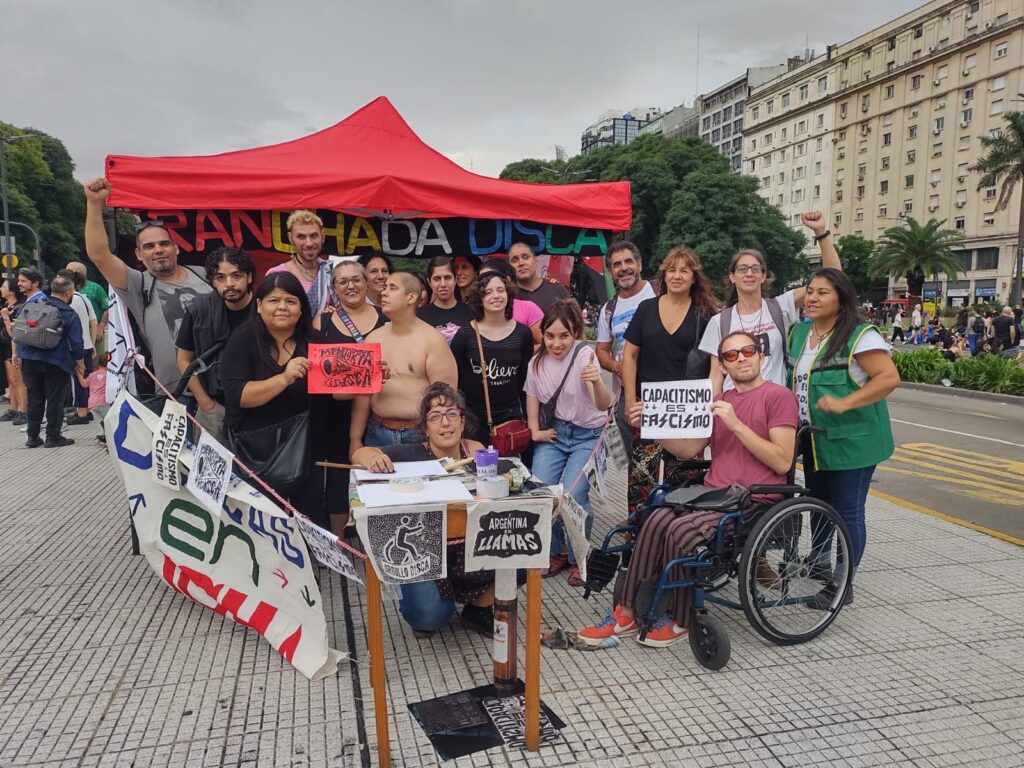
“There are aspects that are significant for the lives of people with disabilities,” shared Laura Alcaide, a proofreader, mother with a visual impairment, and activist with Orgullo Disca and the Asamblea de Discas en Lucha (Assembly of People with Disabilities in Struggle), regarding the law. “Among them are non-contributory pensions because 90% of people with disabilities are unemployed. There are also sheltered employment programs, although it's an absolutely precarious employment system. Now, these two are compatible; those with sheltered employment can receive the non-contributory pension.” “ The emergency law means that the State recognizes that our community is in a state of emergency, in a profound crisis, and in a state of genocide ,” she concluded.
The Permanent Forum for the Promotion and Defense of the Rights of Persons with Disabilities and various organizations called on all of society to join the vigil and mobilization on Tuesday for the Emergency Disability Law. “The rights we have won are not negotiable. We will meet in the streets!” they declared.
We are present
We are committed to journalism that delves into the territories and conducts thorough investigations, combined with new technologies and narrative formats. We want the protagonists, their stories, and their struggles to be present.
SUPPORT US

FOLLOW US
Related notes


We are present
This and other stories are not usually on the media agenda. Together we can bring them to light.