

Paraguay: Cultural manager of La Chispa, bastion of art and diversity, sentenced
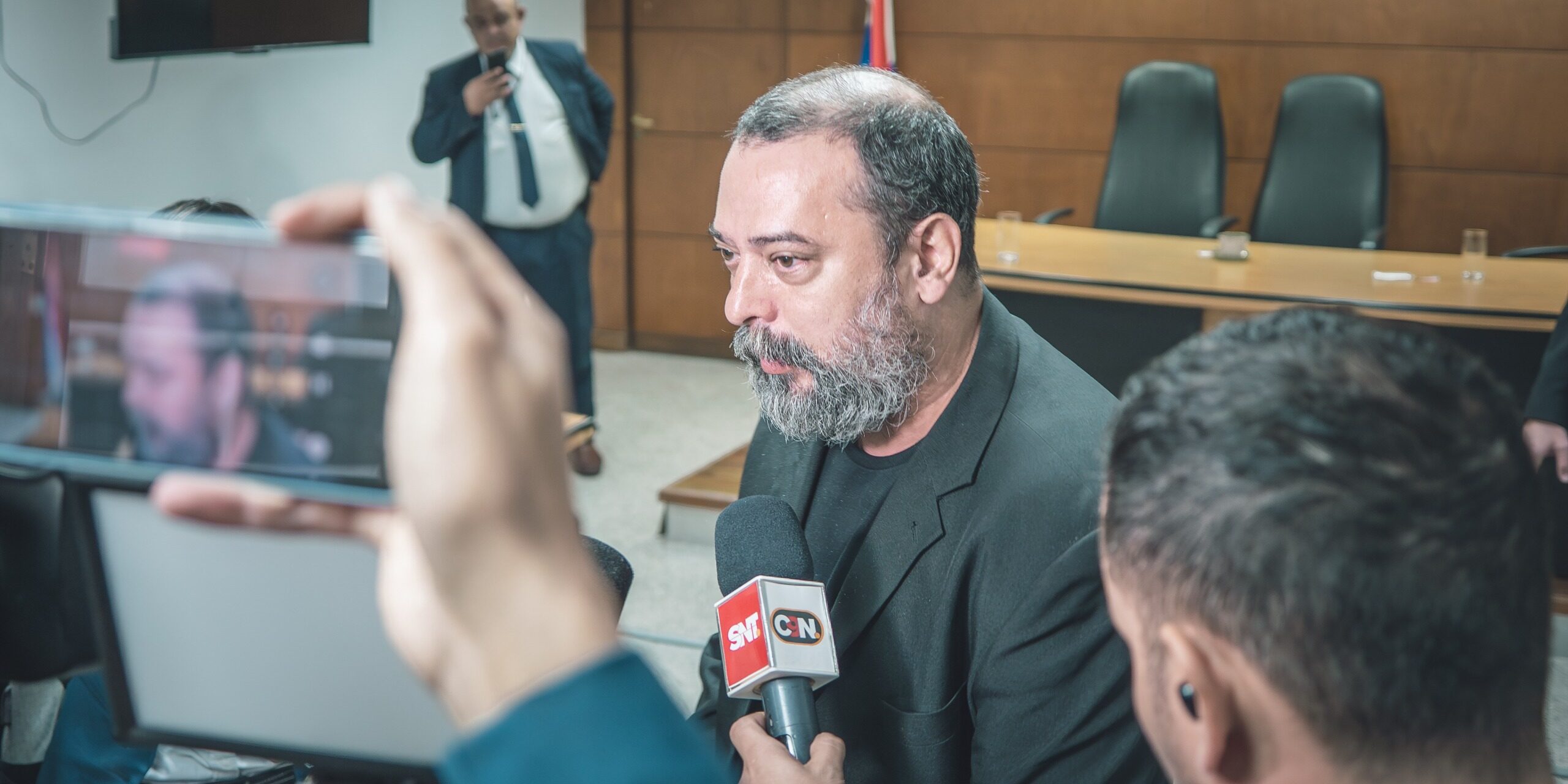
The Paraguayan justice system sentenced Sebastián Coronel, manager of the La Chispa Cultural Center, to nine months in prison, suspended. For the cultural sector, the sentence is an attempt to punish a space that makes those in power uncomfortable.


Share

The wind ruffles a few colorful strands of hair on the second-floor terrace of the Palace of Justice in Asunción. It's August 13th, the last day of the trial for cultural manager Sebastián Coronel , accused of "air pollution and harmful noise." Cuaji, as his loved ones call him, isn't alone. He's surrounded by ten friends and colleagues from La Chispa. They hug and drink mate to ward off the cold and their nerves. From above, they gaze down at the pink lapacho trees while the Sentencing Court deliberates in a courtroom about Cuaji's fate.
For Fátima Fernández Centurión, cultural manager of Nhi Mu and the Kaos residency, what's happening with La Chispa goes far beyond a decibel level dispute. "I think it sets a precedent for the persecution of the work of people who have been working tirelessly to develop cultural management in this country and this city," she says, adding that La Chispa represents more than just a cultural space: "it's an alternative model of community management."
That historic center, marked for decades by state neglect, is the same center where, despite adversity, collectives and artists built artistic projects and cultural centers, often without support and facing bureaucratic obstacles. “This wouldn’t have happened if we were in Villa Morra. It’s that simple,” says Fátima.
The street as a right
The hours pass slowly in the courthouse hallways. At 11:50 the judges still haven't made a decision, but more and more people are arriving to support La Chispa.
-It's great to have you here
-It's my job, I'm a craftswoman
In the early 2000s, Asunción was under a municipal ordinance prohibiting young people from gathering at night. Ordinance No. 114/03 aimed to control the city's nightlife by imposing closing times for bars and nightclubs. The ordinance, promoted by then-mayor Enrique Riera, had stifled the city's nightlife. The plazas, streets, and bars closed early. Little to nothing remained for those who wanted to meet, chat, or simply exist outside the watchful eye of the police.
A house on Estrella Street, between Colón and Montevideo, became a refuge. Malena Bareiro and Pachín Centurión lived there, a couple who opened their doors to young artists and dissidents. “They were already like family, welcoming us young people who had nowhere else to go,” recalls Rocío Robledo, a singer-songwriter and cultural manager. “After university, we would get together there, and it was a warm place where we could be ourselves .”
That same spirit later ignited La Chispa: a cultural center born not from an institutional plan but from the desire to maintain an open space where art is accessible to the entire community. Over time, La Chispa became a space for informal learning for an entire generation, teaching everything from how to produce a festival to how to manage the logistics of an event with volunteers.
“It was and is a training ground for many of us,” says Rocío. “We learned the craft of cultural management, of creating a safe space for people. And that’s no small feat.” Where the city imposed fences and evictions, the block was transformed into a stage, a collective mural, a dance floor; the collaborators of La Chispa built a safe place in the street.
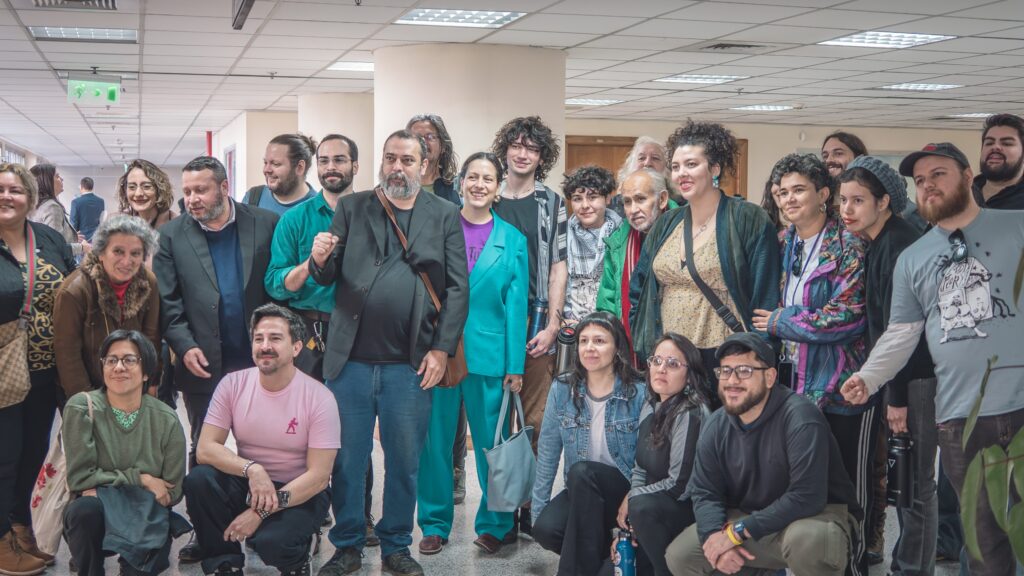
For Paty Latorre, singer of Passiflorx and cultural manager, La Chispa is, above all, a place to encounter a rare and powerful feeling: that of belonging. “It was a place where I could discover projects, people who made me feel like I had a place in the world, where I could express who I was,” she recalls. “Ideas were much more important. That’s what La Chispa leaves us with: that community is the most valuable thing we can create.”
In the same vein, Manu Alviso, an LGBTQ+ activist and cultural manager at Sala Piloto, explains that La Chispa brings together all those communities that lack space in other parts of the city, that are looked down upon, or that are barred from entry. In Asunción's historic center, marked by neglect and mistrust, the legacy of the Stroessner dictatorship still lingers: the idea that danger lies "outside." "The center carries the stigma of being dangerous, of being a place where you'll be robbed. All of that falls away when the people themselves take ownership of the space," he points out.
More than a technical debate
At 1:30 p.m., the judges reach a decision. Prosecutor Elvia Chávez enters along with defense attorneys Emilia Yugovich and Florencia Tornadu, and Sebastián Coronel. El Cuaji softly hums " Desapego" by Purahéi Soul as the public and press enter in silence. The day before, he had sat in the defendant's chair and explained to the three magistrates why the debate over what constitutes art cannot be the subject of a legal process.
“It seems like we’re talking about 60s rock when Elvis Presley or The Beatles burst onto the world music scene and were labeled satanic. Today they’re major icons; there’s no music that hasn’t been influenced by one of them. It seems like the neighbors’ complaints are based on aesthetic criteria. What can be understood is that we were seen as shady, strange people, and it seems to be a debate about what we understand by art or culture,” Cuaji said while testifying.
Part of his argument is revisited in the lengthy preamble by the presiding judge, Héctor Capurro, regarding the importance of La Chispa's contributions to local culture. But it quickly fizzles out when he announces that Sebastián is found guilty and sentenced to nine months in prison, suspended, for "air pollution and harmful noise."
The ruling, which came with a split vote, exposes the criminalization of independent spaces that support artistic and community expression in a city increasingly hostile to diversity. Based on a blank criminal law and repealed municipal ordinances, Judges Héctor Capurro and Juan Carlos Zárate determined that two of La Chispa's six activities exceeded the maximum decibel levels permitted by municipal ordinance.
Capurro and Zárate voted to reject the motion for reconsideration filed by the defense at the start of the trial, arguing that Ordinance 183/2004 was in effect at the time of the events. However, Judge Yolanda Portillo dissented, maintaining that the ordinance used to bring charges was no longer in force and that, consequently, no crime had been committed, and Sebastián should be acquitted.
Legal loophole
Although prosecutor Elvia Chávez requested a four-year prison sentence, the majority of the court applied the law "most favorable" to the defendant, upholding the conviction but with a reduced sentence, as requested by the defense at the start of the trial. Sebastián's legal representative, Emilia Yugovich, explained that the case was based on repealed municipal regulations and a legal loophole.
Yugovich pointed out that Asunción lacks clear regulations on how to measure decibels, a fact that became evident during the trial when municipal technicians themselves demonstrated that they did not know how to conduct the sampling. In his opinion, the absence of precise rules affects not only the La Chispa case but the entire city.
“I understand the position of the judges who ruled in favor of the conviction and the typical conduct and rejected the incident of nullity of the accusation as a corporate matter of the judicial power together with that of the Public Ministry, because really all the cases they have for emission of harmful noises are going to fall apart because the municipalities have been using this ordinance,” he stated.
“This conviction represents a breakdown in the rule of law because the principle of legality was violated, and throughout the entire process, from the proven bias against La Chispa, the principle of equality before the law was also violated,” she stated. The defense attorney also explained that Sebastián Coronel’s sentence does not entail actual imprisonment. He will not serve the prison term and will instead have to comply with the measures ordered by the court for two years.
Voices from the cultural world support La Chispa
Following the conviction, the National Secretariat of Culture expressed its support for La Chispa through an official statement published on its social media. Minister of Culture Adriana Ortiz emphasized the importance of the cultural space and questioned the validity of the accusation.
On the day she testified, she stated that the existing legal loophole surrounding the regulation of cultural centers creates confusion and uncertainty for both cultural managers and residents. She explained that, together with the Red Escucha (Listening Network), a draft municipal ordinance was prepared to provide a clear framework for these types of spaces. She also mentioned that the historic center of Asunción has the highest concentration of cultural centers in the country and that she considers them "heroes of the nation" for having resisted when cultural activity moved to other neighborhoods.
“Society needs open spaces to be free in its expressions and generate active coexistence,” he stated, and maintained that the accusation against La Chispa represents an injustice in a context where the State should guarantee, and not persecute, the right to culture.

In the days following the trial's conclusion, public figures from various sectors spoke out against Cuaji's conviction and called for the cultural center's acquittal. Paraguayan actress Ana Brun, known for her roles in *Las herederas* (2018), *Matar a la bestia* (2021), and the VI Platino Awards for Ibero-American Cinema (2019), told Presentes that La Chispa is a city block reclaimed by culture enthusiasts. "That place unknowingly became a space of resistance, where we can all go to express our joys, dreams, and hopes. We must protect that place, one of the few we have," she said.
Chirola, vocalist and leader of the Paraguayan band Kchiporros and also of La de Roberto, reflected on the city. “Asunción is already a badly battered city, potentially green, potentially beautiful, potentially cultured. One of the things that hurts is the lack of options or proposals. Everything is very politically correct, everything is very accommodating; it's super important to have space for resistance,” he said.
He recalled an opportunity at La Chispa, when he played with La de Roberto, and stated: “We need spaces like La Chispa to continue developing street art, resilient art, and an underground that gives life and soul to the city. It hurts to see cultural promoters being punished.”
Support the arts
Sabb Montes, lead singer of Milkshake and panelist on the show “Noche de furia,” believes La Chispa is essential. “For artists, it’s a space where we can create, connect, and have our voices heard. Preserving it is crucial because it means independent culture can continue to thrive and our new projects can be born and flourish. Supporting La Chispa is supporting art and creativity for everyone,” she stated.
For Jenny Hicks of Purahéi Soul, La Chispa is a symbol and has been an integral part of her musical project's history. “We truly consider it one of the vital spaces for working inclusively on culture in our country. It's one of the few places where we can see cooperative, community-based approaches, inclusive spaces for art and music. It's a little difficult for me to speak; these are sensitive times for culture in our country,” she says.
That feeling is shared by several figures in the cultural sector who expressed solidarity with La Chispa. Rocío Robledo recalled the murals that municipal officials covered with gray paint. There is sadness in her voice. “It’s symbolic and it has to do with the fact that institutions that should be supporting spaces like La Chispa, such as the Municipality of Asunción, or the Prosecutor’s Office, which should be ensuring the safety of citizens, are instead busy persecuting a space like La Chispa where all we did was be happy in the street.”
We are present
We are committed to journalism that delves into the territories and conducts thorough investigations, combined with new technologies and narrative formats. We want the protagonists, their stories, and their struggles to be present.
SUPPORT US

FOLLOW US
Related notes

We are present
This and other stories are not usually on the media agenda. Together we can bring them to light.