

Juanse Rausch: the director who brings the queer archive to the theaters
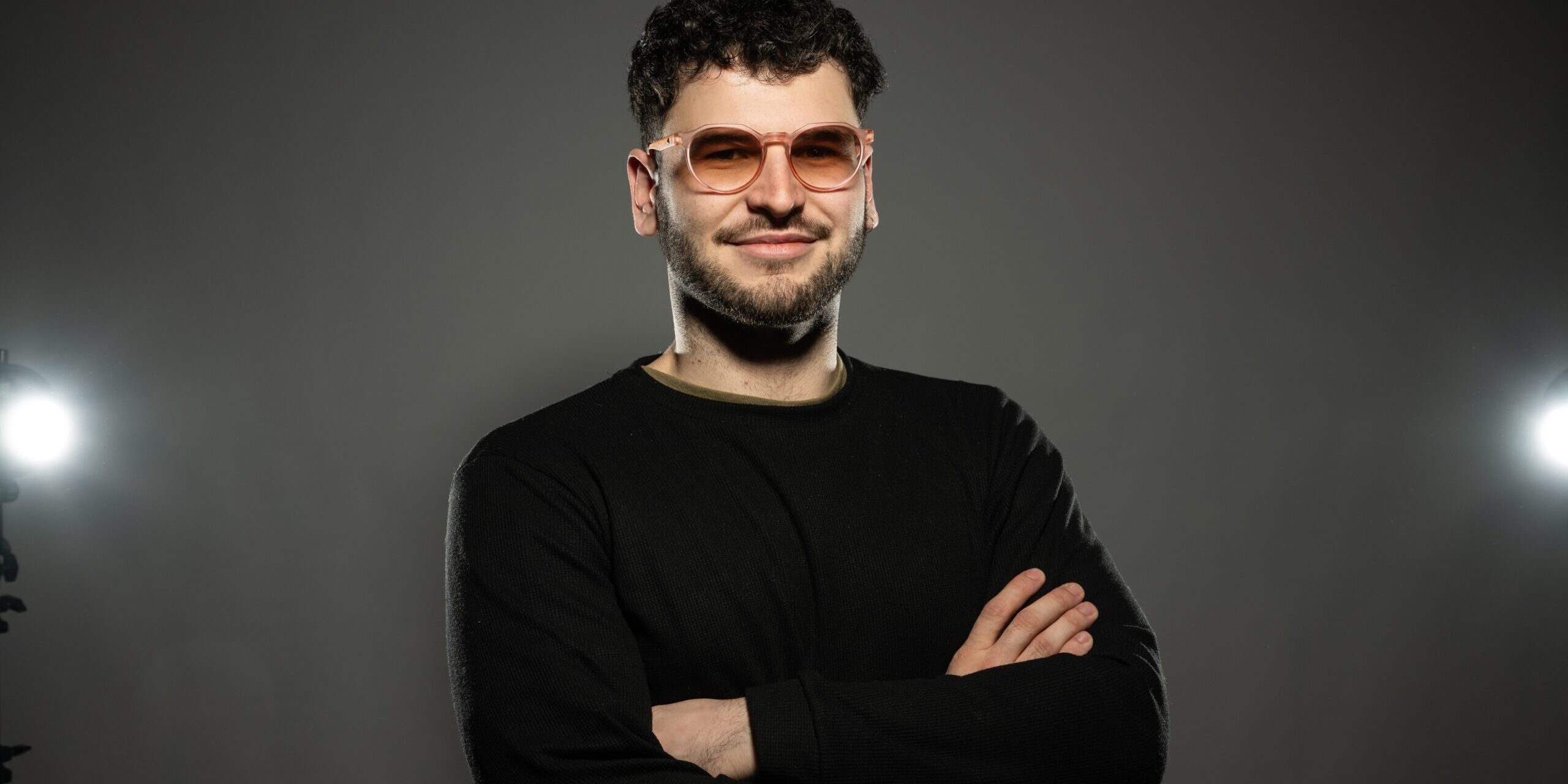
At 27 years old, with four plays currently running in Buenos Aires, Juanse Rausch, from Bahía Blanca, is also a CONICET researcher and a doctoral candidate in History. In this interview, he discusses his plays, which recover stories of dissent through archival research and by placing humor at their center.


Share

In the Buenos Aires province of Bahía Blanca, Argentina, a group of young people premiered their first self-directed play in 2010. A reimagining of The Passion of Christ, conceived by teenagers, was performed in one of the city's largest theaters, the Don Bosco Theater, belonging to the school of the same name, with approximately 1,300 seats.
Among them was a 12-year-old boy. “It was doing acting auditions and a very rudimentary attempt at directing, without me even knowing what I was doing at the time. We also wrote the plays ourselves, a group of very self-taught kids. It was quite formative.” The speaker, Juan Segundo “Juanse” Rausch, is now 27 years old and has four plays currently running in Buenos Aires.
From a giant seashell where a mermaid shines , to a flamboyant laundress , a god singing Whitney Houston songs , comedians who do justice to the Argentine revue theater , to a performer who's a friend of Eva Perón . The stages of the plays in which Juanse participates, as director or screenwriter, are imbued with a language and acting style that is celebrated with applause and cheers from the audience at the end of the show. Also, the music: a cappella singing, piano, and bands that in some of the plays form the basis of musicals. And, above all, the archival work: in most of them, special attention is paid to history, to the recovery of documents, artifacts, biographies, photographs, and scores.
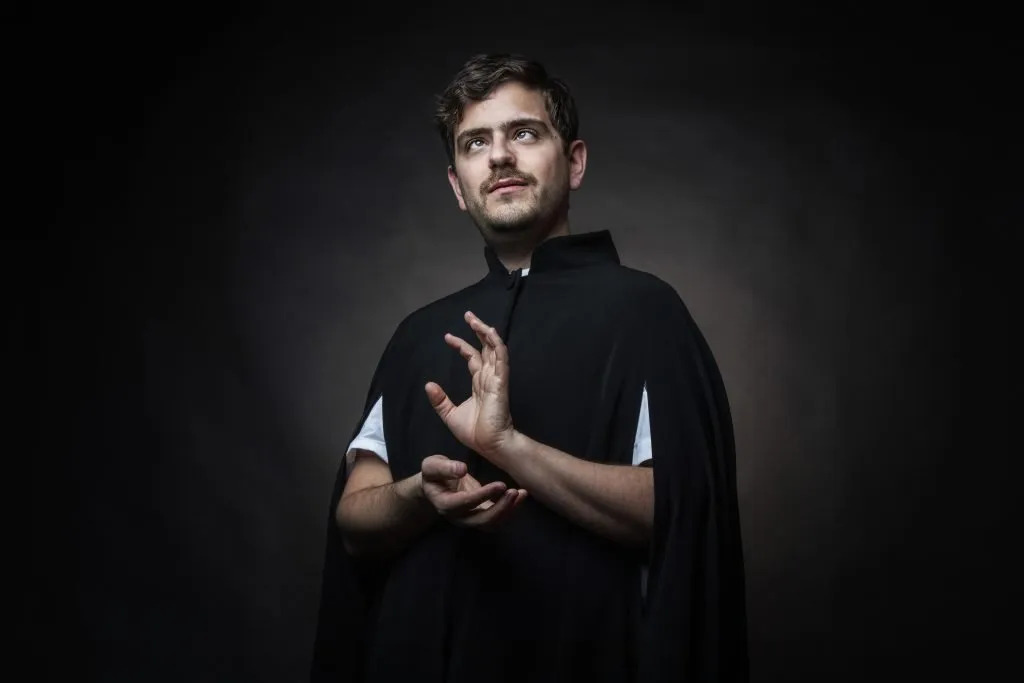
“The archive ignites something that then allows me to imagine. The fact of finding stories, characters, is incredible. I have a fascination with anecdotes, gossip, but period gossip. I think the archive has become, in a way, a fundamental input for creating works . I'm not so interested in a work of fidelity to history, an attempt at historical reconstruction. Rather, it's a starting point for later imagining something else,” Rausch Presentes
Juanse was born in Bahía Blanca, on the Buenos Aires coast, on March 12, 1998. His parents, both teachers, took him to see children's shows from a young age. When he traveled to Buenos Aires with his family, he took advantage of the opportunity to see as many plays as possible. Most were commercial productions, a characteristic reflected in the staging of his own work. He also saw musicals. He watched them both in theaters and on YouTube, where he developed a self-taught understanding from a very young age. Art house and independent theater came much later.
Paquito as a principle
At the end of 2015, he traveled to the country's capital to study. He met the group ORGÍE , which conducted theatrical research, and began participating as a performer. “That's where I became involved in the history of sexual dissidence in Argentina. There was something about that question of sexual dissidence in theater that always interested me. Every time I did a play, I was somehow entering into a process of theatrical research . For me, academic and theatrical research are intertwined. What I research academically is what later comes through in the plays,” he explains. Today, he holds a degree in Stage Direction from the National University of the Arts, is a doctoral candidate in History and Theory of the Arts at the University of Buenos Aires, and is a researcher at CONICET (National Scientific and Technical Research Council).

As part of his fascination with history, an acquaintance suggested he read a book: * La cabeza contra el suelo* (Ediciones de la Flor, 1975), the memoirs of Paco Jamandreu (1919-1995), fashion designer, artist, performer, and friend of Eva Duarte de Perón. “The book came to me from the protagonist of a play I was doing,” he says. “His mother was one of Paco’s models. And then he told me some anecdotes about how Paco had met him and other things that I found amazing. The memoir is incredible; it’s a work in itself, beyond what we did with it. Paco, like so many other figures of sexual dissidence, had a life that wasn’t captured by official history.”
In 2022, he made his breakthrough. He premiered as a director with Paquito (Head Against the Ground) . “It was the first of my works that had a significant impact and in which I feel I was able to work with greater 'creative maturity'. It was a great growth experience and helped me understand a lot of things that had been brewing for some time and that finally came together there.”
Girls from Uranus
Some time later, another book piqued her interest. This time it was *Doctors, Thugs, and Queers: Hygiene, Criminology, and Homosexuality in the Construction of the Argentine Nation* (1995), reissued in 2023 by Planeta. It was a fundamental resource for understanding the play * Saraos Uranistas . In it, Maiamar Abrodos , Lucía Adúriz , Manuel Di Francesco , Emiliano Figueredo, and Tomás Wicz portray the friends—deviant, talkative, and delinquent—who are the subject of study—and fascination—of a doctor in the federal police. Set in early 20th-century Buenos Aires, the play's title refers to the terminology used at that time by the hygienist medical and police system. “Sarao” is a relaxed nighttime gathering with music and dancing, while “uranista” was a pejorative adjective used to describe homosexual men.

“What La Bella Otero does with the archives in the play is real. She wrote a kind of autobiography in the medical records that the doctors read as a case of delirium, but in reality, it's a kind of joke for the doctors. There's a kind of code, which at times operated as a secret code. And we're still laughing today at the same things they laughed at,” Juanse says, fascinated.
Humor is another very present ingredient in his works. Both in dialogue and, above all, in physicality. “Queer or gay humor is somewhat intangible. But, at the same time, when one speaks of queer humor, there is a type of humor that resonates, that has to do with parody, satire, with a certain biting wit in reference to certain icons. It has to do with putting oneself in the position of the object of humor. And like any humorous gesture, it forms a community, a kind of 'us' from which we laugh,” he reflects.
Regarding the inclusion of sexual diversity in the theater world, she adds: “For me, dissidents have always been fundamental to the production of performing arts. There has always been a close connection with the artistic world in general, from the training of actors, actresses, singers, and others, to the very teams that surround them. It has always been there and will continue to be.”.
Four works
In a context of attacks on culture by the government of Javier Milei, Rausch feels grateful to the people who decide to go and see his works and to those who made it possible for four works in which he participates to be on the bill.
In addition to Saraos Uranistas , you can currently see Viento Blanco , where Mariano Saborido plays Mario, a gay man who runs a hostel with his mother in a remote southern village, and whose monotonous life is interrupted by an unexpected reunion. It is directed by Juanse and Valeria Lois.
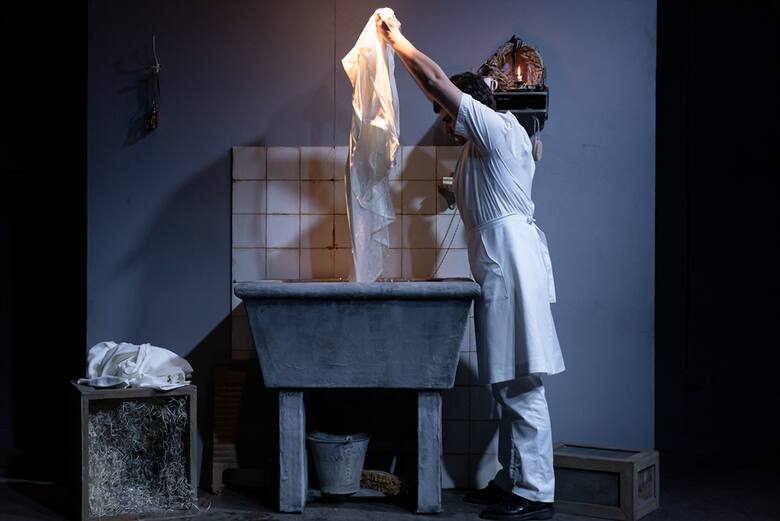
Also featured is *La Revista del Cervantes *, which consistently sells out at the Teatro Cervantes. There, comedians Tato Bores and Enrique Pinti find themselves in a kind of limbo, trying to convince an angel of the charms of revue theater, with a journey through its most stellar moments. Its curation required archival research and the recovery of original scores. Each musical number represents a revue from the 1920s. Rausch is a co-writer, with Pablo Maritano as general director. Meanwhile, in * La Llamada *, an original work by Los Javis (Javier Ambrossi and Javier Calvo, the Spanish creators of * Paquita Salas*, *La Veneno*, and *La Mesías *), Rausch was brought on as director. At a religious camp, two teenagers, María and Susana, encounter a peculiar interlocutor: God, who speaks to them through Whitney Houston songs.
Defense of the theater
In recent weeks, various artists have echoed concerns about the attempted dismantling of the National Theater Institute through Decree 345/2025. Regarding this and the cultural crisis in Argentina, Rausch warns: “Certain sectors currently hold a majority position of power, causing discussions about theater to revolve around its economic benefits. While that's a valid point of discussion, it's not the only way to address the importance and impact of theater on culture. Furthermore, we see the State attempting to relinquish its role in cultural promotion. This is where I believe we must be very vigilant, because the State's role is fundamental to supporting certain activities.”
In a context not only of cuts to cultural funding, but also of attacks and the spread of misinformation regarding sexual diversity, it is heartening that at least two of Rausch's highly successful works feature LGBTQ+ characters. These are not propaganda pieces, but rather characters with stories and problems that affect everyone, not just the LGBTQ+ community.

“Other ways of life are possible,” says Juanse. “They exist, they have existed, and they will continue to exist, even if some people don’t want them to. It’s not a matter of will. The plays are an invitation to imagine life in a different way. For me, that’s the possibility that theater offers: seeing bodies, stories, images that broaden our vision. And today there is an absolute need to broaden our view of the world.”
Saraos Uranistas can be seen at El Galpón de Guevara (Guevara 326) on Tuesdays at 8:30 pm and Fridays at 8 pm. Tickets available through Alternativa Teatral .
Viento Blanco has performances on Wednesdays at 9:30 pm and Sundays at 8:30 pm at Dumont 4040 (Santos Dumont 4040). Tickets available through Alternativa Teatral .
The Call is on Tuesdays at 8 PM at the Astros Theater (Av. Corrientes 746). Tickets available through the Astros Theater .
The Cervantes Revue can be seen from Thursday to Sunday at 8 pm at the Cervantes National Theatre (Libertad 815). Tickets available through Alternativa Teatral .
We are present
We are committed to journalism that delves into the territories and conducts thorough investigations, combined with new technologies and narrative formats. We want the protagonists, their stories, and their struggles to be present.
SUPPORT US

FOLLOW US
Related notes

We are present
This and other stories are not usually on the media agenda. Together we can bring them to light.