

Argentina: Hate crimes against LGBT people increased 70% in the first half of the year
The report from the National Observatory of LGBT+ Hate Crimes reported 102 crimes in the first half of 2025.


Share

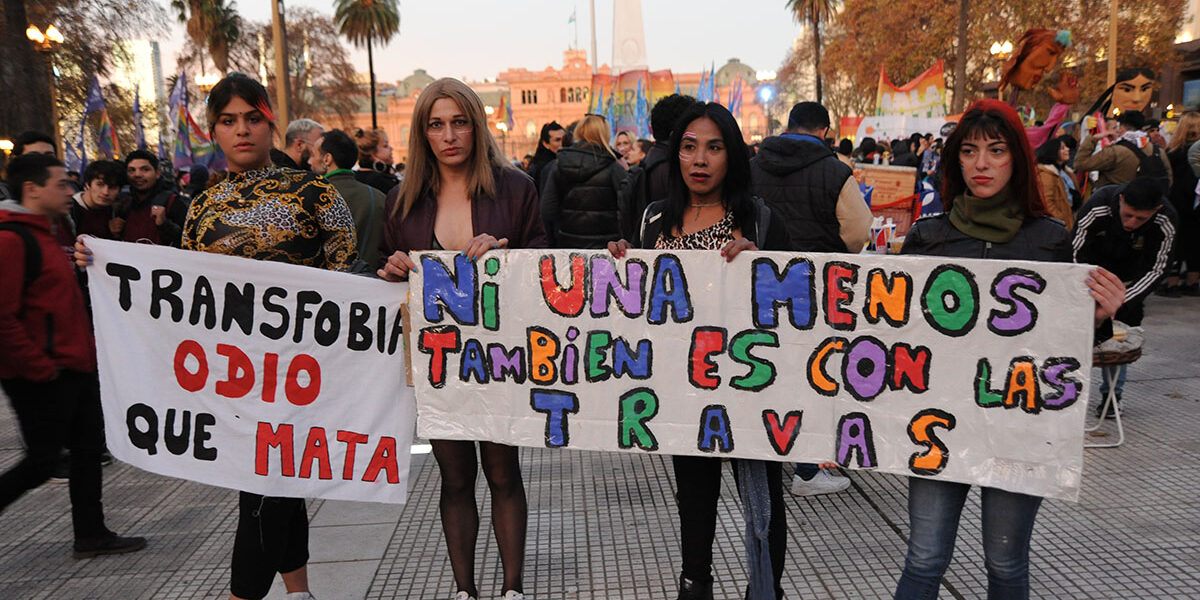
According to the latest report from the National Observatory of LGBT+ Hate Crimes, between January 1 and June 30 of this year, 102 hate crimes occurred in Argentina in which the victims' sexual orientation, gender identity, and/or gender expression were used as a discriminatory pretext for violating their rights and perpetrating violence against them. This figure represents an alarming 70% increase compared to the same period last year, when 60 cases were recorded.
The report also notes that, as happens every year, the most affected were trans women, who represent 70.6% of the cases (72); followed by cis gay men with 16.7% (17) of the cases; lesbians with 6.9% (7); trans men with 4.9% (5); and non-binary people with 1% of the cases.
On the other hand, 16.7% of the cases (17) correspond to violations of the right to life, that is, murders, suicides, and deaths due to structural violence, which the report describes as “deaths in which the systematic and historical violation of rights generated precarious material conditions that made these deaths preventable.” The remaining 83.3% of the cases (85) correspond to violations of the right to physical integrity, that is, situations of physical violence that did not result in death, including suicide attempts.
Structural violence
The report details that of the 17 cases of violations of the right to life recorded, 4 correspond to murders (3 directed at cis gay men and 1 at a lesbian); 3 to cases of suicides (2 of cis gay men and 1 of a trans woman); and 10 were deaths due to structural violence (8 of trans women, 1 of a trans man and 1 of a non-binary person).
The report also indicates that 52.9% (9 cases) of the violations of the right to life were against trans women. “This data confirms, once again, that violence against the LGBT+ community in Argentina is particularly targeted: trans women are the ones who bear the brunt of the most brutal form of hatred and structural discrimination, expressed in practices that continue to take their lives with alarming cruelty,” the report states.
Young people are the most affected
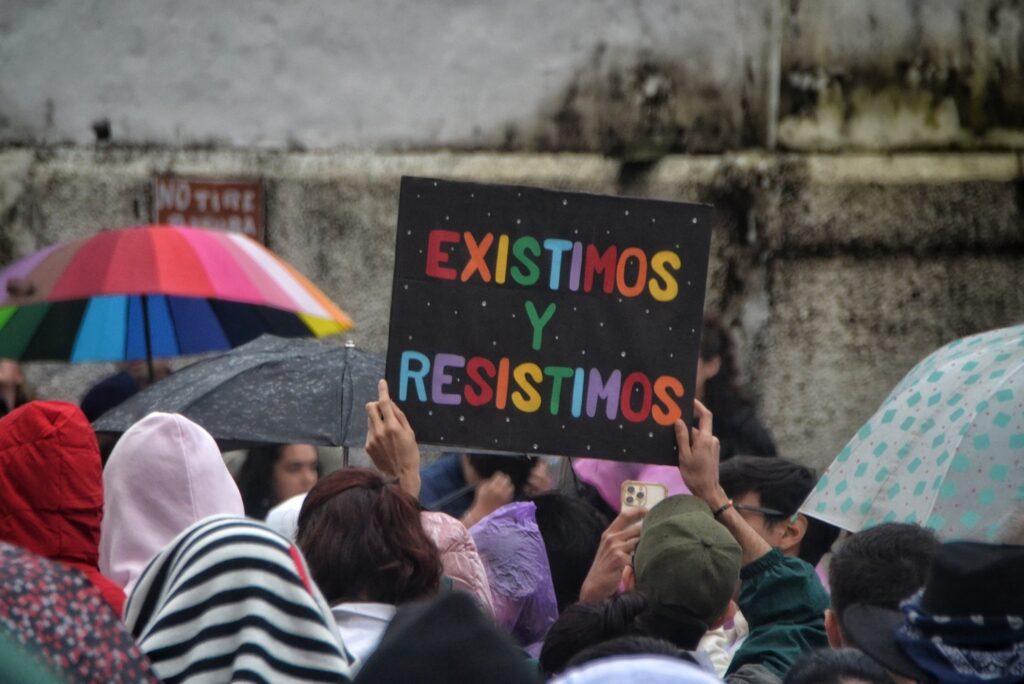
Regarding the victims' ages—in those cases where this data was available—the most affected age group was 20 to 29 years old, accounting for 45.16% of cases. The second most affected group, at 19.35%, was 40 to 49 years old. This was followed by the 30 to 39 age group, at 16.13%, while the 10 to 19 and 50 to 59 age groups each represented 6.45%. Finally, cases were recorded in the 60 to 69 and 70 to 79 age groups, both at 3.23%
The consequences of hate speech
Esteban Paulón, former president of FALGBT and current national deputy, argues that hate speech manifests itself in concrete hate attacks, especially when it comes from the highest levels of power. “Experience worldwide, and we are seeing it in Argentina, indicates that there are sectors of society that harbor a great deal of hatred and resentment toward certain groups, in this case, the LGBTQ+ community.”.
However, Paulón clarified that in our country “the majority of society doesn't play that game” and therefore “we have a certain advantage.” “We have a society with an inclusive outlook. Hate attacks are still overwhelmingly rejected, and there is a condemnatory tone in the media.”.
Regarding the responsibility of the security forces, Paulón pointed out that they are subject to political control and have a particular “cruelty” toward groups whose rights have been violated. “The security forces are out of control and think that anything goes. That’s a problem because they have the monopoly on the use of force, they have the weapons in their hands, and if they perceive the LGBTIQ+ community as a specific target of the government, why wouldn’t they act by increasing the violence against those groups?”.
Finally, the congressman reflected on the higher rates of violence against transgender women. “The transvestite and trans population, despite its significant growth, remains relatively small and largely invisible. Its very scale within society makes it unlikely you'll share a workspace or university with a trans person, unlike with gay men or lesbians. The transvestite and transgender population remains largely unknown to a significant portion of society, and this lack of awareness breeds prejudice.”.
The State as directly responsible
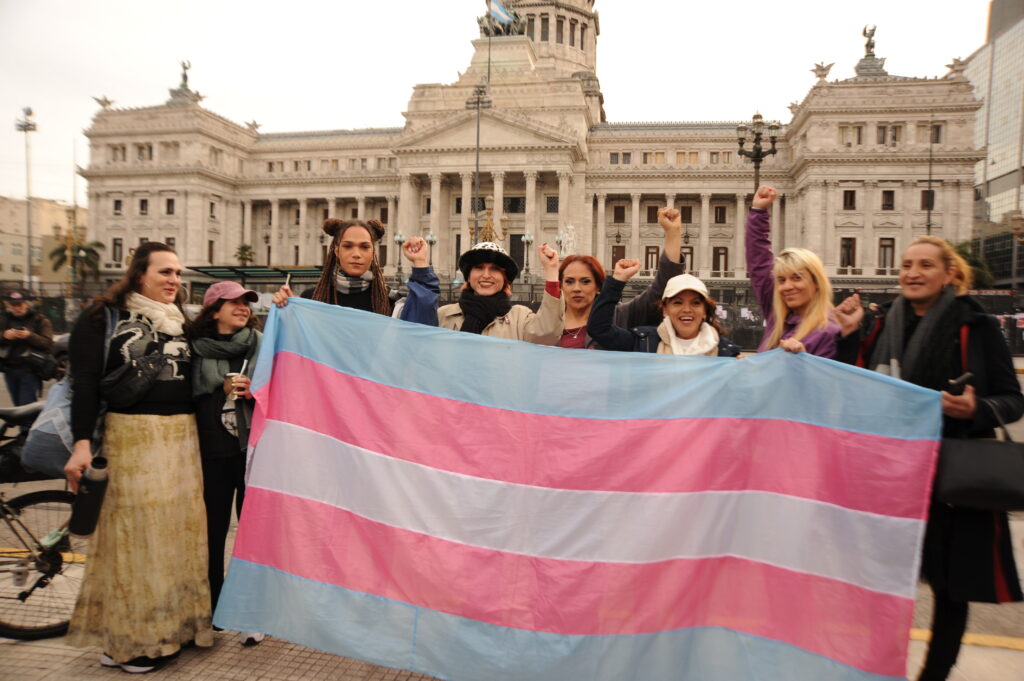
The data collected shows that in 35.3% of cases (36), the acts were committed by private individuals, while in the remaining 64.7% (66), the State appears to be directly responsible for these acts of violence. Of these 66 cases, 54 (52.9% of the total) involved violence perpetrated by members of the security forces in the course of their duties, constituting serious instances of institutional violence. In the remaining 12 cases (11.8% of the total), responsibility lies with other non-police state entities that contributed directly or through omission to the violation of the fundamental rights of LGBT+ individuals.
“These data allow us to affirm that, far from providing protection, the State is configured as one of the main agents reproducing violence towards sexual diversity, whether by direct action or by inaction in the face of situations of exclusion and structural mistreatment,” the report summarizes.
Another brutal attack on a trans woman
A trans woman sex worker, who prefers to remain anonymous, reported that, during the early hours of Tuesday, July 29, she suffered a brutal attack by a group of five men in the Buenos Aires town of Burzaco, in the Almirante Brown district.
Angrela Martínez, a representative of the cultural space “La Zorrería” in Esteban Echeverría and part of the organizing committee for the Pride March in that town, told Presentes that on that night, after the victim had performed a “service,” she returned to her usual spot to make a bonfire to ward off the cold. At that moment, she encountered a group of cisgender men who were “not in a very cool state.” She exchanged a few words with them until they became emboldened and began to beat her, causing her to lose consciousness. When she regained consciousness, she was lying on the ground, “curled up in a ball,” while they continued to kick her.
“After that, she ran out and encountered a police patrol car who offered to take her statement rather than assist her or anything else, and they took her to Meléndez Hospital. She was in shock and asked them not to leave her there in that state, and to take her back to her bus stop where she had left her purse with her essentials like her SUBE card,” Angrela explained in an interview with Agencia Presentes.
Once she was dropped off at her bus stop, the victim boarded a bus, but halfway through the journey she had to get off because she felt faint. She was eventually taken to Balestrini Hospital for treatment.
The victim is undergoing medical checkups for the aftereffects of the beating. “She is experiencing a serious housing and food crisis, to the point that she wanted to return to work the very next day,” Angrela explained.
Community mobilizations
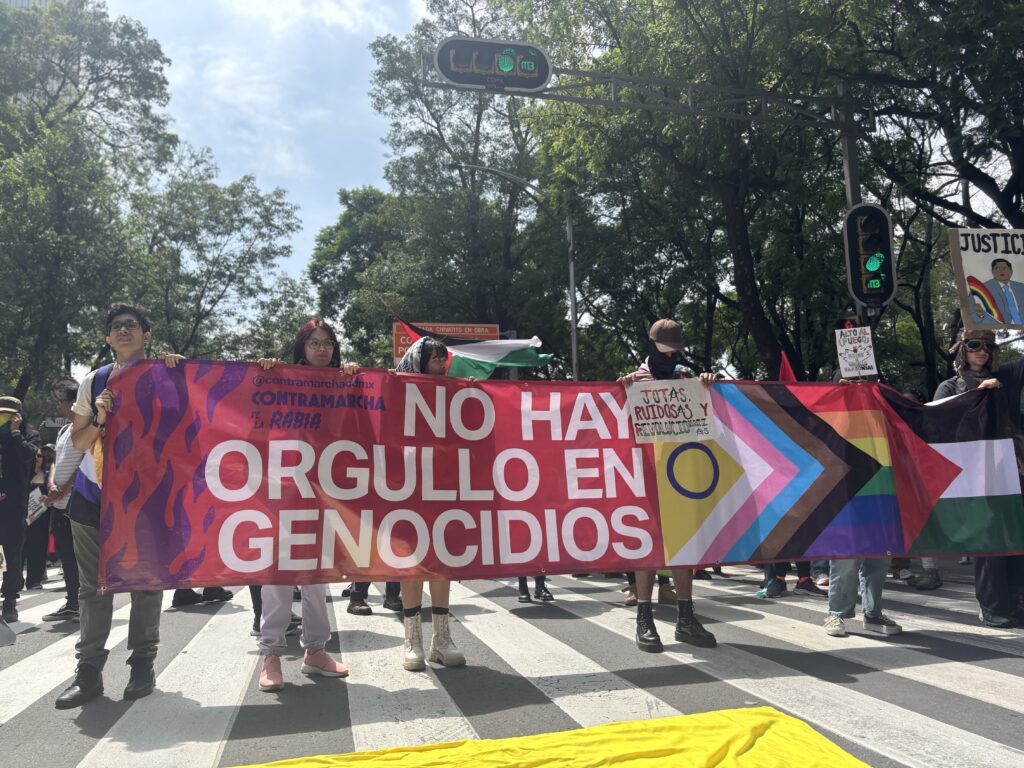
On Friday, August 1st, various social organizations and colleagues held a road blockade and assembly to raise awareness of the problems faced by sex workers in the area. “The victim came to the blockade on Friday, stood in front of a banner, and said she had come not only because it happened to her but for the rest of the sex workers,” she added.
Next Thursday, August 7th, at 2 PM, representatives from various organizations will meet at the Municipal Operations Center (COM) of Almirante Brown, located at Av. Monteverde 4393, along with authorities from the Ministry of Security of the Province of Buenos Aires, the Gender and Diversity Directorate of the Municipality of Almirante Brown, and the Commissioner of Police Station No. 2. The mayor of Almirante Brown, Mariano Cascallares, will also be invited. “We are asking everyone to join us for a peaceful gathering outside the building to hold a vigil and see if we can arrange the meeting with the mayor and the sex workers of Almirante Brown.”
“What happened to my colleague could happen to you tomorrow. If we're thinking about a future where everyone is included, let's start communicating more. Let's seek out those who are similar and those who are different, because we want a world where everyone can exist in peace and harmony. It's a bit utopian, but it's what we need. I'm sure that if anyone has reached the end of this article, it's because they care, and if you care, it's because we need you,” he concluded.
We are present
We are committed to journalism that delves into the territories and conducts thorough investigations, combined with new technologies and narrative formats. We want the protagonists, their stories, and their struggles to be present.
SUPPORT US

FOLLOW US
Related notes


We are present
This and other stories are not usually on the media agenda. Together we can bring them to light.