

Moira Millán: “With the Earth and from it, it is possible to create a good life”
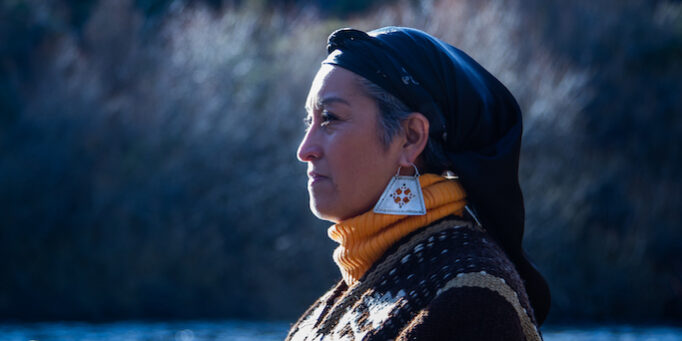
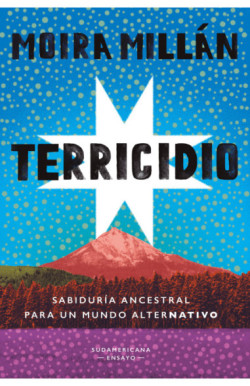
Terricide, the recent book by Moira Millán—a Mapuche warrior and writer—has become a global outcry, a denunciation, and a call to action. Her proposal for a new paradigm with an Indigenous perspective is resonating around the world. Meanwhile, the author and her community face government persecution for defending life and their territories.


Share

Moira Millán lives in the future. The Mapuche is prepared for the cataclysms predicted by dystopias and for the very real environmental collapse. Her latest book, *Terricide: Ancestral Wisdom for an Alternative World *, brings together essays that intersect Indigenous identity with timeless themes: diversity, territory, the body, technology, motherhood, childhood, and resistance. It was published in Argentina in September by Penguin Random House, the largest Spanish-language publishing group, and its impact is spreading worldwide. *Terricide* is a global cry and denunciation. Weeks ago, Moira was in France presenting *Terricide* (Des Femmes Antoinette Fouque). It is about to be released in Colombia, Mexico, and Italy. It will be presented in Brazil in October. It will soon be released in the United Kingdom, and there is interest from publishers in the United States and Japan.
Terricidio disseminates the political concepts and practices of those who inhabit the territories. And those who inhabit the territories are not only people. It includes many expressions of Mapudungun , and like this Mapuche language, it is imbued with vitality and diversity.
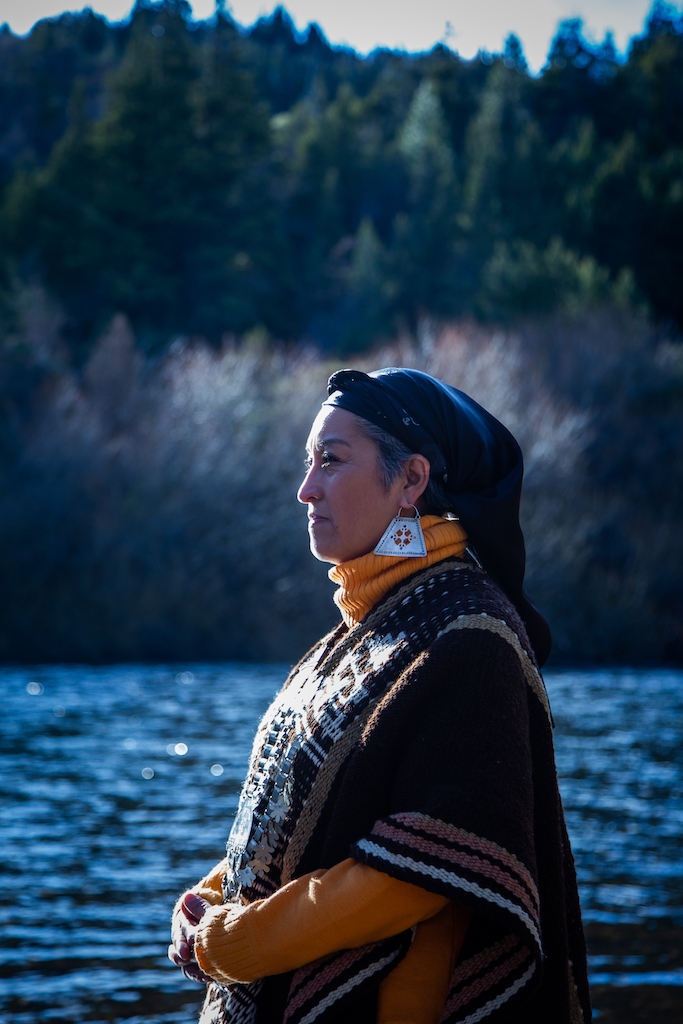
We spoke via Zoom one winter day; she was passing through Esquel, planning upcoming collective actions. Moira lives 100 kilometers away, in the Lof Pillañ Mahuiza, a reclaimed territory—now under threat—in a small eco-house surrounded by forests, on the banks of the Carrenleufú River (Chubut). In that Patagonian paradise, her community, along with other Mapuche Lof, suffered a violent raid and the arbitrary detention of Victoria Núñez Fernández . The judiciary, the provincial and national governments accused the Lof of terrorism and Moira of leading this group , through a campaign of disinformation.
The thermometer read 15 degrees below zero the afternoon we spoke.
"I was talking to one of my daughters the other day, and she said that if a global collapse were to happen, I think we'd know how to survive. Everything's frozen, there's no water in the houses, and many people are without heating because of the extremely low temperatures. And in the countryside, we have the river, yes, we carry water with buckets because the pipes are frozen. But everything runs on firewood, so we manage. We don't need a company to provide us with heating. We're very self-sufficient.".
Autonomy is a word that runs through Terricidio , reflecting what Moira says and does. Among many other things, she is a great communicator. Perhaps this talent is yet another expression of her weychafe . Years ago, she explained this to journalists when we asked her how to introduce herself. She doesn't like to be mistaken for a leader or boss. “I was born with newen, the spirit of a defender of life, a guardian of the Mapu (land). Weychafe comes from weychan, which means to fight. Some translate it as warrior, but that's not really the case. The Mapuche nation is neither expansionist nor warlike; it defended itself. Weychan is the legitimate process of self-defense ,” she summarizes in Terricidio.
Reading it is the closest thing to having a conversation with her live and in person, in a material and immaterial time.
-In your own words: who is Moira Millán?
I am a Mapuche woman living on reclaimed land. Having reclaimed land, living in the countryside, has shaped me in a unique way. In times when neo-fascism and a land-destroying government stalk and harass us, my life has become very difficult, constantly on alert, upholding the right to our territory under threat. I am an activist defending the rights of my people and Indigenous women. I have been an ideologue and founder of numerous organizations. It seems I cannot conceive of life without weaving myself into collective networks with my peers.
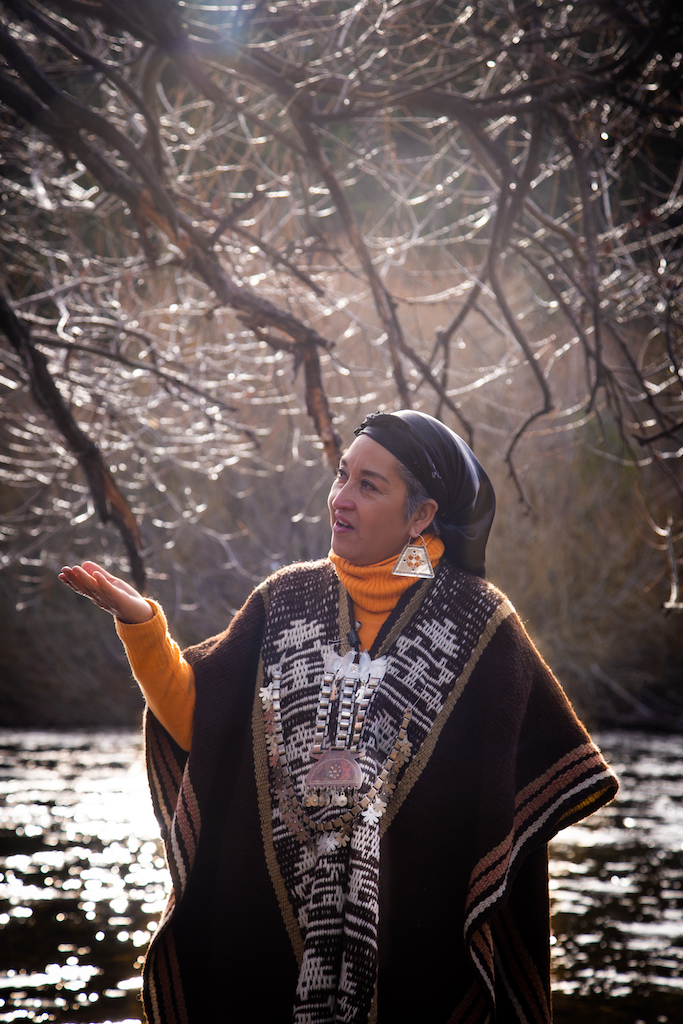
Moira spearheaded the Indigenous Women and Diversity Movement for Good Living, which organized various collective actions, including a peaceful encampment at the Ministry of the Interior in 2019 : “Help us break the media blackout: there is no social pact if politics is about destroying our land,” they demanded. Hundreds of Indigenous women held forums to discuss child abuse and other forms of violence against children, women, and LGBTQ+ individuals. Today, she organizes Pluriversity, seeking a pedagogy of ancestral knowledge and practical wisdom for good living.
I'm currently working among the Mapuche communities of Puel Mapu, and also connecting with Gulu Mapu in Chile. My childhood was under a dictatorship, my adolescence under democracy. But democracy never truly reached Indigenous peoples. I'm a mother of four, I raised them alone, and I'm a grandmother; I have three granddaughters.
-How does your writing come into play?
I write not because I'm a writer, but because I want to tell stories. There's a lot of Indigenous literature in other countries, but it's scarce in Argentina. That's why I started writing. I also work in film; I write screenplays. I have to write a television series, commissions that come from abroad. I don't get any offers in Argentina.
-What would you like to read?
I have several concerns, and many questions about children's literature. I'm the kind of grandmother who buys my granddaughters books instead of toys. Going into a bookstore and choosing is the worst part; I always leave frustrated. I can't find the kind of literature I want to give my granddaughters in children's bookstores . I'm thinking about writing for children. I'd like more diverse, culturally relevant children's literature that reflects Indigenous worlds and worldviews. There are so many stories out there, but what's circulating has nothing to do with the oral history of my people or other Indigenous communities. I'd like to learn more about those who helped Indigenous peoples survive genocide and emerge from that darkness. There's a lack of stories, protagonists, and, most importantly, Indigenous women.
(From Agencia Presentes, we are working with her on a series of comics , illustrated by Florencia Capella, to tell the stories of some of these survivors).
Poetry, though a minority genre, is quite prevalent. But I would like to read political essays and history from an Indigenous perspective. There are many literary genres that need a cross-disciplinary approach and an Indigenous perspective .
Terricide falls into this category of political essay. In the prologue, the anthropologist Arturo Escobar (Colombia) positions the author as “a thinker of the living cosmos” and the book as a cosmobiography, “a biography written from the perspective of how cosmogonic forces constitute the Mapuche people, their territory, and Moira Millán .”
She coined the word Terricide, related to Ecocide and Transvesticide, to summarize the ways in which life is destroyed. “A continuous aggression against the cosmic order. Without justice, people will never have peace.” She proposes recovering the ancestral, three-dimensional perspective on life and the beings that comprise that order. It's not just about animals, plants, water, and air. “Nature is not only made up of tangible elements,” Moira explains. She leaves us pondering: “How could we, as humanity, accept the extermination of groups of people and communities because of their social, racial, ideological, or religious status? Environmentalists, Indigenous peoples, women, LGBTQ+ movements?”.
-Is there a foundational image that triggered the concept of Terricide?
Yes. I remember being in a Mbya Guaraní community and seeing one of the children with a toucan in his hand. Behind him, an electrified fence enclosed the stream where he had been playing. The look on that child's face, making sure the bird didn't touch the wire, was striking. What kind of world are we leaving them? Several children from that community had been injured going to the stream. How is it possible that the lives of these children have no value? Voracious capitalism is bleeding the land dry. It also made me think about the word "territory"—it wasn't just the destruction of tangible ecosystems by these corporations, but also the destruction of the lives of the people.
-What surprises does the book hold for you in other contexts and cultures?
"I've been surprised that Terricidio is doing so well so quickly. It's not that The Train of Oblivion (my first book, a novel) hasn't done well (it was translated into English, will be published in France in 2026, and is being adapted into a film). What surprises me is that it's being compared to geopolitical and environmental essays, sometimes very technical, that emerge from academic circles. It's become quite a popular book. I get messages from everyone from teenagers to people who are very inquisitive about alternative literature. I like that it's a direct, honest, and authentic conversation with the reader. And the reader has no age, no cultural or social background; it's all Earthlings. I think that's being reflected in the way it's reaching so many different audiences. The presentations in France were an indicator of that diversity."
-In your head, are you still writing this book? Do you think about what you would add to it?
Yes, I would add more proactive ideas. The concept of "tellural peoples" is deeply ingrained in the prefiguration of a new, alternative world. I'm excited to think about what it would be like to organize ourselves based on that identity. I have it all in my head (laughs). It would be arrogant to offer tips on how to transition from this anthropocentric, materialistic, Eurocentric, supremacist, racist society to a better life. I don't have the answers; it's something that will be a collective journey .
"The Mapuche issue remains marginal to the human rights agenda."
-In Terricidio you say that the Mapuche people are receiving the strength to protect their territory and the planet. You also say that fascism has global consensus. You were accused of terrorism, Victoria Núñez Fernández was imprisoned, and you suffered violent raids. How do you experience this duality and this very hostile scenario?
"I'm outraged by so much impunity. My two daughters, Llanca and Rain, are being prosecuted by those who tried to imprison me. Prosecutor María Bottini is accusing them because, on the last anniversary of Ni Una Menos (Not One Less), Bottini gave a talk on preventing gender violence. It was a contradiction; she was one of those who carried out the raid on our community, which involved mistreatment and violence against women and the elderly, and culminated in Victoria's arrest. My daughters, along with other Mapuche sisters, confronted her, telling her what we had experienced. And she ended up filing charges against them.".
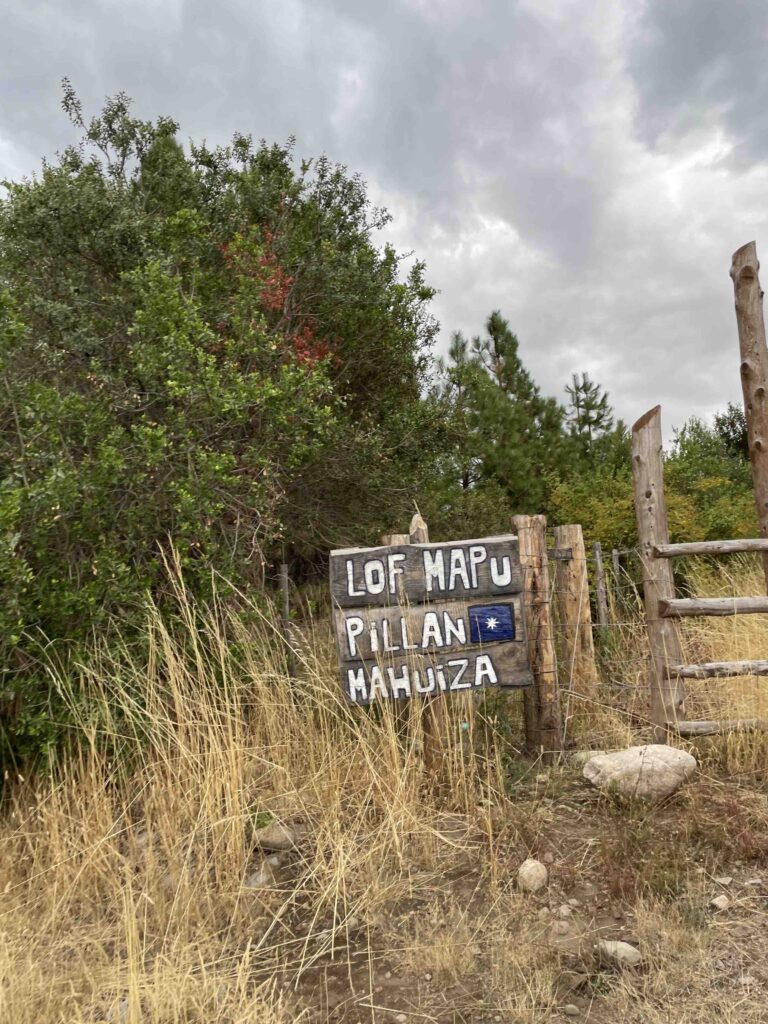
We live seeking spiritual strength. We go to the river, we make offerings, we ask for strength, for it to cleanse our minds, our hearts, our spirits; wisdom to walk these lands, to live life, for protection. And we also live on alert. Drones, helicopters, and unmarked trucks continue to patrol, entering in the early morning. They want to evict us. All to protect the Carrenleufú River from this aqueduct project, with the presence of Israeli forces on our land. We see what is happening in Palestine. What compassion will these people have for our land? And I don't know what level of solidarity the Argentine people will show. Since the raids, no human rights organization from Argentina, except for the Permanent Assembly for Human Rights of Esquel, has come to our territory.
-What explanation do you find?
On the one hand, human rights organizations are overwhelmed by the government's actions. On the other, the Mapuche issue remains marginal on the human rights agenda . And then there are the dominant narratives, which lie, portraying us as terrorists or savages. We will have to dismantle these colonial narratives and reclaim the narratives of our peoples. But it's difficult; there's censorship. I was invited to Radio Nacional Esquel on March 8th, but the interview couldn't take place. The journalist who brought me was mistreated. Even if the government changes, I will not set foot in Radio Nacional Esquel. Racism and complicity are fueled by the impunity of a hateful government. It's very difficult to talk about the genocide of our people in Argentina when there is censorship about what is happening to us.
Educating and transitioning towards a good life
-Ideally, how do you envision a good life?
– Despite the harassment and repression by the Argentine state, I believe that the Mapuche people, in their recovered territory, are building a good life. In this autonomy, we gain strength and freedom. With the land and from the land, it is possible to create this good life. We must transition towards a good life. Megacities must be transformed; we can no longer live this way. But the education system does not prepare us for a good life.
Moira gives the example of the siblings who survived 40 days after a plane crash in the Colombian Amazon. “They managed to survive because a grandmother taught them how to collect water, what fruits to eat, and how to build a shelter in the jungle. She gave them that essential knowledge for life and spiritual development. We have to think about what tools we're going to give children and teenagers while we're talking about a possible nuclear war and an unprecedented environmental collapse. We must educate for a good life .”
Women are creators of new worlds
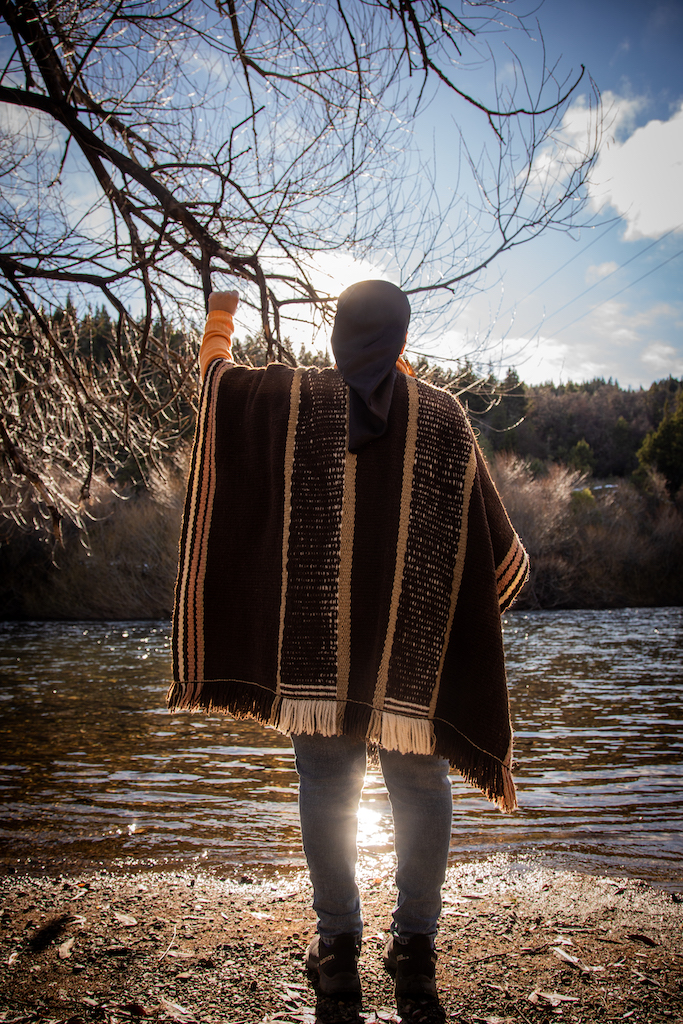
-Do you know of any experiences towards these horizons of hope from the telluric peoples?
-Fortunately, yes. I always seek out these experiences; wherever I hear about them, I go and see for myself. There are the liberators of Mother Earth in Cauca (Colombia), the Nasa people organizing and protecting themselves alongside other peasant communities. They are reclaiming territory, eliminating sugarcane fields for biofuel, removing monoculture, and planting food. At harvest time, they fill their chivas (trucks) with vegetables and head to the poorest areas of the cities, like Cali or Medellín. They bring the fruits of the Earth, distributing food in community kitchens during sociocultural events, not in the style of opportunistic populist governments. They foster this exchange in spaces for debate, reflection, and workshops. There are gatherings, words, and music. And from there, they offer thanks to the food that has been cultivated by freeing the land from agrochemicals. That exchange has a different flavor.
Moira is familiar with various experiences. She speaks of the Purépecha people of Cherán, “who declared self-determination by expelling the drug cartels and the Mexican state, defining how to generate security and an economy.” There is the Zapatista movement. And the one she encountered in California. “I liked this alliance of different peoples. Bioculture is fashionable, but there I saw biocultural plurinationality, a plurinational agroecological experience . There are many young people. And in everything, the women are there, putting their heart, strength, and joy into it. They are the creators of new worlds .”
This interview was originally published in Hecho en Buenos Aires through our cooperation agreement as media partners.
We are present
We are committed to journalism that delves into the territories and conducts thorough investigations, combined with new technologies and narrative formats. We want the protagonists, their stories, and their struggles to be present.
SUPPORT US

FOLLOW US
Related notes
We are present
This and other stories are not usually on the media agenda. Together we can bring them to light.