

Bill against Gender Identity Law: Activists respond to its misleading arguments
Activists respond to the bill proposed by PRO and La Libertad Avanza deputies, which attacks the pioneering spirit of Argentina's Gender Identity Law. What are the crucial points they seek to change with a deceptive discourse, aiming to defund rights?.


Share

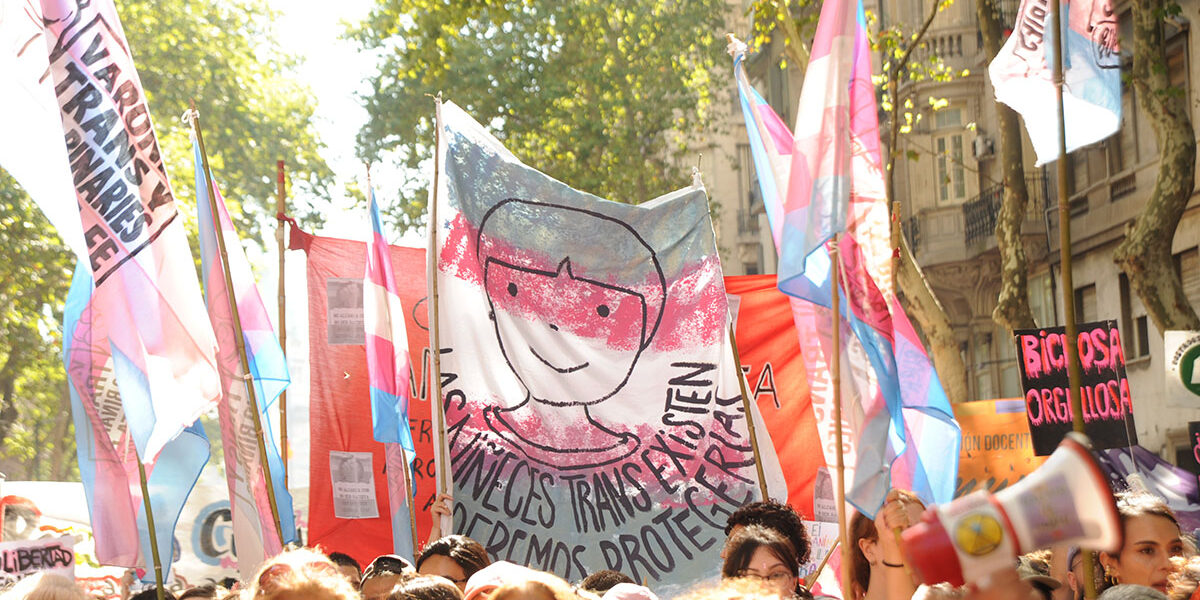
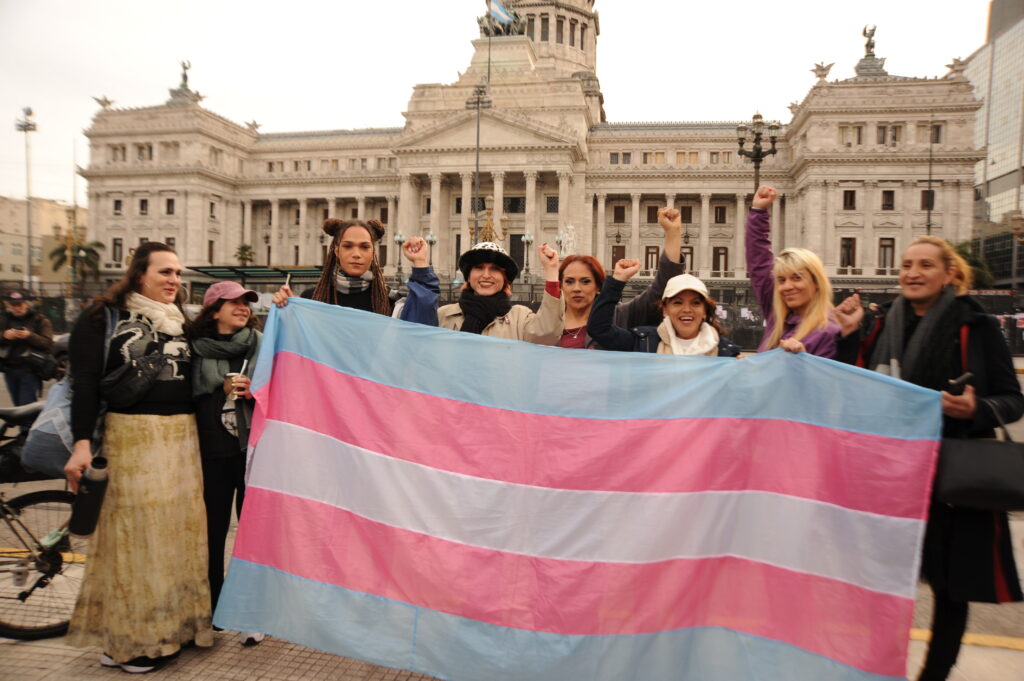
Activists, families, and healthcare professionals condemned the bill introduced by members of the PRO and La Libertad Avanza (LLA) parties that seeks to amend the Gender Identity Law . With an approach that pathologizes trans identities, it aims to eliminate state coverage for gender-affirming interventions and prohibit treatment for individuals under 18.
The bill is titled “Modifications on the limits of the State’s role in relation to the sovereignty of individuals over their own bodies.” It was introduced by Representatives Gerardo Milman (PRO), Lilia Lemoine, and Carlos Raúl Zapata (LLA) on July 14, on the eve of the 15th anniversary of the Equal Marriage Law.
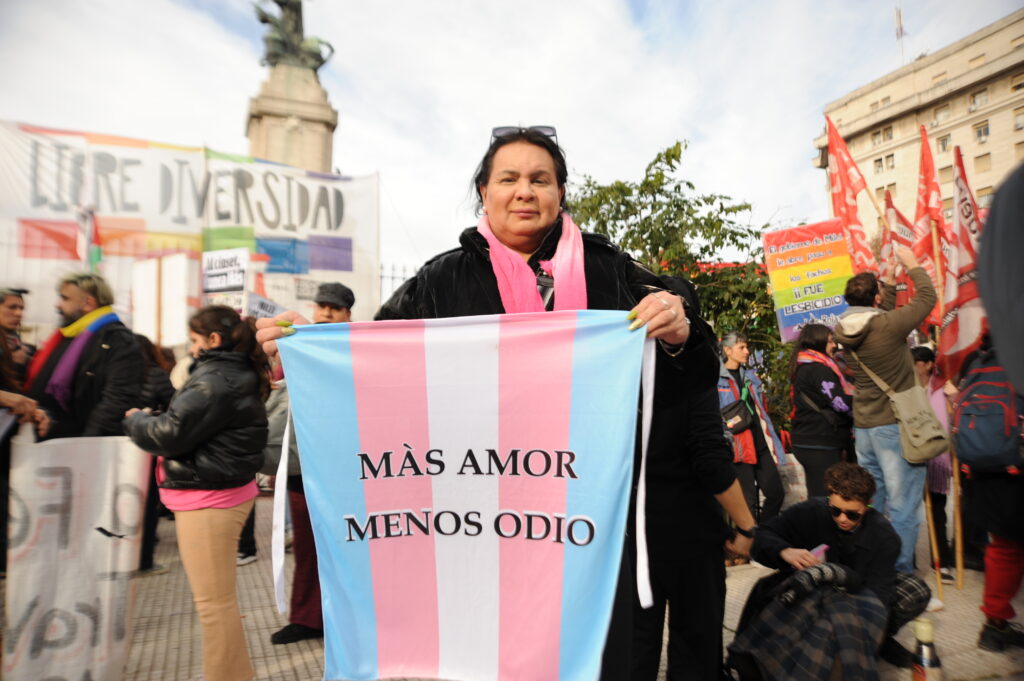
What does the project seek to change and why are its arguments false?
1- Remove state coverage for gender affirmation treatments
In its first article, the bill excludes gender-affirming medical, hormonal, or surgical treatments from the Mandatory Medical Plan (PMO). This effectively eliminates state coverage for these treatments, meaning they would no longer be free. “Everyone over 18 can decide about their body, but not with everyone’s money,” said the bill’s author, Milman, in a post on X titled “Common Sense Returns” (in all caps), in which he tagged President Javier Milei and libertarian leader Agustín Laje.
The myth about costs
“The project lacks data on how much was actually spent on therapies and surgeries since the law was passed. It also lacks data on how much it cost taxpayers and members of social security and private health insurance plans to cover the costs of care for the trans population in terms of attempted suicides, removal of industrial silicone implants, treatment of cancers caused by self-administered hormone therapies, and other practices that occur when there is no proper medical supervision. These latter practices surely generated higher expenses than those covered by the gender identity law,” lawyer, professor, and trans activist Cristina Montserrat Hendrickse Presentes
2- Prohibit treatments in adolescents
In the second article, the bill prohibits hormonal treatments and gender-affirming surgical interventions for individuals under 18 years of age. This aligns with Decree 62/2025, published in February of this year , which has generated numerous complaints and legal challenges across the country. In the City of Buenos Aires, a court ruling successfully halted its implementation in that jurisdiction .
What the evidence says about treatments
“Treatments that generally begin after puberty are hormone blockers (medication that stops or delays the physical changes associated with puberty). Not all transgender adolescents need or request them. They are started around 12 or 13 years of age in transgender boys and around 13 or 14 in transgender girls. They are reversible and are not used for more than one or two years. They are approved by the FDA (the U.S. Food and Drug Administration), meaning they are medically supported medications due to the benefits they provide,” Dr. Fabiana Reina, a specialist in gynecological endocrinology, certified in pediatric and adolescent gynecology, and a member of the Trans-Forming Families .
Hormone therapy, on the other hand, starts later. “At 15 or 16 years old in adolescents. It is also reversible. It is done in people who are under strict medical supervision. They have no risk factors and it can be beneficial to the individual. We never work alone: we work in multidisciplinary and comprehensive teams and with the families,” he explained.
3- Pathologizing trans children and adolescents, and restricting legal gender change
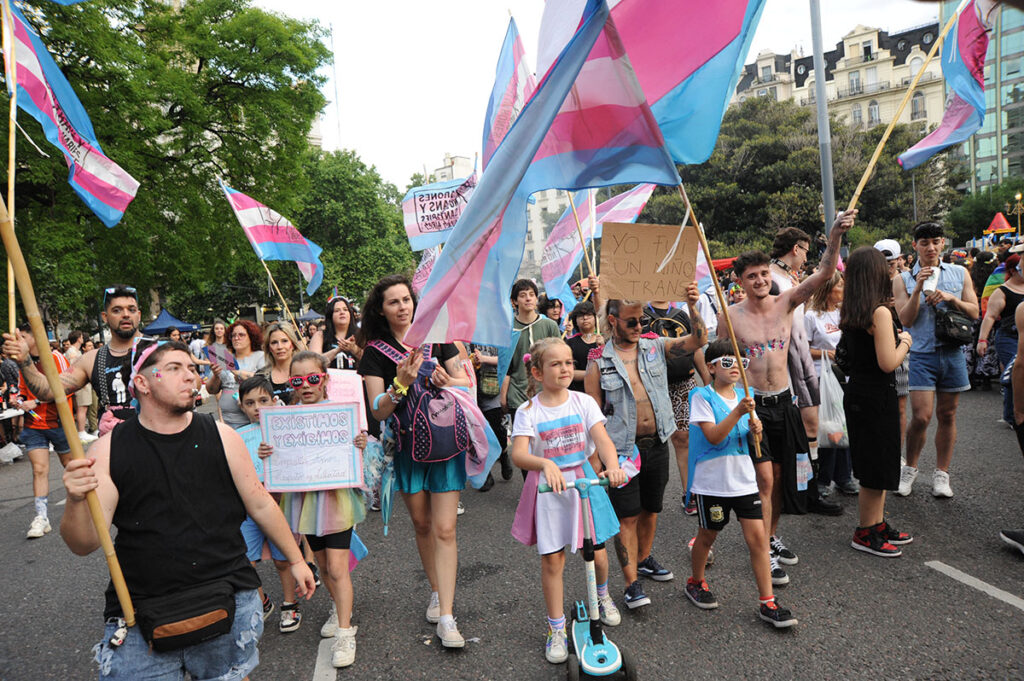
Article 2 of the project also restricts the possibility of making the registration change to adolescents and children since it requires, in addition to the consent of parents or guardians, the validation of an interdisciplinary team composed of a clinical doctor, a psychiatrist and a psychologist.
Against the spirit of the Gender Identity Law
Argentina's Gender Identity Law, passed in 2012, was the first legislation of its kind in the world that did not pathologize transgender people. It does not require a medical, psychological, or psychiatric certificate to prove a person's identity and the resulting legal change. The bill promoted by members of the PRO and LLA parties contradicts the spirit of the law by requiring validation from healthcare professionals.
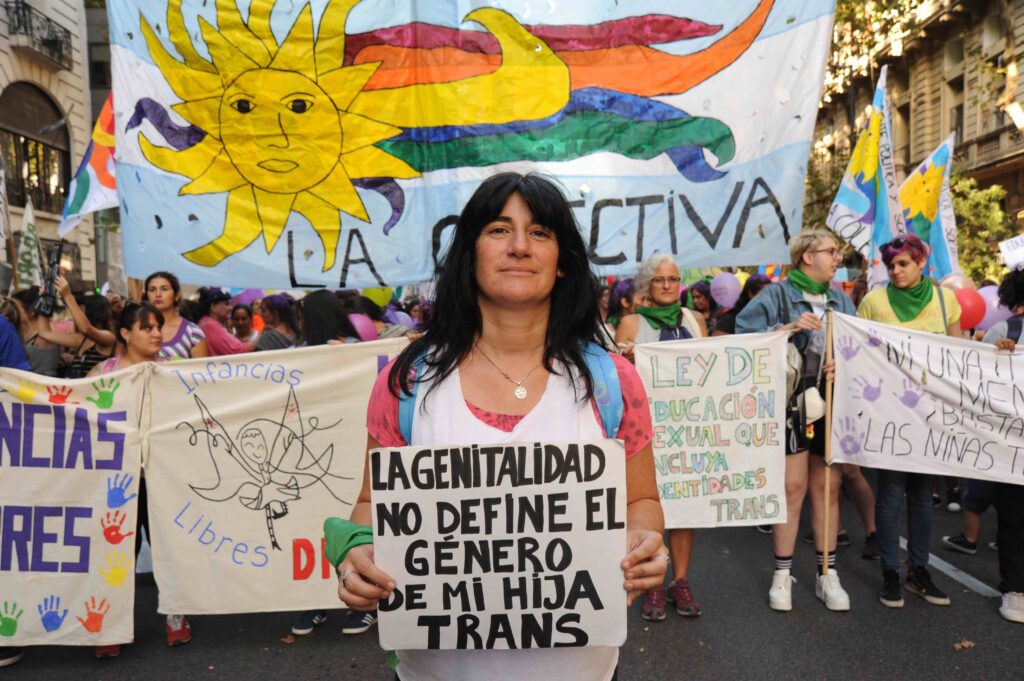
“ Going back to having a medical board for other people to approve or deny whether a trans child or adolescent has the right to a name and ID is unconstitutional and makes us suffer expulsion, violence, persecution, discrimination, and rejection again . It is throwing them back into the prostitution system, expelling them from the education system, as has been done historically,” Gabriela Mansilla, mother of Luana, the first trans girl in Argentina to obtain a corrected ID without having to go to court, Presentes
4- Eliminate the mandatory use of the self-perceived name
The bill also attacks Article 12 of the Gender Identity Law, the one concerning dignified treatment. The text of the current law states: “The gender identity adopted by individuals, especially children and adolescents, who use a first name different from the one recorded on their national identity document, must be respected.” In contrast, Article 3 of the bill states that “the State may not impose on any person, educational institution, company, or entity the mandatory use of a name different from the one appearing on their national identity document, nor may it penalize anyone who exercises their freedom of expression or conscience in disagreement with certain cultural or ideological constructs.”.
Dignified treatment is a right
In its first article, the Universal Declaration of Human Rights expresses in a clear and unequivocal way the equality in dignity and rights: “All human beings are born free and equal in dignity and rights and, being endowed with reason and conscience, should act towards one another in a spirit of brotherhood.
“Treating us with dignity, by our name, is not an anecdote, but a fundamental fact that structures our lives ,” highlighted trans activist Alba Rueda, former Special Representative of Argentina on Sexual Orientation and Gender Identity, on the program La Patria de las Moscas on FM En Tránsito .
4- Prohibit education with a gender perspective

Article 4 of the bill does not modify the Law, but adds Article 14 bis: “Educational material, campaigns, talks, or mandatory content that directly or indirectly promotes self-perceived gender identity may not be included in compulsory educational levels, nor in state agencies serving the public, without the prior informed consent of the parents or legal guardians of minors.”.
The freedom to deny existence
This article attacks the core principle of diversity in Comprehensive Sexuality Education. It also undermines the State's role in promoting universal public policies, which in this case would fall under the "guardianship" of parents. The law's rationale speaks of "protecting the freedom of the population." Furthermore, it obliges the State to refrain from disseminating "ideological constructs about gender or sexuality," thus denying diverse realities.
5- Restrict the free provision of the rectified ID card and cancel its cross-cutting recognition
Article 5 seeks to repeal the second paragraph of Article 10 of the law, which requires the National Registry of Persons (RENAPER) to report document changes to state agencies. “They will be free only in cases of extreme socioeconomic vulnerability, duly accredited,” states Article 6 of the bill.
Without cross-cutting recognition
This weakens "institutional articulation and cross-cutting recognition of identity," warned the Argentine LGBT Federation .
“The project represents an unacceptable setback in human rights, as it seeks to dismantle a law recognized internationally for its pioneering nature and for guaranteeing the right to the free development of gender identity,” the organization stated in a press release .
6- Repeal the provisions that contradict “state neutrality”
Article 7 repeals everything in the Gender Identity Law that contradicts a series of principles: state neutrality, no cultural imposition, no compulsory financing, and respect for freedom of expression.
The State must protect, not encourage hatred
“The State is not neutral. It must adhere to the ideological framework of the Constitution, which enshrines the State's duty to protect health, non-discrimination, diversity, and freedom of expression (which includes the expression of gender identity). By ratifying and approving the Pact of San José, Costa Rica, Argentina committed itself to the international community to prohibit by law all incitement to hatred against any person or group of people, for any reason. And the bill, conversely, seeks to enshrine its legality,” reflected lawyer Hendrickse Montserrat.
“Many say this bill won’t pass, but if even one of those articles gets through, it’s a huge loss for us,” warned activist Rueda. “It’s a fascist bill based on these prohibition measures. The argument is that there’s no money for hormone therapy, but it’s not money they’re after: they’re trying to instill a culture of hate in Argentina.”.
We are present
We are committed to journalism that delves into the territories and conducts thorough investigations, combined with new technologies and narrative formats. We want the protagonists, their stories, and their struggles to be present.
SUPPORT US

FOLLOW US
Related notes

We are present
This and other stories are not usually on the media agenda. Together we can bring them to light.