

Members of Parliament spoke out against hate speech: "We are in a very damaged democracy."
Representatives from various sectors—feminist and LGBTQ+ activists, journalists, and human rights advocates—met with the Women and Diversity Commission of the Chamber of Deputies to denounce the persecution and harassment orchestrated by the Executive branch. Several bills against political violence and censorship were approved.


Share

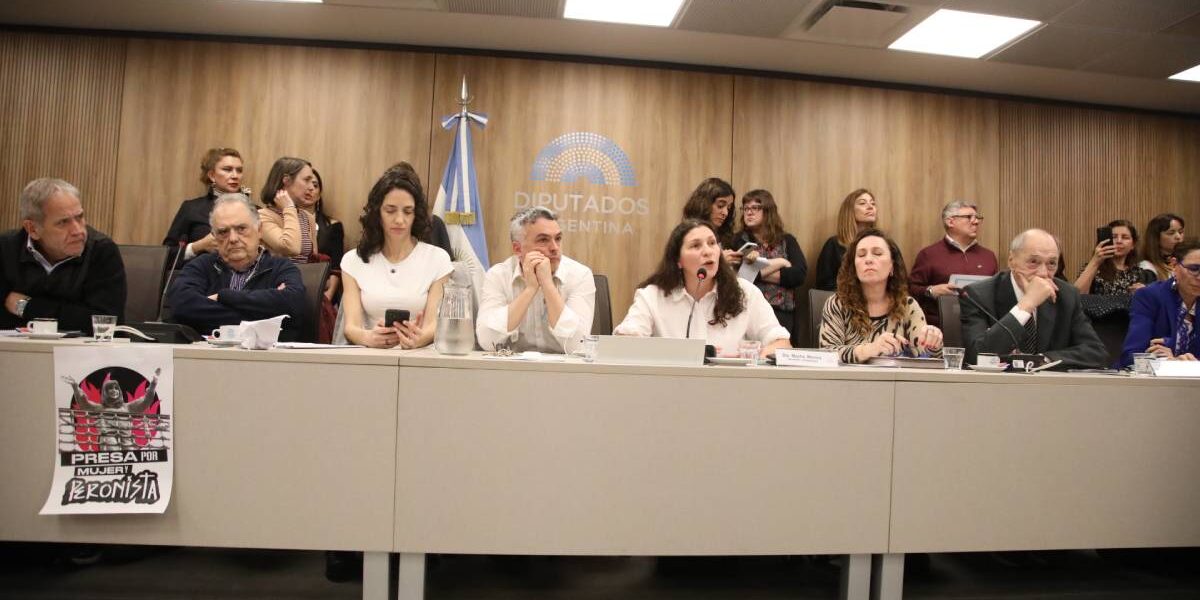
BUENOS AIRES, Argentina. The Women and Diversity Commission of the Chamber of Deputies convened representatives from various sectors to discuss the growing violence against women and diverse groups in political and journalistic spheres.
During the meeting, draft declarations were approved against "the political violence that the Judiciary and sectors of the ruling party exercise against Cristina Fernández de Kirchner," and others that focus on the violence exercised by Congressman José Luis Espert against Florencia Kirchner and against the Kirchnerist activists detained after a protest against the libertarian.
Bills were also passed against the persecution and harassment of critical journalists and LGBTQ+ leaders. These bills primarily targeted Congressman Esteban Paulón, who was the victim of homophobic attacks by members of the program “La Misa,” which airs on the Carajo streaming channel.
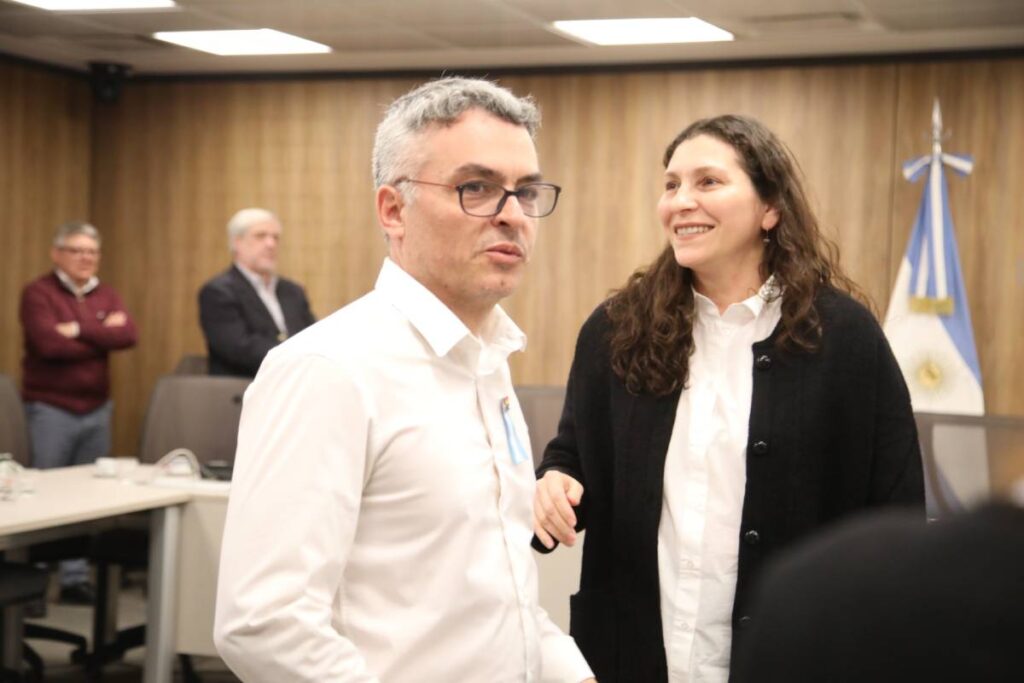
The following individuals also participated as speakers at the Commission meeting: journalists Julia Mengolini and Nancy Pazos; Leila Linhares Barsted, Lucía Portos, Eva Pietravallo (mother of Alesia Abaigar), Melisa García, Pedro Paradiso Sottile, María Rachid, Guadalupe Bargiela, Marcela Romero, and Luci Cavallero. National deputies from the Union for the Fatherland, Federal Encounter, Left Front, and Civic Coalition parties were also present.
In defense of democratic debate
In an interview with Agencia Presentes, Congressman Esteban Paulón addressed the events he has experienced in recent weeks. “The attacks are becoming more virulent and have gone beyond social media. That's why it's so important that there has been such a strong and widespread response. Regardless of whether there is still pending debate in terms of legislation or if some legal instrument is lacking, I believe that if we want to prioritize and protect democratic debate and the public space for democratic discussion, we must raise our voices and fight to uphold it.”.
He specified that these operational groups degrade democratic public debate. “They reduce everything to personal attacks, defamation, fake news, harassment, and intimidation. We are convinced that this is not the way for public debate. It has to be a debate of ideas where, obviously, all ideas are welcome. It's not a problem that libertarian ideas are part of the debate; on the contrary, they have to be part of the debate, but a debate that contributes something to society,” he told Presentes.
There is no cultural battle that can defeat visibility.
— Esteban Paulón 🌈 (@EstebanPaulon) July 16, 2025
To overcome the hatred and violence the government wants to impose on us, we must have a democratic debate, fighting for our rights with pride. pic.twitter.com/q28GF66tdH
Discipline and silencing
Among other things, Representative Paulón stated, “These are very intellectually basic attacks. They range from linking homosexuality, pedophilia, and AIDS, as was the case with me, to the ABCs of being a brutish fascist. The tactic is partly to attack your self-esteem, but above all, it's to discipline you.”
This “strategy of disciplining,” Paulón explains, is unleashed against voices critical of the government. He recalled that he was the first deputy to publicly stand up against Decree 70, in December 2023. “Also because I voted against many of the government's proposals and because I presented an agenda in Congress that sought to expose and reveal the entire network of espionage, sham appointments, Santiago Caputo, and all the delusions of the president's office.”
“I gained a certain visibility because I am part of the LGBT community, the 'woke cause' that they attack. “That agenda is also part of my agenda because it is my political identity.”.
From the meeting, which lasted a little over three hours, the congressman highlighted the cross-party solidarity that emerged. “This broad solidarity serves to test how willing we are to compromise on certain issues in the name of supposed economic stability. From PRO to the Left Front, all the blocs except La Libertad Avanza signed a declaration and said, 'Well, this is a red line we will not cross.'”.
A wounded democracy
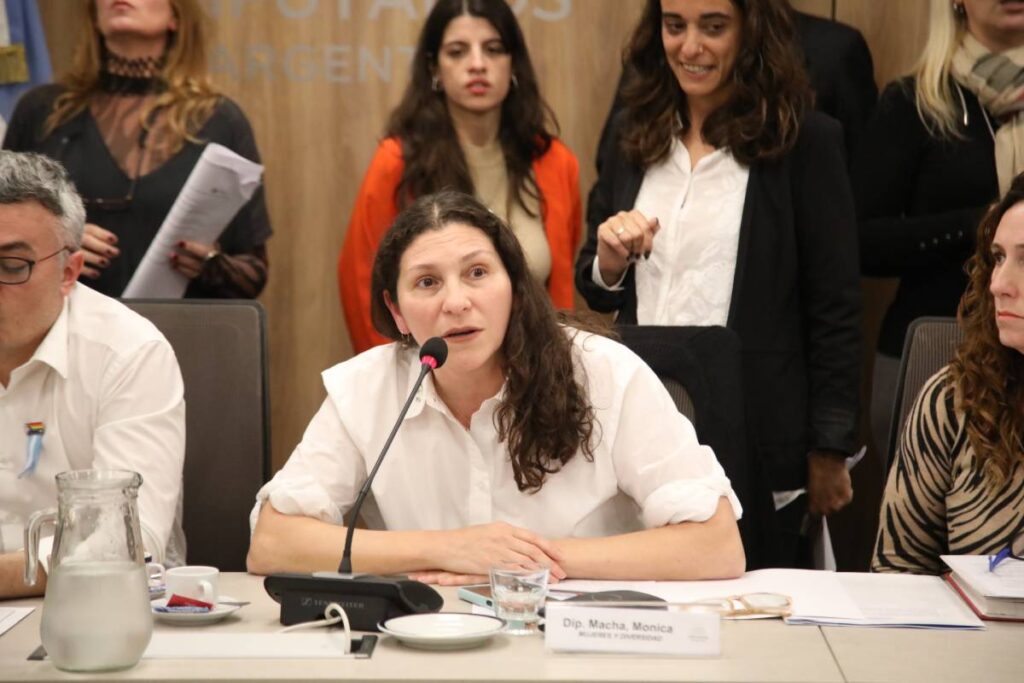
The commission's president, Mónica Macha, stated: “The government is perpetrating acts of violence against many populations and is particularly vicious towards women and LGBTQ+ individuals. There is systematic persecution in the digital sphere, but also in conjunction with the Judiciary. We must protect spaces like Congress because we live in a severely damaged democracy.”.
During the meeting, journalist Julia Mengolini recounted the various attacks she has experienced in recent weeks involving fake videos. The condemnation of this violence also garnered support from all political sectors.
“Everything we are experiencing comes at a personal cost that those of us in politics are willing to bear. But it is also a tremendous opportunity to engage in debate and reaffirm the role of public discourse in a democratic society. It is worthwhile to continue striving to improve democratic debate, and we must isolate all those sectors, give them the public debate, and not hand over the common space. Because when they have it, they degrade it, deteriorate it, and strip it of its meaning,” Paulón concluded.
The attack on the LGBT agenda
“I come to speak from a place that is unfortunately all too familiar to me. A place where commitment to human rights is met with insults, harassment, and threats. A place where activism becomes a target of hatred,” said María Rachid, head of the Institute Against Discrimination at the Ombudsman's Office of the City of Buenos Aires and a member of the Argentine Federation of Gays, Lesbians, Bisexuals, and Transvestites.
Rachid addressed the attacks Paulón suffered on social media. “Every day I open social media knowing that there’s probably someone wishing us dead. And I’m not exaggerating, they’ve told us that in those exact words. And it’s not just the opinion of some random troll; these are organized, repeated campaigns, fueled by political and media sectors that stir up hatred as a strategy,” he said.
And she added: “This is about political violence, about disciplining us, about telling us, ‘If you don’t hide, we’ll make you pay the price.’ I have bad news for those sectors: our community has paid the price many times throughout history, and they have never silenced us. They have created a social climate that has become increasingly permissive of hatred. The attacks are not personal; they are political, aimed at erasing our entire community.” She also mentioned that the FALGBT (Argentine Federation of Lesbians, Gays, Bisexuals, and Transgender People) is constantly under attack.
For his part, Pedro Paradiso Sotile, lawyer and president of the Equality Foundation, said: “We are in a very difficult, very complex, and very dangerous moment. This is a systematic plan, which some of us call an extermination plan, targeting populations like ours.”.
The transfeminist organization as the main objective
Among the speakers was Luci Cavallero, a leading figure in the Ni Una Menos (Not One Less) movement. “We have to ask ourselves if it isn't time to broaden our definition of political violence. It's not just about partisan political participation, as in the cases of Eva, Alexia, and Cristina, but this government is trying to criminalize solidarity and dismantle political organizations,” said Cavallero. She added that this is clearly seen in the raids on soup kitchens and in the persecution of workers fighting against their dismissals.
“From the feminist movement, we feel particularly attacked, not only by the statements and the dismantling of public policies, but also because the government is relentlessly trying to dismantle the feminist political organization and this type of politicization. We find our comrades raided and persecuted in the community kitchens where, for many women in this country, the political conversation begins . We also find comrades who are leading the struggles of workers and Mapuche women fighting against extractivism ,” Cavallero emphasized.
A strategy to annihilate
Former Supreme Court Justice Eugenio Raúl Zaffaroni analyzed the political violence against opposition leaders and journalists, referring to the conviction of Cristina Fernandez de Kirchner as a common case of lawfare.
Regarding “hate speech,” the former judge of the Inter-American Court of Human Rights (2016-2022) said that, as a criminologist, he is concerned that politics, during Javier Milei's administration, has become “a tactic whereby one must choose the enemy to annihilate and, consequently, operate according to a friend-enemy framework.” He further warned that this is “a moment of institutional and political crisis, which lifts our spirits and strengthens our resolve to continue fighting and resisting amidst this colonialist situation imposed upon us.”
In addition to issuing draft declarations against "the political violence that the Judiciary and sectors of the ruling party exercise against Cristina Fernández de Kirchner", drafts were issued that focus on the violence exercised by the deputy José Luis Espert against Florencia Kirchner and against the Kirchnerist militants detained after a protest against the libertarian.
Projects against the persecution and harassment of critical journalists and LGBTIQ+ leaders were also approved
We are present
We are committed to journalism that delves into the territories and conducts thorough investigations, combined with new technologies and narrative formats. We want the protagonists, their stories, and their struggles to be present.
SUPPORT US

FOLLOW US
Related notes


We are present
This and other stories are not usually on the media agenda. Together we can bring them to light.