

Commemoration of 15 years of Marriage Equality: “We celebrate and defend this law”
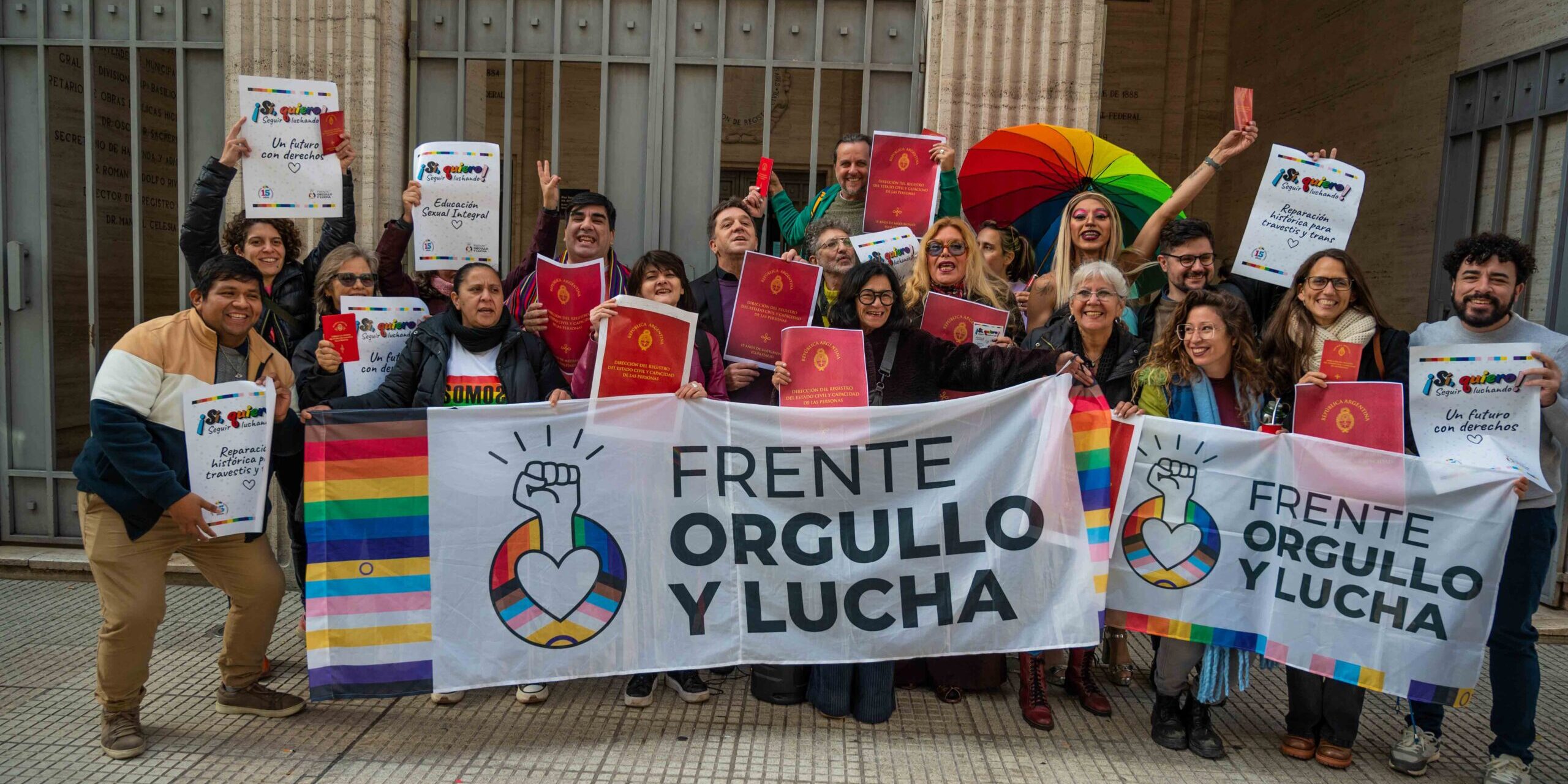
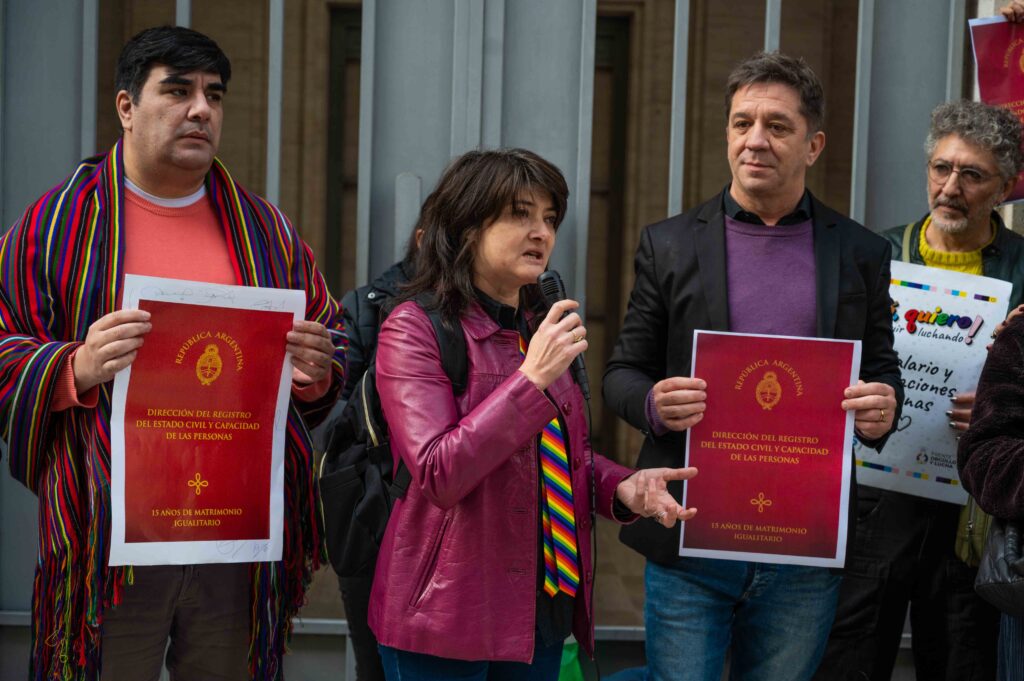
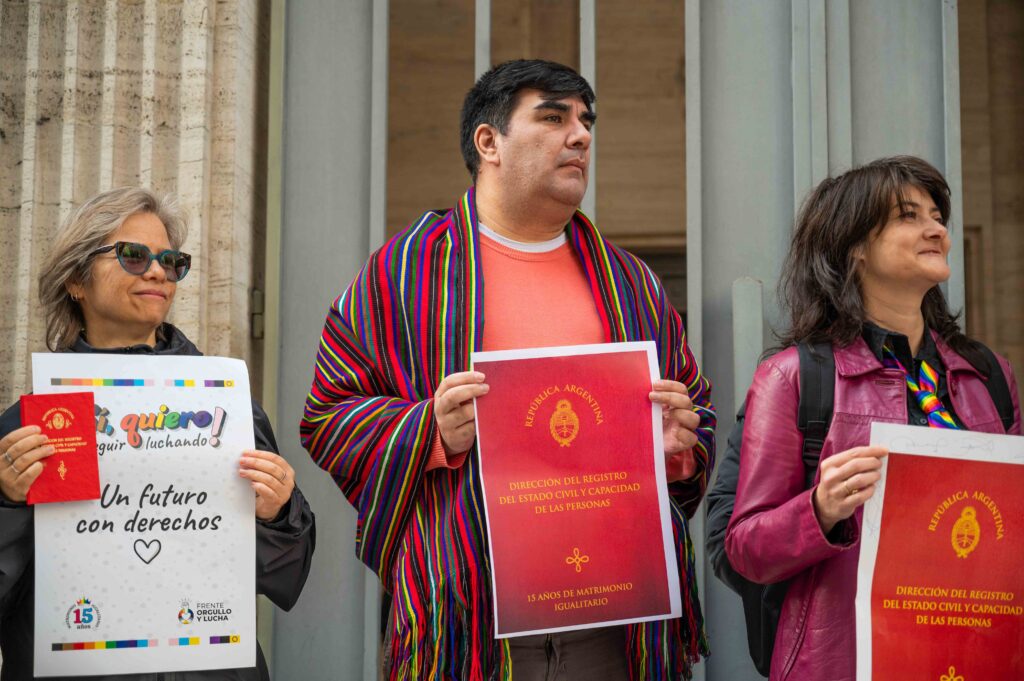
In front of the Civil Registry of the City of Buenos Aires, sexual diversity activists held a "booklet demonstration" to celebrate the 15th anniversary of the Equal Marriage law.


Share

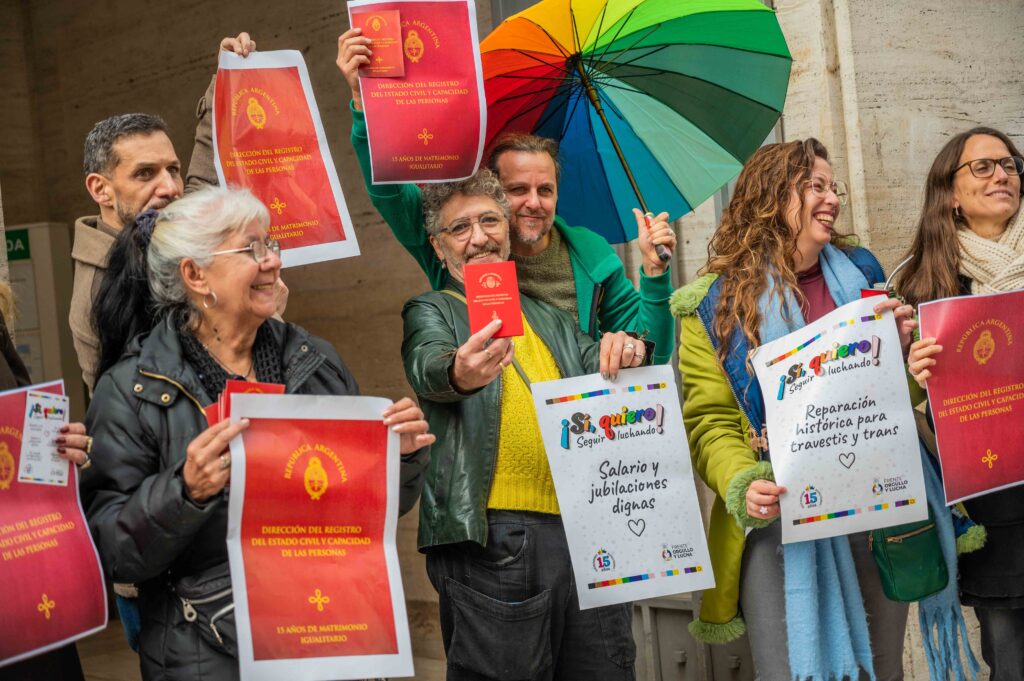
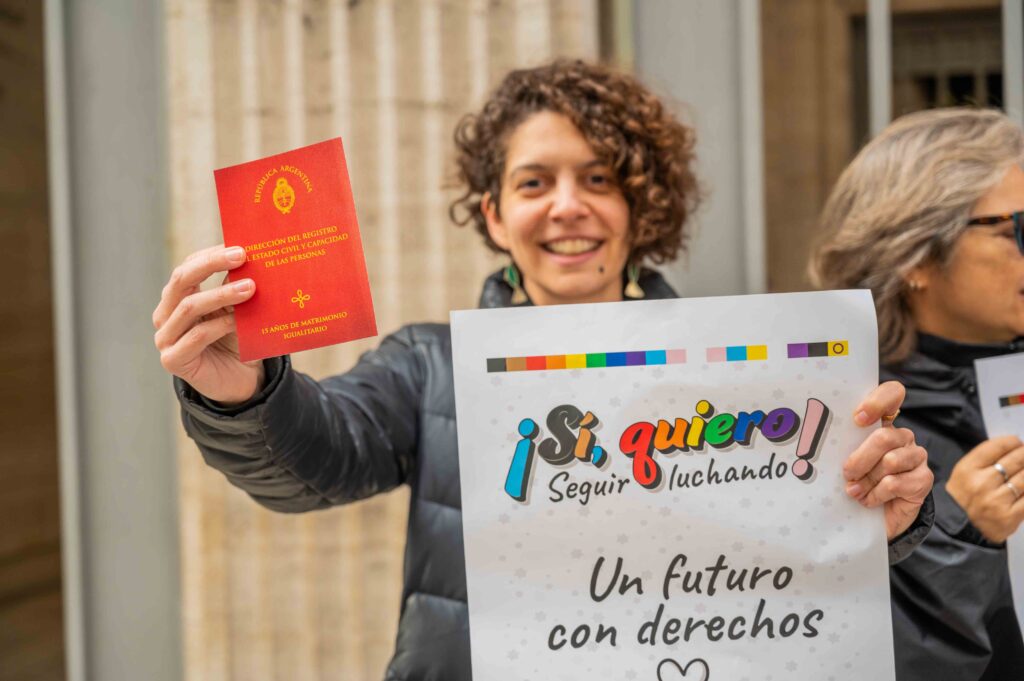
Fifteen years after the passage of the Equal Marriage Law , LGBTQ+ activists and allies held a demonstration in front of the Civil Registry in Buenos Aires, with music, vibrant colors, and their red marriage certificates held aloft. Their goal: to celebrate and defend this law, passed on July 15, 2010, on its anniversary and in a context of attacks on hard-won rights.
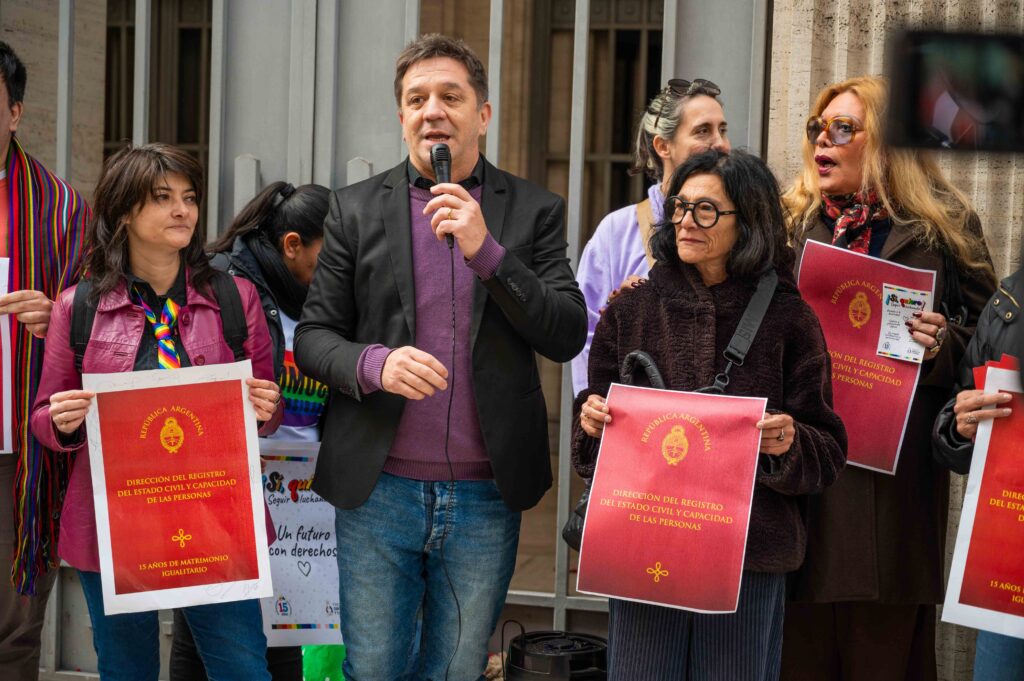
“This historic moment deserves to be celebrated, but also, of course, it deserves to be defended against the far-right’s attack on equality, diversity, and democratic coexistence,” activist Martín Canevaro, a member of 100% Diversity and Rights and the Pride and Struggle Front , which coordinated this activity along with other organizations, told Presentes
The activists emphasized that this law expanded rights for the LGBT+ community by recognizing the legal equality of same-sex couples. Furthermore, it paved the way for new legislation guaranteeing rights, such as the Gender Identity Law , passed in 2012, and the possibility of registering children with two mothers or two fathers.
“This law changed our lives in general, and my family’s in particular, because it paved the way for us to register our children as having two mothers. Until then, only one of them had parental rights,” Paula Llewellyn of 100% DyD shared with this agency. “Defending it now is crucial because they’re going after everything, including us,” she added.
Activist Greta Pena, former director of INADI ( Racism) and of the Undersecretariat of Diversity Policies at the Ministry of Women, Gender and Diversity , married her partner at this civil registry 15 years ago. “We didn't want to enter this institution to assimilate, but rather to create a more democratic form of family. And that was achieved: after marriage equality came the possibility of procreative freedom, of being able to form families where desire and will were the guiding principles. Today, heterosexual couples can put their surname alongside their partner's, or even put it first. Then came the Gender Identity Law and later the possibility of accessing a legal, safe, and free abortion,” she told the participants. Former Minister of Gender, Elizabeth Gómez Alcorta, was also present at the event.
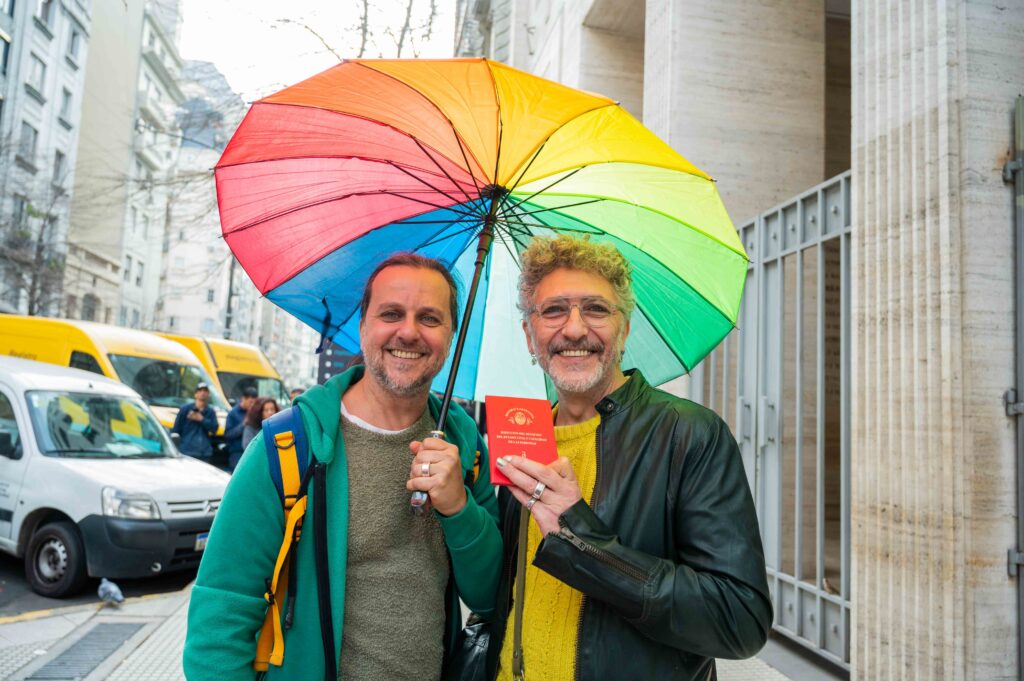
Outside the civil registry office, José and Gerardo huddled under an umbrella in the colors of the Pride flag, proudly displaying their wedding rings and carrying their red marriage certificate. “We came to celebrate being together, getting married, and having rights. We didn't need this to be together, but we did need it to have the same rights as everyone else. We stopped being second-class citizens,” Gerardo told Presentes . José added, “It's only been 15 years since we started being treated equally, it's not very long. We still need more rights.”
The organizations that make up the Pride and Struggle Front issued a statement commemorating the 15th anniversary of the passage of the equal marriage law in Argentina. In it, they highlight the achievements made possible by this legislation and warn of the current hostile environment facing the LGBTQ+ community, given the attacks and contempt shown by the government of Javier Milei. In this context, they called upon all political, labor, cultural, academic, and other representative sectors of society to endorse the following points: “Reject any proposal that attempts to curtail, undermine, or diminish human rights in Argentina. Support the rights of LGBTTTINB+ people, reject hate speech and the dismantling of public policies on human rights, gender, and sexual diversity. Support proposals and policies aimed at strengthening human rights, equality, and non-discrimination based on sexual orientation, gender identity, and sex characteristics. Renew support for LGBTTTINB+ networks and associations that defend and promote human rights, striving to converge in common, multi-sectoral, multi-party, and cross-cutting spaces to defend the rights already achieved.”
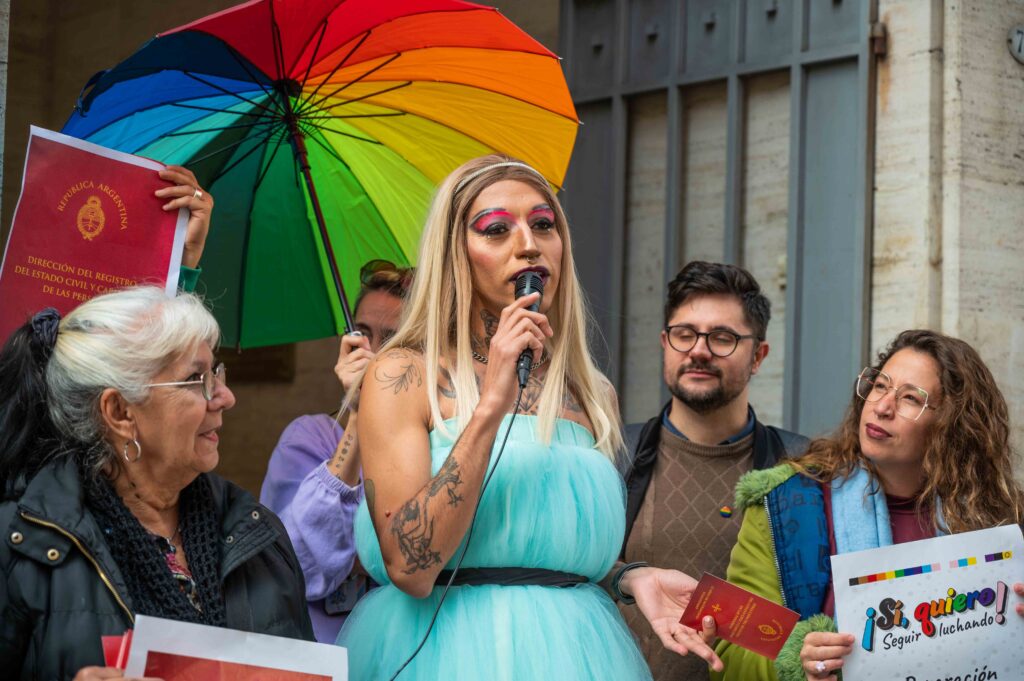
“I would like to remind everyone that this law was achieved through a collective struggle. I believe that today, more than ever, it is necessary to unite. Let us not forget that the conquest of rights is a collective struggle,” said La Criada during the event , which she attended wearing a light blue tulle dress.
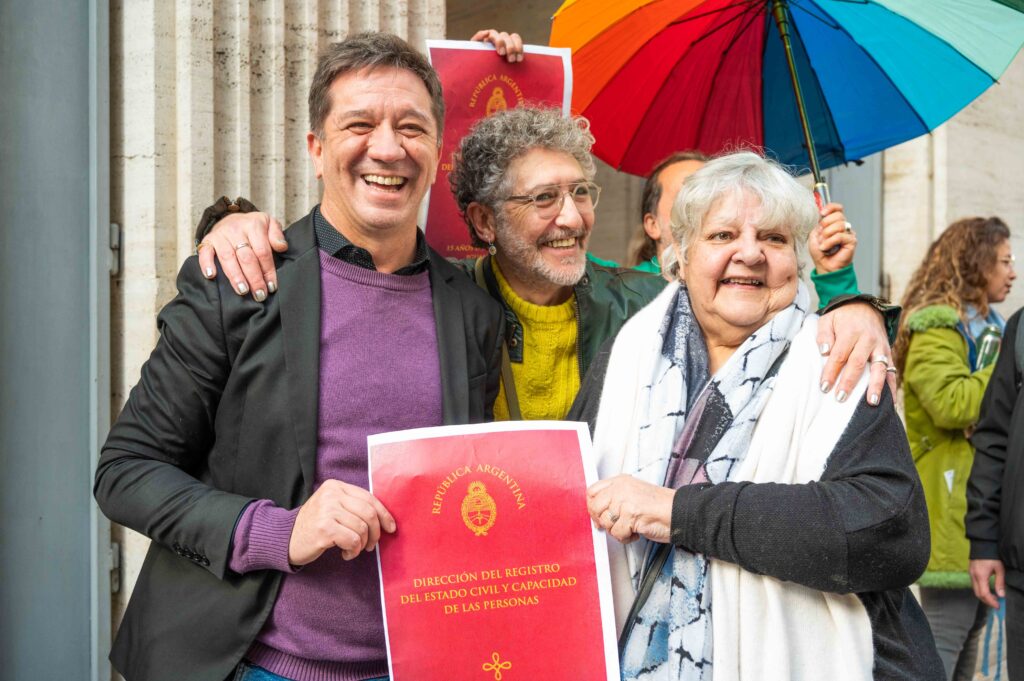
Dario Arias, co-founder of Conurbanes por la Diversidad and co-secretary of ILGA-LAC , wanted to acknowledge the activists from all provinces of the country, the universities, and the movements that dedicated themselves to a struggle that was truly nationwide. “We want to send a message of strength and optimism because they will not defeat us. And we will be able to move forward in defending and achieving more rights and defeating the neo-fascist and far-right projects,” he concluded.
The passage of the law was the result of more than 30 years of activism for LGBT rights. It was also the result of the political decision of the progressive government at the time, led by Cristina Fernández de Kirchner.
We are present
We are committed to journalism that delves into the territories and conducts thorough investigations, combined with new technologies and narrative formats. We want the protagonists, their stories, and their struggles to be present.
SUPPORT US

FOLLOW US
Related notes



We are present
This and other stories are not usually on the media agenda. Together we can bring them to light.