

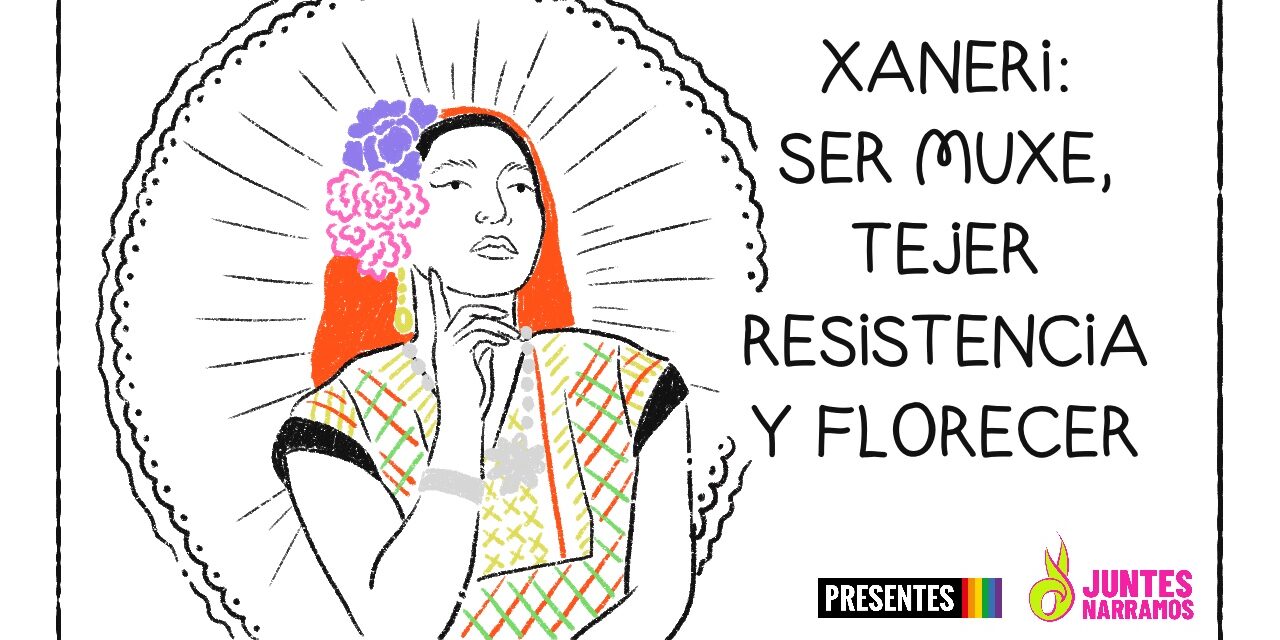
The story of Xaneri: Being muxe, resisting and flourishing
She grew up as a muxe girl in the Isthmus of Tehuantepec. In the city, she experienced sexist violence and identified as transmuxe. Everywhere she goes, she is Xaneri, the one who weaves with her ancestors and lives her identity without fixed categories, embodying diverse childhoods and adolescences.


Share

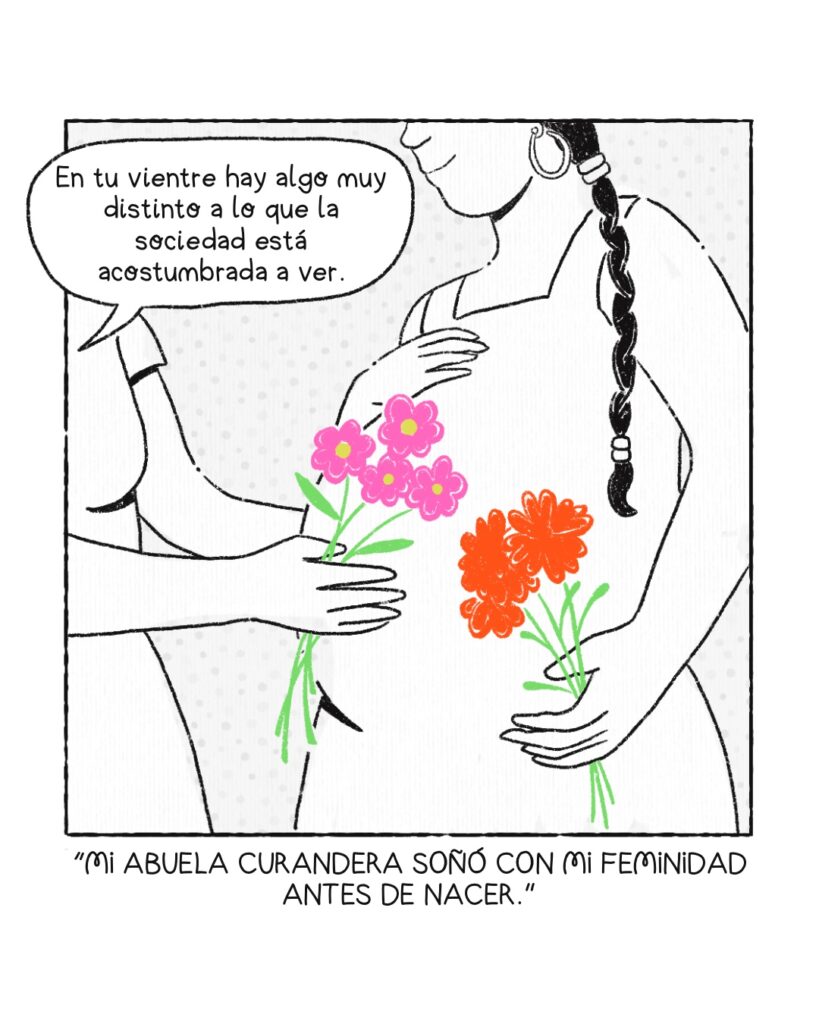
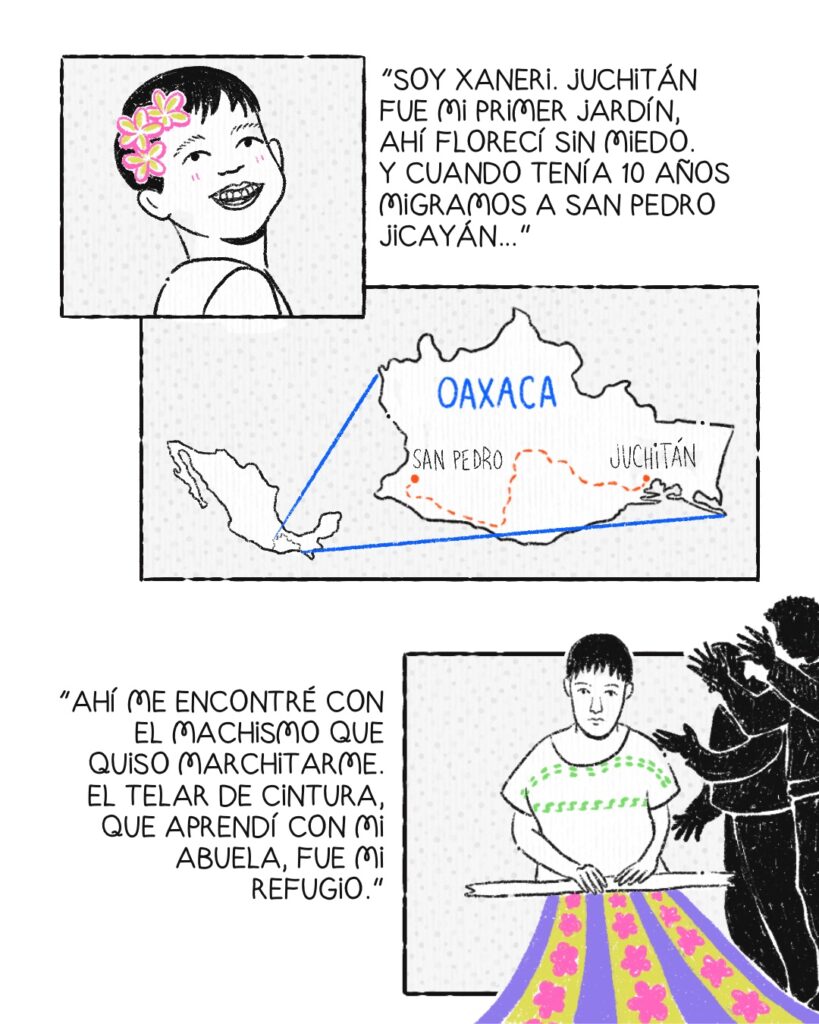
Xaneri was born in Juchitán, in the Isthmus of Tehuantepec in Oaxaca, into a family that embraced her femininity from childhood. Her paternal grandmother, a healer, sensed it even before her birth: she was special. In her childhood, she was able to freely express her femininity and was recognized as a muxe huini , the Zapotec term for muxe girls .
Everything changed in her adolescence when she migrated to the Costa Chica region, to San Pedro Jicayán, where she faced gender-based violence. There, she had to hide her femininity and weave in secret. This activity became an intimate form of resistance. Although she was recognized as muxe from a young age, her appropriation of the term has been a personal and profound process: she redefines it through tenderness, textiles, and flowers.
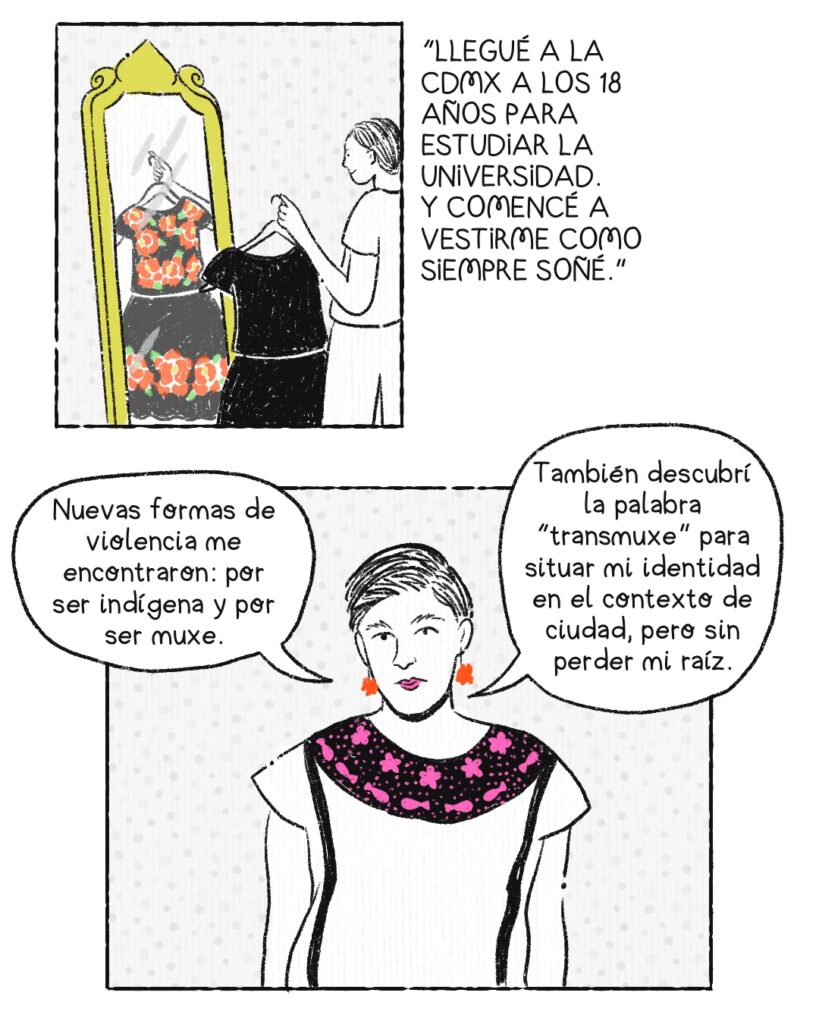


Xaneri identifies as transmuxe in urban contexts, and as muxe' gunaa —one who wears women's clothing—in the Isthmus. She does not see her identity as a third gender or a fixed category, but as a living identity of duality and freedom. Her muxe identity is expressed in both feminine and masculine aspects.
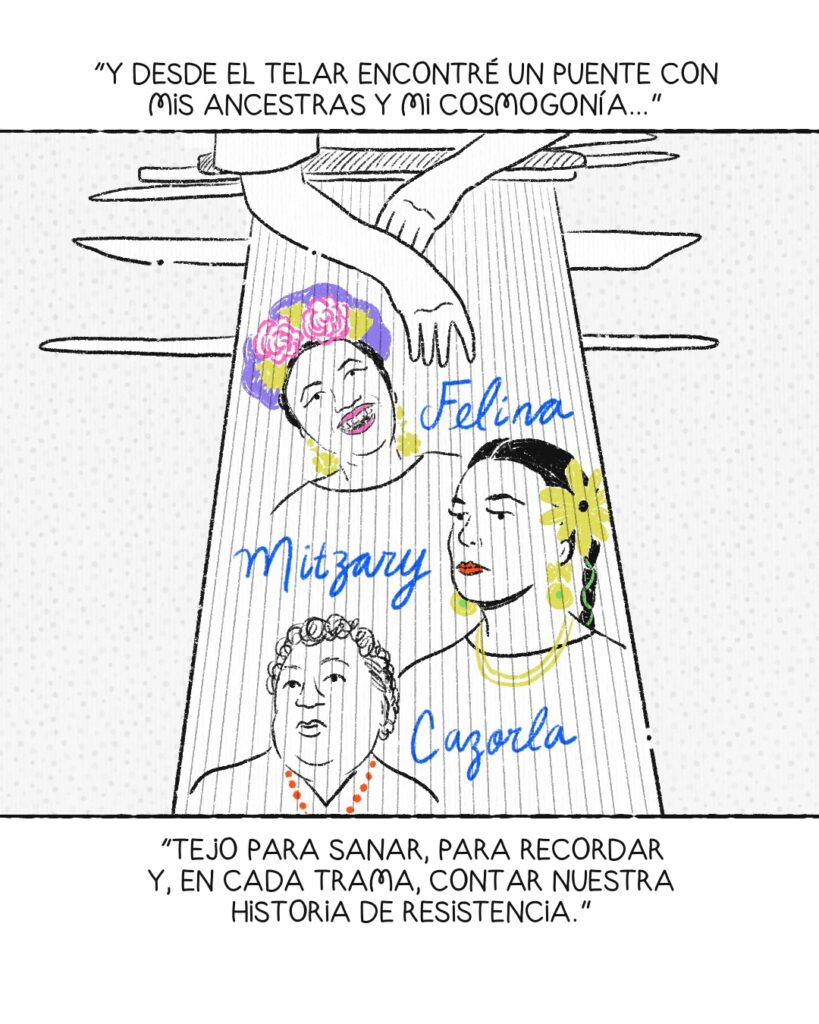
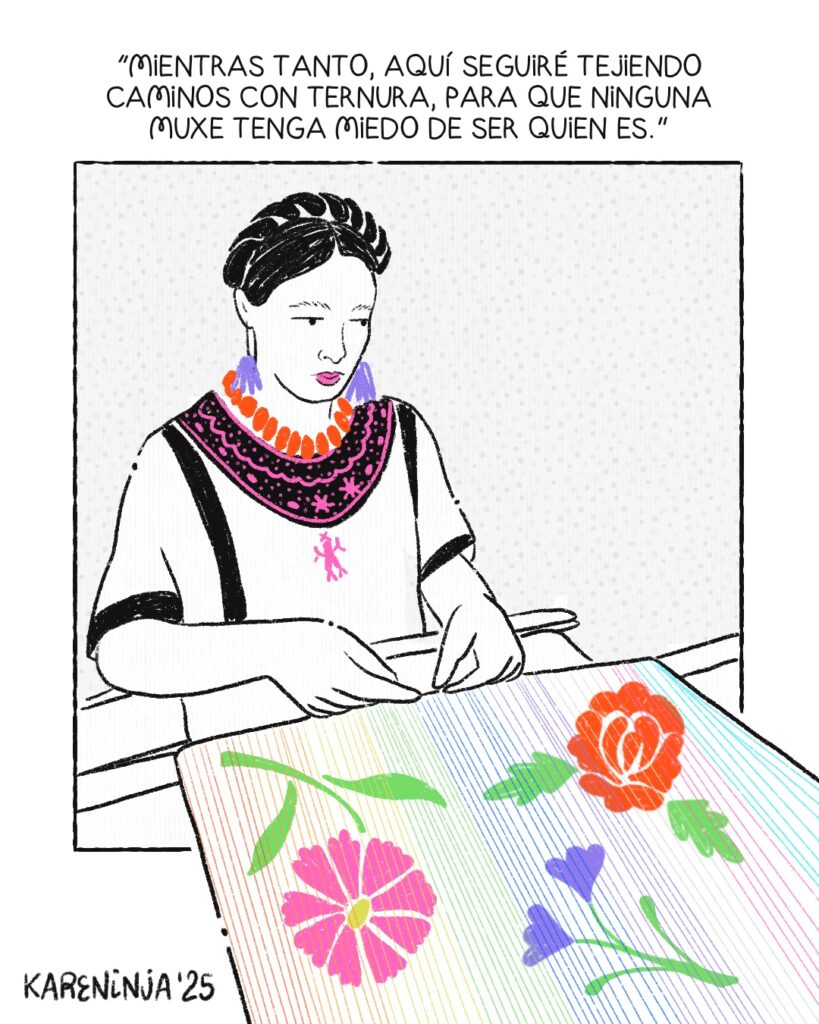
An essential part of her life is the backstrap loom, which she learned from her Mixtec grandmother. For her, weaving is more than an art: it is a way to heal, to tell her story, to connect with her ancestors, and to resist. Her weavings tell stories of pain, joy, and dignity.
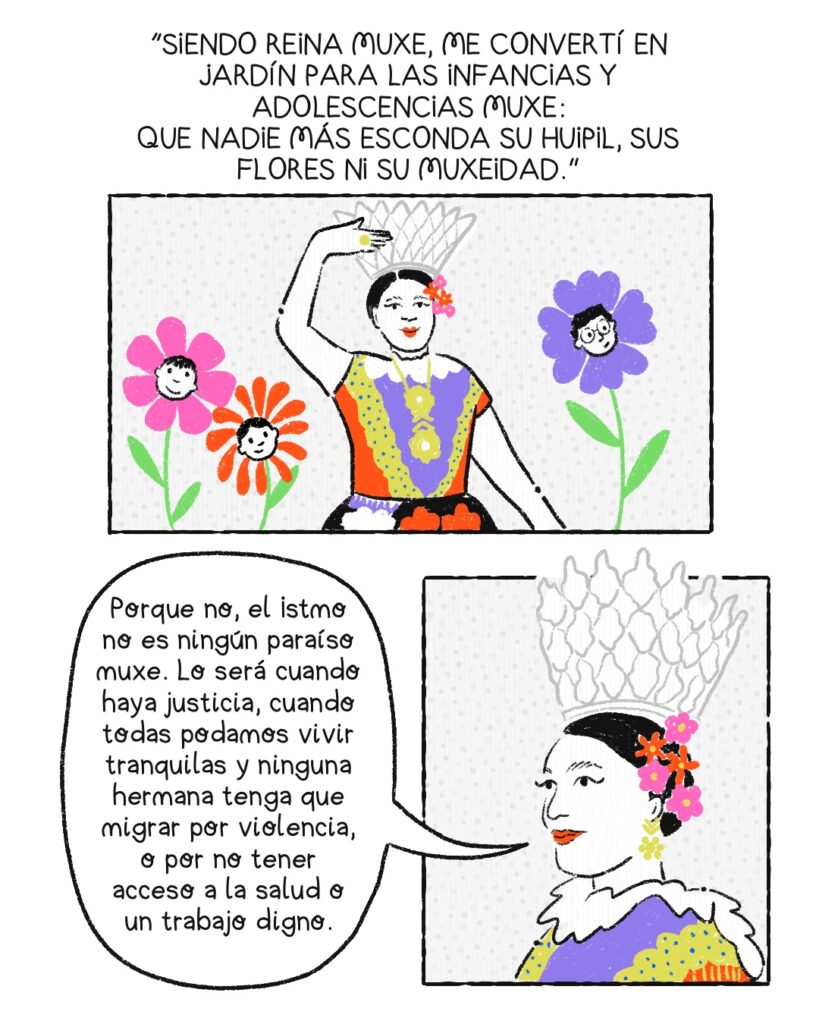
Xaneri doesn't walk alone: she recognizes other muxes like Felina, Cazorla, Mitzary, and Pilar Salinas. She also recognizes those who have been murdered. She denounces the fact that the Isthmus is not the paradise many imagine for muxes: violence, forced migration, and lack of access to healthcare and employment persist.
muxe children and adolescents . She offers herself as “a garden” where others can grow and flourish without fear, wearing huipil and expressing their femininity. She believes in tenderness as a radical political force, as a way to heal, resist, and support one another. For her work of care and visibility, she was crowned Muxe Queen in Oaxaca (2023) and in Mexico City (2024). This July 5th, she relinquished her crown. Her commitment continues: she remains a guide and a refuge so that others can live their muxe identity with dignity, pride, and love.
Juntes Narramos is a project by Malvestida , Volcánicas , GirlUp , Balance and Presentes to strengthen and amplify the voices of young people through narratives of diversity.
We are present
We are committed to journalism that delves into the territories and conducts thorough investigations, combined with new technologies and narrative formats. We want the protagonists, their stories, and their struggles to be present.
SUPPORT US

FOLLOW US
Related notes

We are present
This and other stories are not usually on the media agenda. Together we can bring them to light.