

“Caregivers”: a documentary about the encounter between trans women and older adults
Diversity in the world of care, as told in an Argentine documentary about trans women who gained access to the Santa Ana public nursing home through the labor quota law.


Share

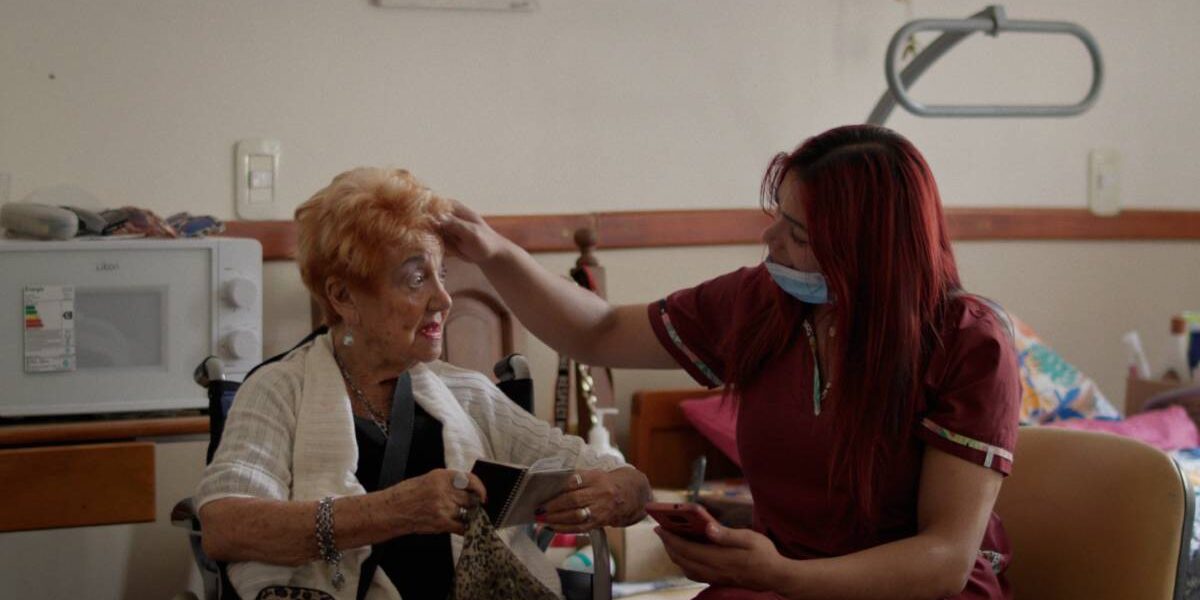
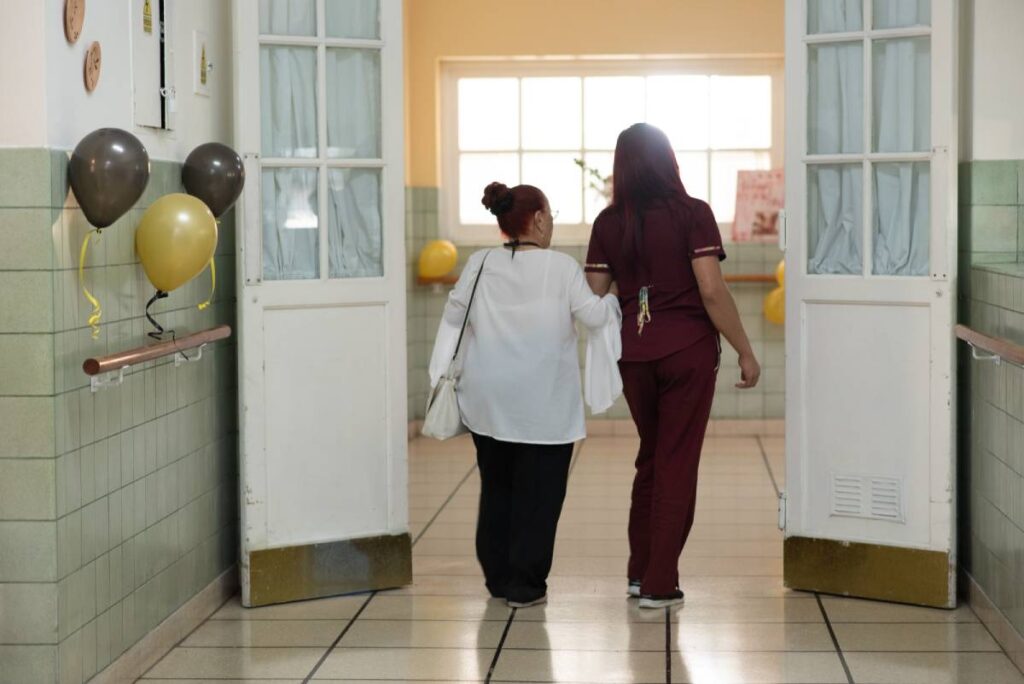
BUENOS AIRES, Argentina. Memories, life, laughter, tenderness, melancholy. Everything converges within the walls of the Santa Ana public nursing home in San Andrés, Buenos Aires province. It is there that Cuidadoras (Caregivers) , a documentary directed by Martina Matzkin and Gabriela Uassouf, was filmed, portraying the work of three trans women in a public home for the elderly.
The caregivers are Luciana, Maia, and Yenifer, and the film chronicles their first days at the home. It also shows how, over time, they become more familiar with the residents and their work.
The play "Cuidadoras" premiered in June at the Gaumont cinema and will continue its run through the first week of July. It will then travel to Rosario, Tandil, and Santa Fe.
A formal job
For the first time, Luciana from Mataderos, Maia from Salta, and Yenifer from Paraguay have access to formal employment. Before that, they worked as sex workers. It's a common topic of conversation: how little they earn as caregivers compared to their previous jobs. At the time of the documentary, their income was low. Three years later, it's much less. Nevertheless, they continue to do the work.
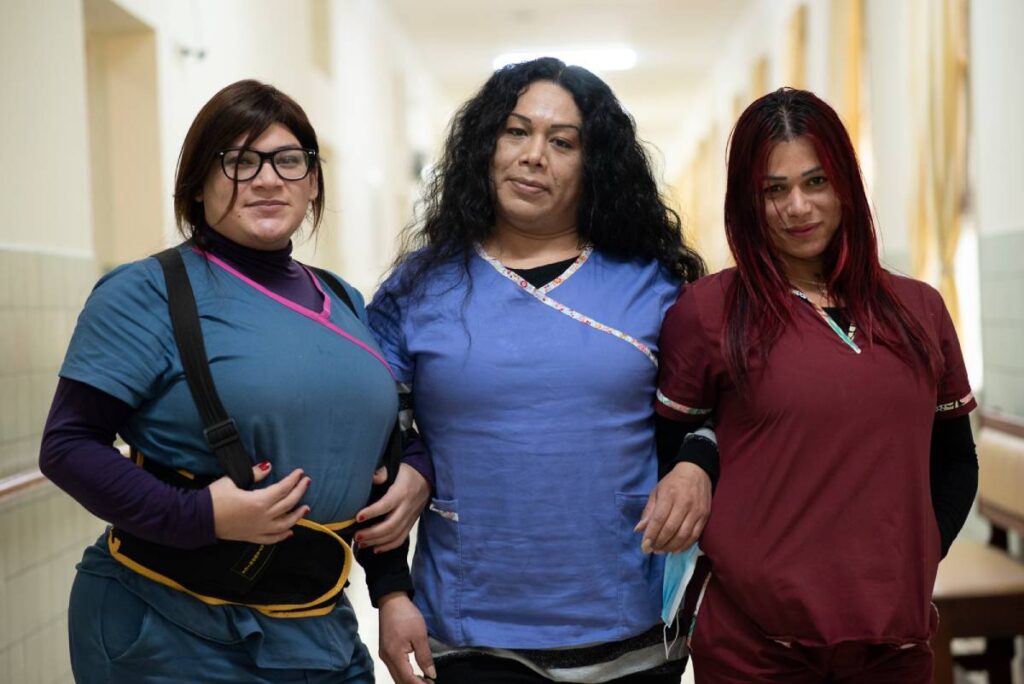
“The caregivers joined the home because of the opportunity the trans job quota offered at that time, allowing them to apply for government jobs ,” explains Rocío Pichirelli, the producer. Along with the directors, Martina and Gabriela, they were part of the development and organization of a collaborative effort to train trans people in elder care.
This training was conducted in conjunction with the Mocha Celis Civil Association, the Red Cross, the 3 de Febrero University, the National Directorate of Policies for Older Adults, and the Secretariat for Children, Adolescents, and Families (SENAF), which is now completely underfunded. The Santa Ana Home is facing the same fate and is currently in a critical situation.
“Santa Ana is one of the few public nursing homes we have in our country. Thanks to all this collaboration, we were first able to offer a course for the girls to train in elder care. And then, the internships. Some at that home and others at PAMI, where some of our colleagues continue to work,” Pichirelli explains.
Life at home
The directors chose to focus almost exclusively on what happened inside the Santa Ana home. Little is known about the caregivers beyond what the film reveals through their interactions with each other, with other professionals, and, of course, with the people they care for.
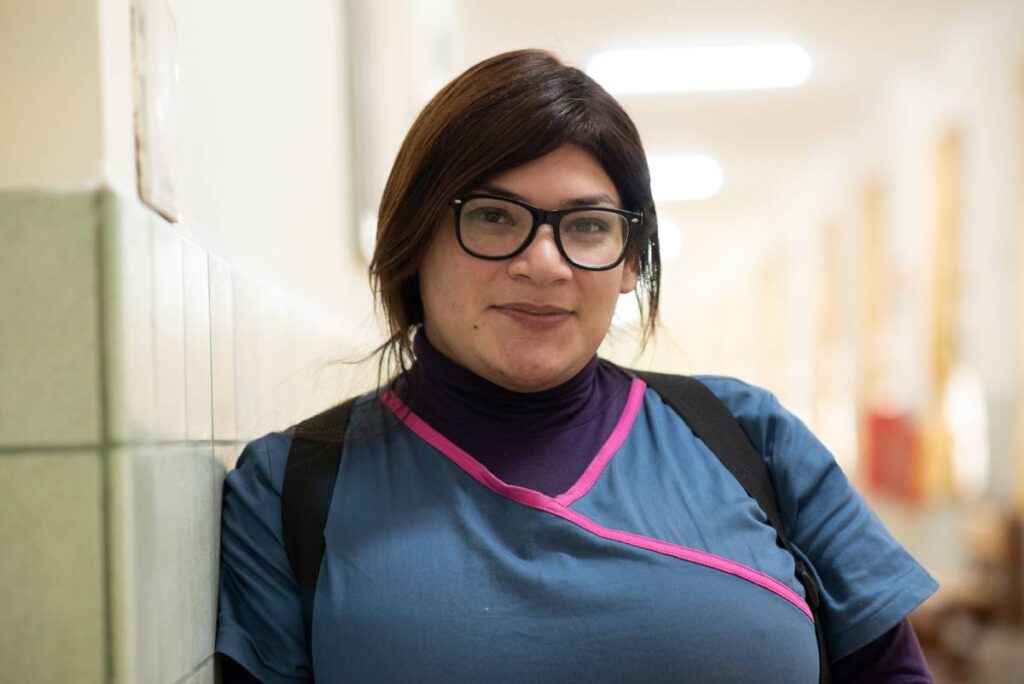
“At one point we considered venturing out a bit more from the house. In fact, we filmed some things, but we realized it was more interesting to focus on that place, on that kind of capsule where the encounter takes place. Where each person carries their own story. And what is formed within that community. We felt it was richer and more interesting to stay inside,” says Martina Matzkin.
“The documentary’s story was bolstered by echoing what many trans women were asking for during the pandemic: the possibility of a job, of change, of taking a new direction in life. And so, this collaboration between civil society and the state paved a new course, leading to the existence of these caregivers today. Ultimately, what remains as a lived experience is more important than what remains on the screen,” adds Gabriela Uassouf.
A counter-discourse on love
One of the residents addresses Maia using masculine pronouns. Her colleague corrects her. Maia smiles and lets her hair down. Using the correct pronoun is still one of the challenges in this society. However, it doesn't seem to create major tension in the development of the bond between them and their caregivers.
“ not the first time they’ve used the wrong pronoun; it’s common. What’s unusual is when someone uses the correct pronoun, even with their gender expression,” the producer says about those scenes. “We want to highlight that anyone can make mistakes. For me, it will probably be difficult when I’m older and have a more progressive identity,” Uassouf adds.
For both the directors and producers, the film's objective is to generate debate. “There's a reality: the women who appear on camera and so generously shared their stories and gave their all find it very difficult to sustain their work with the meager financial compensation they receive. So we must continue pushing for healthy work environments and opportunities for advancement for both trans and cis people,” says Matzkin.
“It’s a time of direct and rather brutal attacks on successful public policies. But spaces for civil society still exist, where ideas and alternative ways of life are generated and considered . Human quality remains—that of the caregivers, the residents, the people who are being trained. That’s what we want to defend and continue supporting,” Pichirelli adds. “It’s about destroying through hate speech, but often that hate speech is based on lies and misinformation. So, suddenly, bearing witness to things that work, laughing, observing, learning, connecting, having empathy—I think that can generate a counter-narrative,” Matzkin contributes.
Talk about what's important
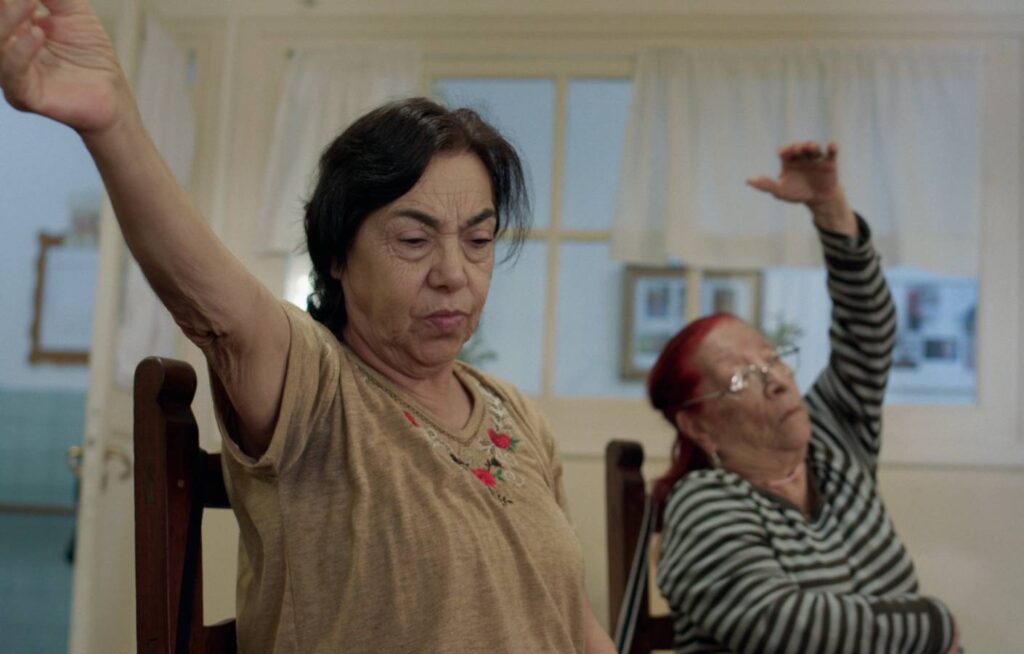
“You have to give it your all beforehand. That’s what’s important,” Alicia tells Maia, who is making the bed. In their first few meetings, Alicia chooses topics of love to talk about with her caregiver, Maia. After a few weeks, Maia arrives and talks to her freely about how her relationships are going.
“Alicia always felt like talking about love; she was a bit of an advisor. But it was also funny how she would give Maia love advice and Maia would listen so patiently. Eventually, Alicia found someone who resonated with her, someone who could share some things. “For us, it was about listening to the conversations that came up naturally and starting to choose or refine how to tell a story,” Uassouf explains.
“There was a selection and follow-up of those stories. It was a matter of carefully observing reality and trying to guess where it was going.”
“Working as a caregiver is wonderful for me.”
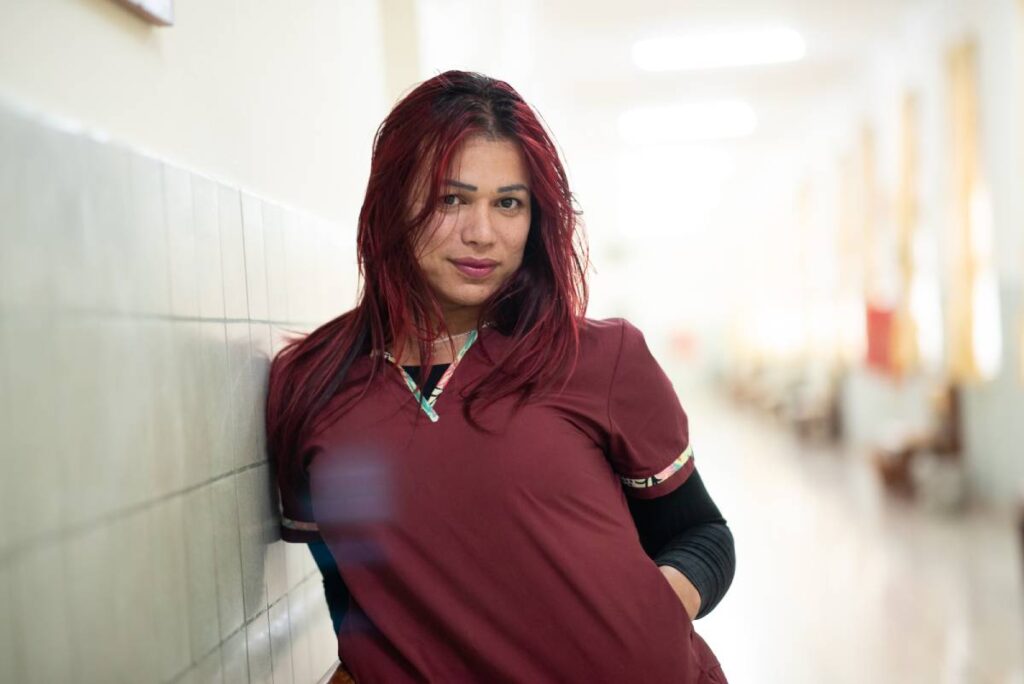
Yennifer Franco Pereira is Paraguayan and the only one of the three caregivers in the film who speaks Guarani. If anything characterizes her appearances in the documentary, besides tenderness, it's a sense of camaraderie. Alongside Vicky, a former folk dancer whose dream (now fulfilled) was to star in a film, she listens to Argentine folk music. She asks questions, listens, and looks for more music to keep the conversation going. Later, she also appears in the garden of the Santa Ana Home, sitting next to one of the women. The two laugh, throw crumbs to the pigeons, and speak in Guarani.
That scene, Yenifer says, is one of her favorites. “I like it when I feed the pigeons with a resident. Because of advanced Alzheimer's, she was ceasing to speak Spanish and was increasingly using Guarani. And since I also know how to speak it, we could communicate,” she tells Presentes .
Yenifer was one of the trans women invited by the film's production team to be part of the documentary. "I think it's so important to talk about our work because there are still many people in society who judge us for our gender identity and believe we aren't capable of working like anyone else," she says.
“Working as a caregiver is wonderful for me,” she tells Presentes . “Caring for someone doesn’t sound so easy, but it’s something I love doing. I have an excellent working relationship with the elderly people, and every day I see their appreciation and gratitude. That makes me feel so good and confident. Beyond the fact that I love my job so much, it’s essential for my livelihood, just like we all do.”
“We’re all going to get old.”
The work of a caregiver, for now, is not enough to get rid of all the prejudices that society has against transvestite and trans people.
“People still point at me. When I go to work so early, and it’s other people going to work just like me, I hear so many snide remarks and insults. It happens day after day. It makes me angry, but I always try to ignore people’s offenses because at work I have to arrive calm and with a lot of empathy. I don’t allow the prejudice of ignorant people to affect me,” she adds.
Three years after the documentary was filmed, Yenifer continues to choose to be a caregiver.
“At work, I continue to learn. I gain experience working as part of a team and communicating daily with all my colleagues to facilitate our daily tasks.” She adds, with some anger, “There is still a lot of discrimination. I believe there is discrimination against us, especially in the most vulnerable neighborhoods.”
“We can afford to grow old, something others can’t,” says Luciana, one of the protagonists in the film. The idea of older trans women is still an enigma for a population with a life expectancy of 40 years.
“Imagine if they had to assist us,” Maia replies to Luciana. For Yenifer, it’s also a mystery, and she acknowledges that, although there is discrimination against the elderly, it’s different. “The discrimination is different because, ultimately, we’re all going to get old.”.
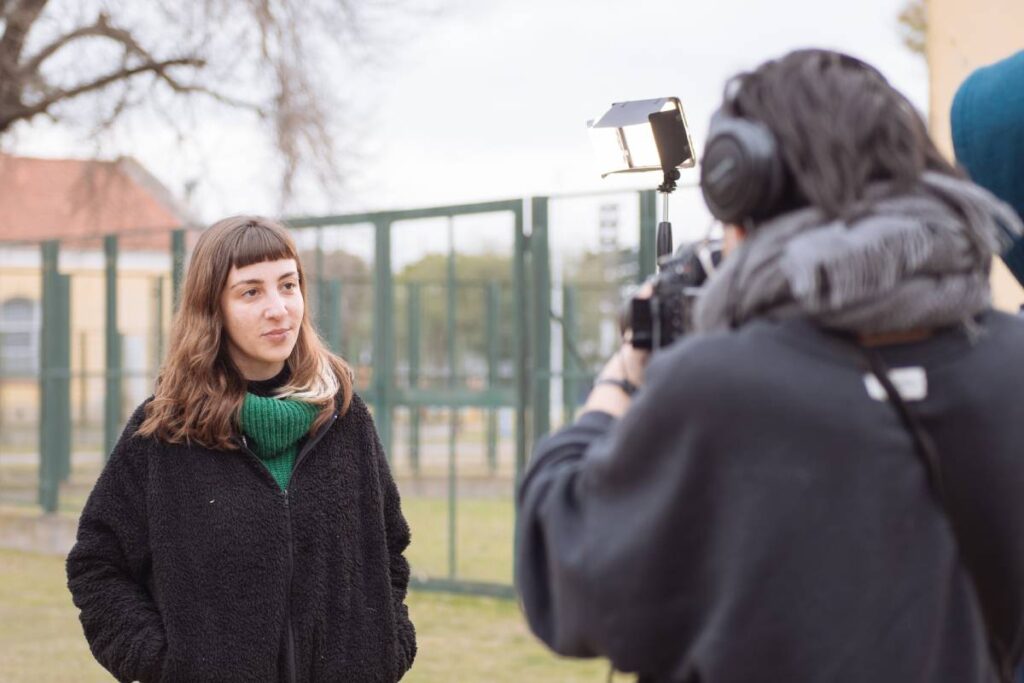
Cuidadoras is showing at the Cine Gaumont, Av. Rivadavia 1635, (CABA) until Wednesday, July 9th at 2:15 PM and 6:30 PM
It will also have screenings at the El Cairo cinema in Rosario on Thursday, July 3 at 8:30 p.m. and on Sunday the 6th at 10:30 p.m.
In Tandil, it will be shown on Sunday, July 6th and Tuesday, July 8th at 6 PM at the Espacio Incaa Unicen Tandil
We are present
We are committed to journalism that delves into the territories and conducts thorough investigations, combined with new technologies and narrative formats. We want the protagonists, their stories, and their struggles to be present.
SUPPORT US

FOLLOW US
Related notes
We are present
This and other stories are not usually on the media agenda. Together we can bring them to light.