

Pabllo Vittar: Drag Queen of Pride, from Brazil to the world
In this interview, Pabllo Vitar explores how she became a global queer star, breaking molds through her identity. She shares the stage with Lady Gaga, Nathy Peluso, and Madonna, and continues to use music as a space for political resistance.


Share

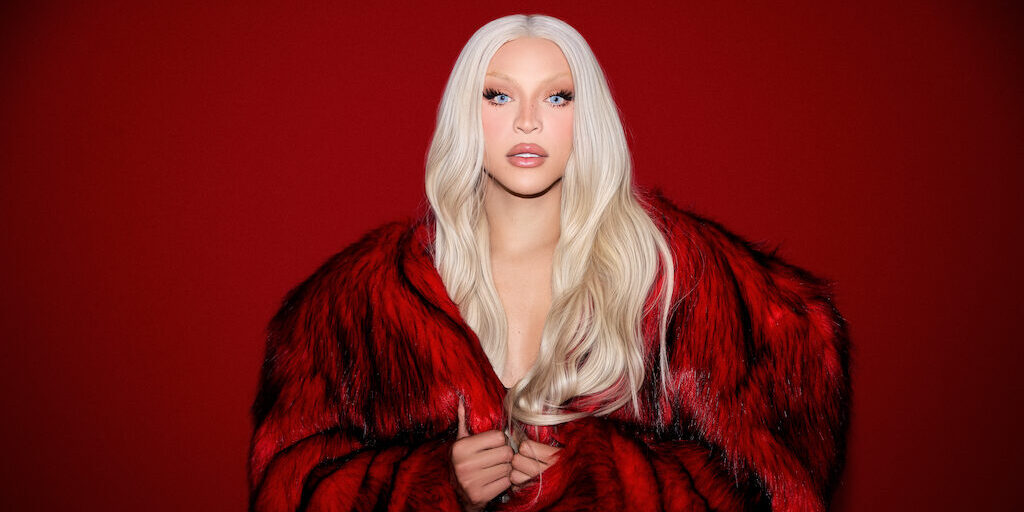
Pabllo Vittar is the first drag queen to perform at the legendary Rock in Rio, reached number one on Spotify Brazil, and toured the world—and continues to do so—with massive advertising campaigns. But she's not someone who came to fit in. She came to blow everyone away with glitter . More than a pop star, she's a fabulous anomaly, a drag queen who transforms hit songs into discourse and the dance floor into a battleground. From a Brazil ablaze with conservatism and desire, Pabllo exports twerking, sweat, and highlighter as weapons of revolution. In this interview with Presentes, she talks about bodies, languages, idols, politics, and the glorious and dangerous vertigo of being oneself in front of the entire world.
You need a certain kind of body to do what Pabllo Vittar does. Not just a body trained for jumping, thongs, and heels; you need a mutant, undisciplined body, capable of dancing when everything is on fire.
Born in Maranhão, in northern Brazil, one of those regions where the heat and hostility are brutal. They grew up in a country where Catholic devotion coexists with police brutality, raised by a single mother. When called a "Northeastern faggot," they responded with a soprano voice, shaved legs, and a stage presence that could have been priestly, had they not preferred the dance floor as their altar.
Pabllo Vittar is already a mythological figure straight out of some futuristic queer poem: a siren of the digital age who sings of love, revenge, and pleasure. She's compared to RuPaul, Lady Gaga, and Beyoncé, but those comparisons crumble the moment she steps on stage. Vittar is far from an imitation; she embodies. Perhaps this is the legacy of a superb lineage of drag queens who came before her, another genealogy, that of Latin transvestites, those who found no place in academies or on mainstream television, but who nonetheless learned to pose, to die, and to rise again.
There's something profoundly political in the way she moves: every high note is a dagger to the throat of conservatism, and every voguing , a mockery of the heterosexual order. It's no coincidence that the queer people of the favelas, the nameless teenagers, love her like a pop goddess, a marginal figure, one of those born on the periphery who end up setting the city center ablaze.
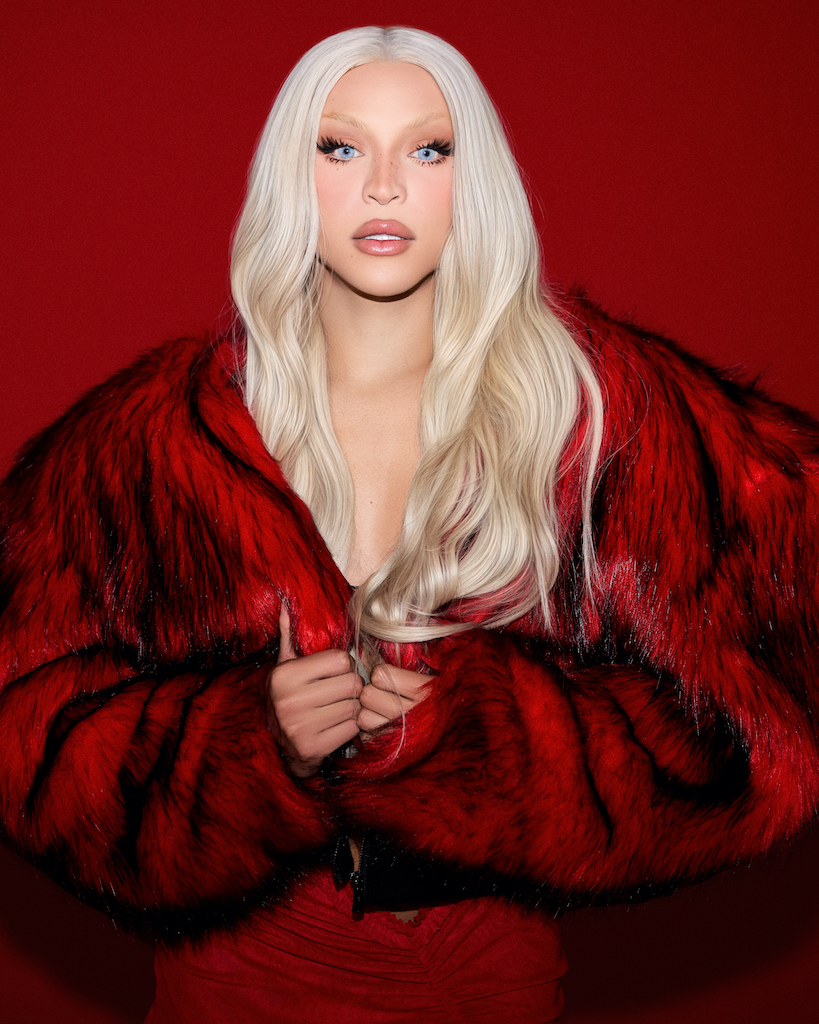
Violence was a constant in her upbringing, but so was her will to live and her refusal to apologize. From that margin, she began to build an identity that would transcend pop. There is no neutrality in her aesthetic or her music. Pabllo's body doesn't fit the pre-established norm, and that's what makes her so explosive. Her figure—tall, hyperbolically feminine, vocally exuberant—wasn't molded by the industry, and yet it was imposed on the industry by a legion of fans who felt represented by no one else. Transvestites, dissident teenagers, undocumented trans girls, kids from the favelas, racialized bodies. What the hegemony makes invisible, Pabllo sings and dances.
Music for LGBTQ+ rights and for all
During the Bolsonaro years, her existence was a provocation. In a country governed by a president who publicly rejected LGBTQ+ identities and dreamed of a nation without queers, without artists, without joy, Pabllo responded by dancing in stadiums, kissing her dancers on television, headlining international festivals. Her resistance was celebratory, but no less fierce for it. Her body—transvestite, racialized, popular—became a banner in marches, a backdrop in school occupations, a queer slogan in the favelas. When Lula took office, Pabllo headlined the concert that celebrated a new era in Brazil.
In the interview, she tells us that she doesn't sing to please everyone, that she sings to survive , to get revenge. To shine. Because in a world that insists on killing you, shining is a radical act. Loving, relaxed, kind, generous, always with a huge smile and a hearty laugh about to burst out. That's how Vittar presented herself on Zoom for this interview. We talked about Brazilian, Argentinian, and Latin American realities, about minorities in general, about the joy of pop music, her upcoming trip to Mexico, her desire to come to Argentina: a diva in all her splendor.
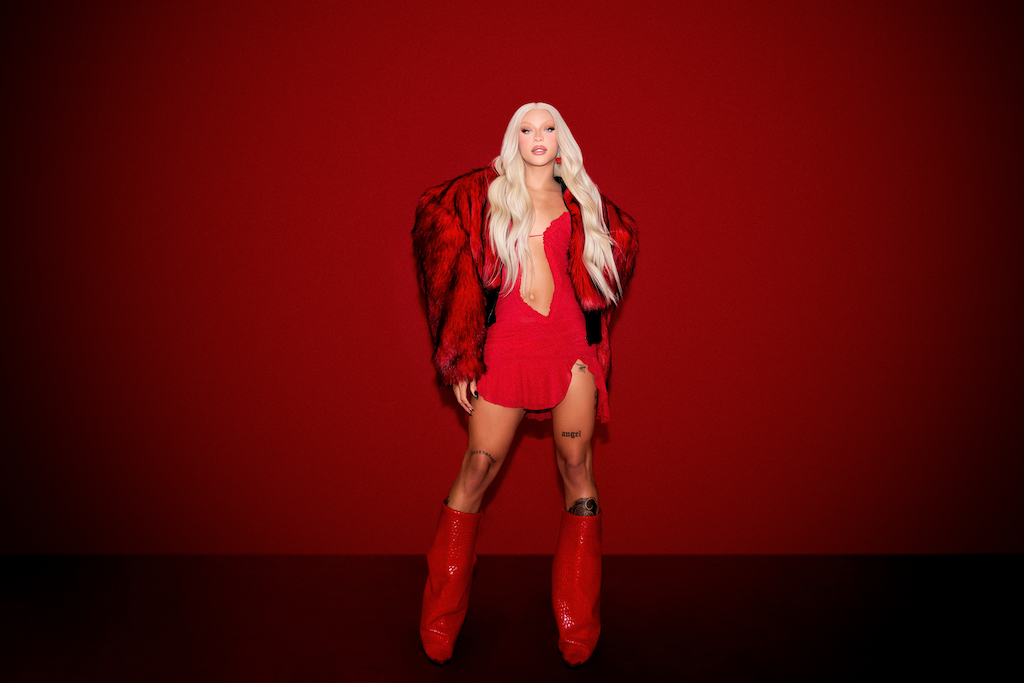
― Brazil saw you born, and the rest of the world quickly followed suit. What is it about that initial anonymity that is so strange, and what is it about global recognition that is so appealing now?
"I miss being normal (laughs). It's not that I don't feel like a normal person, but doing normal things like getting drunk in the streets, like I used to do when I was younger, that kind of thing. Now, whenever I can, and thanks to this, I'm traveling, and that's incredible. I was just in Japan; it was amazing. But one of the achievements of being a star is being able to change people's lives, with creativity, with strength, showing that it's possible to change your life; that it's possible to transform your dreams into achievements. That makes me very happy, having been able to fulfill a dream I've had since I was little: to be a singer, to be a voice, to be an icon, for my fans, for my family, for the community."
― Pabllo Vittar is an aesthetic manifesto, a political statement in heels. What becomes of you when the lights go out?
"My love, I am what you see here (more laughter). I am a very sensitive person, who suffers a lot with the personal things in my life. I suffer terribly with the love that I often can't have, moments that are taken from me, snatched away. But when I'm in Pablo Vittar, everything transforms into fantasy; I live my fantasy very fully and it's full of love. But when I take off the wig, I'm a very fragile little boy."
“I have always been proud of who I am.”
― Brazil, like most likely the rest of South America, is a very turbulent country that was, though not recently, governed by very conservative rhetoric. Were you afraid of being so explicitly yourself?
“For me, it’s very natural to be this way. I’ve been like this since I was little, you know? I remember when I was in school, always dancing and singing. I was never ashamed of being who I am, speaking up, highlighting my feminine side. I’ve always been very proud of it, because it’s who I am . My music would never be any different, because it’s me. When we were in the most conservative times here in Brazil, every time I went on stage it was like saying, ‘We won’t be silenced, we won’t give up on our dreams, on our rights.’ I was always full of energy to do more and more and more. They never managed to make me feel less.”
― Does it bother you when people ask about your gender identity, or do you see it as a political opportunity?
"It's always an opportunity to speak out, primarily to communicate. To speak out, above all, so that there isn't so much transphobia directed at my sisters and brothers. They won't silence me, I can't allow it, because they are my family, my brothers and sisters who are wonderful . It's always a way to educate society, a way to bring these issues to the forefront. I see pop, pop music in general, electronic music, everything we dance to, as a kind of political territory right now."
― Do you think pop music can change anything? Or perhaps just make people uncomfortable, and that's enough?
"We can change anything, whatever it is. And I know that very well. I think a lot about how most people lump many other rhythms together under the umbrella of pop music. But when I started making music, I always wanted to make pop music because it was pop songs that changed that boy into the person I am now. Yes, we can change other things too.".
From Copacabana to the world with Madonna and Lady Gaga
He danced with Madonna at what was the Queen of Pop's biggest concert, the 2024 show on Copacabana Beach in Rio. A year later, he returned with another megastar, Lady Gaga, for another massive show at the same venue. His collaborations don't begin or end when he steps off the stage.
― Regarding your collaborations now with Nathy Peluso, and previously with Lady Gaga, what do you gain from a feature and what do you contribute?
— Originality in both aspects: what I gain and what I contribute. I always look for artists who bring different approaches to the productions. I pay attention to how the artist performs, how they behave on stage, something that challenges me, that captivates me. All the artists I collaborate with have always captivated me, and I like their songs too. It's a beautiful job.
What did she do with Lady Gaga? When Gaga's song "Fun Tonight" was first heard in Portuguese, with a northeastern accordion, the rhythmic beat of the zabumba drum, and Pabllo Vittar's voice crying "I can't keep pretending everything is alright," something shifted—broke—on the official pop map. The Brazilian remix of the album "Dawn of Chromatica," curated by Lady Gaga, was born. And a moment was born as well: Pabllo Vittar's entry into the global canon, not through translation, but by making the mainstream speak her language.
Until then, northern pop divas had flirted with Latin culture, with queer culture, with the periphery. But this was something else entirely. Gaga didn't just open the doors to the acid-pink castle of "Chromatica": she let an Afro-Indigenous drag queen, with an electronic forró foundation, redecorate it. She invited her to change the very structure of a song. And Pabllo did it in her own way: painful and danceable. A remix that sounds like a screamed farewell in a gay bar in Recife and also like a victory: the victory of the abject body entering the club of goddesses. Without surrendering her voice, without whitewashing. Pabllo doesn't sing in English: she sings with hunger, with an accent, with a sweet rage. Lady Gaga had created "Chromatica" as an emotional science fiction planet, inhabited by queer and traumas processed through the beat.
Pabllo entered like someone arriving from a more earthy and precarious universe to dance on its own ruins. There's something irreverent and fierce in that fusion. As if, for the first time, a drag star from the Global South were not only being honored, but summoned to rewrite the architecture of international pop. The remix of "Fun Tonight" was an intervention because there's history there: the history of dead transvestites, feminized bodies expelled from the norm, poor queer people who dance to avoid dying.
And they came together on May 3, 2025, in Copacabana. Lady Gaga was arriving for the first time in over a decade in Brazil, which would welcome her with a free mega-concert. But before the first pink stage lights illuminated the sand, another diva took control: Pabllo Vittar, in her Club Vittar DJ persona. The event—part of the “Todo Mundo no Rio” project, which seeks to revitalize the cultural economy—brought together more than 2.5 million people, a record for a female artist on the beach. That night, Copacabana was the stage for a historic show and witness to a symbolic moment: the alliance between a drag queen from the Northeast and a global diva, sharing body and space. And Pabllo didn't see Gaga as a goddess; she illuminated her. And Gaga arrived on land already ignited by a local queer queen. The party wasn't just global: it was radically South American and dissident.
Fantasies without algorithms and with Nathy Peluso
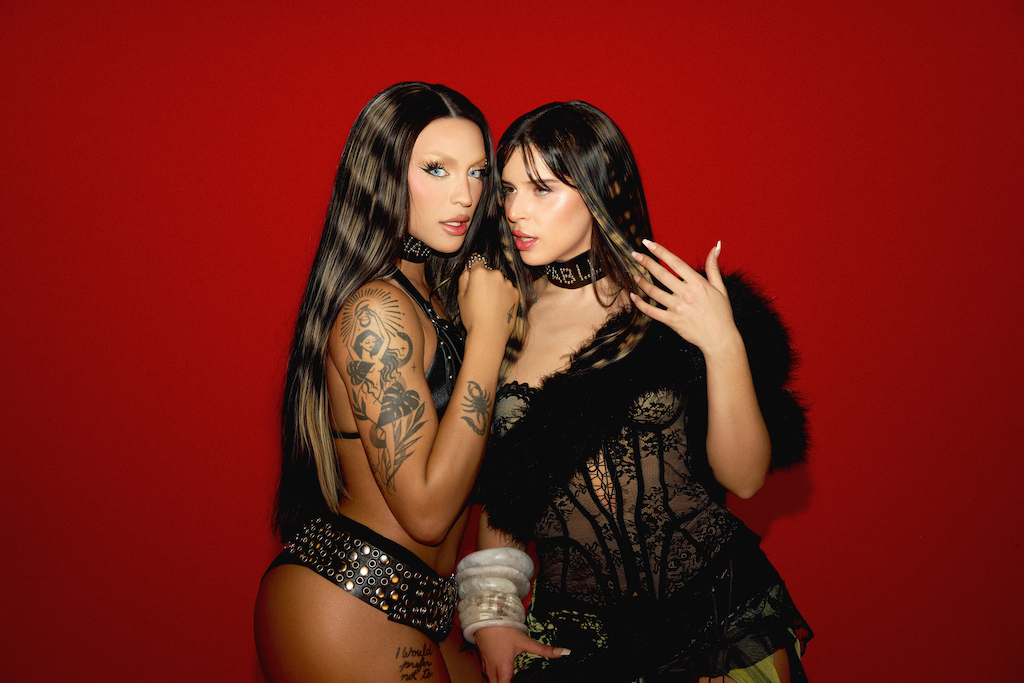
With Nathy Peluso, it's a different story: the scene unfolds in Rio de Janeiro, but it could have happened on a dance floor in Buenos Aires, at a carnival in Salvador, or at an after-party in Madrid with the scent of guava and smudged eyeliner. Pabllo Vittar and Nathy Peluso are face to face: two expansive, bilingual, theatrical bodies. A choreography brings their legs together, but what vibrates is something else entirely. A kind of tacit alliance: we know they didn't want us here, but we arrived dancing. In April 2025, they released "Fantasía," a song made to be blasted and listened to with your eyes closed. Reggaeton, carioca funk, a touch of soft electronica, and two voices that intertwine. Their meeting seemed inevitable. For years, they'd orbited on the fringes of Latin pop with a shared desire: to push the boundaries of genre, body, and language.
Vittar had already conquered territories previously forbidden to transvestism. Nathy Peluso, raised between Luján and Madrid, amidst rap and performance jazz, had been dismantling any preconceived notions of what it means to "be Latina" through her accent and excess. When their paths crossed, there was an instant connection. "Fantasía" is a song about sharing, but also about appropriation. Sharing desire and appropriating the beat, the body, the space that for so long was denied to voices like hers. The lyrics, light and catchy, don't need to go any further: the body already says it all. There is a fantasy, yes. But it's not heterosexual, nor white, nor politically correct. It's a fantasy that breathes, that sings in Spanish with a northeastern accent, that raps with breasts on full display. A fantasy that defies categorization, and that's why it calls to us.
In an increasingly homogenized pop world, where even rebellion has an expiration date, the encounter between Pabllo and Nathy functioned as a glitch . A system error that became a success. Because if there's one thing these two artists share, it's that they built their careers from the margins and with their whole being.
“Let's unite so that we are heard.”
― If you were to cease being Pablo Vittar tomorrow, what would be your last act?
— Oh, oh, I don't know, I don't know (laughs). It would be something very Brazilian, I suppose, right? Something that people would say years later: “Please, Pablo, come back to music, we want more.” Something very much my own.
― I would like you to give a message to the community in Argentina.
“Yes, I know you’re going through a very difficult time. But it’s also a time when we have the opportunity to unite to achieve whatever it takes, to be heard… You know what? All minorities unite to do something better and change this situation, like the one that’s plaguing Argentina right now. Just like we did here in Brazil and managed to change our political landscape, I believe that Argentina will soon have moments of happiness and will regain faith in everything. That’s my wish!”
Pabllo Vittar puts on makeup like a warrior, moves like a star, and laughs like someone who's already won. Because she has won.
She doesn't sing just for pleasure. She sings to live. She sings so that others can live. In one video, we see her spitting fire; in another, destroying a prison; in all of them, she mocks the cis mandate, the white mandate, the mandate of shame. She sings from the future. She is a direct consequence of the trans women who were murdered, of the gay men who never made it, of the dissidents the system tried to erase.
That's why it's so unsettling. That's why it's so moving. She sings for those who couldn't sing.
We are present
We are committed to journalism that delves into the territories and conducts thorough investigations, combined with new technologies and narrative formats. We want the protagonists, their stories, and their struggles to be present.
SUPPORT US

FOLLOW US
Related notes


We are present
This and other stories are not usually on the media agenda. Together we can bring them to light.