

This is how access to sport benefits trans and non-binary youth
Trans and non-binary youth have always played sports. Benefits and advantages for emotional and mental health.


Share

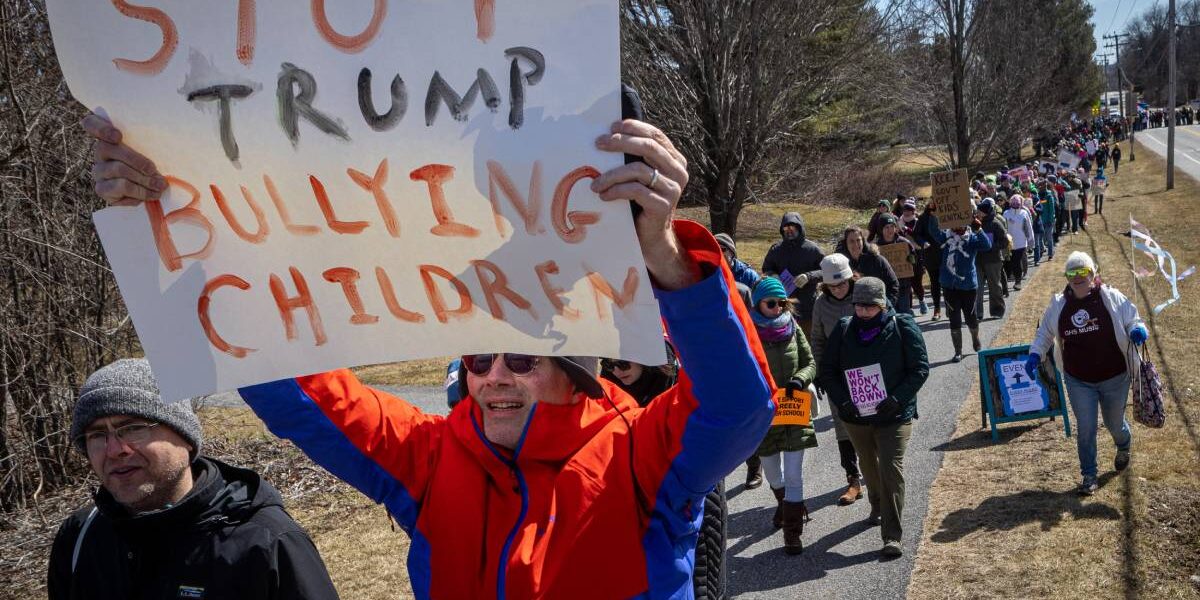
MEXICO CITY, Mexico. Trans and non-binary youth participate in sports for the same reasons as cisgender people. However, in the last five years, anti-rights politicians in general, and US President Donald Trump in particular, have amplified their false narratives and rhetoric to legitimize policies that violate the human rights of trans and non-binary people, including their participation in sports.
The false narrative of an alleged 'unfair advantage' is what anti-rights politicians use to push through laws and regulatory changes. They seek to exclude trans and non-binary children and youth who participate in sports at the school level: from elementary school to university. But in the vast majority of cases, these policies primarily exclude trans girls and women.
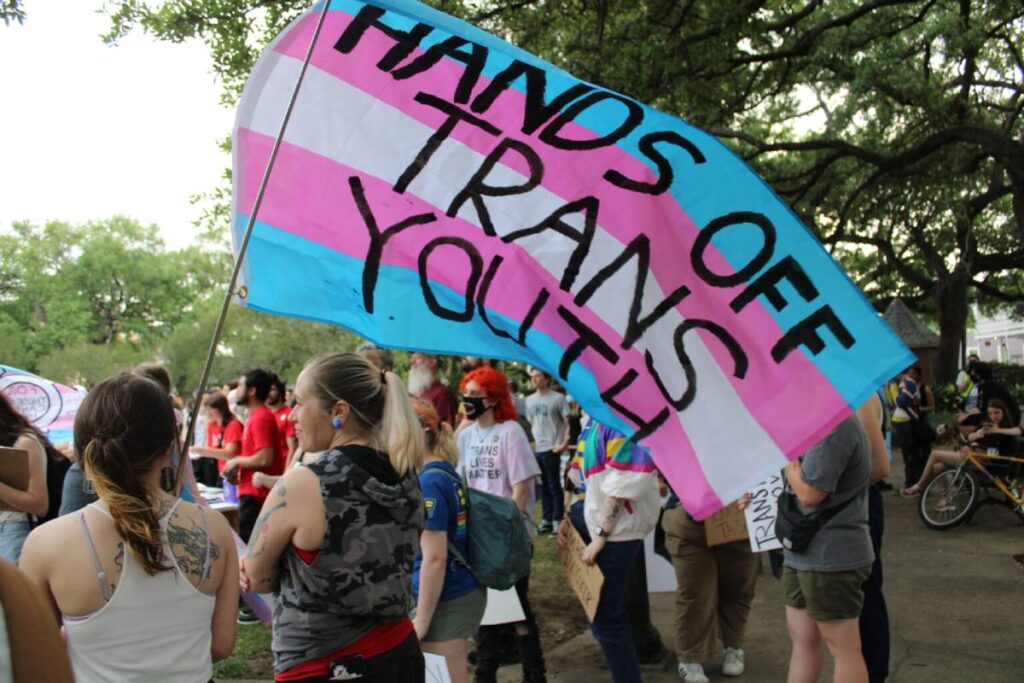
These laws not only seek to exclude transgender youth from sports, but also deny them the mental and physical health, educational, and social benefits that sports offer.
In elite sports, we also see these same prohibitions in some federations. The athletics is one of the most restrictive, despite the fact that the International Olympic Committee (IOC) concluded in 2021 that “there is no scientific consensus on how testosterone affects athletic performance. Its role in measuring an unfair advantage is unclear, because performance is measured differently in each sport.”
In this explainer we seek to answer: How does sport benefit trans and non-binary youth? How do anti-trans policies affect girls and women, trans and cisgender athletes? What is the situation where these laws already exist? And what are we seeing in Latin America?
The United Nations (UN) recognizes sport as a human right and considers that access to physical activity should happen “without any discrimination”, nor based “on ethnic criteria, sex, sexual orientation, language, religion, political opinion, or any other factor”.
Access to sport benefits the mental health of trans and non-binary youth
In Latin America, there is a lack of data on the perceptions and experiences of trans and non-binary children and youth in sports. Research in countries of the Global North on trans youth and their experiences in sports sheds some light on the benefits of access to sports for this population.
The Trevor Project, in a 2021 study, highlights the positive reasons why LGBT+ youth participate in sports. These include connecting with friends and teammates , the opportunity to stay healthy , and the right to have fun .
The results also showed that for some trans and non-binary youth, sport provides support against stressors such as academic pressure or the tension surrounding discrimination based on their gender identity. Furthermore, it supports their mental health and distracts them from negative thoughts. This same finding can be seen in numerous other studies that generally discuss the benefits of sport for trans and cisgender youth.
One young man told the Trevor Project that sports "help me deal with gender dysphoria and depression ." Another said, "Sports are a good way to distract myself from negative thoughts .
The 2023 report on LGBT youth prepared by the Human Rights Campaign (HRC) foundation found that trans and non-binary high school students who are athletes “reported better grades, lower levels of depression and were less likely to feel unsafe at school than those who did not play sports.”
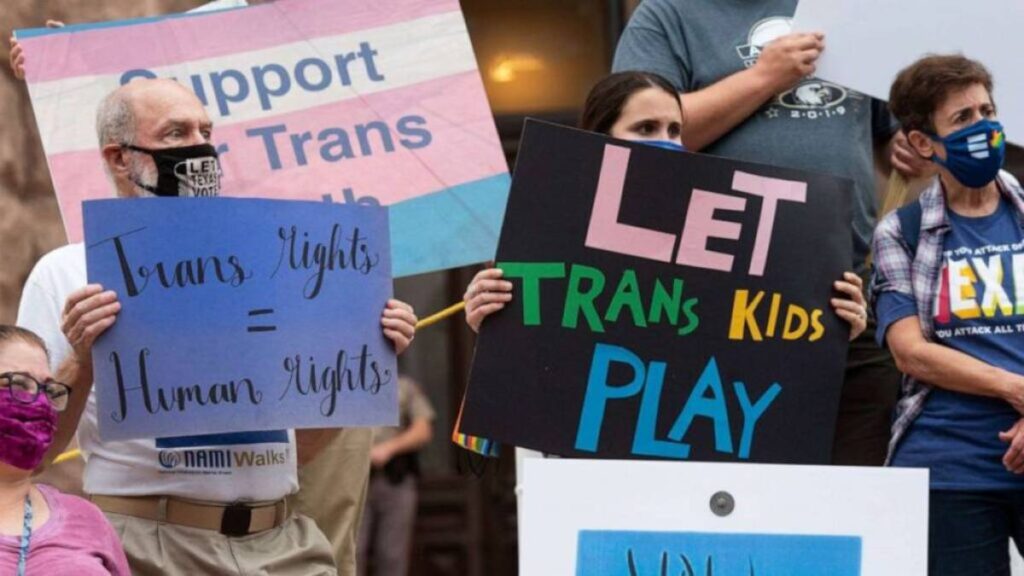
The effects on mental health in children and young people
Despite scientific evidence supporting the mental health benefits of transgender youth participation in sports, there is a wave of bans and false narratives. This has repercussions for their mental health.
A survey and report by The Trevor Project found in 2021 that:
- 79% of trans and non-binary youth felt that their gender identity was a factor affecting their participation in sports. The main barriers are: sports uniforms and their association with gender dysphoria, and the binary gender categorization of sports.
- 55% said that news with alarmist and negative narratives about the participation of trans athletes has influenced them not to feel included in practicing the sport they like.
- Only 32% of LGBT+ youth reported ever participating in a sports, school, or community team or league; compared to 6 out of 10 who said they had never participated for fear of experiencing exclusion or some type of violence.
"I probably wouldn't be allowed on the boys' team because I'm a trans boy (neither my parents nor the school allow it). And even if I were allowed, I would be at great risk of being bullied," a transmasculine youth told the Trevor Project survey.
Anti-trans policies against girls and women, trans and cisgender
Sports bans are putting trans and non-binary people, especially girls and women, at risk. They are also putting cis girls and women of school age who are athletes at risk.
Trans girls and young women are not the only ones being scrutinized. Following the wave of anti-trans policies in sports in the United States, there have been reports of young cisgender athletes experiencing harassment and being falsely accused of being trans. This happened to Olympic boxing champion Imane Khelif at the 2024 Paris Olympics.
Just as World Athletics applies 'sex tests' to elite athletes, today in countries like the United States, trans and cisgender girls, young women and female athletes are at risk of invasive practices that violate their safety and privacy.
One example happened to the California university volleyball team , who had to hire security personnel to protect a player accused of being transgender.
The same thing happened in Utah with a high school athlete who had to request police protection after a public official in that state spread false information about her, accusing her of being trans.
A 2022 study found that transgender high school students in the United States said they were interested in playing sports and at the same time mentioned concerns about bullying and stigma.
These practices are not new. Human Rights Watch has documented how, for decades, the international athletics federation, World Athletics, “applies arbitrary tests based on gender stereotypes and the use of flawed scientific data that lacks scientific and ethical rigor, and violates human rights.”
Those who legislate using false arguments about an alleged 'unfair advantage' of trans athletes in the female categories of sport, which lack scientific evidence , are not actually guaranteeing dignified conditions for young and female athletes to develop their sporting discipline free of barriers.
Today, girls and women athletes around the world face barriers in sports that have nothing to do with the inclusion of trans women or trans and non-binary people in aspects of public life.
The lack of public policies, lack of facilities, wage inequality, harassment by coaches, and scientific research with sexist, racist, and binary biases prevents us from knowing the real needs of trans and cisgender women athletes.
What is happening in the United States and the United Kingdom with the participation of trans athletes at the school level?
Trans and non-binary youth have always played sports. What is new are the increasingly aggressive and misleading narratives that anti-rights politicians are using to legitimize moral panics regarding the participation of trans women and girls in sports.
However, in the last three years, at least 164 policies have been promoted that seek to deny access to sports, particularly to girls and women competing at the school level: from primary school to university. From 2023 to 2025, there was a 318% increase in the creation of initiatives and proposed laws related to sports alone.
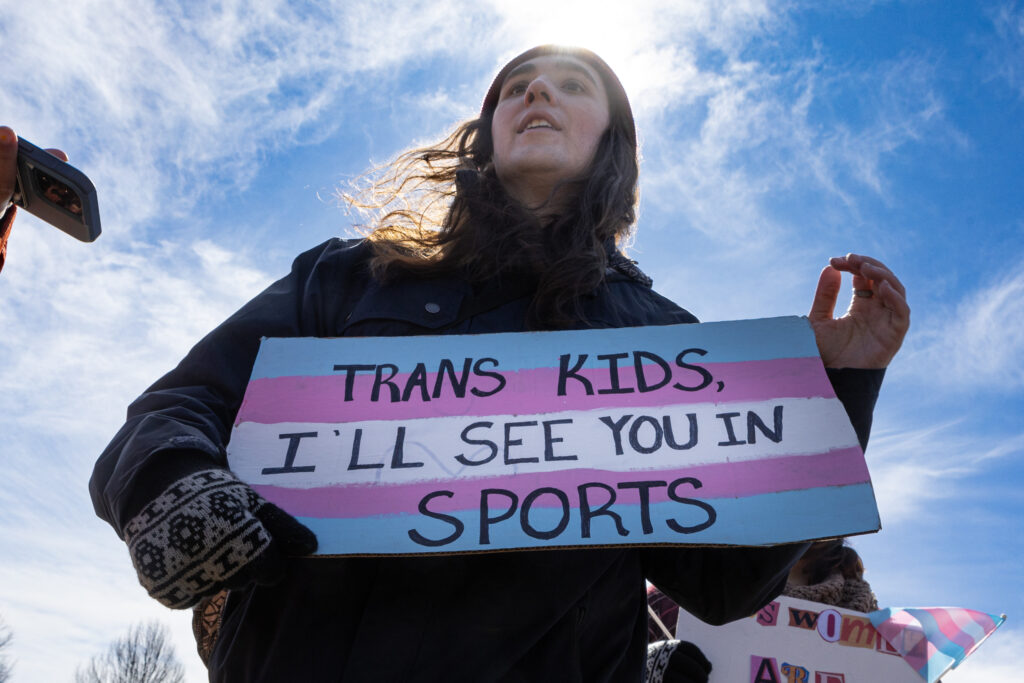
While these bills began to be promoted at the state level, and Idaho passed its first law of this kind , the new administration of Donald Trump signed an executive order withholding funding for federal educational programs that allow transgender girls and women to compete in women's sports. Subsequently, the House of Representatives voted to prohibit transgender girls and women from participating in women's sports at the school level. Soon after, the NCAA, the governing body of college athletics, prohibited transgender students from competing in women's sports.
In the UK, anti-trans stances from politicians and powerful figures are neither new nor recent. However, this year the Supreme Court declared that trans women “do not meet the definition of woman under equality laws.” And this is already having implications for sports teams.
The football federations of Scotland and England have already modified their participation policies and from June 2025 trans women who play football at a competitive level will not be able to participate in women's teams.
What's happening in Latin America?
While there have been no explicit attempts to legislate in our region, the fascist governments of Argentine President Javier Milei and Nayib Bukele in El Salvador have alluded to the anti-trans policies and narratives maintained by Donald Trump and his government.
In Argentina, there is no formal ban on the participation of transgender athletes. However, public statements by Javier Milei and the decree that amended the gender identity law —which has been in place since 2012 and is a pioneering piece of legislation worldwide—reflect his government's restrictive stance in denying the human rights of transgender people.
Nayib Bukele has also not published any reform or decree explicitly against the participation of transgender people in sports. However, in a meeting with Donald Trump, he described the participation of transgender women in sports as “violence .”
Furthermore, in 2019 it eliminated the Secretariat of Social Inclusion , which was responsible for implementing policies against discrimination against LGBTI+ people. And in 2024 it announced the elimination of the gender perspective in educational content.
Latin America is, for now, a contested terrain in this regard. On the one hand, trans activists continue to push for greater recognition, justice, and inclusive public policies; on the other, far-right political sectors and trans-exclusionary feminists use false information, almost always exploiting trans children and youth, to try to halt the rights won through civil organization and activism.
Juntes Narramos is a project by Malvestida , Volcánicas , GirlUp , Balance and Presentes to strengthen and amplify the voices of young people through narratives of diversity.
We are present
We are committed to journalism that delves into the territories and conducts thorough investigations, combined with new technologies and narrative formats. We want the protagonists, their stories, and their struggles to be present.
SUPPORT US

FOLLOW US
Related notes


We are present
This and other stories are not usually on the media agenda. Together we can bring them to light.