

Ten years of Ni Una Menos: "The change we need: uniting the struggles"
Ten years after the first Ni Una Menos (Not One Less) march, feminisms and diverse movements face a complex scenario. There have been enormous advances along the way. How can we continue building despite the attacks, setbacks, and political fragmentation?


Share

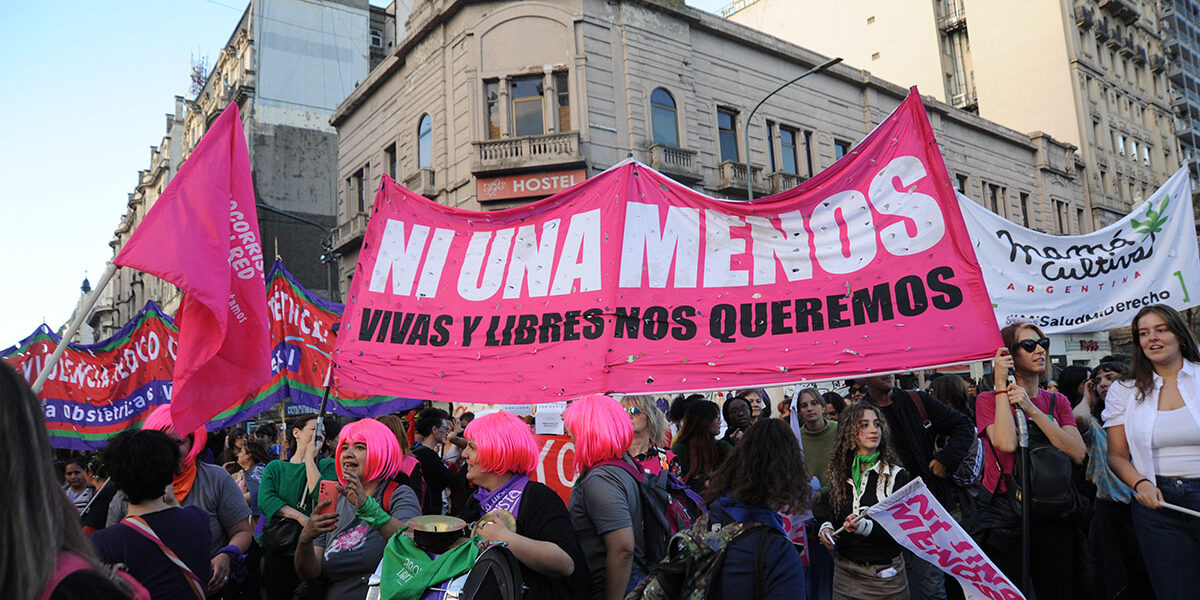
BUENOS AIRES, Argentina. In May 2015, the news of Chiara Páez's murder ignited the outrage of thousands of women and LGBTQ+ people who had been warning about the rise in gender-based violence. Ten years after the first Ni Una Menos (Not One Less) march, a demonstration that marked a turning point in Argentina, many of those demands, which had been slowly addressed, are now facing a discursive and material attack, but the struggle continues.
One thing is clear: “We remain organized,” agree those interviewed for this article. A massive mobilization of feminist groups, along with retirees, is expected next Wednesday, June 4th, at the National Congress, starting at 4 p.m., under the slogan: “Ten years ago we took to the streets and we didn’t come back alone.”.
What did the first Ni Una Menos movement demand?
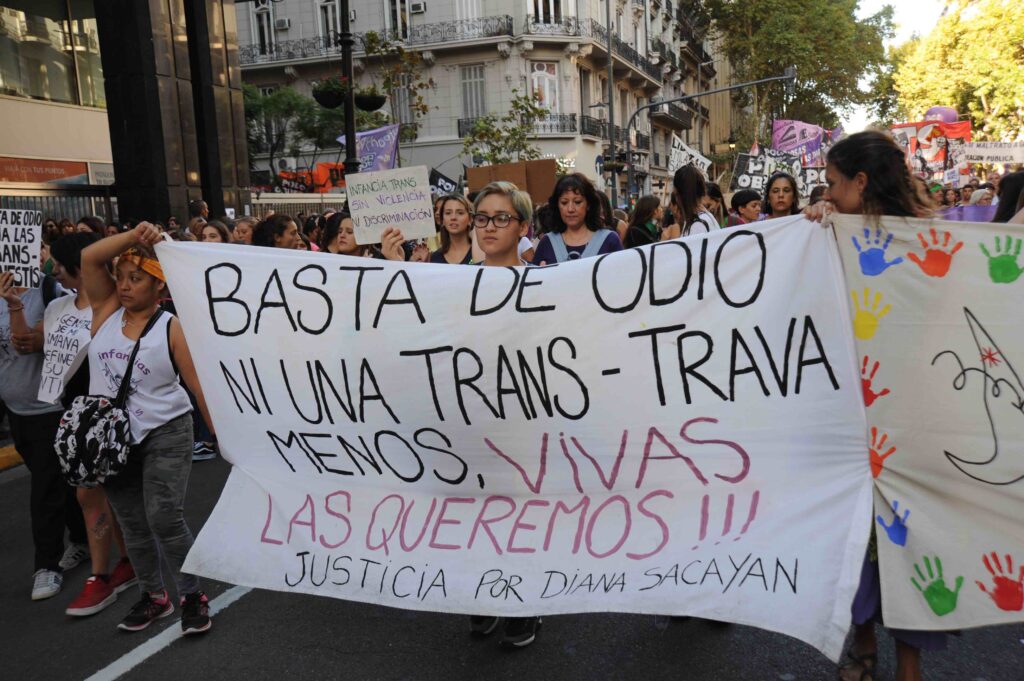
That first demonstration in 2015 was marked by a series of demands for public policies from the State and the Justice system. These included a budget for the implementation of Law 26.485 on Comprehensive Protection , the publication of official statistics on gender-based violence—including femicides—guarantees for women's access to justice, the creation of emergency shelters and safe houses, mandatory training for security agents and judicial personnel, and the effective implementation of Comprehensive Sexuality Education.
The initial starting point of the Ni Una Menos (NUM) movement was a cultural event at the National Library. There, the slogan 'Ni una menos' was coined and quickly went viral. “An assembly process was initiated, which allowed the movement to remain alive and capable of making political statements,” sociologist and NUM Luci Cavallero Presentes .
The massive mobilization of the Ni una menos movement was a powerful force for different generations of women and diverse groups. Just as in the current context, it was also the result of the intersection and lessons learned from other struggles.
“Ni Una Menos wouldn’t have been the same if there hadn’t been marriage equality five years earlier or the Gender Identity Law in 2012. Ni Una Menos wouldn’t have existed as such, as an explosion, without the mobilization of trans women who were there that same day with signs saying 'Without trans women there is no Ni Una Menos.' And Ni Una Menos embodies that,” the lesbian transfeminist journalist Marta Dillon told this agency.
Yesterday demands, today public policies
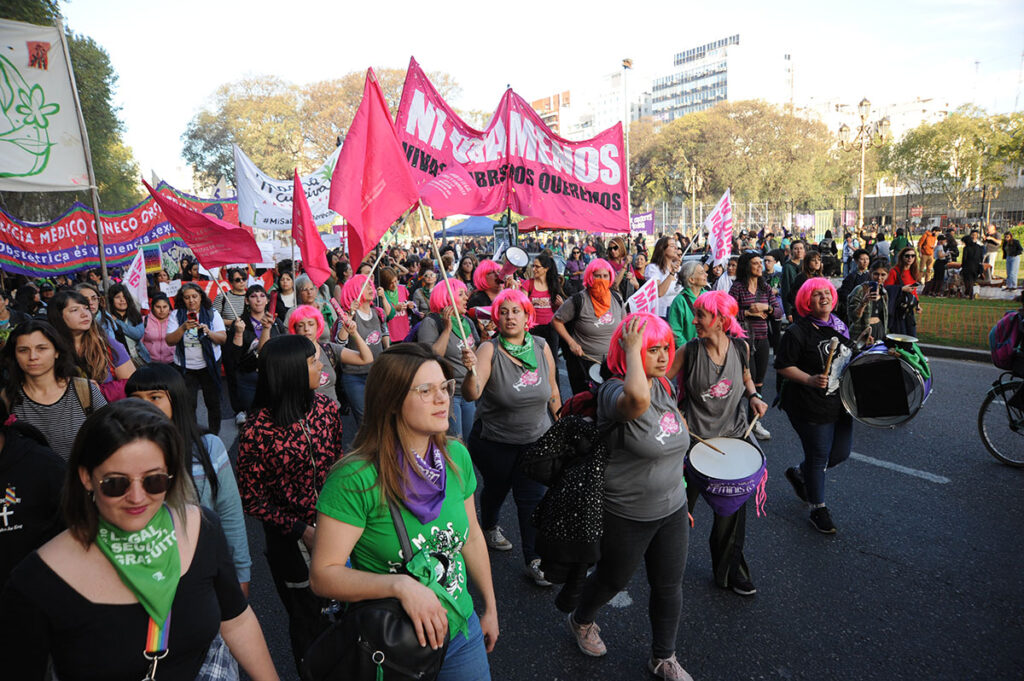
The power of the feminist movement in the first Ni Una Menos (Not One Less) movement stemmed, on the one hand, from the emergence of a new social force that brought sexist violence out of the shadows in all its forms. But it also translated the demands into public policy.
One of the demands was that the State record the number of women murdered in the context of gender-based violence. Five months later, on November 25, 2015, the Supreme Court of Justice presented the first Femicide Registry with figures for women murdered in 2014. A year later, the National Gender Ombudsman's Observatory was created, which also maintains a registry that is published annually. Until then, only the Adriana Zambrano Observatory of the organization Casa del Encuentro generated data.
This crucial registry allowed for a comprehensive understanding of the problem across the country. The initial data revealed that in 2014, a woman was killed every 37 hours. In 2015, that figure dropped to one every 30 hours.
It wasn't until late 2016 that the government led by Mauricio Macri presented the first Action Plan for the prevention, assistance, and eradication of violence against women. Although the plan was developed, the then-Institute for Women, also created in the wake of the Ni Una Menos movement, did not have sufficient funding to implement it.
At the end of 2019, the first Ministry of Women, Gender, and Diversity was created. Along with it came the National Action Plan against Gender-Based Violence, which had two phases: the first from 2020 to 2022 and the second from 2022 to 2024. Innovative in its approach to coordinating ministries and establishing a plan of commitments among provinces, it also encompassed fundamental programs such as Acompañar (Accompany). These programs were key to rescuing thousands of women and LGBTQ+ individuals from situations of violence.
What are the laws that Ni Una Menos left behind?
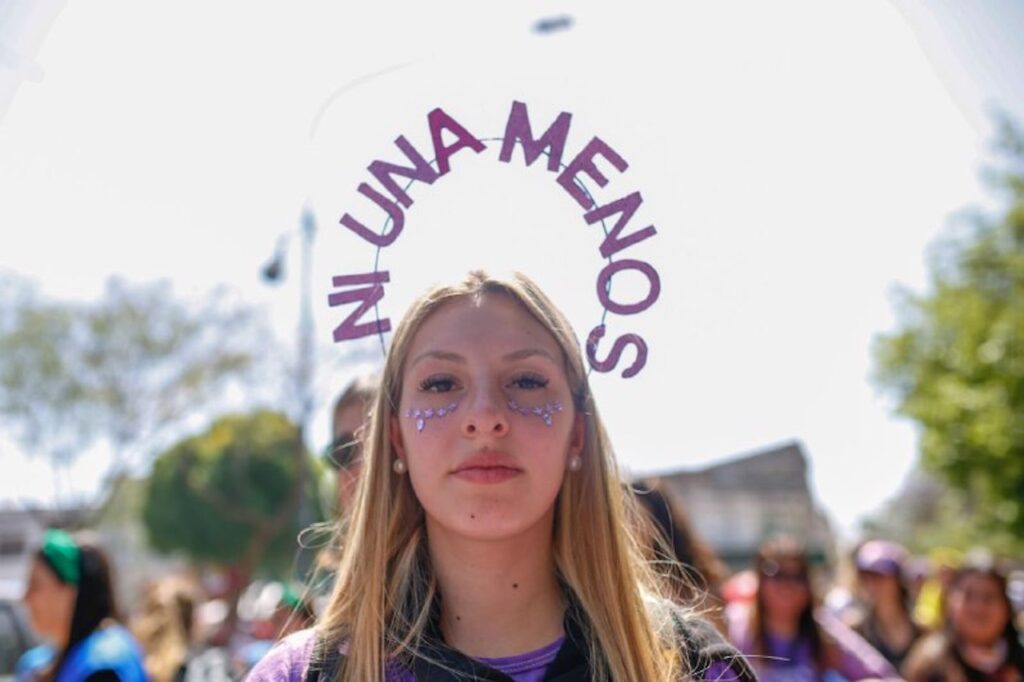
One of the laws enacted after the Ni Una Menos movement was Law 27.542, known as the Brisa Law. It establishes an Economic Reparation Program for children and adolescents of femicide victims. It consists of a pension (equivalent to a minimum retirement pension) and comprehensive health coverage until the age of 21. Currently, it is underfunded and, according to family members, is not being implemented.
Months later, following the murder of Micaela García, a member of the Evita Movement and an activist with Ni Una Menos in Entre Ríos, Law 27,499 , known as the Micaela Law, was enacted. Driven by feminist organizations, it mandates gender perspective training for all public employees at all levels and ranks within the Executive, Legislative, and Judicial branches of the national government.
Another law that emerged from the Ni Una Menos movement was Law 27636, the Diana Sacayán-Lohana Berkins Law, which guarantees access to formal employment for transvestite, transsexual, and transgender people . It establishes a minimum quota of 1% of positions within the national government for this population to ensure formal employment under equal conditions for transgender people.
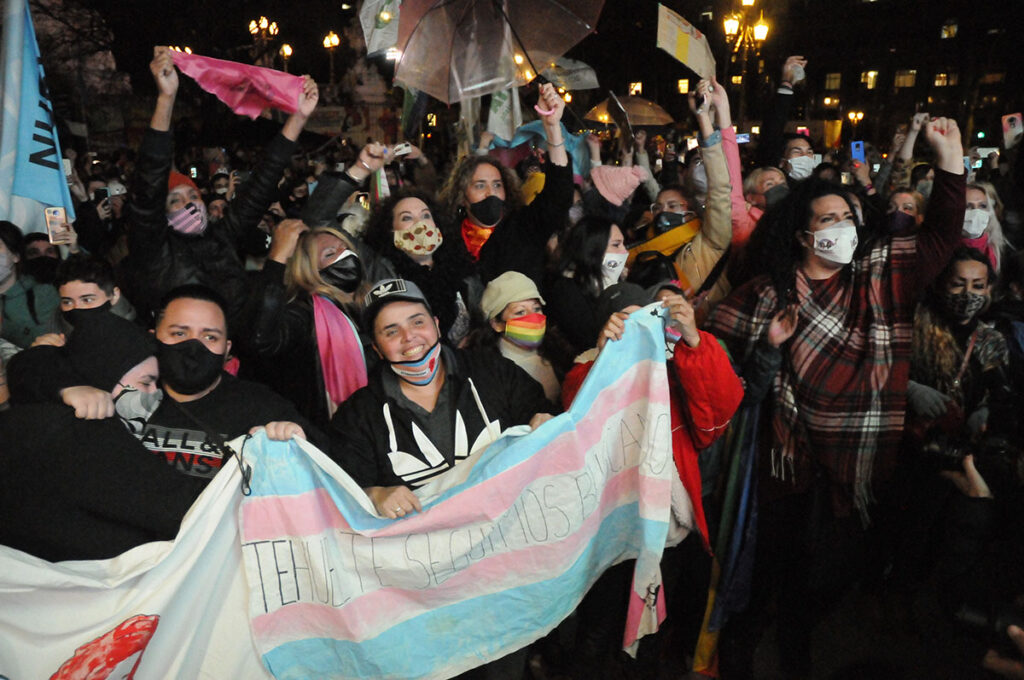
What did Ni Una Menos mean?
The debates that had been brewing for a long time came to the forefront with greater force after the massive mobilization. Prior to this, figures from the worlds of culture, entertainment, and sports had joined the movement with the slogan “Not One Less.”.
“The massive scale of the movement changed all of our lives a bit because these were things we used to talk about in smaller groups or at the Encuentros (meetings). All those activist movements converged in that massive mobilization . That leap meant taking to the streets for the victims of femicide, with a very clear slogan like Ni Una Menos (Not One Less). It also happened in the assemblies, in the assembly-based structure, which was always very large,” says Dillon. And she recalls that the fight for Higui's freedom, two years later, was fueled by that massive mobilization.
“ Ni Una Menos signified a shift in societal sensitivity, a change in the thresholds of tolerance for violence, the emergence of thousands upon thousands of collectives , and gender-focused spaces in universities and schools. It opened a cycle of struggles that is absolutely nourished by the genealogies and layers of previous struggles , such as sex education, legal, safe, and free abortion, and the piquetero movement,” Cavallero acknowledged.
From Tucumán, trans artist Claudina Rukone recalls that she and other trans women witnessed the first Ni Una Menos (Not One Less) march as spectators. “It was a very powerful birth because it was precisely Ni Una Menos who pushed us in 2017 to organize the first massive march for the murder of Ayelén Gómez. It was the first crime we experienced from a different perspective and with a different awareness as a trans community. By that time, we already had rights we hadn't had before, like the Gender Identity Law. Ni Una Menos encouraged us to organize, to learn. It was those feminists who shaped us, supported us, embraced us, but above all, invited us to take to the streets. To occupy those spaces that we previously felt didn't belong to us.”
Georgina Orellano, a sex worker and general secretary of the Association of Sex Workers of Argentina (AMMAR), explains: “For us, the massive mobilization of Ni Una Menos (Not One Less) 10 years ago gave us the opportunity to put the institutional violence experienced by sex workers in Argentina on the social agenda and within feminist movements . It allowed us to raise the names of our colleagues murdered by the police on signs—crimes that have gone largely unpunished, femicides that haven't generated the same social outcry as others.”
Within the framework of Ni Una Menos, the 2nd Assembly of sex workers, migrants and their families was held at Casa Roja on Saturday, May 31.
The setbacks of Milei's government
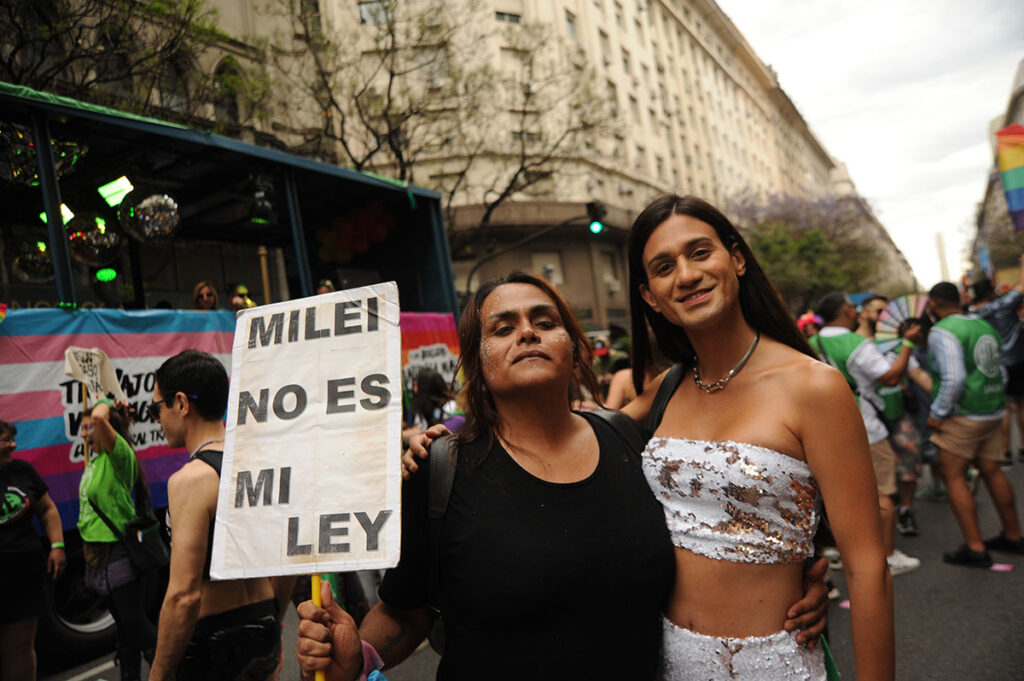
Today, Javier Milei's government is attacking the feminist agenda built over the past decade on all fronts. Far from eradicating gender violence, the Milei administration is stigmatizing the gender agenda and disproportionately impacting the most vulnerable and impoverished sectors of the population: women and LGBT people.
“I believe that all those changes in attitudes haven't been reversed, but we're at a crossroads. Not only because of the dismantling of public policies that were small victories for the movement, but also because we're in a deep economic crisis that undermines women's opportunities and participation. This generates more poverty, increases the number of femicides, and leaves far fewer options for escaping a context of violence,” Cavallero explained.
In just a year and a half, the La Libertad Avanza government eliminated the Ministry of Women, Gender and Diversity and other agencies responsible for public policies protecting these populations, such as INADI (National Institute Against Discrimination, Xenophobia and Racism). Two weeks ago, the Minister of Justice, Mariano Cúneo Libarona, boasted about announcing the elimination of 13 gender programs, which had already seen no implementation . Among them was the program for Urgent Support and Immediate Comprehensive Assistance in cases of Extreme Gender-Based Violence.
The question remains: how will the government address the social problem that sparked the first Ni Una Menos (Not One Less) movement—gender-based violence? Argentina has recorded 93 femicides between January 1 and April 29, 2025, according to the latest survey by the MuMaLá Observatory – Women of the Latin American Motherland . This translates to one woman murdered every 31 hours. According to the Ahora que sí nos ven (Now That They See Us) Observatory, there have already been 108 femicides in 2025.
Furthermore, in its misnamed “culture war,” the Executive Branch specifically targeted diverse groups. It ignored the Transgender Employment Quota Law, dismissing more than 150 transgender, transvestite, and non-binary workers. The President himself delivered a speech before the international community in which he spread misinformation about the LGBTIQ community, and especially about the transgender community. Finally, he attacked the national legislation that is a global landmark: the Gender Identity Law .
The chainsaw targeted the most vulnerable sectors. Minimum pensions—mostly received by women—suffered a 13.3% loss in the first quarter of 2025 compared to the last quarter of the previous administration, as a consequence of Decree 274/2024. Furthermore, pensioners have seen their 70,000-peso bonus frozen since March 2024. Had it been adjusted, next month's bonus should have been 158,620 pesos. With the announced 2.8% increase, the minimum pension will be 304,723.93 pesos.
“Despite the fact that 10 years have passed since the birth of Ni Una Menos, and despite all that we have achieved in terms of progress and rights, today we continue to suffer not only the cruel murders of our trans sisters, but also the ways in which investigations and trials are conducted, the constant demand for dignified treatment, and the importance of trials being classified as 'transfemicide' because a trans woman is not killed for nothing. These are things we continue to demand,” Rukone adds.
“We remain organized”

In this context, pensioners attempt to hold demonstrations every Wednesday at the National Congress to demand a dignified pension, but they are met with heavy repression by security forces. Adding to this, the moratorium, which allowed those without 30 years of contributions to access a minimum pension, ended on March 23. Who are the most affected? Again, women: nine out of ten women will not be able to retire at the minimum age of 60.
“There is growing resistance, we remain organized. In this context of extreme difficulty, there are still important resistance initiatives against something that is gigantic, with a very accelerated mechanism of destruction,” said the sociologist and member of NUM.
“The State still owes us enormous debts, and above all, the gap is widening when it comes to engaging in dialogue or even being heard regarding the importance of accessing these rights. Our older trans sisters are dying one by one, and there aren't that many of them, yet the State continues to ignore us. So, for us, it's fundamental that the movement is once again vibrant in the streets. Because all these cries for help, for rights, didn't go silent with the advance of all this cruelty that governs us in Argentina today,” adds artist and activist Claudia Rukone.
This year, the Ni una menos (Not One Less) movement, which has historically taken place every June 3rd since 2015, will be moved to Wednesday, June 4th to coincide with the pensioners' march.
“The change we need: unifying the struggles”
Ana María Tapia is 72 years old, with white hair streaked with purple, and is a member of the Insurgent Retirees collective. She was tear-gassed, beaten, and hit several times by rubber bullets during the Wednesday marches outside Congress. She spoke with Presentes after an exhausting day: she accompanied the demand for an Emergency Disability Law at Congress, went to the Ministry of Health regarding the demands of residents at Garrahan Hospital, participated in the Mothers of Plaza de Mayo march, and witnessed a tribute to Norita Cortiñas, on the first anniversary of her death.
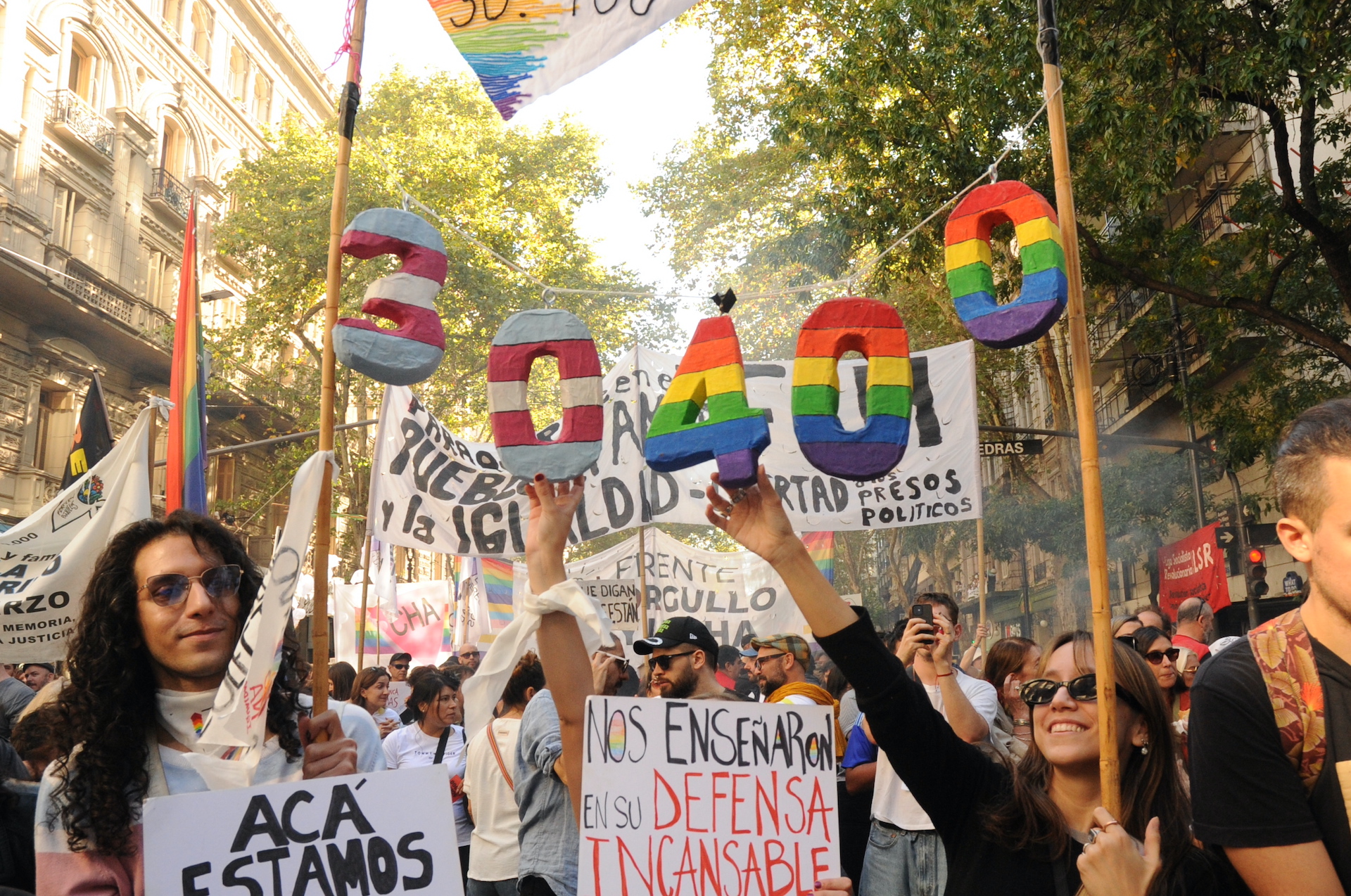
“The date change seems perfect to me; we're starting to unify our struggles. I was at the March 28th event, which marked the 20th anniversary of the Campaign for Legal, Safe, and Free Abortion, and they're also going to come and collaborate with pensioners. Look how the struggle is bearing fruit. This is the change we need: unifying our struggles,” she shared with this agency.
With retirees, always
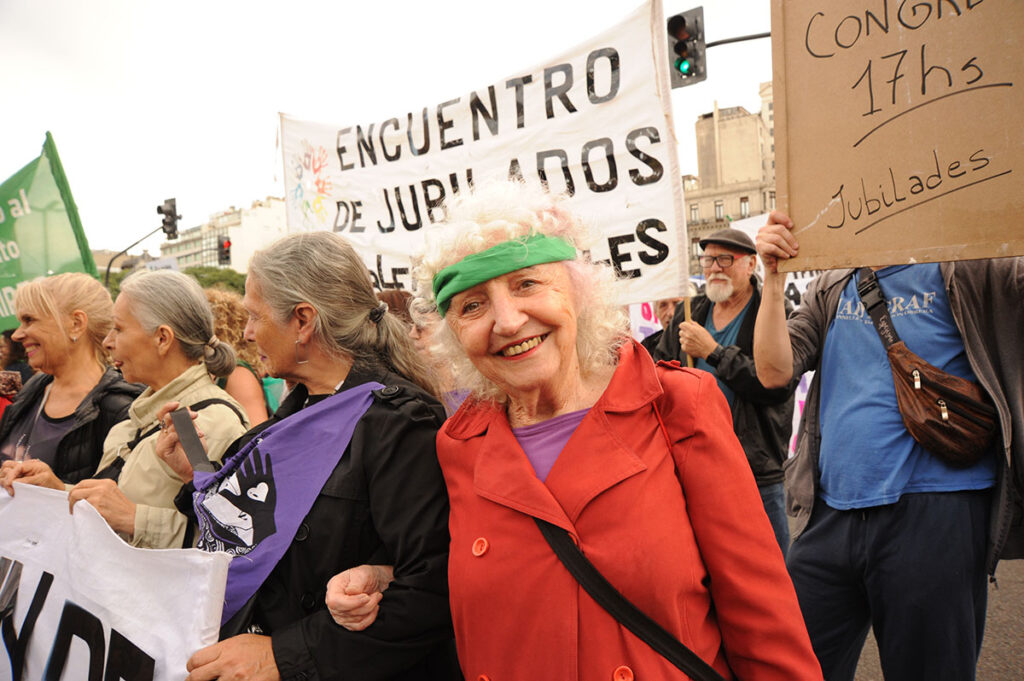
Regarding the choice of this date, Cavallero shared: “We didn't want the tenth anniversary of Ni Una Menos to be just a commemoration, a reminder of something that's already happened. We felt it was necessary to open a discussion about the tasks the movement faces today, which is why we called for assemblies. There was a collective effort among many sectors to say that the task of popular feminism and trans feminisms today is to combat the atomization and fragmentation of the struggles. And secondly, to contribute to strengthening and showing solidarity with the most repressed struggle, the one bearing the brunt of a third of the austerity measures: the struggle of pensioners.”
What will the Ni Una Menos (Not One Less) protest on June 4th be like?
The gathering for Wednesday, June 4th, is at 4 PM in Plaza de los Dos Congresos, with similar events taking place across the country. There will be statements from pensioners' groups and trans-feminist organizations. They will also seek to participate in the weekly Wednesday marches. All actions will be defined that day based on how the day unfolds. "History isn't something you watch: it's something you push forward," proclaims the Ni Una Menos movement, ten years after the first historic mobilization.
We are present
We are committed to journalism that delves into the territories and conducts thorough investigations, combined with new technologies and narrative formats. We want the protagonists, their stories, and their struggles to be present.
SUPPORT US

FOLLOW US
Related notes


We are present
This and other stories are not usually on the media agenda. Together we can bring them to light.