

Vivir Quintana: “Diversity is what truly enriches us”
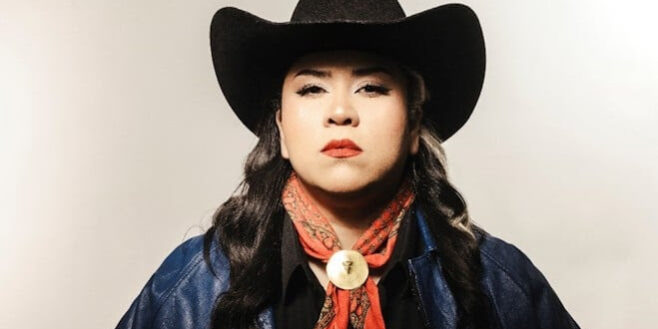
We spoke with Mexican singer-songwriter Vivir Quintana, author of the feminist anthem "Canción sin miedo" (Song Without Fear), during her visit to Argentina where she presented her latest album "Cosas que sorpresan a la audiencia" (Things That Surprise the Audience).


Share

BUENOS AIRES, Argentina. Vivir Quintana loved teaching, but her passion was singing. So one day she left her job teaching Spanish in the schools of her hometown in Coahuila , Mexico, and took to the stage to share everything she had learned from her parents since childhood: singing songs with meaningful messages. She was successful. Since dedicating herself to music, she has opened for Silvio Rodríguez in Mexico City's Zócalo before thousands of people; her song "Canción sin miedo" (Song Without Fear) is an anthem for trans-feminist struggles; and in April, her second album, Cosas que sorpresan a la audiencia (Things That Surprise the Audience ), was released by Universal.
In March, Vivir Quintana visited Argentina, where she organized a concert at La Tangente venue in Buenos Aires. She was joined by the Mujeres y Disidencias collective from La Plata . “It’s necessary right now to talk about love, unity, and community,” the Mexican singer-songwriter told Presentes . “Song, resistance, and culture are a great salvation that we sometimes fail to see.”
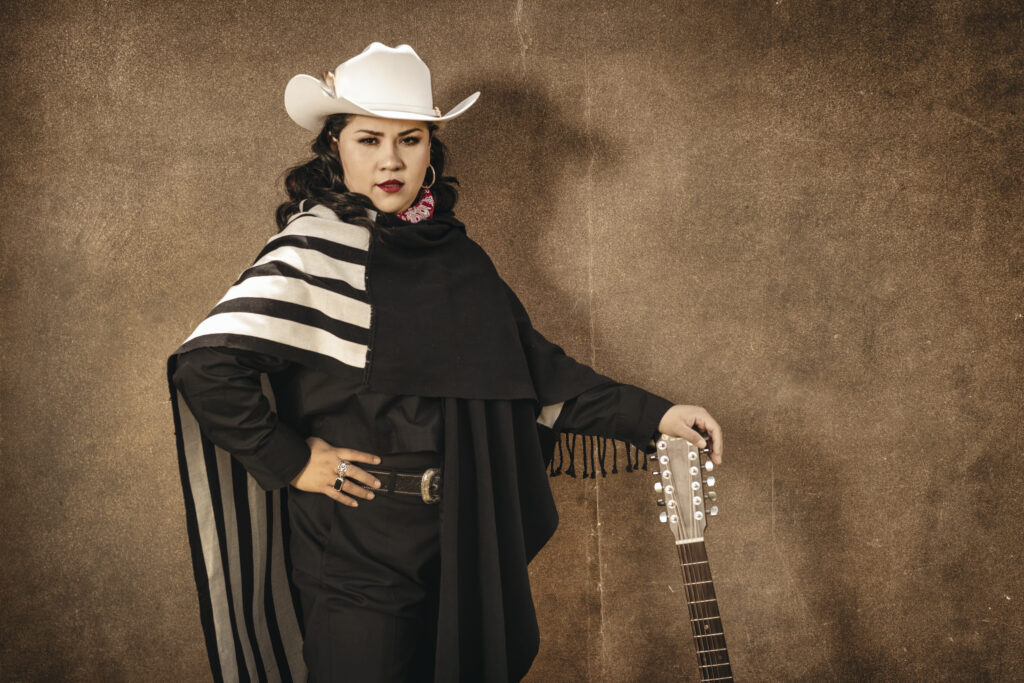
Vivir Quintana's visit from Buenos Aires was to preview her second album, Things that Surprise the Audience , which contains ten songs narrated in the first person: ten stories of women who were deprived of their physical freedom for defending themselves against their aggressors.
“I have set myself the task of sowing love within music”
In her song “ La casa de la esquina” (The House on the Corner), which opens her first album ( Te mereces un amor - You Deserve Love ), Vivir speaks of her parents' house where her musical journey began. “My parents played music for me all the time when I was a child. I had a super old record player and I would set it up in the backyard. Lola Beltrán and Los Tigres del Norte were played a lot, but also Violeta Parra and Mercedes Sosa. They were my biggest influences, and I understood that words are a powerful, effective, and compelling means of communication. I discovered that within that music, within those words, within those songs. My parents taught me to love the world around me in all its nuances. So, because I love the world around me, I'm also concerned about it,” she explains.
– These are difficult times, what is it like to create, perform and compose at this moment?
It's important to put the talents that life gives you at the service of a cause. And I believe that talent isn't just musical, but also the connection you manage to have with the land, with people, with nature. I'm taking on a responsibility that no one gave me. Rather, it's a responsibility I feel as a woman and as a citizen. But as an inhabitant of this land, and in such painful times for the world, I'm also taking on the task of sowing love within music. Musical genres, especially in Mexico, are currently plagued by violence and misogyny. I seek to create narratives that are also rooted in Mexican folklore, but with love as the central theme. A free love, a beautiful love, a healthy love. It's incredibly healing for those who listen to it, and for me as well.
-Your songs have a feminist theme, how do you navigate the music industry with that theme?
It's difficult. I'm fortunate to have a super loving and wonderful team who say, "We need your message to get through." Navigating this field can be incredibly tiring because you want to deliver messages in a fast-paced industry. You have to move with a lot of love, but also with a lot of strength and determination, while deeply respecting my own voice, what I want to do, and where I want to go. I think that's one of the key elements in this world.
-Both your band and your team are made up of women, was that a decision or did it just happen that way?
"It was a conscious decision. Not out of separatism, but rather because of an opportunity I believe is necessary. And a collective effort, which I think is incredibly important: to try to have more women in this industry and close this gender gap that has existed for so long. As long as there's an opportunity to hire women, then do it. There are female colleagues who can't work with male colleagues, and that's understandable, because they've suffered various forms of violence. I have no problem working with male colleagues; I work with incredible colleagues, but we also need to provide this opportunity to close this gap."
Counting women
The corrido is a traditional Mexican genre that recounts tragic events, generally crimes committed by men. “Rosita Alvirez” is one such corrido. Set in Coahuila, it tells the tragic story of a young woman who refused to dance with a man at a party. Vivir Quintana heard this song throughout her childhood, but as an adult, she wondered, “What would have happened if Rosita, or any other woman, had defended herself against her attacker?” This question led to the creation of * Cosas que sorpresan a la audiencia* (Things That Surprise the Audience), an album of corridos composed by Vivir Quintana that tells the stories of women who suffered gender-based violence and ended up in prison.
“ It’s an album that took ten years to work on because I wanted the stories to be told in the best way possible. I didn’t want any revictimization or sensationalism in the lyrics; I wanted them to help bring these stories to light,” the singer-songwriter tells Presentes .
“It's a difficult record, but also a necessary one. It took ten years of searching for these stories, of understanding that not all women have the same stories, but that we can tell the stories of others. Everyone's voice is important, including those of these women who are deprived of their physical freedom. It has been a painful process because it means constantly talking about violence. That either makes you violent or makes you more loving, and I wanted it to make me more loving. It was a powerful personal and internal journey to understand all these stories that also resonate within you. I hope this album resonates, resonates in people's hearts and consciences, in the collective consciousness.
-How did you weave these themes, which are so difficult to address, into your compositions?
I do it from a place where honesty speaks volumes. I always say that I don't want to steal anyone's fight. I believe that all struggles in this world are valid and have their reason for being. But when I sit down to write a song, I understand that what I want might not be the same as what other people want, but I'm going to do it in the most honest way possible so that it connects with the people who listen to me. Honesty is a fundamental part of my project.
And consistency, which is incredibly difficult, but I try to be consistent in my music, my private life, and my public life. I can't release songs of resistance, love, and peace if, for example, I mistreat my team, my friends, or my family; or if I'm out of touch with my parents. Speaking honestly is one of the things that motivates me most.
–What is your relationship with sexual diversity, which was also part of the demands of feminism?
Diversity is what truly enriches us. In this world, which is often so unequal for some and for others, it's necessary to understand that diversity exists, that we are not all the same, and that each of us has, or rather should have, the freedom to decide where we go, where we are, who we are with, who we want, and who we love. Talking about love in these complicated times also makes us more diverse, and I really like that.
-How are women and sexual diversity represented in popular Mexican music?
There's more and more representation; I'm meeting more and more women who are doing incredible things. I see more spaces where this conversation about diversity is opening up for everyone, and I think there's still a long way to go. It's necessary that we continue to address important issues within music, within the social and cultural narratives of our countries, because it truly connects us. We're connected by a shared struggle for equal rights for everyone. Diversity also plays a part in this. And in Mexico, the diverse representation within regional music is growing, and I'm the first to celebrate that.
A song that travels the world
Five years ago, her friend, the singer Mont Laferte, asked her if she had a song about femicides to sing at a concert in the Zócalo. Vivir didn't have one, but she composed it and it premiered on March 7, 2020. That's how "Canción sin miedo" (Song Without Fear) was born.
“I never imagined it would be so big. Unfortunately, this tragic situation of femicides is everywhere, and the pain resonates with many of my sisters throughout Latin America,” says Vivir Quintana. “What connects us is the strength and desire for things to change, for these issues to be known and made visible. 'Canción sin miedo' (Song Without Fear) is a song that has taken on a life of its own and has become huge, but it's the women who fight around the world who have made it so big. I feel very honored, that's the word. But I hope that next year it won't be sung anymore.”.
-You got to listen to and sing "Canción sin miedo" at the 8M march in Spain, what was that experience like?
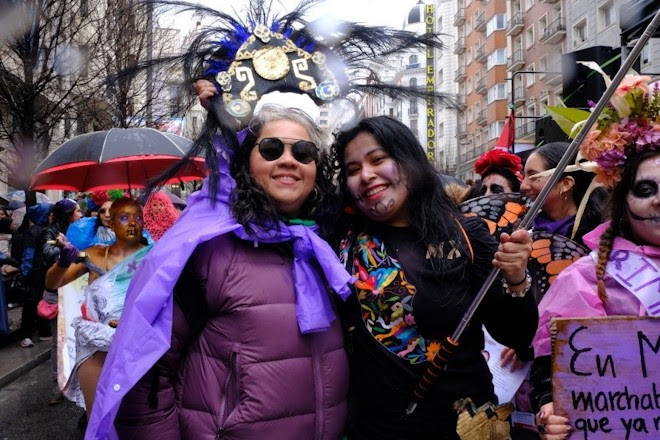
"It was incredibly powerful. I always said I wouldn't spend International Women's Day outside of Mexico, but I ended up working in Madrid. I connected with the migrant women's collective, Las Tres M (Women, Monarch Butterflies, Migrants) , with colleagues from Argentina, Chile, Brazil, Colombia, Peru, Panama, and Mexico. Marching alongside them was also very powerful. At the end, we sang 'Canción sin miedo' (Song Without Fear), and I was so moved that it lasted all day. I even felt exhausted from feeling so much because I also cried a lot."
-How do you envision yourself ten years from now?
I imagine myself with more songs in my throat, and I hope my voice gives me many more years. I imagine myself sharing so much more with more people, but I also imagine myself trying to plant seeds now (and see it in ten years) where people's consciousness is transformed a little through music. To be one of those singers whose work is preserved in history books—I hope that's possible, because music will always be music, with or without the industry. I see music existing and transcending through word of mouth. I hope that's how it will be. And with two more cats, in ten years, a house with a garden for two more cats, one of each color.
We are present
We are committed to journalism that delves into the territories and conducts thorough investigations, combined with new technologies and narrative formats. We want the protagonists, their stories, and their struggles to be present.
SUPPORT US

FOLLOW US
Related notes
We are present
This and other stories are not usually on the media agenda. Together we can bring them to light.