

Persecution of the Mapuche people: six members of the Lafken Winkul Mapu community were sentenced
The Federal Court of General Roca sentenced six members of the Lafken Winkul Mapu Mapuche community to up to two and a half years in prison, with suspended sentences. This is the second trial the community members have faced following the evictions and militarization of their territories.


Share

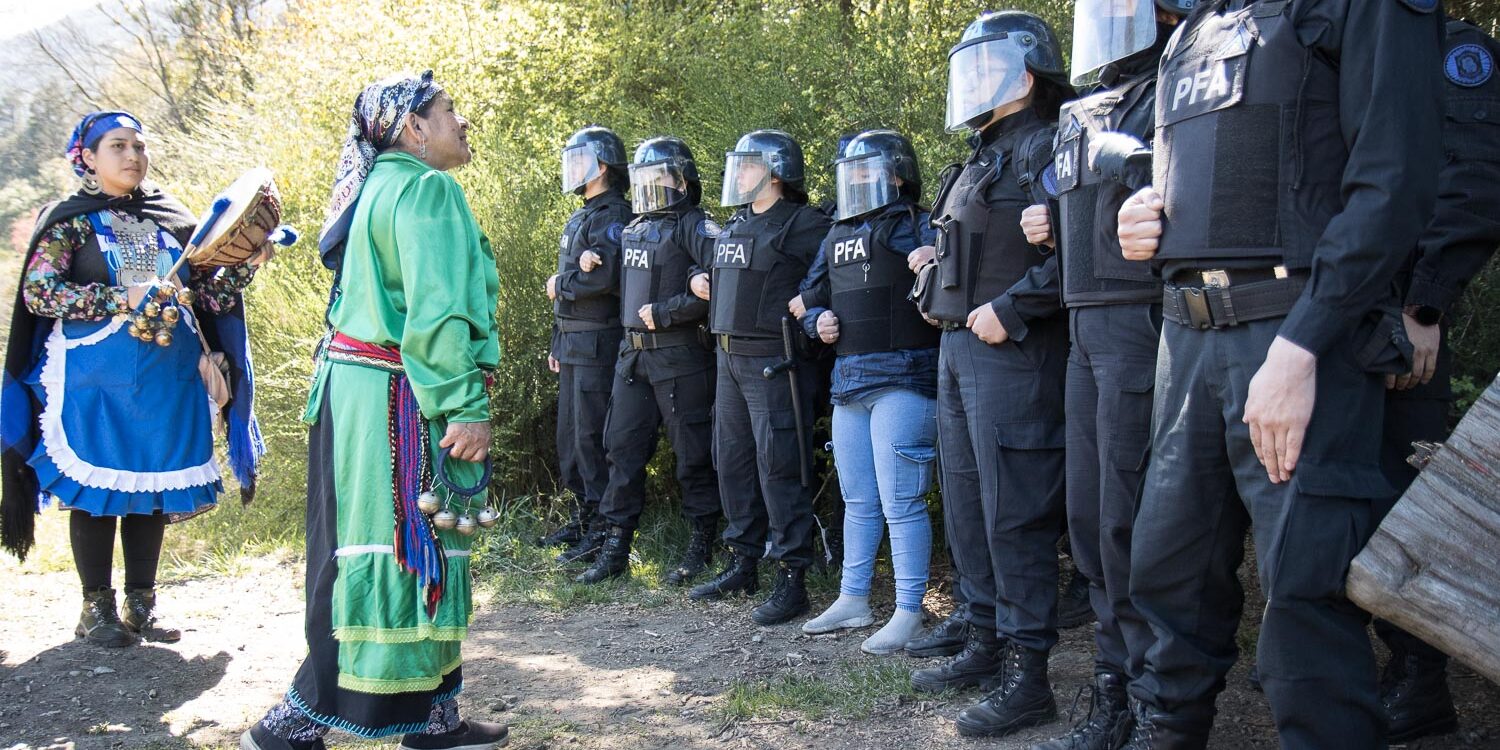
On Monday, May 26, the second trial of members of the Lof Lafken Winkul Mapu community , and once again the verdict was against the Mapuche community. Judge Alejandro Silva, of the Federal Oral Court of General Roca, convicted Betiana Colhuán Nahuel, Celeste Ardaiz Guenumil, Matías Santana, Luciana Jaramillo, Romina Rosas, and Yessica Bonnefoi of the crime of usurpation with dispossession. The latter three had already been convicted in the previous trial, which ended in October of last year.
The Lawyers' Guild, which led the community's defense, stated in a press release: “The outcome was predictable: Judges, prosecutors, and plaintiffs, driven by racist ideology and supporting the interests of large landowners and corporations, steered the legal process to this foreseeable end. As we have said and reiterate: the sentences against Indigenous peoples are signed in court offices but drafted elsewhere.”
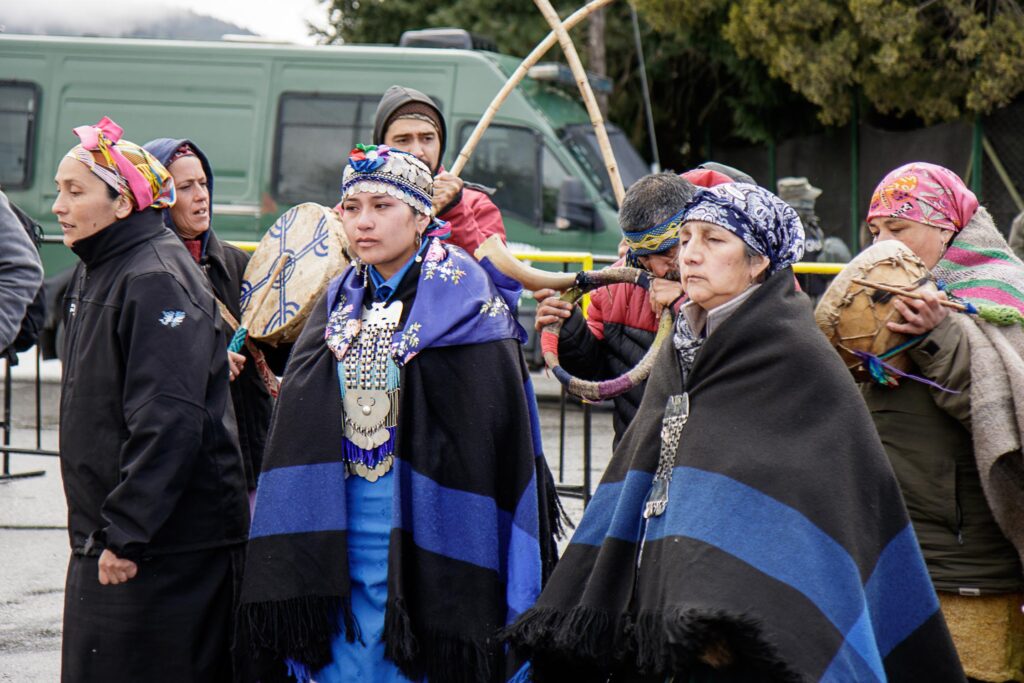
In this instance, the judge rejected the defense's requests to acquit Betiana Colhuán Nahuel on the grounds that she was a minor when the rehabilitation process began, and to dismiss the case for subjecting the same individuals to trial a second time for the same acts. While he handed down lesser sentences than those requested by the prosecution and the plaintiffs—who had asked for up to four years of effective imprisonment—he found all the defendants guilty. The sentences range from two years and two months to three years (except for Ardaiz Guenumil, whose sentence was one year because she was charged with fewer offenses), all suspended. However, for the three defendants already convicted in the previous trial, if both sentences are upheld on appeal, the sentences will be combined, and they could face imprisonment.
Matías Santana, who was detained for over a year (first for a few months in the Esquel prison and then under house arrest in Bariloche), told Presentes: “What we've been denouncing is that we were convicted without evidence. There isn't a single piece of evidence, nothing, nothing that links us to the acts we were accused of, so what happened? That's why they did everything in secret.” He's referring to the fact that the court had announced the trial would be broadcast live, as is common practice in federal trials, but at the first hearing they reversed the decision and the press was denied access to witness testimonies.
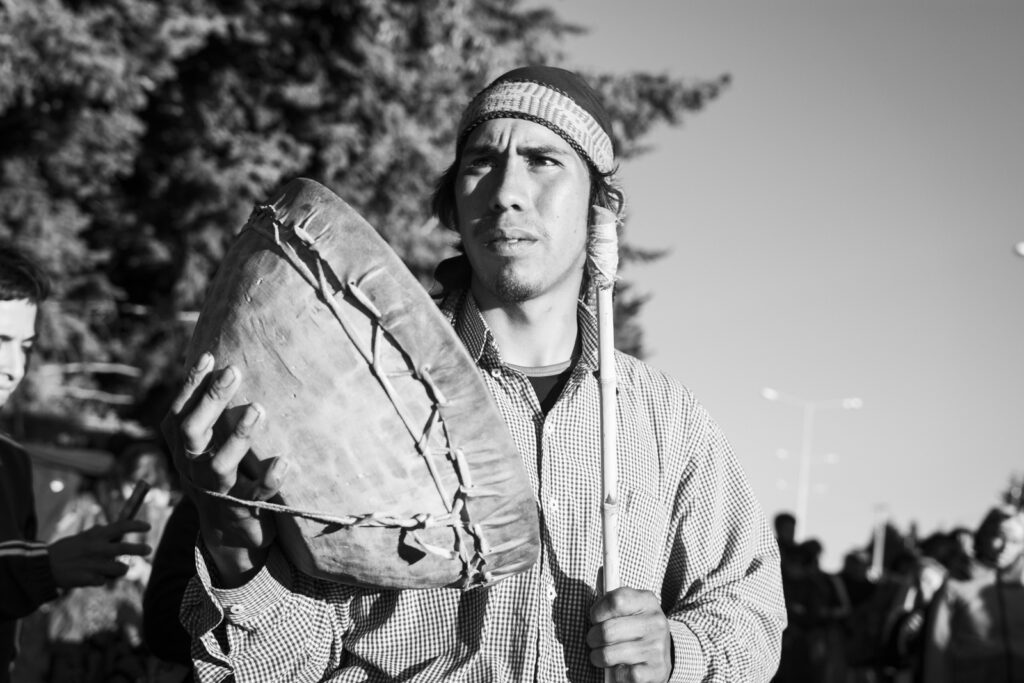
“They restricted everything because they knew they had nothing. Before, at least the prosecutors made an effort to convict you. Today, it's as if it's enough to accuse one person and bring in two or three who say, 'Yes, I think it was them, but I'm not sure,' and that's enough. It's a wake-up call, really, for all of society because it's not just what's happening to us Mapuche people, but it's happening at a societal level.”
“It’s clear this is a politically motivated sentence. The judge couldn’t let anyone go unpunished. They can’t let this go unpunished, because it’s how they assert their agenda and confront the Mapuche people’s struggle by repressing, punishing, and persecuting them,” Gustavo Franquet of the Lawyers’ Association told Presentes.
Militarized territory
Since the community was evicted in October 2022 by a Unified Command armed by then-Security Minister Aníbal Fernández, the territory has remained in the hands of the security forces, but the rewe, the ceremonial space, remains intact by order of the judge who oversaw the eviction. At this stage, the National Parks Administration filed a lawsuit requesting the removal of all ceremonial elements from the site, but Judge Silva rejected the request, stating that resolving the conflict was not within his jurisdiction.
It's worth remembering that after that operation, four of the Mapuche women now convicted spent eight months under house arrest. Representatives from several other communities met with President Alberto Fernández and opened a dialogue that, after several meetings, culminated in an agreement signed between the community and the state. With that agreement, the two cases should have been dropped, but Fernández's outgoing government refused to implement what it had signed, and the current administration simply annulled it.
Faced with the advance of state repression, Matías Santana affirms, “I believe that the alternative left to us is to create a true community organization, to begin sowing these small grains of sand that we are leaving behind, in terms of the fact that it is possible to live in community, it is necessary to live in community, it is necessary to recover values that neither the State nor the system has today, in order to leave behind a slightly cleaner humanity, right? And that is where we say, well, no matter how much they dismantle us and how much they disarm us, the invitation is constantly to organize ourselves, to consider that it is truly necessary and an obligation to fight this system.”
For her part, in her statement prior to the sentencing, Celeste Ardaiz Guenumil expressed: “All we do is defend life, defend our fundamental rights as a people, to exist… They have never wanted us to have a political, social thought where we can put forward our philosophy of life and exist with our worldview.”
We are present
We are committed to journalism that delves into the territories and conducts thorough investigations, combined with new technologies and narrative formats. We want the protagonists, their stories, and their struggles to be present.
SUPPORT US

FOLLOW US
Related notes



We are present
This and other stories are not usually on the media agenda. Together we can bring them to light.