

Democracy's debt to transvestites and trans people: they demand reparations for a dignified old age
Trans and travesti groups are demanding historical reparations for those who survived structural violence and persecution simply for existing. On Trans and Travesti National Day, for the third year in a row, they took their demands to Plaza de Mayo.



Share

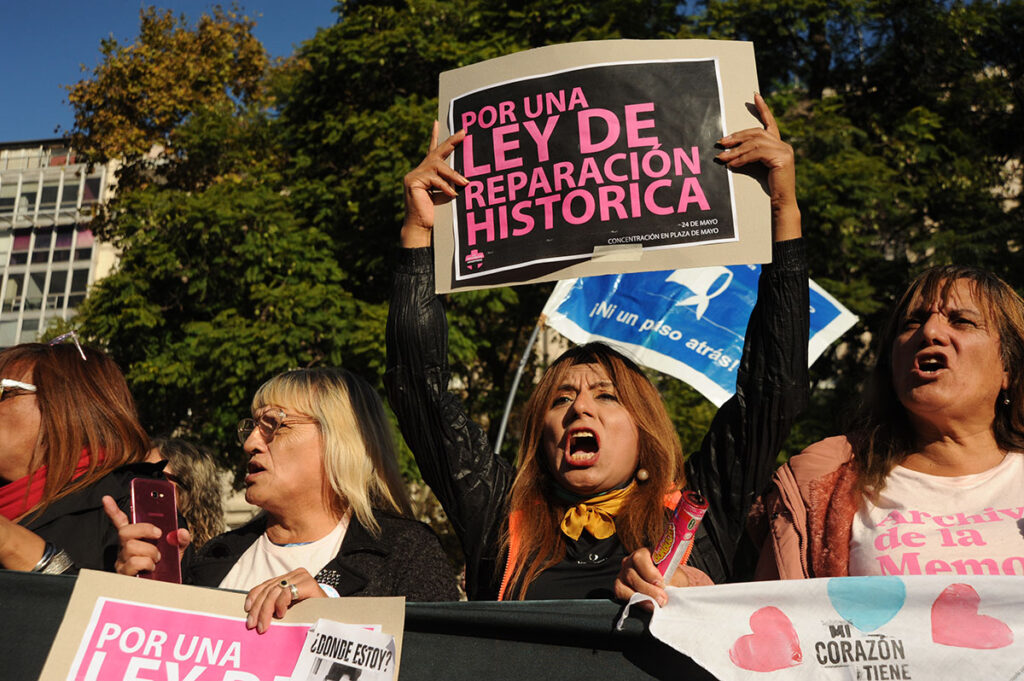
BUENOS AIRES, Argentina. Trans and transvestite groups, transsexuals, transvestites, youth, adults and the elderly gathered in Plaza de Mayo in a day of protest for the enactment of a Reparation Law for trans and transvestite survivors of state terrorism and police edicts.
Organized by Las Históricas Argentinas, the event was held for the third consecutive year on May 24th, which they dubbed “Trans Homeland Day,” on the eve of the anniversary of the May Revolution. Their demand is a reparative pension to ensure a dignified old age.
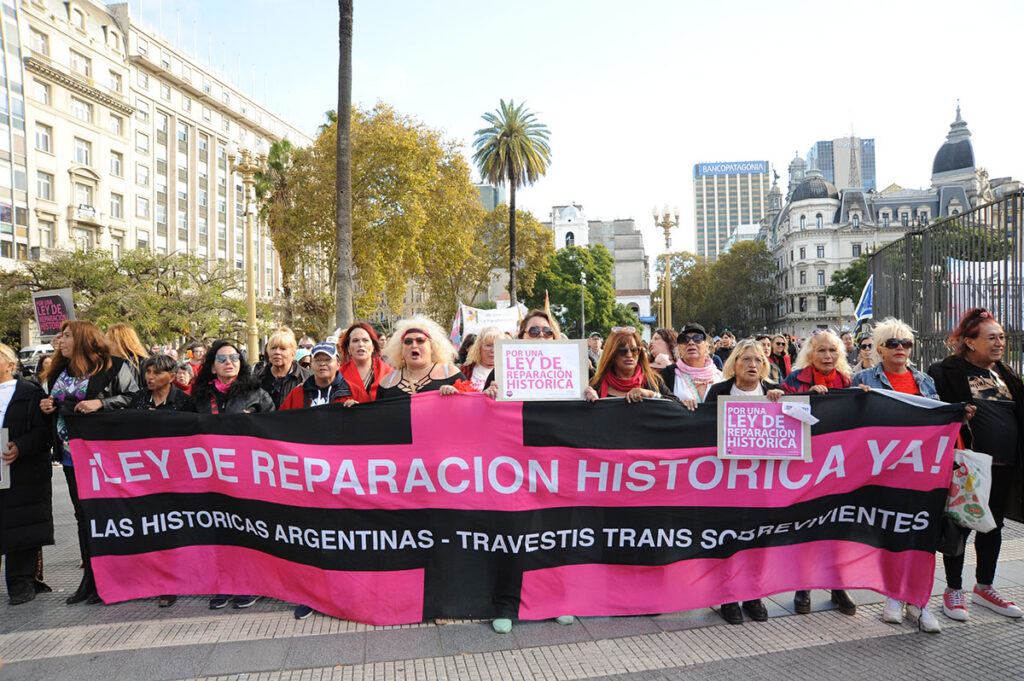
National campaign for historical reparations

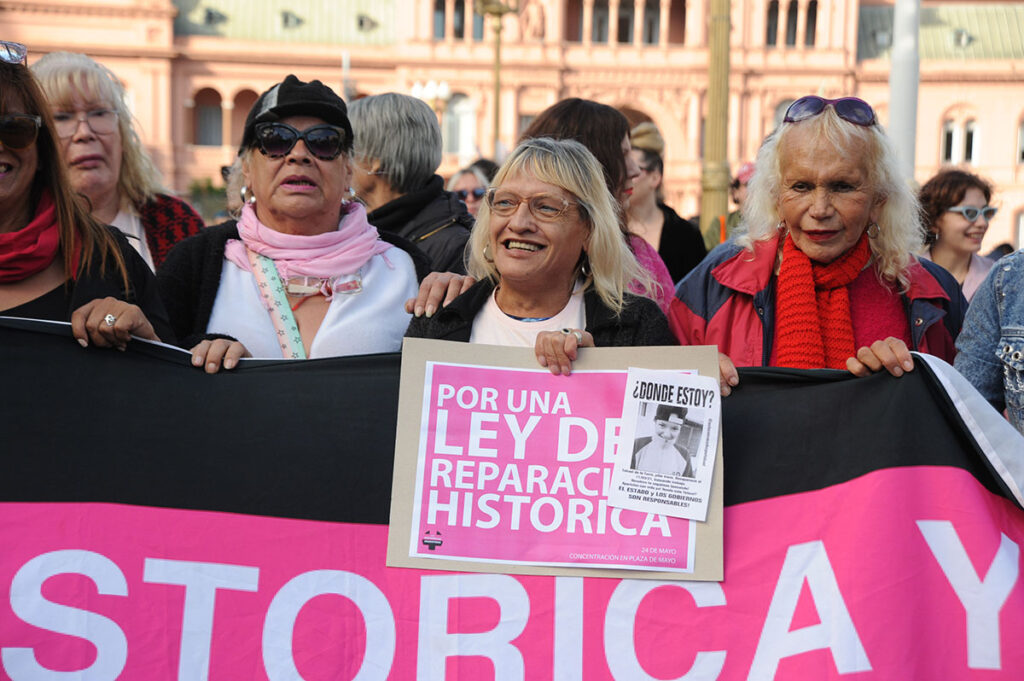
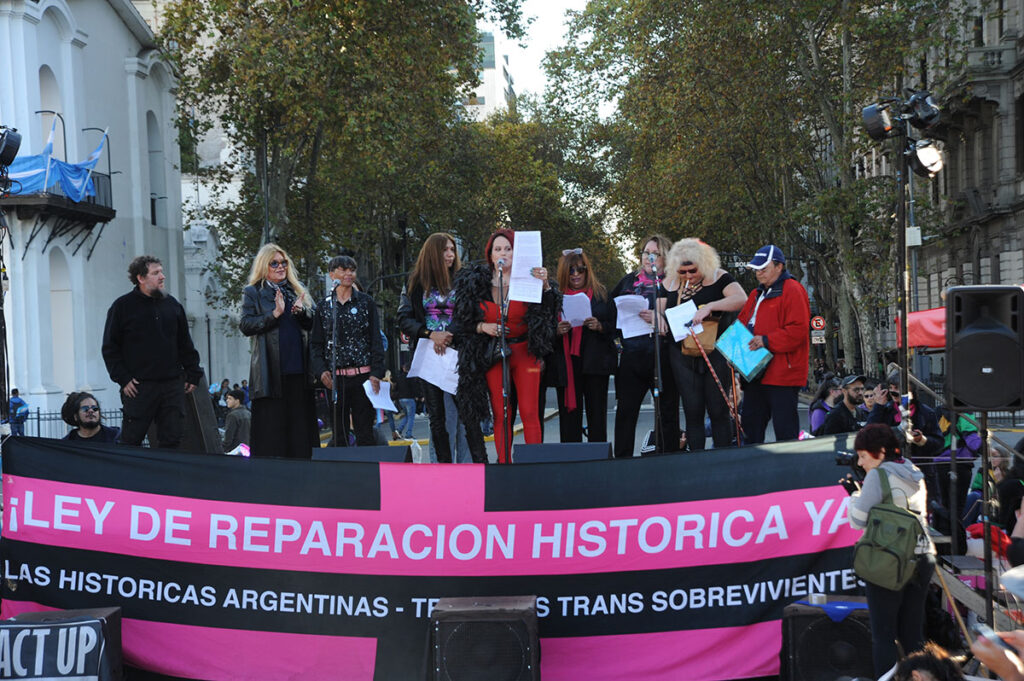
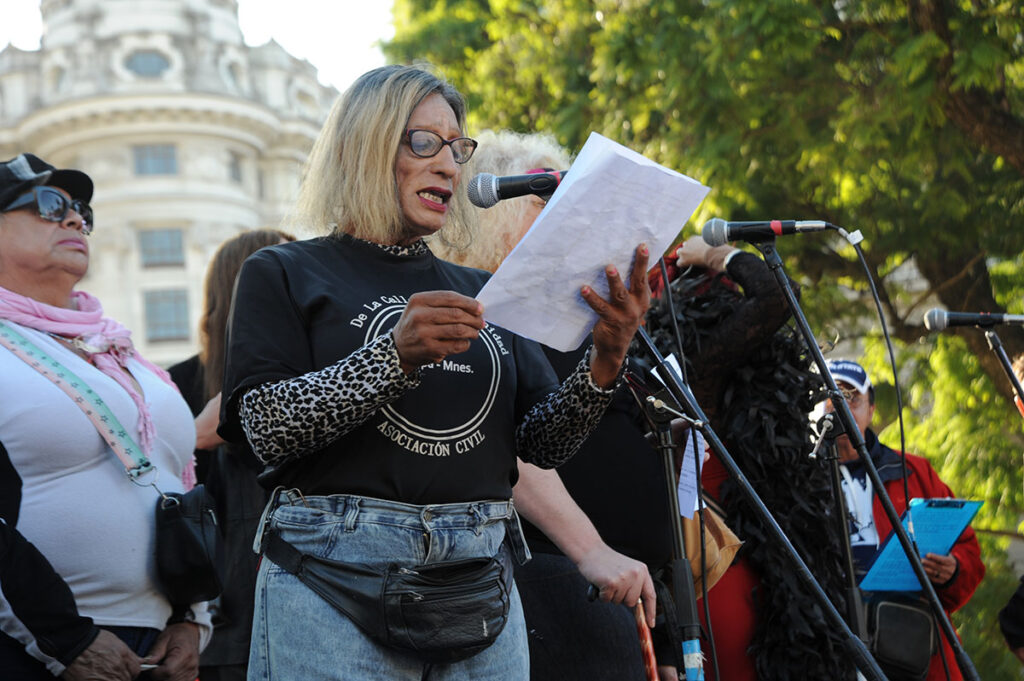
“We are here to demand a Historical Reparation Law now for those of us who have lived through the systematic violence of the Argentine State, which only in 2012 recognized us as citizens with the Gender Identity Law. The debt is owed to us: for considering us non-human, non-citizens, non-Argentinians, for denying us work, culture, education, and health.” This demand began the document they read on the stage set up a few meters from the Cabildo.

Earlier, the survivors had marched in a circle around the Plaza de Mayo pyramid, emulating the legacy of the Mothers of Plaza de Mayo—who continue to march there every Thursday—and the Grandmothers of Plaza de Mayo. “We demand Memory, Truth, and Justice for our community! We need a Historical Reparation Law NOW. We demand the commitment of Representatives and Senators to give the force of law to this project that we have been advocating for for more than 13 years. All political groups that consider themselves democratic have the ethical obligation to support Historical Reparation, to make it law so that it doesn't languish in the drawers of Democracy,” they stated in the same document.
“For trans women, reparations are a debt the Nation owes us,” was chanted throughout the afternoon, which included a beautiful version of the Argentine national anthem performed by trans artist Fedra. There was a communal potluck—provided by the Ni Una Menos collective—and dancing on a day that, despite the urgency of the demands, was infused with trans fury and a festive spirit.

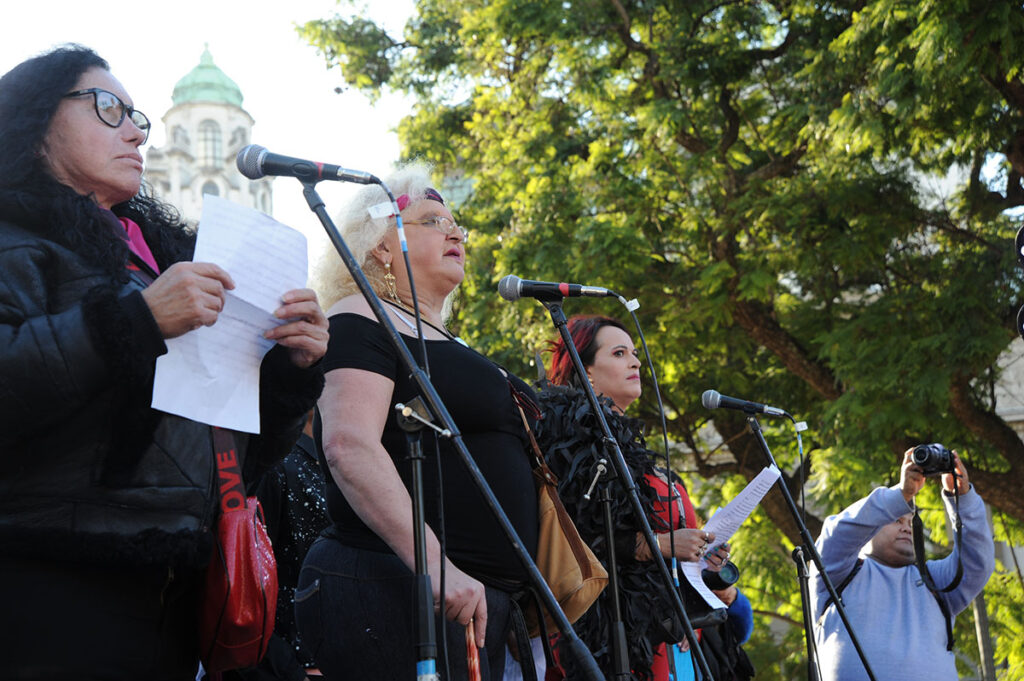
The event was supported by over a hundred social, political, feminist, community, cannabis, student, labor, and human rights organizations, according to Las Históricas. Activists from that organization and other trans and travesti groups across the country took turns on stage to read the full document.
“Today, May 24th, which we have named Transgender Homeland Day, finds us with comrades with whom we have been collectively building a great National Campaign for the urgent passage of a Historical Reparation Law . We have international support from comrades in Bolivia, Ecuador, Italy, the Netherlands, Spain, and other corners of the world, because transgender people break down borders and exist all over planet Earth,” they read.
The Never Again of the transvestite and trans homeland
📣🌈Activist Patricia Rivas, a member of Las Históricas Argentinas, explains what this Third Plurinational Meeting for Historical Reparation will be like. pic.twitter.com/SzKFXfrfnJ
— @presenteslatam.bsky.social (@PresentesLatam) May 24, 2025
Patricia Rivas, a member of Las Históricas, emphasized to Presentes : “The State owes us this existence because they always persecuted us, hunted us down, and killed us. It is time and day that we are recognized and that this is our last 'Never Again'.”

Marlene Wayar was unable to attend due to health reasons and sent an audio message that was played in Plaza de Mayo. “What a source of pride to know that we have been able to meet again, all of us, making a great effort to be together, the transvestite, transsexual, transgender, trans community, with a common agenda to continue winning rights and give the country the opportunity to strengthen democracy, which is so denigrated.”.
A new reparations bill
Marlene referred to the political work needed to make the historical reparations project, which has been advocated for over 10 years, law. Las Históricas (The Historical Ones) has been working on a project conceived by members of these collectives. “Only a trans woman can know what’s best for another trans woman” is the leitmotif of this initiative, which has not yet been formally presented. It consists of three chapters and twenty articles, which are currently being finalized. In addition to financial reparations, it includes proposals such as creating a national archive of trans memory, providing symbolic reparations, requiring the State to apologize for its crimes, and establishing a registry of victims.
Marlene explained that “this is a first step, to come together to join forces and think about strategies (to request the approval of the law) that are not limited to the National Congress in the Federal Capital. Each province will have to work with its representatives and senators, urging them to take up the bill, read it, familiarize themselves with it, support it, and vote for it. This is how democracy grows, this is how institutions are strengthened.”.
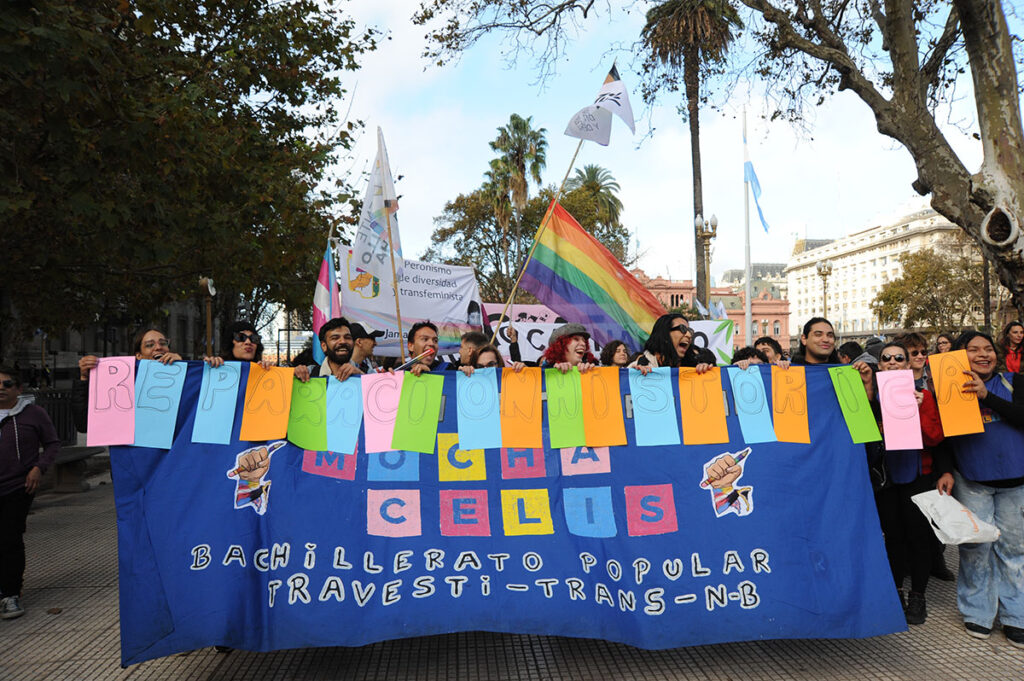

This year it was decided to stay in the Plaza and not march to Congress, as a result of the strong repressive operation that the aunts, as the survivors are affectionately called, endured last year.
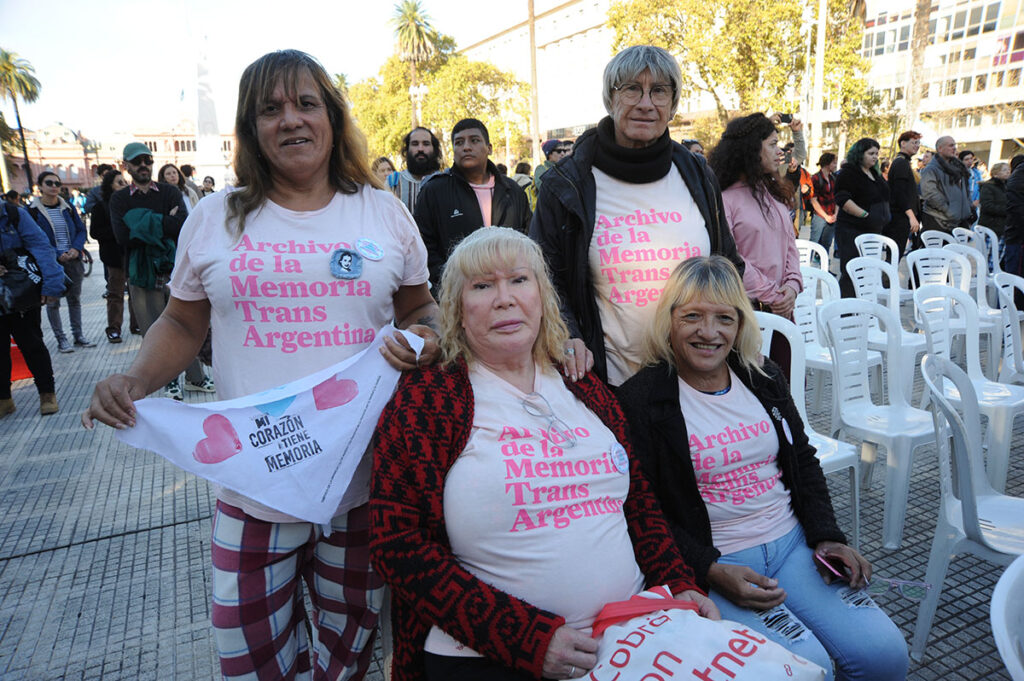
In the Plaza were the elderly women from the Trans Memory Archive, the activists from La Rosa Naranja, and the young people from the Mocha Celis Popular High School, among other institutions and groups that engage in intergenerational dialogue. “We came from Luján to demand reparations for our aunts. But also so that we don't have to have to ask again for the rights we won thanks to them, rights that this government threatens to take away from us,” Logan and Luciana, the president of “Juntas por vida” (Together for Life), told Presentes.
🏳️⚧️📢 "It's a right we need for our old age," says Carola Figueredo, a member of @ArchivoTransArg , regarding the draft Law of Historical Reparation for adult transvestite and trans women who are victims of institutional violence. pic.twitter.com/3yorgMUupY
— @presenteslatam.bsky.social (@PresentesLatam) May 24, 2025
Belén, a trans woman and sex worker, arrived from Barrio 31 with the group Act Up. “I came to support the many trans women who suffer the government’s hatred. But it’s clear that it’s not just aimed at us, but at all of society.”.
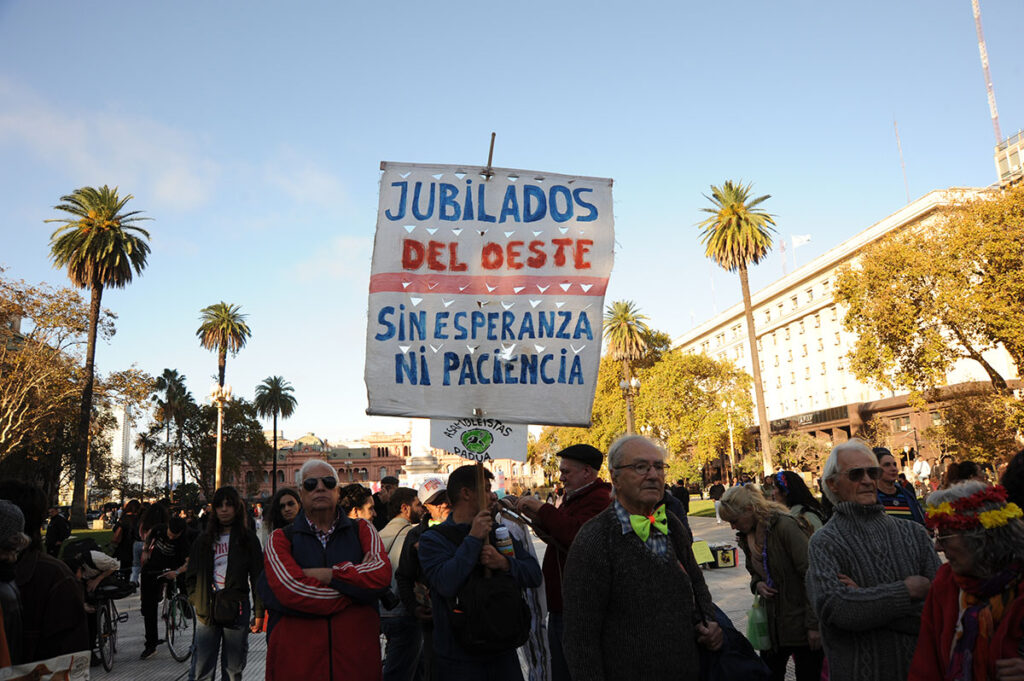
Why reparations are urgent and necessary for trans and transvestite survivors
From La Rosa Naranja, Marcela Tobaldi emphasized why reparations are necessary: “There are facts that cannot be hidden, such as our average life expectancy of 40 years. Are there other groups with this average? No, only trans women. As a responsible, humane society, we cannot allow this average life expectancy. Ten years ago it was 35, and thanks to public policies, we have a five-year increase. What I mean by this is that politics determines the lives of a country's citizens. In this case, the State has an immense debt to the trans community. I know that with this government there are things we won't be able to achieve, but I do believe that there is a national and popular force, one with a sense of humanism, that will urgently put historical reparations on the agenda.”.

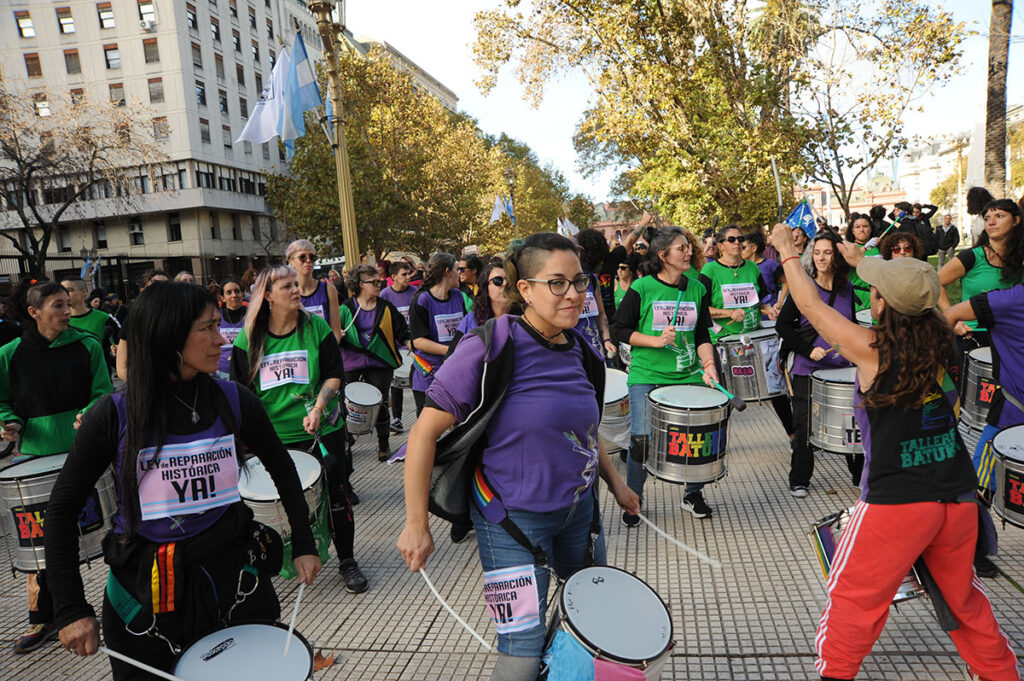

Among those who came to show their support was Mónica Astorga, known as the "trans nun ," surrounded by the embrace of trans women. Beside her was Tatiana, who came from Neuquén and is a member of ATTTA (Association of Transvestites, Transsexuals, and Transgender People of Argentina). Also present were sexual diversity organizations such as 100 Percent Diversity and Rights.
“We are facing a government that tries to co-opt our narrative, that talks about historical reparations for savings, when for decades we have been asking them to tell our stories. As long as there are trans people in inhumane conditions, we will continue fighting,” transmasculine activist Ese Montenegro told us.
Santa Fe, the pioneer in historical reparations
To date, Santa Fe is the only province with a historical reparations law. Approved in November 2023, the Post-Dictatorship Reparations Law for Trans and Travesti People provides a pension for those who suffered detentions between 1983 and June 10, 2012. At the time of its approval, the government had compiled a registry of beneficiaries, totaling 147 people.
What happened to the previous projects?
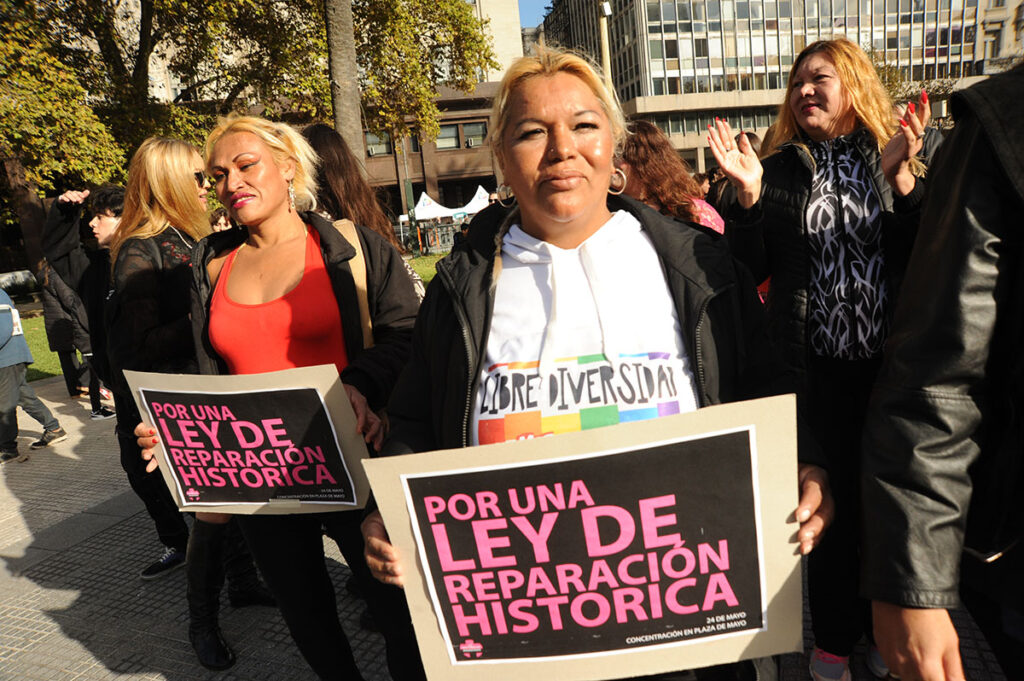
In 2023, the issue of historical reparations began to be debated in Congress . In May, when the debate began, there were three bills proposing reparations, and the Women and Diversity Committee called for a unified text in conjunction with trans and travesti activists. However, no agreement was reached with the opposition blocs to move forward with the process. Today, all of those bills (introduced by Mónica Macha, Mara Brawer, and Gabriela Estévez, representatives of the Frente de Todos coalition) have lapsed. Macha did not reintroduce the initiative, in agreement with the organizations that requested she submit her own.
How is the collective protection for social security progressing?
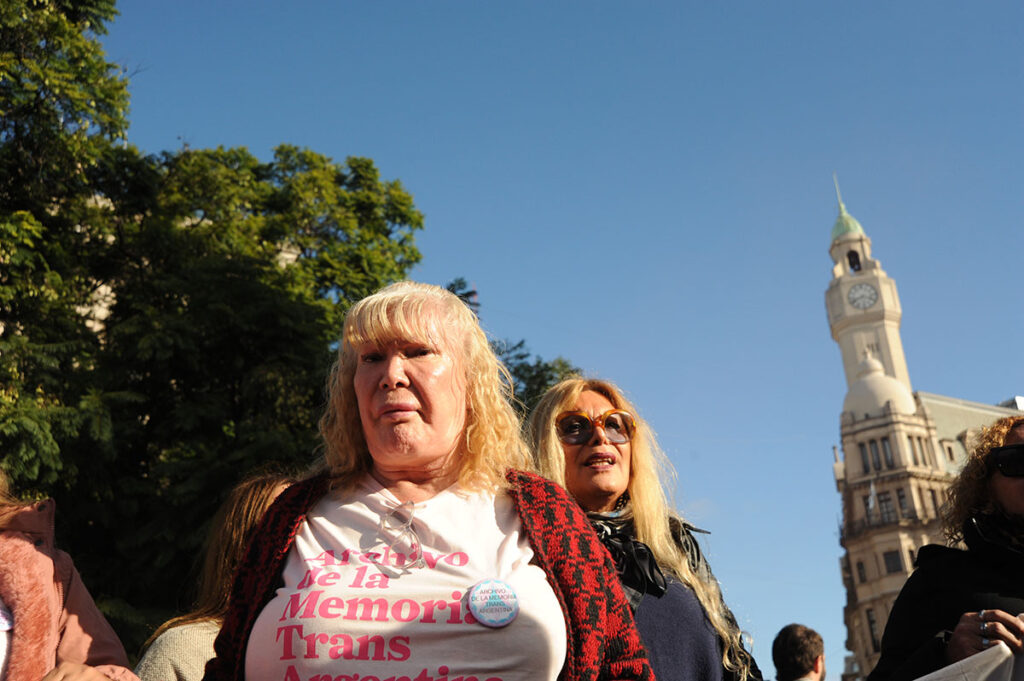
On the other hand, last November, the Trans Memory Archive, with the support of the Center for Legal and Social Studies (CELS), filed a collective injunction demanding that the courts grant social security benefits to transgender people over 50 years of age . This action was against ANSES (the Argentine Social Security Administration) and was signed by 13 petitioners representing different groups.
“The State responded that they lacked standing to act on behalf of others or on their own behalf, and that there was no case,” Lucía de la Vega, coordinator of the CELS feminist agenda and lawyer for the case, explained to Presentes . On Friday, CELS added another complaint: Resolution 291 from the Minister of Justice, which revoked thirteen programs, including the Access to Rights for Transgender People program, one of the few public policies aimed at transgender people. It consisted of financial support equivalent to two minimum wages for people in situations of extreme vulnerability.
“Eliminating the only existing public policy for trans, transgender, and transvestite people further harms the situation of this community. It makes it imperative to amend the social security law and establish a pension system that provides reparations for transvestite and trans people over 60,” De la Vega concluded.
This legal action is collective, and its core argument is that the Social Security Law is inconsistent with the Gender Identity Law. The arguments are the same for both legal and legislative avenues. Members of this community have suffered structural violence and exclusion, which explains their shorter service time. They also fall under the dual system of social security and gender identity. Furthermore, most have experienced institutional violence that must be acknowledged and addressed.
We are present
We are committed to journalism that delves into the territories and conducts thorough investigations, combined with new technologies and narrative formats. We want the protagonists, their stories, and their struggles to be present.
SUPPORT US

FOLLOW US
Related notes


We are present
This and other stories are not usually on the media agenda. Together we can bring them to light.